Vietnam has a drink for every part of the day. Morning starts with slow-drip coffee over ice, afternoons call for fresh sugarcane juice from a street cart, and evenings are best spent with a cold glass of bia hoi on a plastic stool.
Vietnamese drinks are a big part of daily life here, and getting familiar with them is one of the best ways to see the country beyond its famous food. Here, we’ll cover everything from bold Vietnamese coffee to street-side smoothies and potent rice wine, organized by category so you know exactly what to order, and where.
☕ Coffee-based drinks
Ca phe sua da (Vietnamese iced milk coffee)
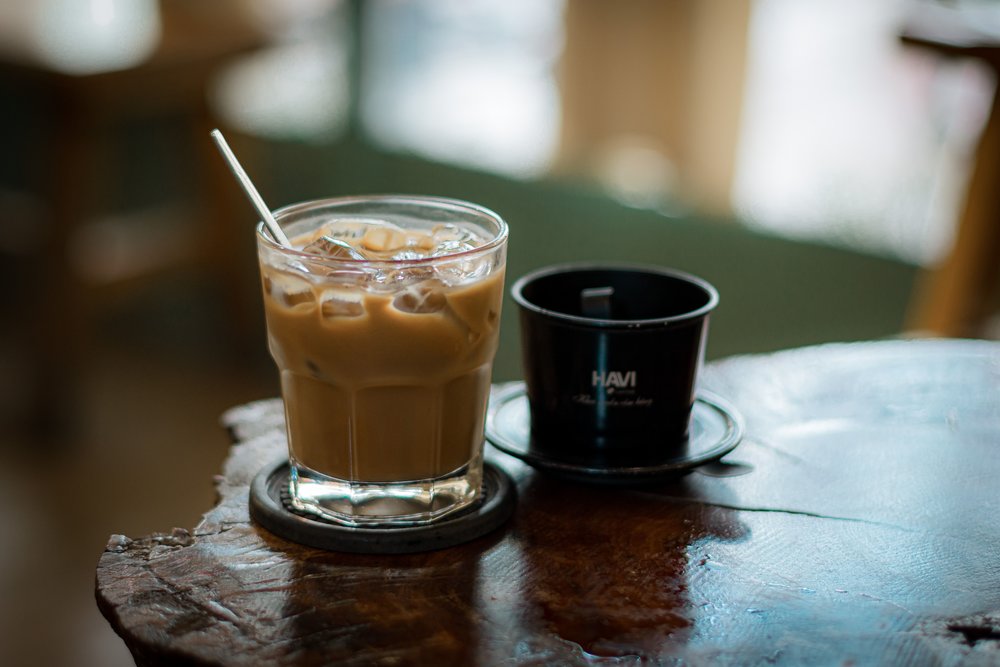
Ca phe sua da (Vietnamese iced milk coffee) | Photo Credit: 🇻🇳🇻🇳Nguyễn Tiến Thịnh 🇻🇳🇻🇳 on Pexels
If there's one drink that defines Vietnam's café culture, it's a ca phe sua da, strong drip coffee brewed through a metal phin filter, then poured over a generous pour of sweetened condensed milk and ice. The result is intensely rich, slightly sweet, and deeply caffeinated. You'll find it everywhere from Hanoi to Ho Chi Minh City, usually for under $1 USD.
The key to ordering it right: "ca phe" is coffee, "sua" means milk, and "da" is ice. If you want it hot, swap "da" for "nong." For black coffee without milk, ask for ca phe den.
Most local cafés brew with robusta beans, which are bolder and more bitter than the arabica you might be used to, and that contrast with the condensed milk is exactly the point.
Klook Tip: Skip the chain cafés when you're after the real thing. Pull up a plastic stool at a street-side coffee spot early in the morning, that's when regulars come, and the coffee is usually freshest.
Ca phe trung (egg coffee)
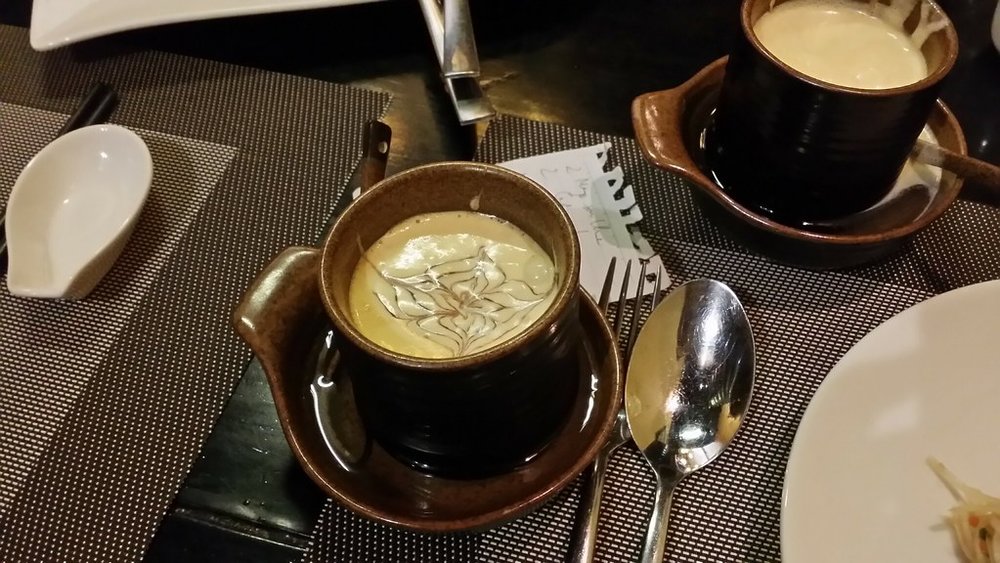
Ca phe trung (egg coffee) | Photo Credit: Flickr
Egg coffee is Hanoi's most beloved local specialty, and it's exactly as interesting as it sounds. Ca phe trung is whisked egg yolks and condensed milk spooned over strong black coffee. The texture is somewhere between a dessert and a drink, and it tastes like a cross between tiramisu and the best latte you've ever had.
Klook Tip: Egg coffee is best enjoyed warm. Ask for it served in a small ceramic cup, resting in a bowl of hot water to keep the temperature just right while you drink slowly.
It was invented in the 1940s at Giang Café in Hanoi's Old Quarter, where condensed milk was used as a substitute for fresh milk during wartime shortages. That same café still serves it today, and the recipe hasn't changed much. Try making it yourself with this egg coffee barista course in Ho Chi Minh City.
Coconut coffee
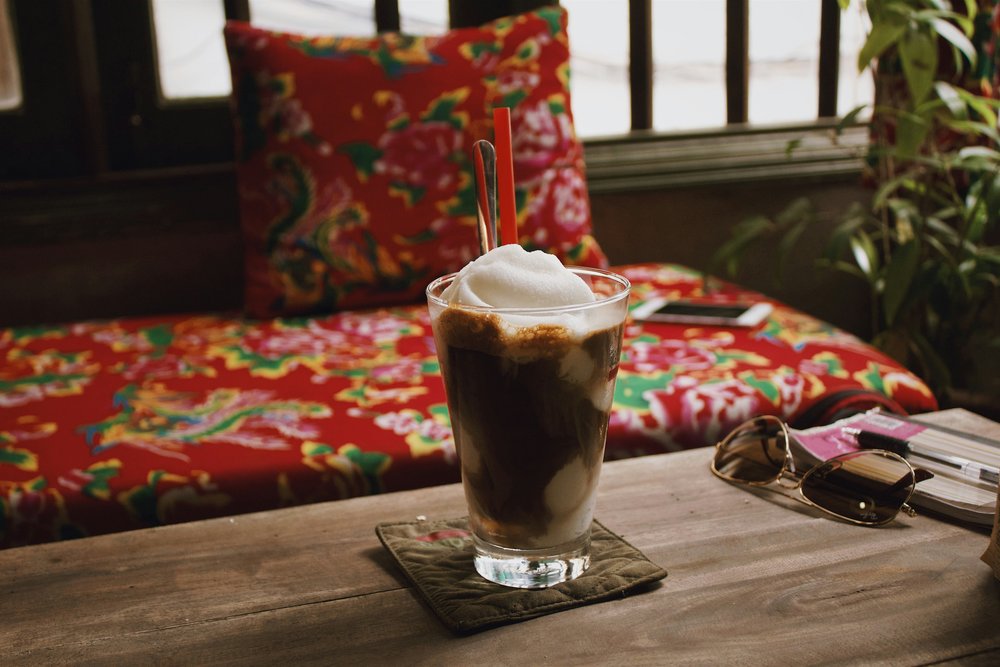
Coconut coffee | Photo Credit: K8 on Unsplash
Southern Vietnam's answer to the coffee craze is coconut coffee, cold-brewed or drip coffee blended or layered with coconut milk or coconut ice cream. It's thicker, creamier, and a little sweeter than ca phe sua da, and it's become a staple in Ho Chi Minh City cafés over the last decade.
Some versions are blended smooth like a frappé; others have the coffee poured straight over a scoop of coconut ice cream. Both are worth trying at least once. Book a Tea Tastings & Coffee Brews Workshop to explore Hanoi's coffee culture properly and try making coffee yourself!
Klook Tip: Look for coconut coffee at cafés around Bui Vien Walking Street, there are lots of spots like Cong Caphe that specialize in creative coffee variations along this strip.
Ca phe muoi (salt coffee)
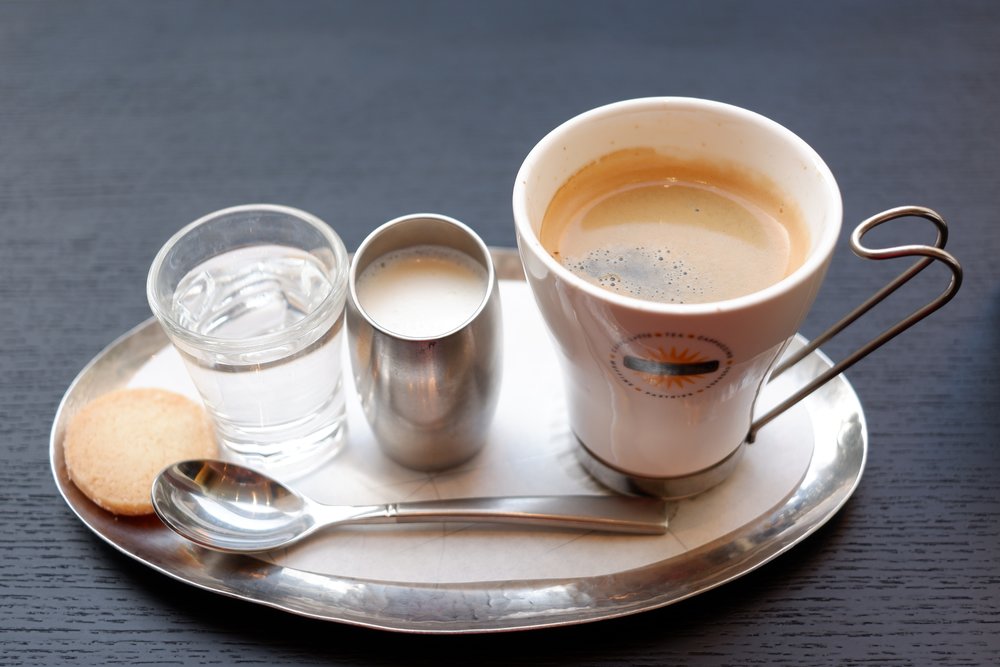
Creamy ca phe muoi (salt coffee) | Photo Credit: Wikimedia Commons
Salt coffee is one of Vietnam's most underrated regional drinks, and it's almost exclusively a Hue thing. Ca phe muoi is made with drip coffee topped with a lightly salted cream. The salt doesn't make it taste savory; it actually balances the bitterness of the coffee and brings out a sweetness you wouldn't expect.
If you're traveling through central Vietnam, Hue is worth a stop just for this. Try it at Ca Phe Muoi the spot credited with making it popular, or Bo Ơi Coffee for a slightly more modern take. Most serve it hot or iced, and it's usually very affordable.
Klook Tip: Salt coffee in Hue is best enjoyed slowly. Stir the salted cream layer into the coffee gently rather than mixing it all at once, that way you get both flavors in each sip.
🍹 Non-alcoholic street drinks
Tra da (free iced tea)
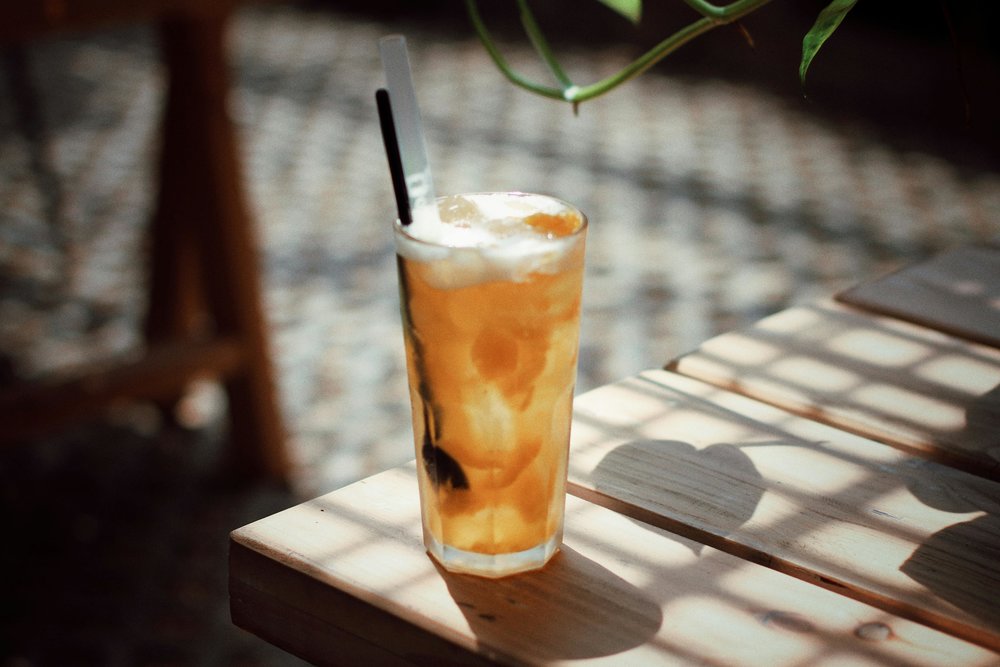
Tra da (Vietnamese iced tea) | Photo Credit: 🇻🇳🇻🇳Nguyễn Tiến Thịnh 🇻🇳🇻🇳 on Pexels
Tra da might be the most underappreciated Vietnamese drink, mostly because it's free. Almost every local restaurant and street food stall in Vietnam will bring you a glass of lightly brewed green or jasmine tea over ice without being asked. It's light, slightly grassy, and very refreshing when you're sweating through a plate of pho or banh mi.
After sipping Vietnamese iced tea, learn how to make another local favorite with this hands-on pho and cooking class.
Nuoc mia (sugarcane juice)
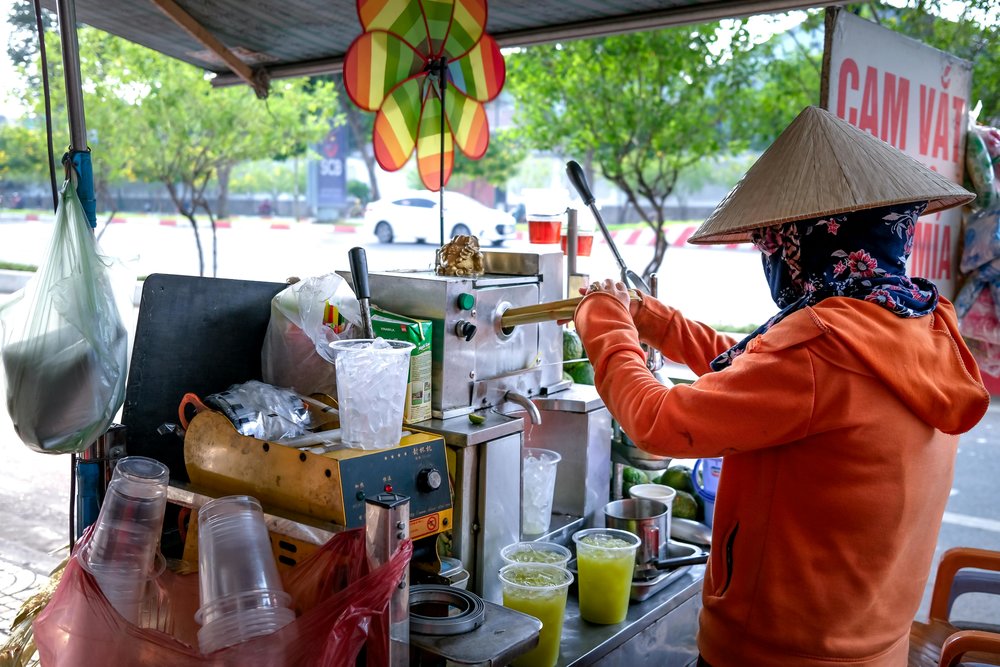
Street vendor preparing sugarcane juice at outdoor cart with various ingredients | Photo Credit: Quang Nguyen Vinh on Pexels
Fresh-pressed sugarcane juice is one of those drinks that's impossible to walk past without stopping. Nuoc mia is made by feeding stalks of sugarcane through a mechanical press, usually right in front of you, then served over crushed ice with a squeeze of kumquat. It's grassy, lightly sweet, and nothing like the artificially flavored sugarcane drinks you might have tried elsewhere.
Street vendors selling nuoc mia are easy to spot; look for the small electric press and the pile of green cane stalks. A glass costs almost nothing and is one of the most satisfying things you can drink on a hot afternoon. Join a Saigon street food tour and look for street vendors selling this refreshing juice!
Klook Tip: The kumquat squeeze is key, don't skip it. It cuts through the sweetness and gives the drink a bright, citrusy finish.
Sinh to (fresh fruit smoothies)
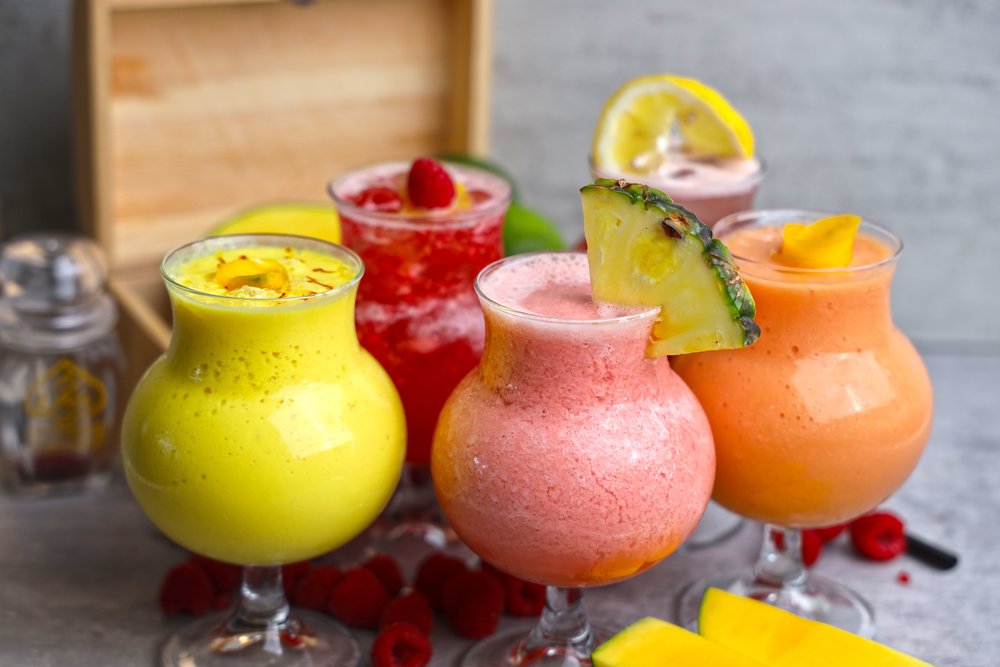
Fresh fruit smoothies | Photo Credit: Shameel mukkath on Pexels
Sinh are thick, creamy fruit smoothies made with whatever's in season, avocado, mango, jackfruit, dragon fruit, soursop, and more. They're blended with ice and condensed milk or yogurt, which gives them a richness that's more dessert-like than your average smoothie back home.
Avocado sinh to (sinh to bo) is particularly popular and may sound strange if you've never tried it, but the condensed milk transforms it into something very delicious. You'll find sinh to stalls near markets and along tourist streets across the country.
Che (sweet dessert drink)
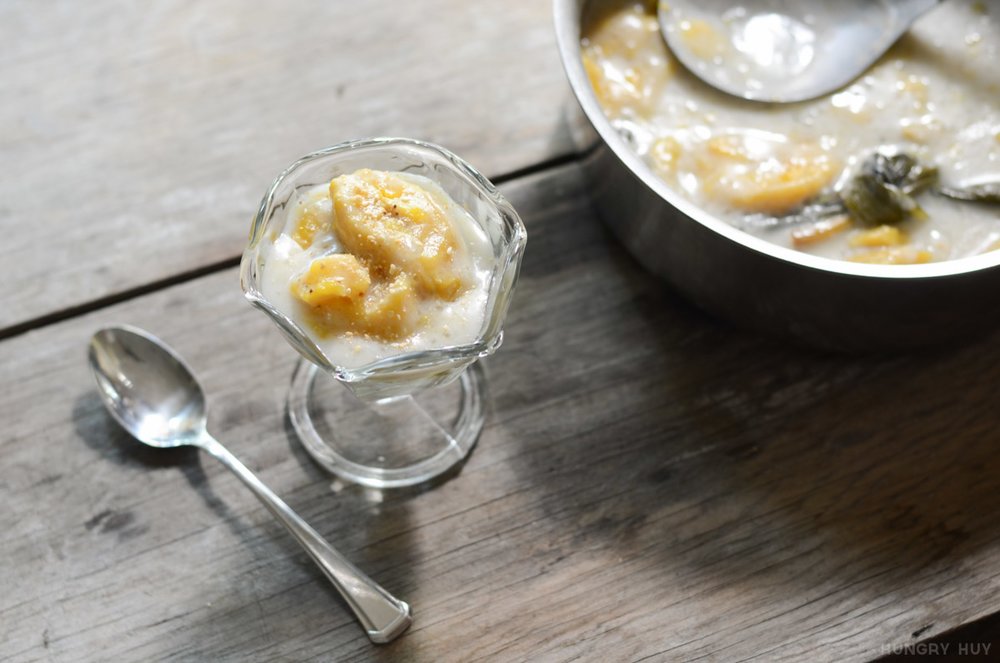
Banana, tapioca, coconut creme Vietnamese pudding
Che is a category all its own. It's a Vietnamese sweet drink, soup, or pudding, sometimes all three at once, made with combinations of beans, jellies, tapioca, coconut milk, lotus seeds, and fresh fruit. You eat it with a spoon from a bowl or cup, and it's sold cold in the south and warm in the north.
🍸 Alcoholic drinks
Bia hoi (draft street beer)
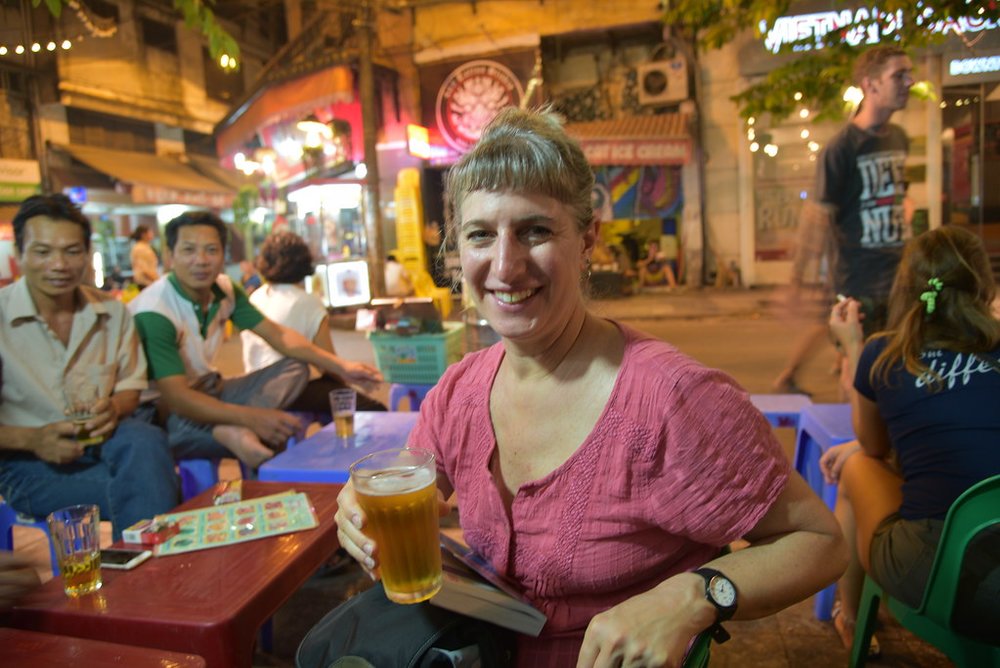
Having a Bia Hoi in Hanoi’s Old Quarter | Photo Credit: Wikimedia Commons
Bia hoi is cheap, fresh, and completely central to Vietnamese social life. It's a light, low-alcohol draft beer brewed fresh daily, served from kegs at outdoor street-side bars on plastic stools. The beer itself is mild and easy-drinking, but the experience is the real draw.
Hanoi's Bia Hoi Corner at the intersection of Ta Hien and Dinh Liet streets is the most famous spot for it, where people come together from early evening onward. The call-and-response drinking toast here is "mot, hai, ba, yo!" (one, two, three, cheers!), learn it and use it freely.
If you want to combine bia hoi with some sightseeing, the Hanoi exclusive craft beer bus tour rolls through the city's cultural highlights with cold beer in hand.
Klook Tip: Bia hoi runs out when it's gone, especially on weekends. Arrive by 5 or 6 PM for the best experience before the most popular spots sell out of the day's batch.
Ruou gao (Vietnamese rice wine)
Ruou gao is Vietnam's traditional rice wine, ranging from mild ruou nep (glutinous rice wine) to stronger clear spirits. It's brewed in homes and small distilleries across rural Vietnam, and drinking it is often a communal experience tied to festivals, family gatherings, or welcoming guests.
If you're offered rice wine in a village setting, it's a generous gesture, accepting it (even just a small sip) is a sign of respect. The polite phrase to know is "mot tram phan tram" (one hundred percent), said before downing a full shot together. Sip cautiously; the alcohol content varies widely and can be surprisingly high.
Ruou can (highland communal wine)
Ruou can is a fermented rice wine from Vietnam's central and northern highlands, traditionally drunk communally through long bamboo straws from a shared clay pot. It's common among ethnic minority communities, usually brought out for celebrations or when welcoming guests.
The flavor is earthier and more complex than standard ruou gao, with a slight sourness from the fermentation. If you’re looking to explore Vietnamese craft spirits more broadly, the Sip Saigon Vietnamese craft spirit tasting is a great introduction.
Vietnamese craft beer
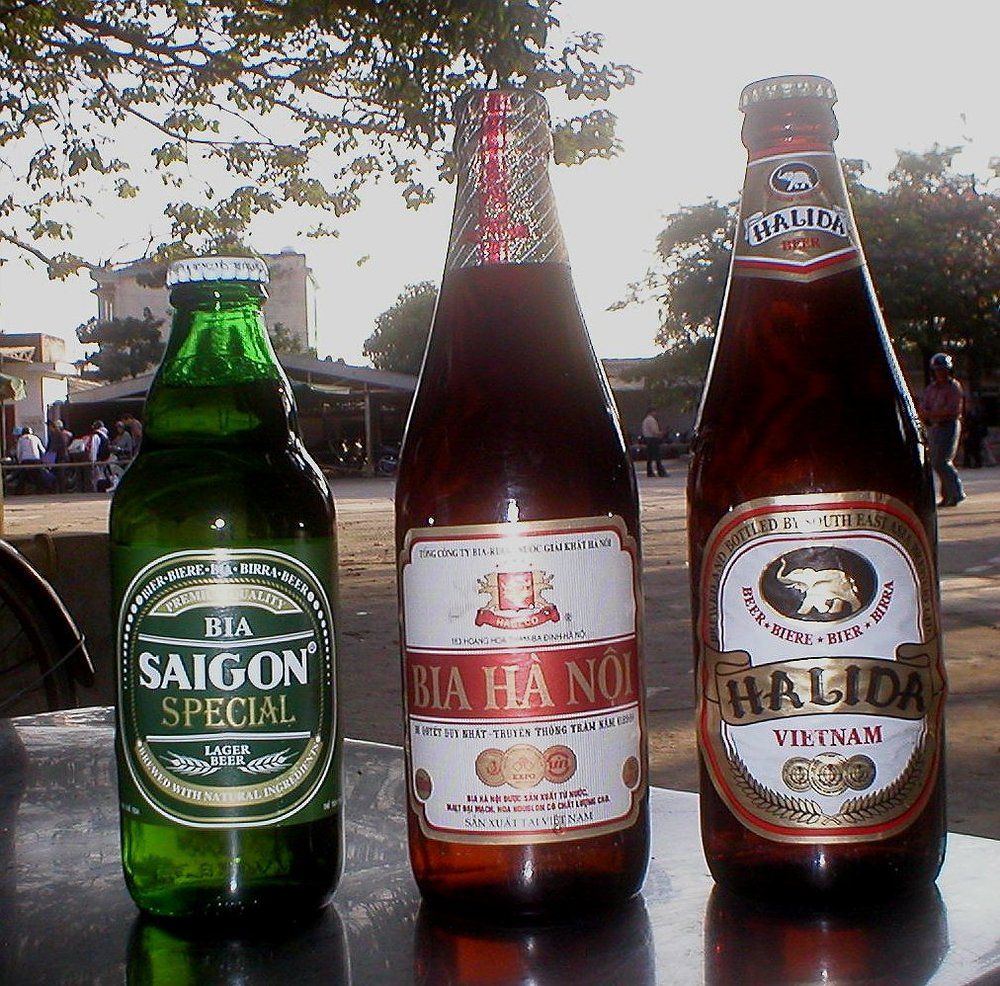
Vietnamese craft beers | Photo Credit: Wikimedia Commons
Vietnam's craft beer scene has grown fast, especially in Ho Chi Minh City. Tap rooms and craft bars have popped up across Districts 1 and 3, offering locally brewed IPAs, wheat beers, and sours alongside bar snacks and live music. It's a very different experience from bia hoi, more curated, more expensive, and just as fun in its own way.
Bui Vien Walking Street is the most energetic area for a night out, though the craft bars tend to be a little quieter and more laid-back. To check out Saigon's craft beer circuit, join the Saigon craft beer crawl, it covers multiple stops with tasting bites included.
FAQs about Vietnamese drinks
What is the most popular drink in Vietnam?
Ca phe sua da (Vietnamese iced milk coffee) is easily one of the most popular and widely consumed drinks in the country. You'll find it at street stalls, local cafés, and convenience stores from north to south. Tra da (free iced tea) is just as common in everyday life, it's served automatically at most local restaurants and is a quiet but constant part of Vietnamese culture.
What is egg coffee and where can I try it in Vietnam?
Egg coffee (ca phe trung) is a Hanoi specialty made by whisking egg yolks with condensed milk into a thick, creamy foam and spooning it over strong black coffee. It was invented at Giang Café in Hanoi in the 1940s and is still most closely associated with the city. You can try it at historic cafés in the Old Quarter or book an egg coffee class to learn how to make it yourself.
What is bia hoi and how much does it cost?
Bia hoi is fresh-brewed draft beer sold by the glass at street-side stalls across Vietnam, most famously in Hanoi. It's brewed daily and has a lower alcohol content than most bottled beers, making it easy to drink over a long evening. A glass typically costs $0.20–$0.60 USD, making it one of the most affordable beers in the world.
What non-alcoholic drinks should I try in Vietnam?
Start with nuoc mia (fresh sugarcane juice) and sinh to (fresh fruit smoothies); both are widely available, very affordable, and made fresh to order. Che, the sweet dessert drink made with beans, jellies, and coconut milk, is also worth seeking out at local markets. And don't overlook tra da, the free iced tea served at almost every local eatery; it's refreshing and endlessly refilled.
Where can I try the best Vietnamese coffee?
For authentic coffee experiences, Hanoi and Ho Chi Minh City are the two main cities to focus on. In Hanoi, the Old Quarter is full of small independent coffee shops serving egg coffee, ca phe sua da, and artisan blends. In Ho Chi Minh City, the coffee scene leans more toward modern specialty cafés, especially around Districts 1 and 3.
If you're planning a visit, check out our guide to the best coffee spots in Ho Chi Minh City for more café recommendations.
Looking for more Vietnam travel ideas?

What is Klook?
Klook is a leading pan-regional experiences platform in Asia Pacific, purpose built to digitalize experiences and make them accessible to every traveler.
Our mission is to build the digital infrastructure for the global experience economy — empowering merchants to share their passions and travelers to discover the heartbeat of each destination. We operate a mobile-first, curated platform featuring diverse experiences across global destinations.