
Vietnam is a long, thin country that is over 1,600 km from north to south, and that shape is basically the whole point of a two-week trip. You start in Hanoi, end in Ho Chi Minh City, and work your way down through some of the best scenery, food, and history in Southeast Asia.
Fourteen days is enough to do it properly without rushing. Just plan to fly a couple of the longer legs rather than commuting by bus, as domestic flights are cheap, and the time you save is worth it. Keep scrolling to see what a Vietnam 2-week itinerary looks like!
Your 2-week Vietnam itinerary at a glance
Day | Destination | Highlights |
1-3 | Hanoi | Old Quarter, Hoan Kiem Lake, Temple of Literature |
4-5 | Ha Long Bay | Overnight cruise, kayaking, limestone karsts |
6 | Ninh Binh | Trang An boat ride, Hoa Lu, Bich Dong Pagoda |
7 | Phong Nha (optional) | Paradise Cave, Dark Cave, national park |
8 | Hue | Imperial Citadel, royal tombs, street food tour |
9-11 | Hoi An | Ancient Town, tailors, beaches, and the lantern festival |
12-13 | Ho Chi Minh City | War Remnants Museum, Reunification Palace, street food |
14 | Mekong Delta | Floating markets, river channels, coconut workshops |
Days 1-3: Hanoi
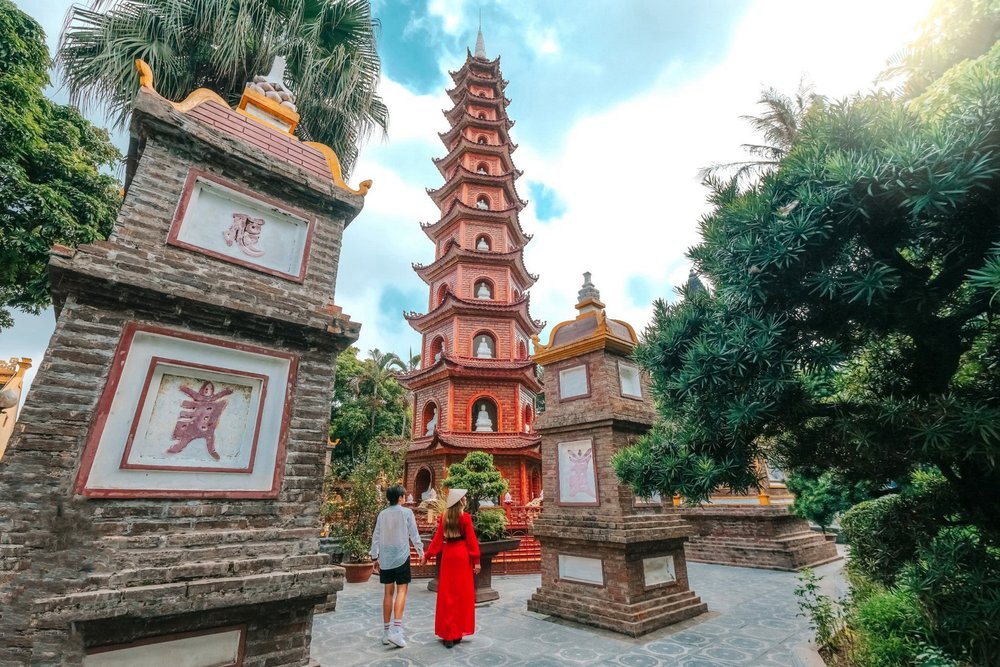
The Tran Quoc Pagoda in Hanoi
Hanoi is the ideal starting point for a north-to-south Vietnam itinerary for 14 days. The capital is chaotic in the best way, with motorbikes weaving through ancient streets, bia hoi (fresh draft beer) corners packed by 5pm, and more lakes, temples, and pagodas than you can cover in a week.
Spend your first morning at Hoan Kiem Lake and the nearby Ngoc Son Temple, then lose yourself in the lanes of the Old Quarter. In the afternoons, visit the Temple of Literature and Ho Chi Minh Mausoleum. Save one evening for a cyclo ride through the Old Quarter and street food crawl; bun cha (grilled pork noodle soup) is the city's signature dish, btw!
Klook tip: If you want to tour around Hanoi stress-free, you can join a full-day Hanoi city tour that takes you to its most popular attractions, such as the Temple of Literature and One Pillar Pagoda, with lunch and transpo included!
Getting to the next stop: Take a private transfer or public bus to Ha Long Bay (about 3.5-4 hours). Most cruise packages include pickup from Hanoi.
Days 4-5: Ha Long Bay overnight cruise

Scenic view of Halong Bay with limestone islands and cruise boats
No two-week Vietnam tour skips Ha Long Bay. The bay's 1,600-plus limestone karsts rising from emerald water are as dramatic in person as in every photo you've seen, and more so at dawn when the mist rolls in and the boats are still quiet.
The best way to see it is on a two-day, one-night cruise. Most itineraries include kayaking through caves, swimming in sheltered lagoons, a cooking class, and sunset drinks on the top deck. Book your Ha Long Bay cruise from Hanoi in advance, especially for travel between October and April.
Getting to the next stop: Cruises typically return to Hanoi by early afternoon on Day 5. From there, take an evening bus or transfer to Ninh Binh (about 2 hours from Hanoi).
Day 6: Ninh Binh

Trang An in Ninh Binh
Ninh Binh is often called "Ha Long Bay on land," and it actually earns that comparison. The same limestone formations that define Ha Long rise here from rice paddies and rivers, with far fewer tourists. It's a natural one-day add-on that most people don't regret.
The highlight is a thung (rowing boat) ride through Trang An, a UNESCO-listed landscape of caves, grottoes, and waterways. Rent a bike to reach Bich Dong Pagoda and the ancient capital of Hoa Lu in the afternoon. The area is quiet and rural, so base yourself in Ninh Binh town or the Tam Coc village area for easy access.
If you want to maximize your one day in Ninh Binh, you can also consider joining a Ninh Binh day tour that takes you to some of the city’s highlights, like Tam Coc, Hang Mua, and Trang An, with a Vietnamese lunch included!
Getting to the next stop: From Ninh Binh, take a bus or train south toward Phong Nha or continue to Hue. A direct bus to Hue takes around 6-7 hours; overnight trains are also an option.
Day 7 (optional): Phong Nha
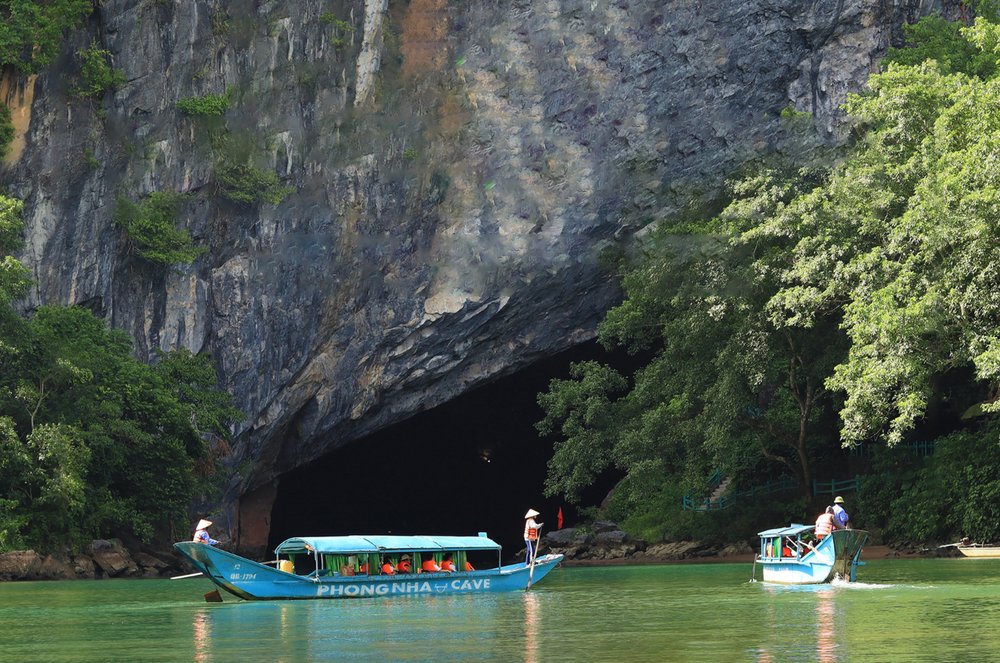
The entrance to Phong Nha cave
Phong Nha is a detour that pays off if you have an extra day to spare on your two weeks in Vietnam. The Phong Nha-Ke Bang National Park is home to some of the world's largest cave systems, including the Son Doong Cave and the easily accessible Paradise Cave and Phong Nha Cave.
A day in the area can mean a boat tour into Phong Nha Cave, a motorbike ride through the national park, or a guided trek into the Dark Cave for zip-lining and mud baths. If you're short on time, skip Phong Nha and use the day to arrive in Hue relaxed rather than rushed.
Getting to the next stop: Bus from Phong Nha to Hue takes around 4-5 hours, depending on the service.
Day 8: Hue
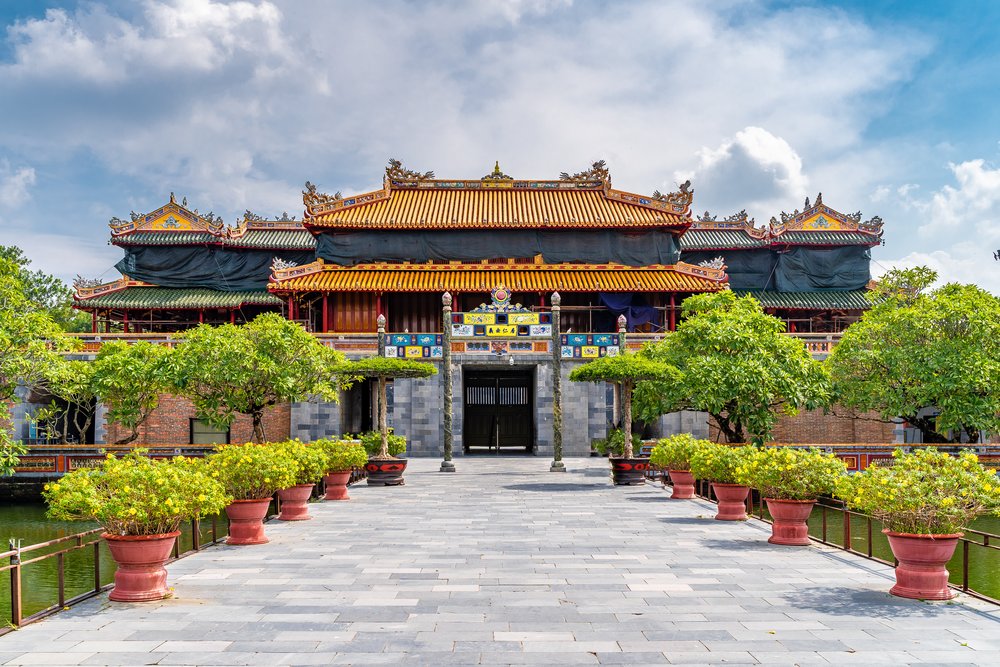
The Imperial City of Hue
Hue was Vietnam's imperial capital for over a century, and the city carries that weight in the best possible way. The Hue Historic Citadel alone could fill a full day: a walled complex of palaces, gates, and temples that served as the seat of the Nguyen dynasty until 1945.
Beyond the citadel, Hue is also known for its good food. Bun bo Hue (spicy beef noodle soup), banh khoai (crispy Vietnamese pancake), and com hen (baby clam rice) are all dishes that originated here and taste better in Hue than anywhere else. The best way to work through them all is on a Hue street food walking tour with a local guide who knows where the good stalls are.
Getting to the next stop: Catch the train or a bus to Hoi An. The Hai Van Pass road between Hue and Da Nang is one of Vietnam's great drives, so consider booking a Hue private tour that takes this scenic coastal route.
Days 9-11: Hoi An
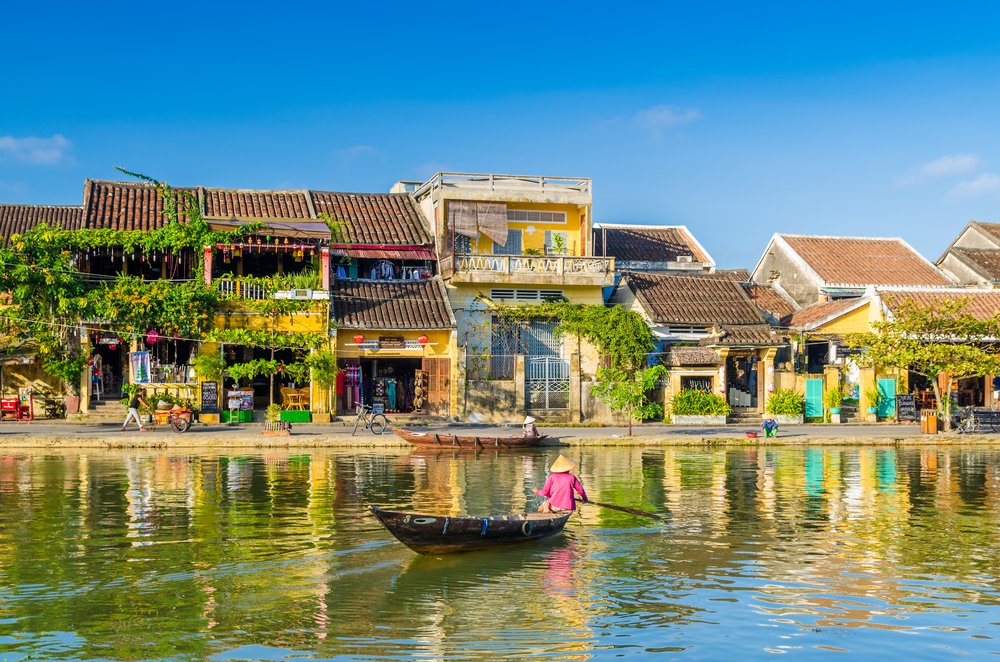
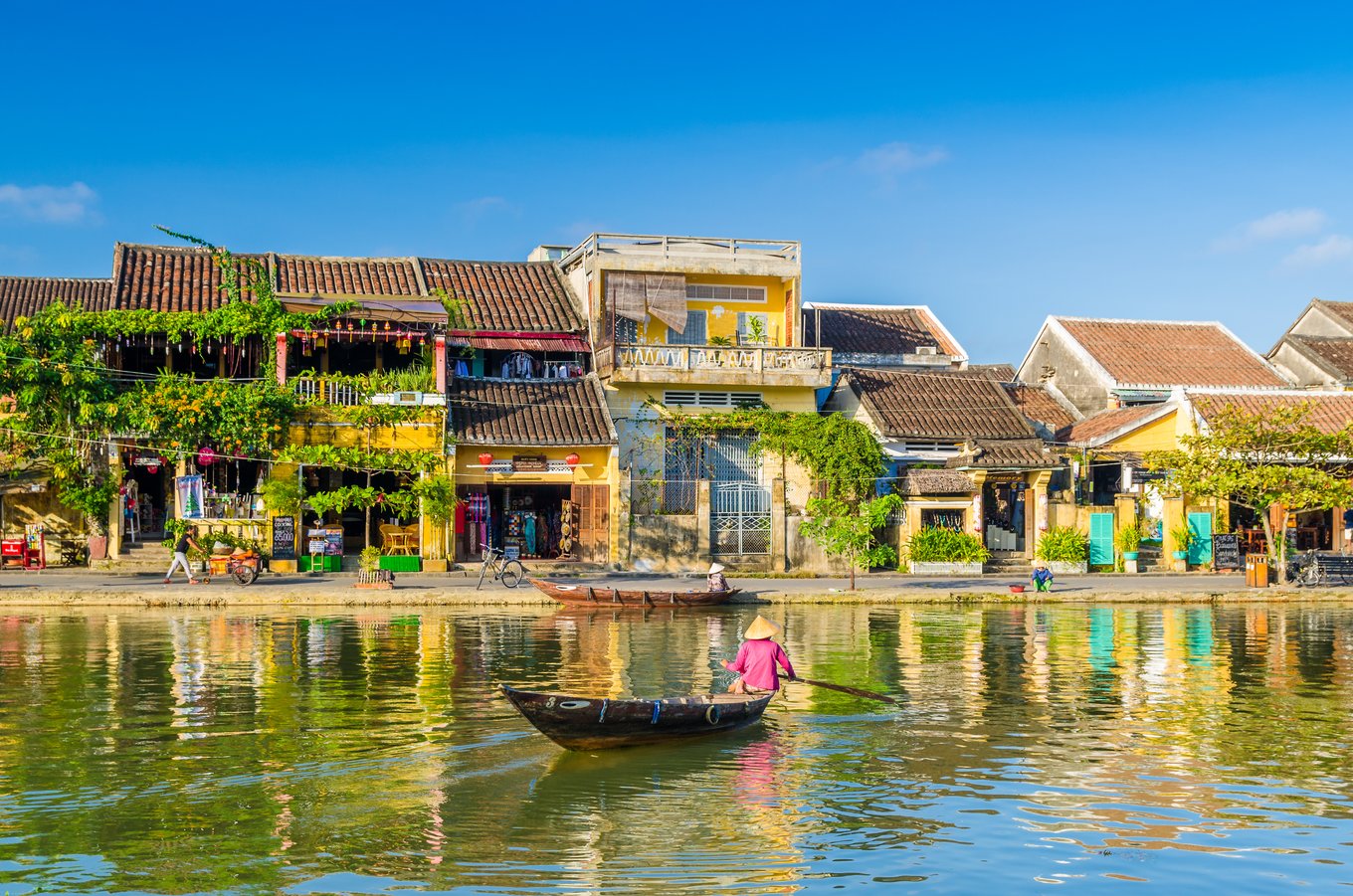
Hoi An, Vietnam
If any stop on the 14-day Vietnam itinerary route earns extra time, it's Hoi An. The Ancient Town is a UNESCO World Heritage Site with beautifully preserved merchant houses, lantern-lined streets, and a tailoring industry that can have a made-to-measure outfit ready in 24 hours.
You can spend your mornings in the town; visit the Japanese Covered Bridge, the Tan Ky Merchant House, and the local market before the tour groups arrive. Afternoons work well for renting a bicycle out to An Bang or Cua Dai Beach, which is about 4 km from the center. In the evenings, you’ll see paper lanterns glow over the canal and night markets fill the streets.
If you want to tour around the city and also try the iconic coconut boat tour experience, you can join this Hoi An city tour that takes you famous spots like the Tan Ky House and Cam Thanh Coconut Village!
Getting to the next stop: Fly from Da Nang to Ho Chi Minh City (about 1.5 hours). Da Nang airport is 30 km from Hoi An; allow 40-50 minutes for the taxi ride.
Days 12-13: Ho Chi Minh City

Ho Chi Minh City, Vietnam
Ho Chi Minh City (still widely called Saigon) is the energetic counterpart of Hanoi: louder, faster, and built around a different kind of energy. It's the economic engine of Vietnam, and the city's pace reflects that.
Two days is enough for the main sights. The War Remnants Museum is the most visited museum in Vietnam and one of the most powerful—its exhibits on the Vietnam War are graphic and unflinching, and no one leaves unchanged. The Reunification Palace, Ben Thanh Market, and the Jade Emperor Pagoda round out a solid city itinerary.
Getting to the next stop: Day tour operators run Mekong Delta departures from HCMC early in the morning. Book the night before or arrange with your hotel.
Day 14: Mekong Delta
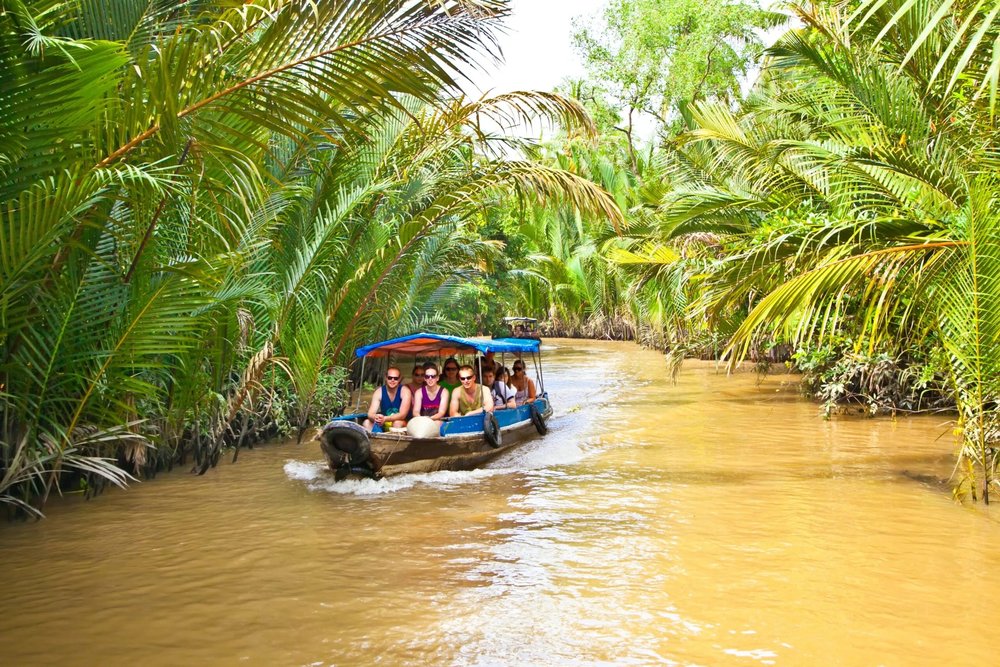
The Mekong Delta River
The Mekong Delta is your final stop on this classic 2-week Vietnam travel itinerary route, and it's a deliberately different kind of day. The landscape here is flat, green, and laced with waterways, which is a world apart from the limestone peaks of the north.
A Mekong Delta tour from Ho Chi Minh City typically includes a boat ride through the river channels and a visit to a floating market. It's a calm, scenic way to end a two-week trip before flying home from HCMC. Most tours return to the city by 5 PM, leaving you time to grab a final bowl of pho before heading to the airport.
FAQs about a two-week Vietnam itinerary
Is 2 weeks enough time to see Vietnam?
Two weeks is enough time to cover the highlights of Vietnam's north-to-south route without feeling like you're rushing. The key is flying to at least two of the major cities rather than relying on buses or trains for every connection.
What is the best route for 2 weeks in Vietnam?
The classic route runs north to south: Hanoi, Ha Long Bay, Ninh Binh, Hue, Hoi An, Ho Chi Minh City, and the Mekong Delta. This order follows the natural geography of the country and means you're always moving in one direction. You can also do the route in reverse (south to north), but most find the north-to-south flow easier to manage logistically, especially with an open-jaw flight.
How much does a 2-week trip to Vietnam cost?
If you’re on a tight budget, you can do a 2-week trip for around $600-$900 USD (excluding international flights), while an average budget is typically $1,500-$2,500 USD on accommodation, transport, food, and activities.
Should I travel Vietnam from north to south or south to north?
Either direction works, but north to south is slightly more popular and often easier to book logistically, especially if you fly into Hanoi and out of Ho Chi Minh City on an open-jaw ticket. Traveling south to north works just as well if you find better flight deals that way. The itinerary in this guide runs north to south, but every section can be reversed without losing anything.
How do I travel between cities in Vietnam in 2 weeks?
The most efficient approach is to use domestic flights for the long legs (Hanoi to Da Nang or Hue, and Da Nang to HCMC) and slower transport like trains or buses for the shorter, more scenic sections. Hanoi to Hue sleeper trains are a good option and can save you a night's accommodation.
More Vietnam travel guides for you


What is Klook?
Klook is a leading pan-regional experiences platform in Asia Pacific, purpose built to digitalize experiences and make them accessible to every traveler.
Our mission is to build the digital infrastructure for the global experience economy — empowering merchants to share their passions and travelers to discover the heartbeat of each destination. We operate a mobile-first, curated platform featuring diverse experiences across global destinations.