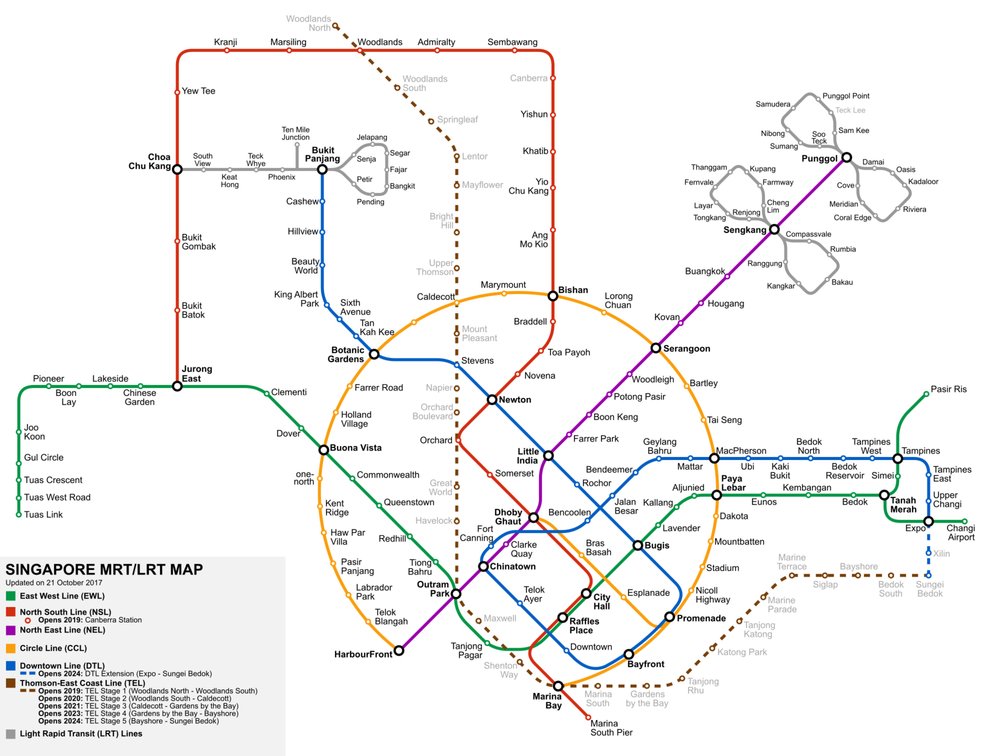
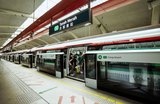
The first time you open the Singapore MRT map, it looks like someone dropped six colored pencils on a table. But once you know which color goes where,
Singapore turns out to be one of the easiest cities for public transport, and the trains are air-conditioned and arrive every few minutes.
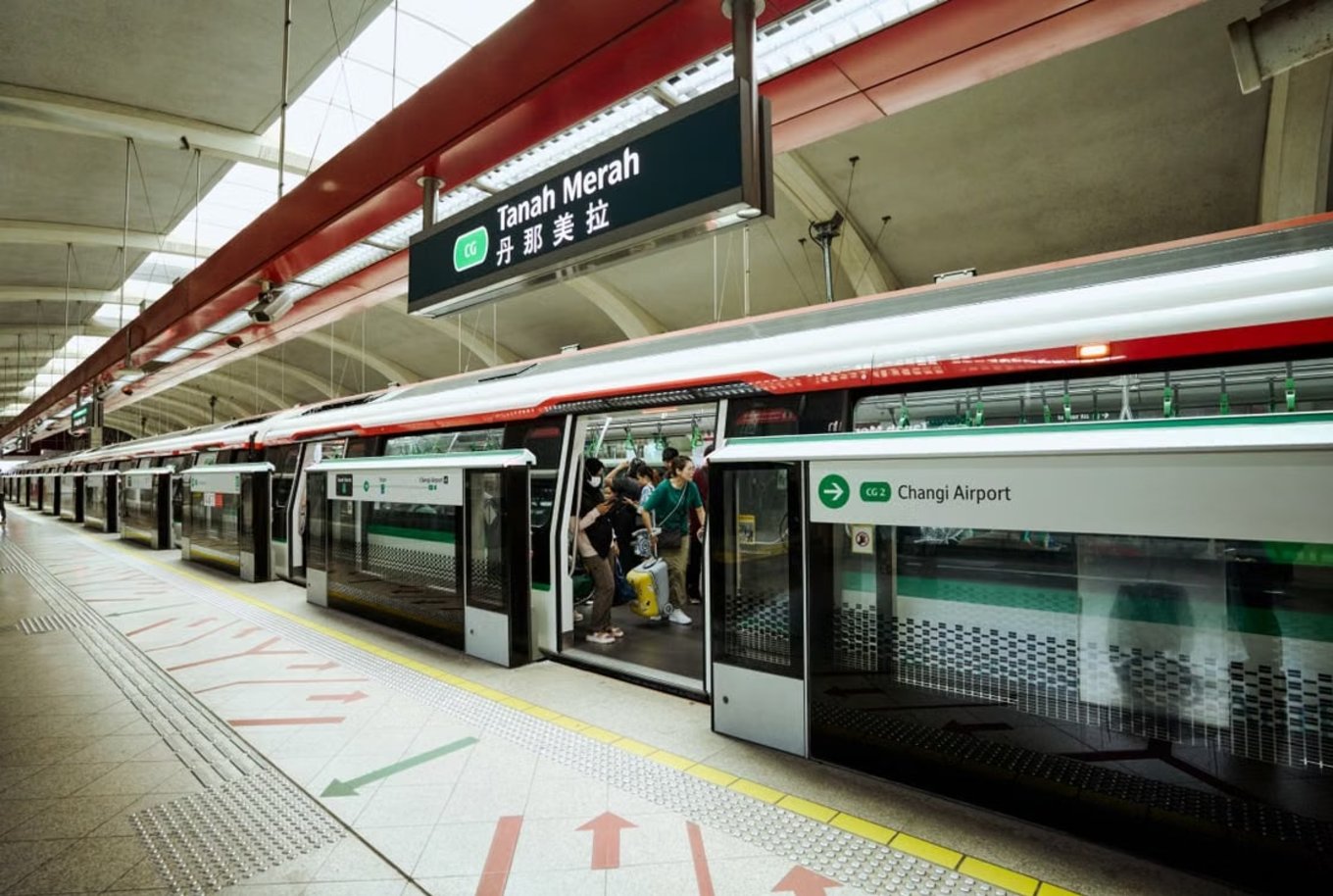
All you have to do is tap your card or phone at the gate, follow the colored signs to your platform, and tap the same card at the exit gate. Singapore public transport charges by distance, so there's no ticket to buy.
This guide covers every line, what you'll pay, how to get in from Changi Airport, and which station to use for the sights you came for. Keep the Singapore MRT map open on your phone while you read.
Tap, ride, repeat: how to ride Singapore public transport
Nervous about the gates? Almost everyone is, for about five minutes. The routine is the same at every station.
Tap in. Hold your contactless card, phone wallet or transit card on the reader at the fare gate.
Transfer if you need to. Follow the colored signs and station codes to your next platform. A transfer doesn't add a charge, because the fare follows your total distance.
Tap out. Use the same card or phone at the exit gate so the system charges the right fare.
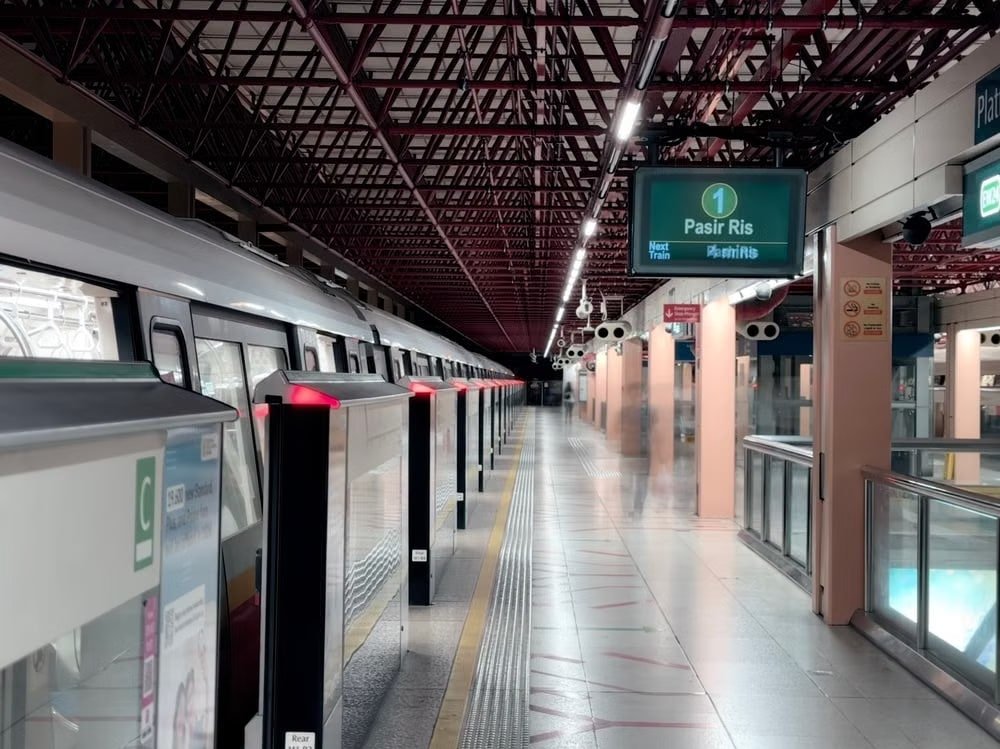
Trains run roughly 5:30am until around midnight. Expect one every 2 to 3 minutes during the 7am to 9am rush and every 5 to 7 minutes the rest of the day.
Klook Tip: Every station has a letter-number code. City Hall is NS25 on the North-South Line and EW13 on the East-West Line, so match codes when the signs get busy.
Singapore MRT lines: six colors and where each one goes
Think of the lines as six colors with one job each. You won't need all six on one trip, and reading the Singapore MRT map gets easier once you know that. Most sightseeing days stick to two or three. Together, the Singapore MRT lines cover more than 140 stations across about 200 km, according to LTA.
Line | Route & Key Details |
|---|
North-South Line (red) | Connects Jurong East in the west with Marina Bay, passing Woodlands, Bishan, Orchard, City Hall and Raffles Place. Key stops: Orchard, Dhoby Ghaut, City Hall, Raffles Place. |
East-West Line (green) | Connects Pasir Ris and Tuas Link, with a branch to Changi Airport. Key stops: Tanah Merah (the airport change), Paya Lebar, Bugis, City Hall, Raffles Place, Outram Park. |
North East Line (purple) | Connects HarbourFront and Punggol via Outram Park, Chinatown, Clarke Quay, Dhoby Ghaut and Little India. HarbourFront is your stop for Sentosa. |
Circle Line (orange) | Loops around the city and links to every other line. It closed its loop on July 12, 2026, when Keppel, Cantonment and Prince Edward Road opened between HarbourFront and Marina Bay. |
Downtown Line (blue) | Connects Bukit Panjang and Expo via Newton, Bugis, Bayfront and Chinatown. Expo is where you change for Changi Airport. |
Thomson-East Coast Line (brown) | Connects Woodlands North and Bayshore via Orchard, Outram Park, Marina Bay and Gardens by the Bay. Three new stations open on December 26, 2026: Bedok South and Sungei Bedok on this line, plus Xilin on the Downtown Line. Sungei Bedok also links the two lines. |
The LRT lines look like squiggles on the map, and they confuse almost every first-timer. Bukit Panjang LRT and Sengkang-Punggol LRT are small feeder loops that run through residential neighborhoods and connect to the MRT. They use the same cards and the same tap, and most sightseeing never touches them.
Singapore MRT fare and how to pay
A Singapore MRT fare runs between SGD 1.28 and SGD 2.57 per ride right now (about USD 1.00 to USD 2.01). Fares work by distance in bands of about 1 km, so a short hop of up to 3.2 km is SGD 1.28, while 10.3 to 11.2 km is SGD 1.90. Transferring doesn't change the price.
Fares rise 7% on December 26, 2026, which adds 12 to 13 cents per adult ride. That makes the range roughly SGD 1.40 to SGD 2.70 (about USD 1.09 to USD 2.11). Paper single-trip tickets were phased out in March 2022, so don't go looking for a ticket machine. USD amounts here are converted at about USD 0.78 per SGD 1 and will shift with the exchange rate.
Here's how most people pay:
Contactless bank card or phone wallet: Nothing to buy or register. Visa, Mastercard, American Express, NETS and phone wallets (Apple Pay, Google Pay) all work. Foreign-issued Visa and Mastercard cards pay an admin fee of SGD 0.60 per day of use, and Maestro and Cirrus cards don't work.
SimplyGo EZ-Link card: Costs SGD 10 (SGD 5 for the card, SGD 5 of travel value), and you top it up in the SimplyGo app or at kiosks and convenience stores. Want a prepaid card before you fly? The
NETS FlashPay travel card is another option.
Singapore Tourist Pass: Costs SGD 17 for one day, SGD 24 for two and SGD 29 for three (about USD 13, USD 19 and USD 23). It covers the MRT, LRT and basic buses, but not the Sentosa Express. Kiosks at Changi Airport Terminals 2 and 3, Bugis, HarbourFront and Orchard stations sell it.
At SGD 1.28 to SGD 2.57 a ride, you'd need roughly 7 to 13 rides in a single day to beat the one-day price. Most days won't add up to that many rides, so a contactless card is usually cheaper. The pass makes sense if you hate thinking about fares or you're packing a day full of stops.
Klook Tip: Tap in and out with the same card or the same phone wallet every time. Switching halfway means the system can't match your trip.
Changi Airport MRT: from the airport to the city
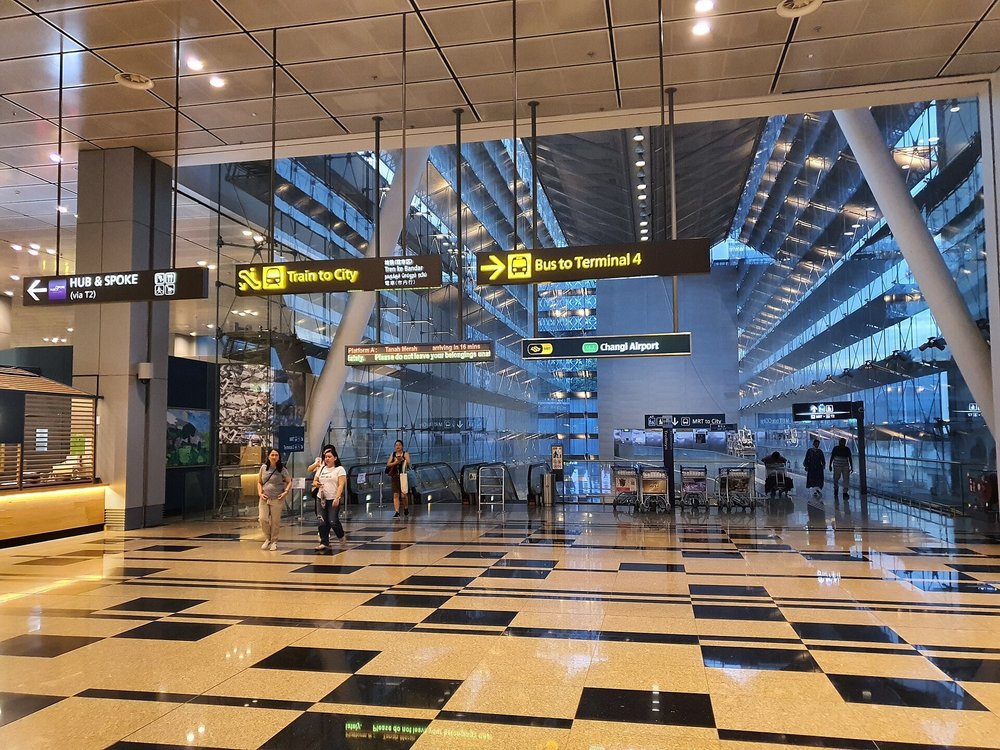
Landing late and wondering how to get downtown? The Singapore MRT airport to city route is simple and cheap. The Changi Airport MRT station sits in the basement of Terminals 2 and 3, with escalators and elevators up to the arrival and departure halls.
Take the train to Tanah Merah, about 7 minutes away, then change to the westbound East-West Line toward Tuas Link. Expect roughly 35 to 45 minutes to Raffles Place and 45 to 55 minutes to Marina Bay Sands. The ride stays under the SGD 2.57 top fare, and the SMRT journey planner gives exact timings.
Prefer the Downtown Line? Change at Expo instead, and you can ride straight to Bayfront or Chinatown.
The first train from Changi Airport is at 5:31am Monday to Saturday and 5:59am on Sundays and public holidays. The last westbound connection leaves at 11:18pm, so book a taxi or transfer if your flight lands after that. Our
airport transfer guide covers the other options.
Where the Singapore MRT takes you
Pick your sights first, then work backward to the station. Here's the nearest stop and line for the places you'll probably want to see. For more things to do, browse
Singapore experiences.
Marina Bay and Marina Bay Sands
Marina Bay is where the skyline photo happens.
Marina Bay Station is a three-line interchange (North-South, Thomson-East Coast and Circle), so it's a handy place to change trains.
For the
Marina Bay Sands Skypark ticket, get off at Bayfront instead, which connects straight into the Marina Bay Sands complex. It's a big station with long underground walkways, so follow the signs rather than the nearest staircase.
Nearest stations: Marina Bay (NS27/TE20) and Bayfront (DT16)
Lines: North-South, Thomson-East Coast, Circle, Downtown
Gardens by the Bay
Gardens by the Bay has two stations, and the right one depends on where you're starting. Gardens by the Bay station (TE22) is on the Thomson-East Coast Line, and Exit 1 leads toward the gardens. From Orchard, that's a direct ride with no change.
Bayfront works too: take Exit B, follow the underground linkway and cross the Dragonfly Bridge or Meadow Bridge. Neither station drops you at an attraction door, so expect a walk once you're out. Check which attractions each
Gardens by the Bay ticket option includes.
Nearest stations: Gardens by the Bay (TE22) and Bayfront (DT16)
Lines: Thomson-East Coast, Circle, Downtown
Chinatown
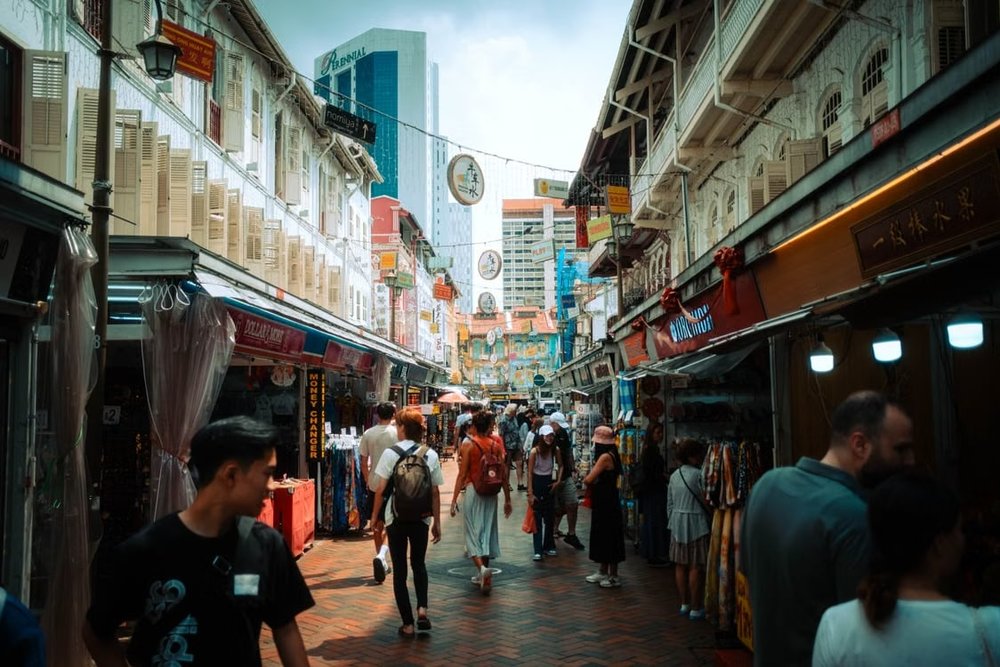
Chinatown is a good first evening, with heritage shophouses, temples and hawker food all within walking distance of the exits. Take
Chinatown station (NE4/DT19), which sits on both the North East and Downtown lines. From Bayfront it's three stops on the Downtown Line.
It gets crowded on weekend evenings, so go earlier if you want room to wander. These
local sightseeing tips can help you decide what to do nearby.
Orchard Road
Orchard Road is the shopping street, and it's long, so choose your station by the mall you want. Orchard station (NS22/TE14) covers the west end, while Somerset and Dhoby Ghaut serve the east end. Weekend afternoons get packed, so weekday mornings are calmer.
Nearest stations: Orchard (NS22/TE14), Somerset, Dhoby Ghaut
Lines: North-South, Thomson-East Coast (plus North East and Circle at Dhoby Ghaut)
Sentosa and Universal Studios Singapore
Sentosa needs one extra hop. Take the North East or Circle Line to HarbourFront (NE1/CC29), leave through Exit E to VivoCity, and board the Sentosa Express on level 3. Resorts World station, one stop later, is the one for Universal Studios.
Nearest station: HarbourFront (NE1/CC29), then Sentosa Express to Resorts World
Lines: North East, Circle
FAQs about Singapore MRT map
How many MRT lines are there in Singapore?
Singapore has six MRT lines: North-South, East-West, North East, Circle, Downtown and Thomson-East Coast. Two LRT feeder systems, Bukit Panjang and Sengkang-Punggol, run alongside them. The Circle Line closed its loop in July 2026, and three more stations open on December 26, 2026.
How much does the Singapore MRT cost?
An adult card fare is SGD 1.28 to SGD 2.57 per ride right now (about USD 1.00 to USD 2.01), depending on distance. Fares rise by 12 to 13 cents from December 26, 2026, so the range becomes roughly SGD 1.40 to SGD 2.70. Transfers don't add a charge, so a trip with two changes costs the same as a direct trip of the same distance.
What is the best way for tourists to pay for the MRT?
A contactless bank card or phone wallet is the easiest option for most trips. There's nothing to buy or top up, and you don't need to register. If you'll ride a lot, compare it with the Singapore Tourist Pass, which starts at SGD 17 (about USD 13) for one day.
Can I use a contactless credit card on the Singapore MRT?
Yes, Visa, Mastercard, American Express and NETS contactless cards all work at the gates. Foreign-issued Visa and Mastercard cards pick up an admin fee of SGD 0.60 for each day you use them, and your own bank may add fees too. Turn on overseas use before you fly, because Maestro and Cirrus cards won't work.
What time does the Singapore MRT start and stop running?
Most trains run about 5:30am until around midnight every day. Hours often stretch during festive periods, and first and last trains vary by station and direction. Check the MyTransport app before a late night out.
How do I get from Changi Airport to the city by MRT?
Take the train from Changi Airport station, change at Tanah Merah and ride the westbound East-West Line toward the city. Expect 35 to 45 minutes to Raffles Place. You can also change at Expo for the Downtown Line, which runs to Bayfront and Chinatown.
Which MRT station is closest to Gardens by the Bay?
Gardens by the Bay station (TE22) on the Thomson-East Coast Line is the one named after it, and Exit 1 leads toward the gardens. Bayfront (DT16) works too: take Exit B, follow the underground linkway and cross the Dragonfly Bridge or Meadow Bridge. Bayfront is the easier pick if you're also visiting Marina Bay Sands.
Ready to ride?
Here's a first day that works: tap in at Orchard after a morning of shopping, ride the Thomson-East Coast Line straight to Gardens by the Bay, and stay for the evening light.
Get your NETS FlashPay card or Tourist Pass sorted before you land, keep the Singapore MRT map handy, then open the
3D2N Singapore itinerary to plan the rest of your days.
More Singapore travel guides for you
What is Klook?
Klook is a leading pan-regional experiences platform in Asia Pacific, purpose built to digitalize experiences and make them accessible to every traveler.
Our mission is to build the digital infrastructure for the global experience economy — empowering merchants to share their passions and travelers to discover the heartbeat of each destination. We operate a mobile-first, curated platform featuring diverse experiences across global destinations.