
Art and history lovers, this one’s for you! 🎨
Everyone knows that the Sagrada Familia is a must-see in Barcelona, but most first-time travelers only scratch the surface when visiting Gaudí’s unfinished masterpiece. The soaring spires, dazzling stained glass, and intricate façades get plenty of attention (and rightfully so), but step inside and you’ll discover details that many visitors walk right past.
This guide highlights what you shouldn’t miss inside the Sagrada Familia to help you make the most of your visit, so keep reading for more.
Klook Tip: Modest attire is required (no sleeveless tops or short shorts) inside the cathedral, so plan those OOTDs accordingly! Flip-flops and hats (unless for medical or religious reasons) are also not permitted inside.
1. Start With the Forest
One of Gaudí’s most brilliant ideas was to design the basilica’s interior to feel like a forest. The tall, branching columns represent tree trunks, while the ceiling mimics a leafy canopy that scatters natural light across the nave.
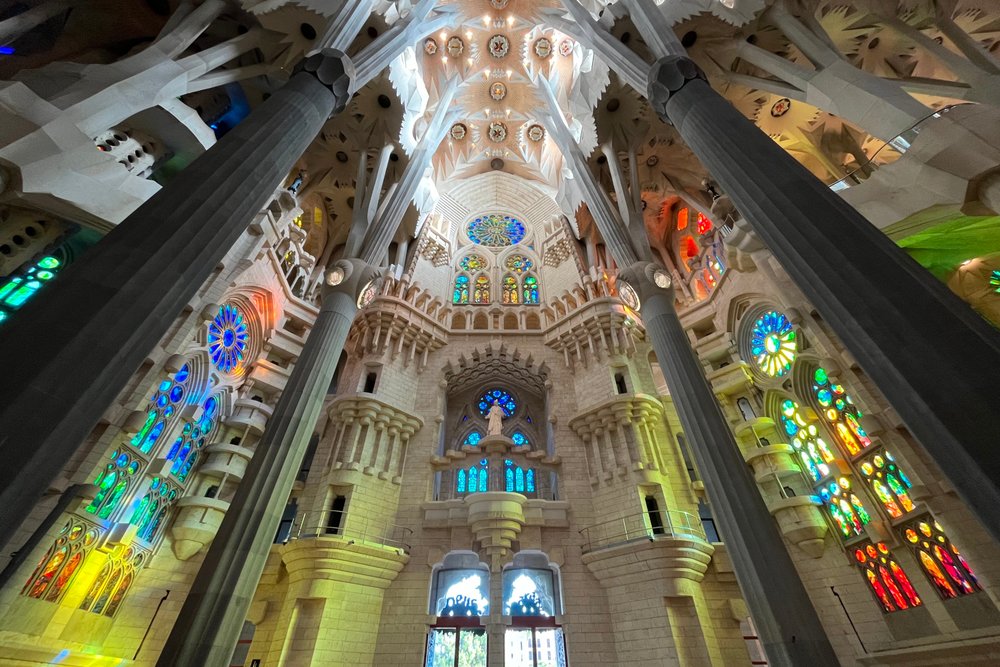
The Sagrada Familia features elaborate nature-inspired Gothic architecture
The subtle shift of light from the stained glass changes throughout the day, so morning and late afternoon visits feel completely different. If you want to experience this light show in its full spectrum, plan ahead with Sagrada Familia tickets. Securing a timed entry in the late afternoon lets you catch the golden glow that floods the nave from the west-facing stained glass windows.
How to get there: Metro L2 or L5 to Sagrada Família station leaves you right outside. Buses also stop nearby.
2. The Symbolism in the Stained Glass
The kaleidoscope windows aren’t just decorative. Gaudí carefully chose colors and placement to represent different aspects of the Christian faith.
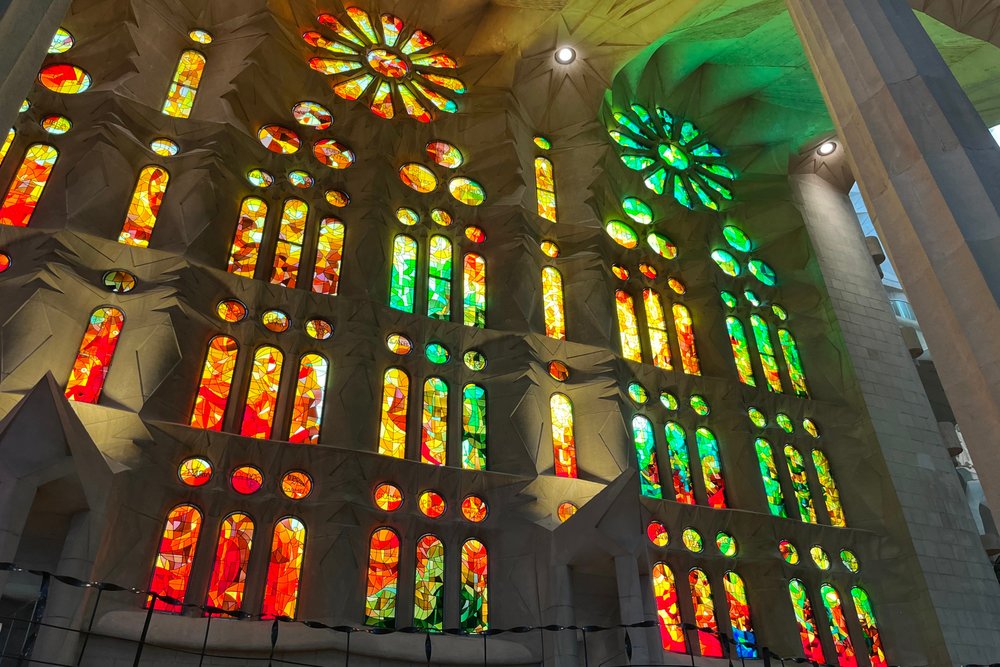
The colors of the stained glass symbolize the beginning and end of Christ’s life
On the eastern side, the Nativity façade, bathed in morning light, features blues and greens that symbolize dawn, creation, and the birth of Christ
By contrast, the western Passion façade is lit by the setting sun, which shines through reds and oranges, representing sacrifice, the end of life, and Christ’s Passion. This play of light transforms the interior into a living narrative of birth and death, one that shifts as the day progresses.
If you’d like someone to unpack the symbolism further, a Sagrada Familia Guided Tour can bring these details to life. Guides often point out connections between Gaudí’s architectural choices and his deep spirituality, which isn’t always clear without context.
3. Don’t Skip the Museum
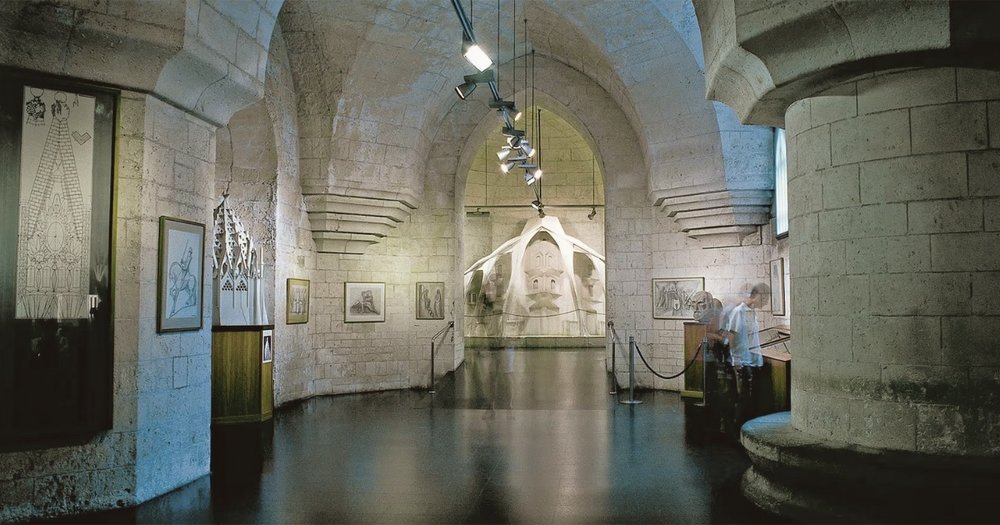
The museum gives you behind the scenes access to the history behind the construction of the Sagrada Familia (which is ongoing to this day), Photo Credit: spain.info
Tucked beneath the basilica is a small but fascinating museum that most travelers overlook. Here you’ll find Gaudí’s original plaster models, sketches, and even photographs from the earliest construction phases in the late 1800s. It’s a behind-the-scenes look at how La Sagrada Família evolved through the decades.
If you’re curious about why the project has taken so long and how new technology is finally speeding things up, this is where you’ll get answers. Apart from the museum, the area outside the grand church is also noteworthy. If you’re interested in a Sagrada Familia tour that starts at the Avinguda de Gaudí, the quaint street outside the cathedral that connects it with another historical landmark (more on that later), then check it out below.
4. The Nativity and Passion Towers
While many visitors are content to admire the spires from outside, climbing one of the towers gives you a completely different perspective.
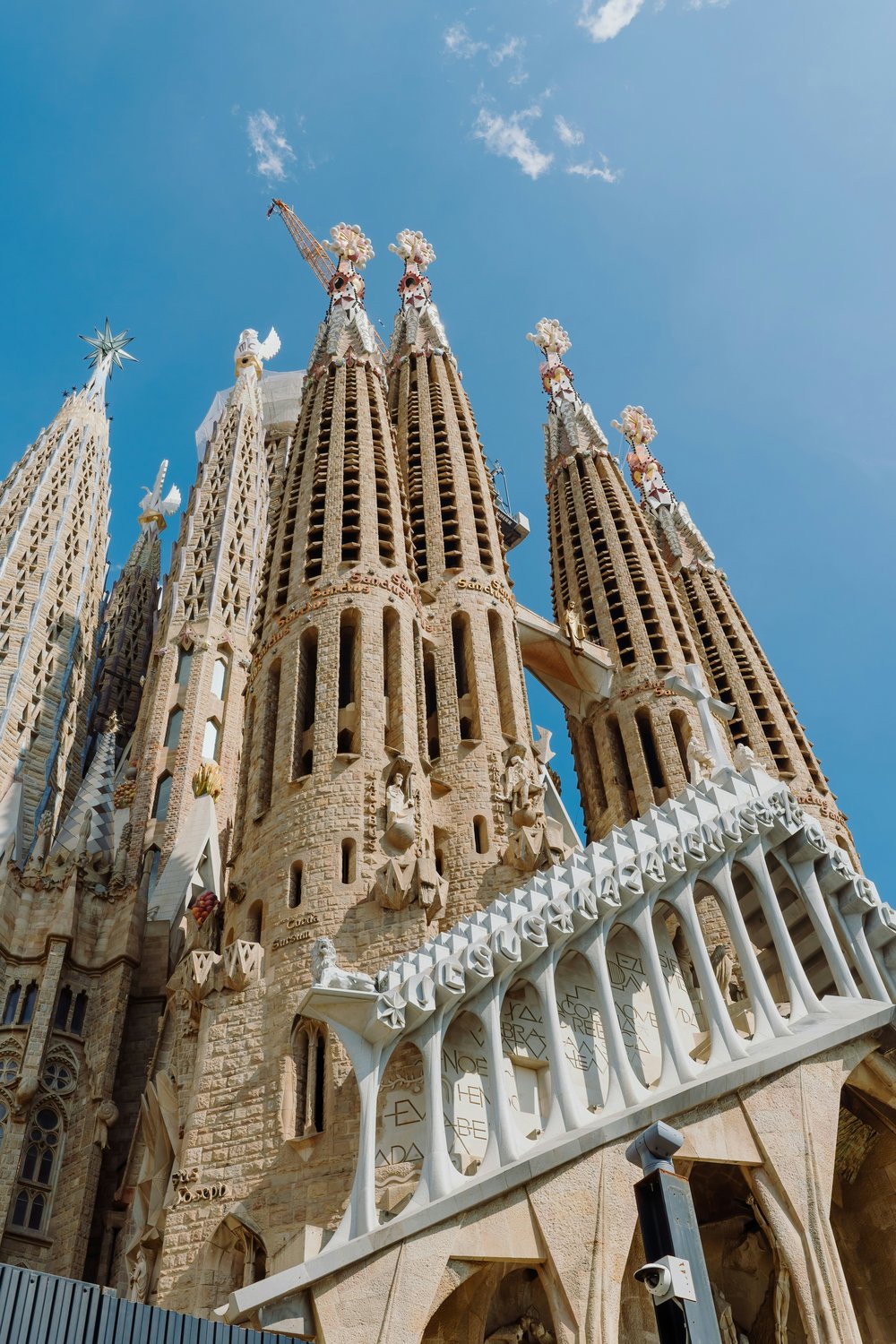
Upon completion, the Sagrada Familia will have 18 towers — each dedicated to a major biblical figure. Currently, 8 towers have finished construction. Photo Credit: Pourya Gohari on Unsplash
To access these towers (visitors are only allowed entry into the Nativity Towers and the Passion Towers), you’ll take a combination of an elevator ride up and a narrow spiral staircase down. Don’t forget to have your cameras charged! 📸 The Nativity Towers provide views toward the old city and the Mediterranean Sea, while the Passion Towers look out over the modern grid of the Eixample district and Montjuïc Hill.
Gaudí designed the interior staircases to resemble seashells, a detail rooted in his interest in natural geometry. Tower access requires an add-on to your Sagrada Familia tickets. Book early if you want to go up, as slots often sell out days ahead.
5. The Altar and Crypt
At the heart of the basilica lies the high altar, covered by a canopy-like baldachin that resembles grapevines and wheat, representing the Eucharist.
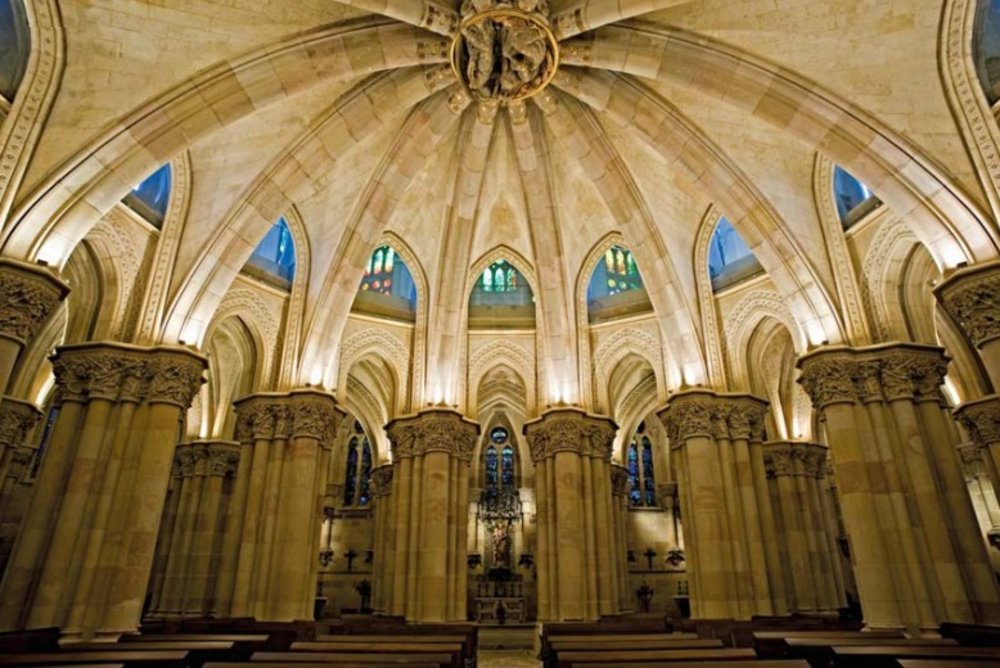
Gaudi is laid to rest at the crypt at the Sagrada Familia, Photo Credit: Sagrada Familia Official Website
Beneath the altar is the crypt, one of the oldest parts of the church, where mass is still held. It is also where Gaudí was laid to rest in 1926 after his sudden death. The crypt is only open for a limited time during the day, but knowing the architect rests beneath his life’s work adds a deeper historical layer to the visit.
Klook Tip: If you’re interested in attending a mass service during your trip, international masses are held at the main altar every Sunday at 9AM and every Saturday at 8PM. The masses are free of charge, but seats are limited so come as early as you can!
Joining a Walking Tour with Sagrada Familia Experience can help you appreciate these historical connections. Many tours also include a stroll past nearby Hospital de Sant Pau, another UNESCO site with modernist architecture that complements Gaudí’s vision.
For a Full-Day Experience ☀️
If you have extra time in Barcelona and want to see more than just the basilica, consider combining your visit with a trip to Montserrat, a mountain range about an hour’s drive away via car.
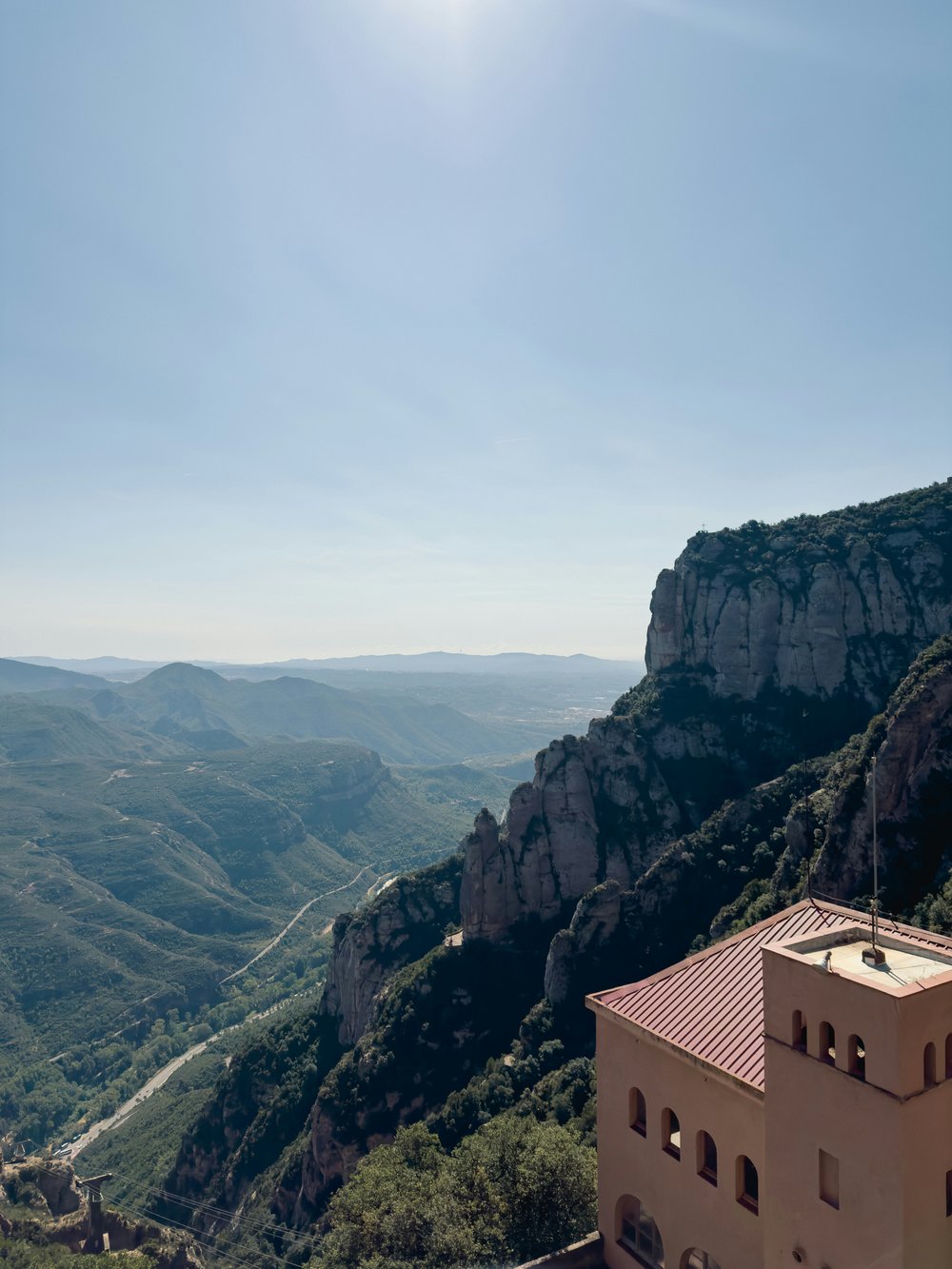
Views from the Montserrat Mountains, Photo Credit: Nate Holland on Unsplash
Montserrat is home to the Benedictine monastery of Santa Maria de Montserrat, founded in the 11th century. The site is famous for its Black Madonna statue, a revered icon that attracts pilgrims from around the world.
A Sagrada Familia & Montserrat Full-Day Tour takes you inside the basilica in the morning, then out to the mountains to explore the monastery and sweeping views. It’s a great option if you’d prefer not to juggle separate transport arrangements, since round-trip transportation is included.
Take your time at the Sagrada Familia
Visiting the Sagrada Familia isn’t just about checking a famous landmark off your list: It’s about slowing down and admiring one of the most famous and unique pieces of architecture in the world. Whether you explore on your own with a timed ticket, join a guided walk for deeper insight, or extend your day to Montserrat, there are countless ways to make your experience unforgettable.
So next time you’re in Barcelona, step inside la Sagrada Família with fresh eyes. Take it slow and let this unfinished work of art (literally) amaze you. ✨
FAQs
Will Sagrada Familia ever be finished?
Yes, the main structure of the church is slated for completion in 2026 to commemorate Gaudí’s 100th death anniversary. The construction of additional decorative elements and ornamentation may extend up until the 2030s, however.
Why was the Sagrada Familia destroyed?
It wasn’t fully destroyed, but parts of Gaudí’s workshop and original plans were damaged during the Spanish Civil War in 1936. Reconstruction since then has relied on surviving models and modern technology.
Why is Sagrada Familia so famous?
It’s not only Gaudí’s most ambitious work but also one of the world’s most unique religious buildings, blending Gothic and modernist styles. Its scale, symbolism, and ongoing construction make it a global icon.
Can you wear jeans to La Sagrada Familia?
Yes, jeans are allowed as long as they’re modest. The dress code mainly restricts sleeveless tops, short shorts, and overly revealing clothing.
What is Klook?
Klook is a leading pan-regional experiences platform in Asia Pacific, purpose built to digitalize experiences and make them accessible to every traveler.
Our mission is to build the digital infrastructure for the global experience economy — empowering merchants to share their passions and travelers to discover the heartbeat of each destination. We operate a mobile-first, curated platform featuring diverse experiences across global destinations.
✨ Follow us for more deals and inspiration for your upcoming travels