Planning a trip to Barcelona? Few buildings on Earth can prepare you for what it's like to stand in front of Sagrada Família. It's not just a church. It's a 140-year construction project, a spiritual statement, and one of the most complex architectural undertakings in human history, all rolled into one impressive building in the middle of Spain.
The facts about Sagrada Família go far deeper than its famous spires. There are stories of obsession, tragedy, centuries of craftsmanship, and a vision so ambitious it still isn't finished. If you're heading there soon or just endlessly fascinated by the place, this is the deep-dive you've been looking for.
1. Construction started in 1882 (and it's still going!)
Sagrada Família has been under construction for over 140 years. Work began on March 19, 1882, under architect Francisco de Paula del Villar, who resigned just a year later. Antoni Gaudí took over in 1883, and the project would consume the rest of his life.
What makes this one of the most extraordinary facts about Sagrada Família is the sheer scale of the commitment. Multiple generations of architects have carried Gaudí's vision forward, and the basilica is still being built today, with completion now expected around 2026.
2. It's entirely funded by visitor ticket sales
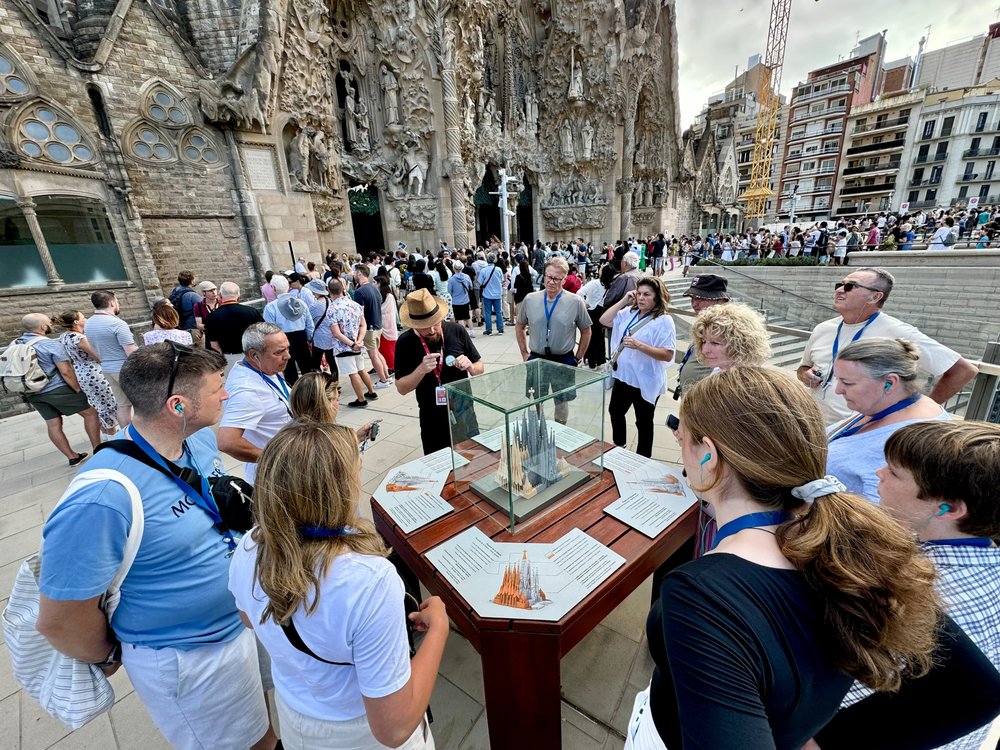
Learning about the history of Sagrada Familia
There's no government grant, no private endowment, no single billionaire behind Sagrada Família. The entire construction project is self-funded through ticket revenue from visitors. Every ticket sold directly contributes to the next phase of the build.
This makes it genuinely one of a kind among major religious buildings in the world. It also means booking your Sagrada Família entry isn't just sightseeing, you're literally funding one of the most ambitious architectural projects still in progress.
3. Gaudí is buried inside the basilica
Antoni Gaudí died in 1926 after being struck by a tram in Barcelona. He was 73 and had devoted the last 43 years of his life almost entirely to Sagrada Família. He was buried in the crypt beneath the basilica, in a chapel dedicated to Our Lady of Mount Carmel.
His tomb is still there and open to tourists. In the context of Sagrada Família history, it's a quietly moving detail, the man who gave everything to the building never saw it anywhere near finished, and yet he rests inside it still.
Klook Tip: Book a guided tour to make the most of your visit. The history and art of Sagrada Família tour covers Gaudí's story, the architecture, and the symbolism in a way that completely changes how you see the building.
4. The 18 towers each represent a specific religious figure
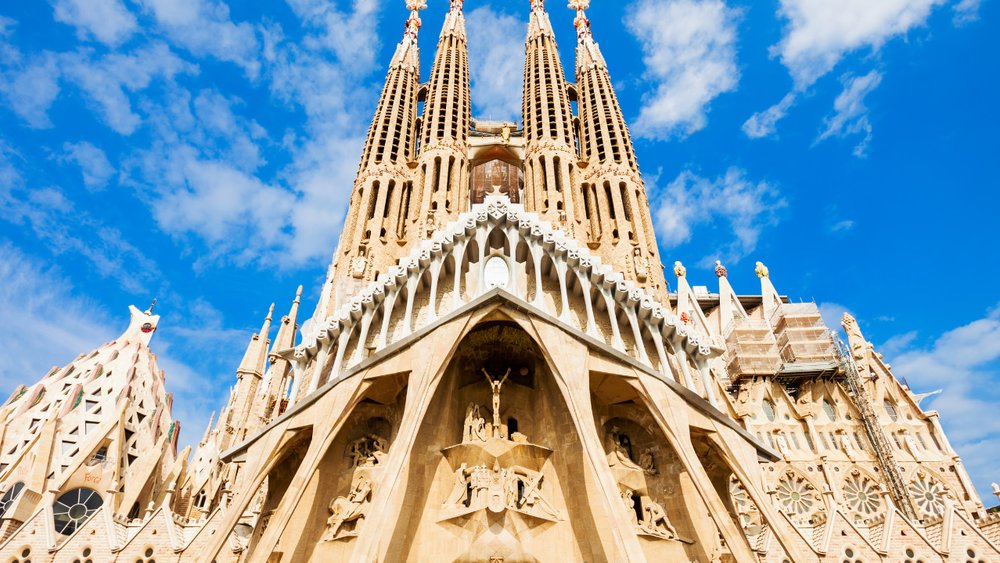
Sagrada Familia towers
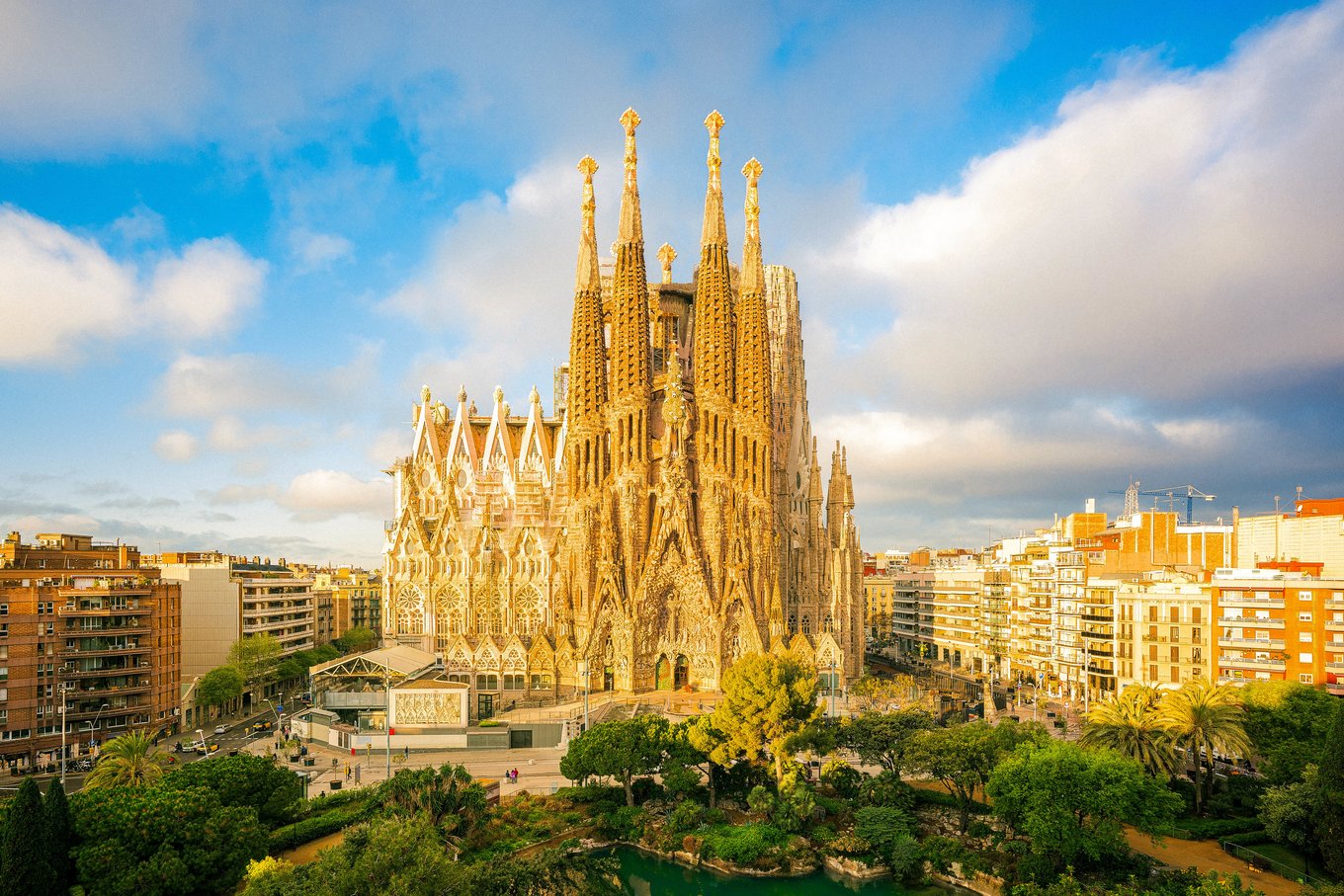
One of the most striking Sagrada Família architecture facts is that none of the towers are random. Each one represents a specific figure in Christian theology. The 12 shorter towers represent the Apostles. Four taller towers represent the four Evangelists. One tower is dedicated to the Virgin Mary.
And the tallest of all, the central Tower of Jesus Christ, which will reach 172.5 meters once complete, is designed to be the crowning point of the entire building.
5. The building's height is symbolically capped
This is one of those Sagrada Família facts that reveals just how deeply Gaudí put meaning into every decision. The Tower of Jesus Christ is designed to reach exactly 172.5 meters, just one meter shorter than Montjuïc, the natural hill overlooking Barcelona.
Want a different perspective of the city? The Montjuïc Cable Car gives you breathtaking views over Barcelona and takes you to the hill that inspired the height of the Sagrada Família’s tallest tower
Gaudí's reasoning was theological: human creation should always be humbled by God's natural world. It's the kind of detail that makes Sagrada Família something more than architecture, it's a built argument about faith, nature, and humility.
6. Light is one of the building's main design materials
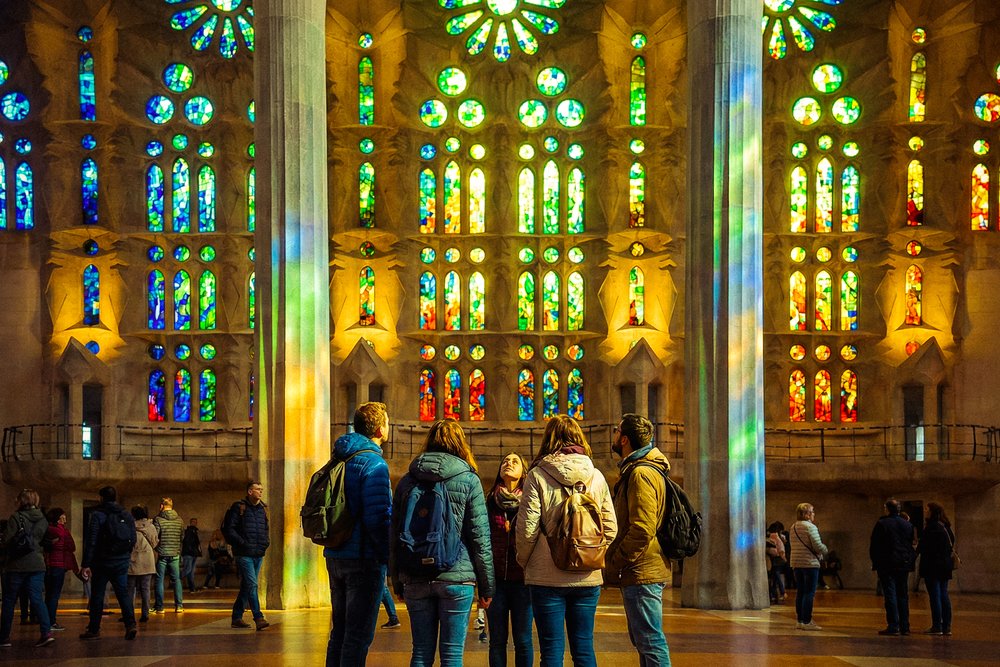
Visitors admire the colorful stained-glass windows inside the Sagrada Família in Barcelona
Walking inside Sagrada Família, you're immediately hit by color. The stained-glass windows, blues and greens on one side, ambers and reds on the other, flood the interior with light that shifts throughout the day. This wasn't accidental. Gaudí designed the orientation of the building specifically to control how sunlight moves through the space.
The east-facing windows use cool tones to bathe the nave in morning light. The west-facing windows cast warm colours in the afternoon. It's one of the most remarkable Sagrada Família interior facts, and the lights and shadows of the Sagrada Família tour is the best way to experience it with an expert guide who explains exactly how this all works.
7. Gaudí used nature as his primary blueprint
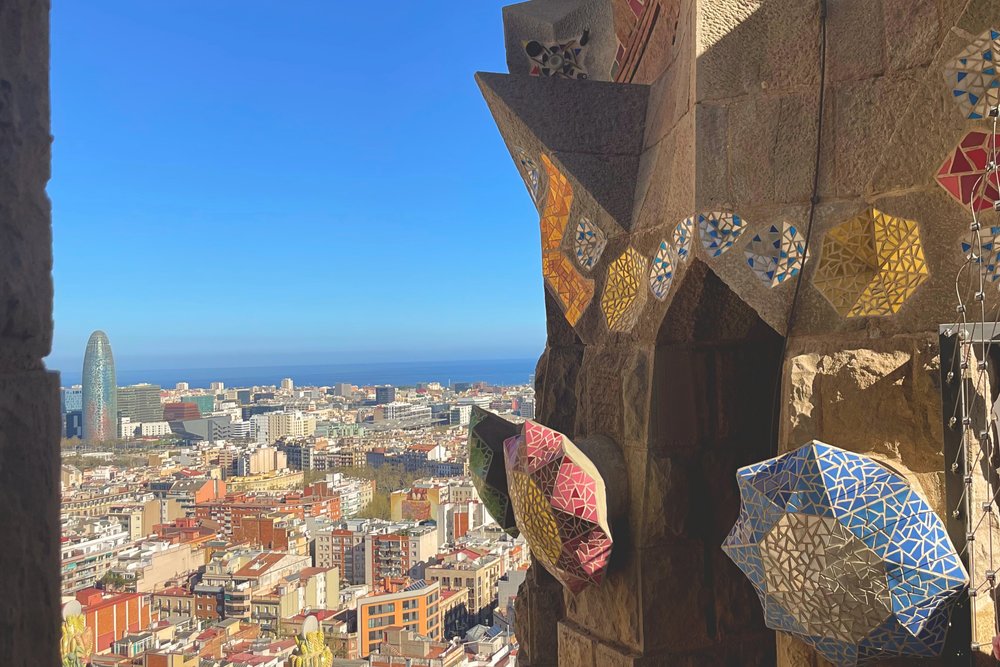
Colorful mosaic details of Sagrada Familia
Gaudí rejected straight lines. He studied tree trunks, bones, seashells, and coral to understand how natural structures carry weight and resist force. The result is Sagrada Família's interior forest of branching columns, which spread at the top like canopies to distribute the load of the roof without needing external supports.
This is one of the most important Sagrada Família architecture facts because it explains why the building looks like nothing else. Where other Gothic cathedrals rely on flying buttresses to hold up thin walls, Sagrada Família supports itself entirely from within, more like a living organism than a stone structure.
8. Gaudí's original plans were partially destroyed in 1936
The Spanish Civil War left a permanent mark on Sagrada Família's history. In 1936, anarchists set fire to Gaudí's workshop, destroying many of his original drawings, plaster models, and blueprints. It was a significant loss, and a genuine threat to the project's future.
Architects pieced together what they could from surviving fragments, photographs, and Gaudí's published writings. Modern construction has relied heavily on computer modelling to interpret his intentions from incomplete records.
It's one of the more sobering Sagrada Família construction facts, the building you see today is partly a reconstruction of a vision that almost disappeared entirely.
9. There are three facades, each telling a different story
Sagrada Família has three main facades, and each one focuses on a different part of the story of Jesus Christ. The Nativity Facade, which Gaudí personally oversaw, is dense with joyful natural imagery: plants, animals, and children celebrating the birth of Christ. The Passion Facade, completed later, is stark and angular by design, representing suffering and death.
The Glory Facade (still under construction) will eventually be the main entrance and represent the path to God. Sagrada Família history is literally written in stone across these three faces, and each one rewards close attention.
10. The towers offer views across all of Barcelona
Climbing the towers of Sagrada Família is a different experience from looking at it from the street. The Nativity Tower gives you sea and city views, while the Passion Tower looks out over the grid of the Eixample neighborhood. It's where you can also spot Recinte Modernista de Sant Pau, another landmark of Barcelona's Modernisme era, just a short walk away.
Sagrada Familia tower access is included with most ticket options but sells out fast, so book in advance. The views are worth it, and the scale of the building only really hits you when you're looking down at the street from above.
Klook Tip: Tower access is limited to a set number of visitors per session. Book as early as possible, especially if you're visiting in peak season, as these slots go quickly.
11. Gaudí spent his final years sleeping on-site
By the time Gaudí was in his 60s, he had largely withdrawn from other work and was devoting himself full-time to Sagrada Família. He lived simply, and in his final years he was reportedly sleeping in the workshop on-site. He became such a regular presence in the neighborhood that locals knew him by sight.
When he was struck by the tram in 1926, he was initially unrecognised, mistaken for a beggar due to his worn clothes, and taken to a public ward. It wasn't until friends came looking for him that he was identified. For a man of Gaudí's reputation, it's a detail that speaks to how completely the building had absorbed him.
12. Casa Batlló is part of the same extraordinary legacy
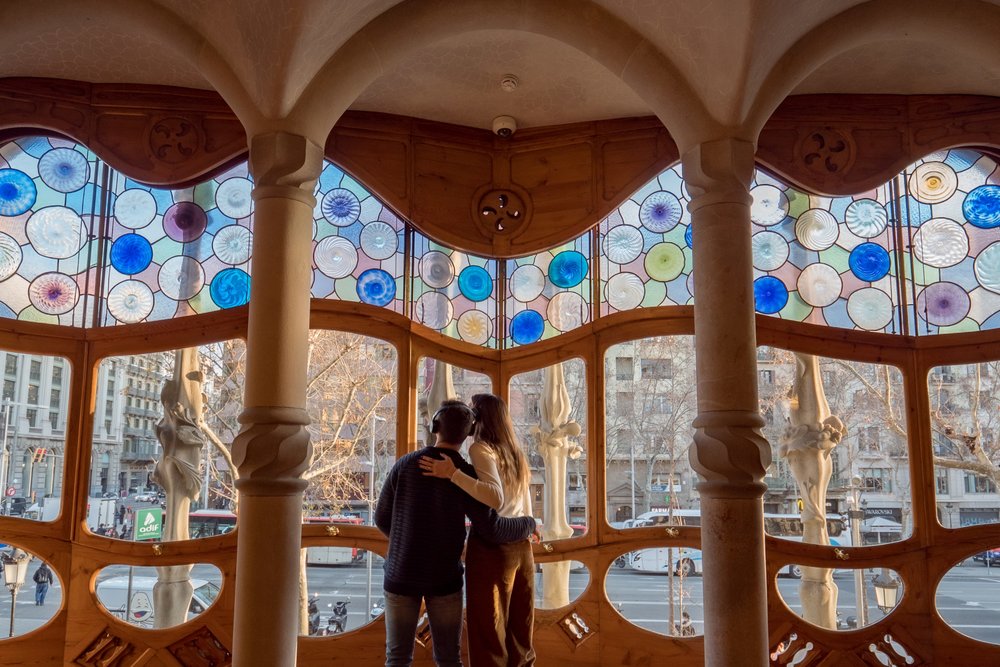
Visitors admire Casa Batlló’s stained-glass gallery overlooking Passeig de Gràcia in Barcelona
Sagrada Família is Gaudí's masterpiece, but it's not his only one. A short metro ride away, Casa Batlló is another peak of his career, a residential building on Passeig de Gràcia that looks like it's been pulled from a dream. The undulating facade, dragon-spine roof, and bone-like balconies make it unmistakably Gaudí.
Visiting both on the same trip gives you the full picture of his architectural vision. If you're already in Barcelona for Sagrada Família, adding a Casa Batlló tour to your itinerary makes the entire visit richer.
13. Completion is done, but it's already a UNESCO World Heritage Site
Here's one of the more surprising facts about Sagrada Família: it was granted UNESCO World Heritage status in 2005, despite being unfinished. That's how significant it's considered, not just for Spain, but for world architecture.
The full completion of the basilica, with all 18 towers standing, is expected around 2026. When it's done, it will be the tallest church building in the world. It will also mark the end of a 140-year project unlike anything attempted before or since.
Klook Tip: Sagrada Família sells out regularly, especially during school holidays and summer. Always book your tickets in advance online to guarantee entry. Tower access sells out even faster than general admission.
FAQs about Sagrada Família
How long has Sagrada Família been under construction?
Sagrada Família has been under construction since 1882, making it over 140 years in the making. Antoni Gaudí took over as lead architect in 1883 and dedicated the remaining 43 years of his life to the project. Construction has continued without interruption since, passing through multiple generations of architects who have worked to realise Gaudí's original vision.
When will Sagrada Família be completed?
The current target for completion is approximately 2026, which would mark the centenary of Gaudí's death. Its construction timelines depend on funding and the complexity of each phase. The central Tower of Jesus Christ and the Glory Facade are among the major elements still in progress, and finishing those to the required standard takes time.
How tall will Sagrada Família be when finished?
When complete, the Tower of Jesus Christ will reach 172.5 meters, making Sagrada Família the tallest church building in the world. Gaudí deliberately capped this height at one meter below Montjuïc hill, the natural landmark overlooking Barcelona, as a gesture of humility.
The full set of 18 towers, representing the Apostles, Evangelists, the Virgin Mary, and Jesus Christ, will give the basilica a skyline unlike anything else in Europe.
Why did Antoni Gaudí design Sagrada Família?
Gaudí didn’t start the project, he took over a year after construction began when the original architect resigned. He soon transformed it into a deeply personal expression of his Catholic faith, using architecture, light, and natural forms to convey religious meaning.
How is Sagrada Família funded?
Sagrada Família is funded entirely by visitor ticket sales, with no ongoing public subsidy or government support. Every ticket purchased contributes directly to the construction fund. Visitor numbers have increased consistently over the decades, generating enough revenue to accelerate the pace of building significantly in recent years.
Go see it for yourself ✨
Now that you know these facts about Sagrada Família, there's really only one thing left to do: go see it. No photo and no article does justice to standing inside those light-filled columns or looking up at those towers from the street below. Book your tickets in advance and consider a guided tour to catch the details you'd otherwise walk straight past.
More Barcelona travel guides for you
What is Klook?
Klook is a leading pan-regional experiences platform in Asia Pacific, purpose built to digitalize experiences and make them accessible to every traveler.
Our mission is to build the digital infrastructure for the global experience economy — empowering merchants to share their passions and travelers to discover the heartbeat of each destination. We operate a mobile-first, curated platform featuring diverse experiences across global destinations.