


Most people come to Rome with a rough list: the Colosseum, the Vatican, and the Trevi Fountain and then spend half their trip figuring out everything else. The city is huge, the queues are real, and three days can disappear faster than a plate of cacio e pepe.
So instead of another generic sightseeing list, we organized this guide by what you actually want to do: ancient ruins, Vatican art, local food, neighborhood walks, or a day trip out of the city. Keep scrolling to find out the details! 👇
Explore ancient history and archaeological sites in Rome
Tour the Colosseum, Roman Forum, and Palatine Hill
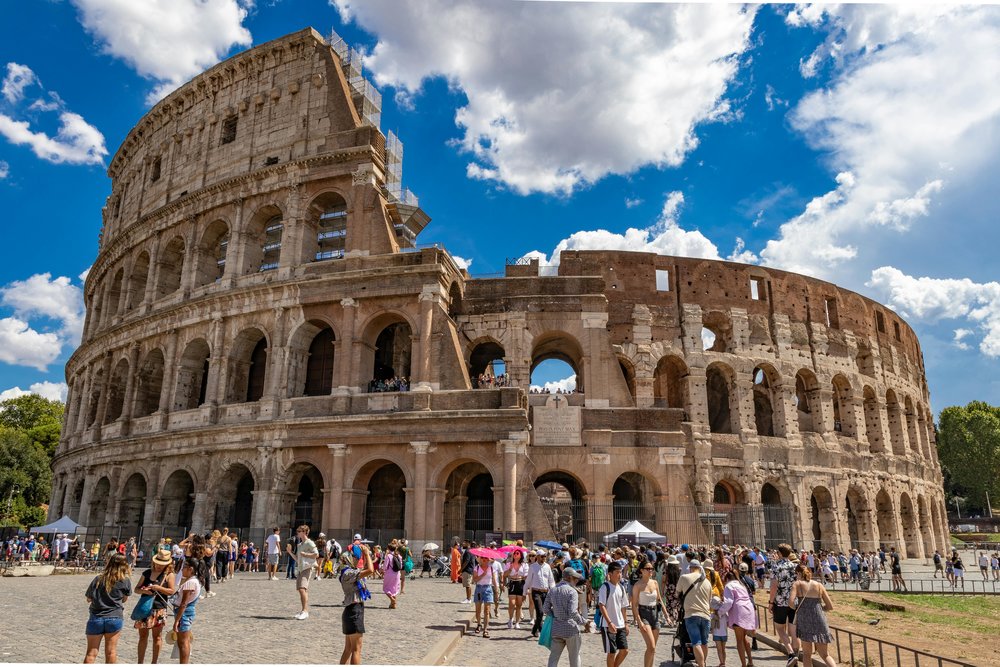
Lines at the Colosseum | Photo Credit: Igor Meghega on Pexels
Your list of Rome tourist attractions is incomplete without the Colosseum. It's the most visited site in Italy—I mean, you’re standing inside the arena where gladiators once fought. How cool is that? 🤩
You can combine your Colosseum visit with the Roman Forum and Palatine Hill on the same ticket, which makes sense because they're all connected on the same archaeological site. Plan to spend at least three hours for all three.
Skip-the-line access is essential here; queues without an online ticket can run 2-3 hours in peak season. Join a Colosseum, Roman Forum, and Palatine Hill tour that includes arena floor access if available, as it's a noticeably different experience from the standard upper tiers.
Stand under the world's best-preserved ancient dome at the Pantheon
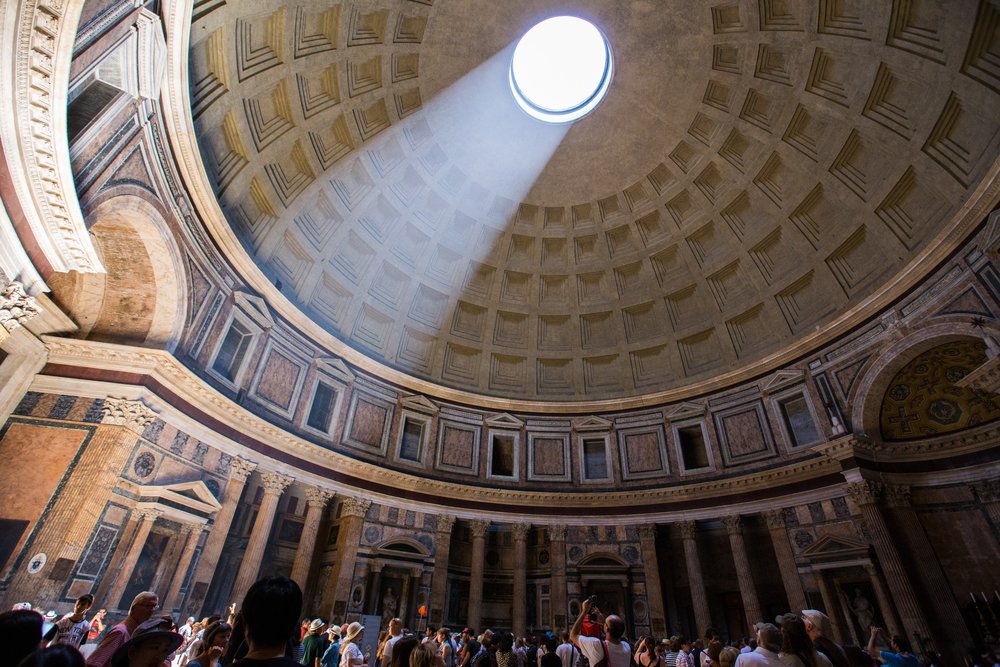
Light through the oculus at the Pantheon
The Pantheon is one of the best-preserved buildings, and it's still being used nearly 2,000 years after it was built. The 43-meter dome with its open oculus is an engineering feat that architects still study today. It's quieter than the Colosseum and takes about an hour to visit properly.
Since 2023, entry now requires a ticket, which has helped manage crowd flow. Morning visits on weekdays are your best bet for a less crowded experience. The Pantheon is a short walk from Piazza Navona, so it pairs well with a morning spent in that neighborhood.
Visit the Vatican and other religious landmarks in Rome
See the Sistine Chapel and St. Peter's on a Vatican tour

The famous spiral staircase in the Vatican Museum
Vatican City tours are among the most booked experiences in all of Europe, and for good reason. The Vatican Museums alone contain over 70,000 works, including the Gallery of Maps, Raphael Rooms, and the Sistine Chapel, where Michelangelo's ceiling is even more detailed up close than in any photograph.
St. Peter's Basilica is technically free to enter, but the queues can be brutal. A combined Vatican Museums, Sistine Chapel, and St. Peter's tour with skip-the-line access saves you the better part of a morning. Set aside at least four hours for the full complex.
Throw a coin in the Trevi Fountain (and go early)
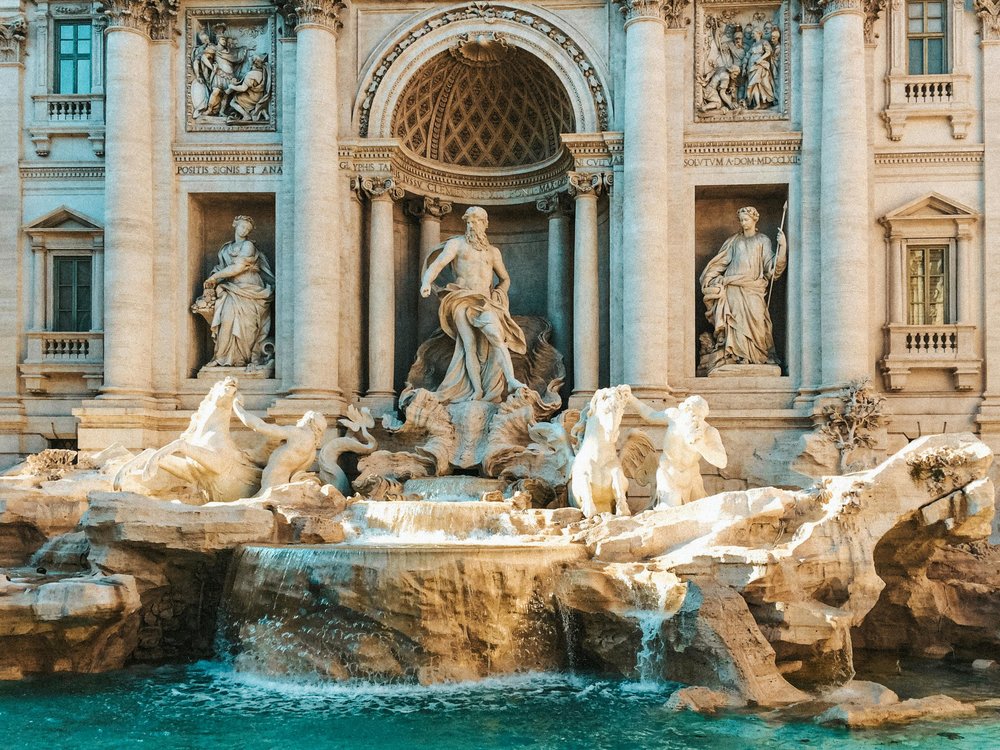
Iconic Trevi Fountain in Rome | Photo Credits: Ezgi Kaya on Pexels
The Trevi Fountain is one of those Rome tourist attractions that are almost impossible to avoid. It's theatrical and somehow still surprising even when you know exactly what to expect. The tradition of throwing a coin over your left shoulder is said to guarantee a return to Rome.
Go early in the morning (before 8 AM) or late at night to see it without the shoulder-to-shoulder crowds. The fountain is in the Trevi neighborhood, which is also worth a wander for its trattorias and gelato shops. No ticket is needed to see the fountain itself.
Eat and drink your way through Rome
Join a food tour through Trastevere and beyond

Join a food tour in Rome
If there's one thing Romans take seriously, it's food, and the best way to get across that quickly is a guided Rome food tour. The Trastevere food tour is a 3-hour group walk starting at Piazza Mastai, going deep into the neighborhood's family-run eateries and local producers.
Want more ground covered? This Rome food tour takes you to Trastevere, the Jewish Ghetto, and Campo de' Fiori in a single half-day, finishing with artisanal gelato. It runs at 11 AM and 5 PM, so you can slot it around the rest of your day.
Get outdoors and explore Rome's neighborhoods
Cycle the ancient Appian Way on a Rome e-bike tour

Bike along the Appian Way
A Rome e-bike tour is one of the most enjoyable ways to escape the tourist crowds and see a completely different side of the city. The Appian Way (Via Appia Antica) is one of the oldest roads in the world, and stretches of it are still paved with the original basalt stones. Cycling out here on a Sunday—when the road is closed to cars—feels peaceful.
Along the route, you'll pass ancient tombs, villas, aqueduct ruins, and stretches of open countryside that are technically still within Rome's city limits. Most bike tours cover 10-15 km and include stops at the Catacombs of San Callisto or San Sebastiano. Expect 3-4 hours total.
Book a timed slot at the Borghese Gallery

Pluto and Proserpina by Bernini
The Borghese Gallery in Rome is one of the finest small museums in the world and easily missed by first-time visitors focused on the Vatican and Colosseum. Inside, you'll find Bernini sculptures that look like they're made of skin rather than marble, like his Apollo and Daphne and Pluto and Proserpina. The gallery also houses Caravaggio paintings and a Raphael collection.
Entry is strictly timed (2-hour slots, maximum of 360 visitors at a time). So, book well in advance, because the Borghese Gallery is one of the few attractions in Rome that sells out fast. It's located inside Villa Borghese park, which is worth a walk before or after your visit.
Get around Rome without the stress
Rome's metro is surprisingly limited for a city this size; there are only two main lines (A and B), and they don't connect many of the key tourist areas directly. The good news is that most of central Rome is walkable: the Pantheon, Trevi Fountain, Piazza Navona, and Campo de' Fiori are all within 15-20 minutes of each other on foot.
For the Vatican and Trastevere, take a bus or tram rather than the metro, as it's often faster and puts you closer to the entrance.
If you want to cover the main highlights without planning your own route, the Rome hop-on hop-off bus connects all the major Rome tourist attractions on a loop, which is especially useful on your first day.
FAQs about Rome tourist activities
What are the best things to do in Rome for first-time visitors?
For first-timers, the Colosseum complex (with the Roman Forum and Palatine Hill), the Vatican, and the Pantheon are unmissable. Beyond the big three, build in time for Trastevere in the evening and at least one meal in a proper trattoria. A hop-on, hop-off bus on your first day is a great way to familiarize yourself before you start walking between sites.
How many days do you need to see Rome properly?
Four to five days gives you time to cover the main Rome tourist attractions without feeling rushed. Three days is doable if you're focused and book everything in advance. If you want to add a day trip (Pompeii, Florence, or Tuscany), plan for at least five days so you're not sacrificing the city itself.
What are the most unique things to do in Rome?
Beyond the classics, the most distinctive Rome tourist activities include a Sunday cycling tour along the Appian Way (when it's closed to cars), a food tour through Testaccio's market, and a timed visit to the Borghese Gallery, where the crowd cap keeps things calm.
What are the best tourist sites in Rome?
The Colosseum, Vatican City, the Pantheon, Trevi Fountain, the Borghese Gallery, and Trastevere are consistently the most visited sites. For archaeology, Palatine Hill (included with the Colosseum ticket) is often overlooked but offers some of the best views in Rome. Piazza Navona and Campo de' Fiori are worth an evening walk even if you don't stop for a drink.
What are the best day trips to take from Rome?
Pompeii is the most popular day trip for history lovers; the train journey is quick and the site is extraordinary. Florence is ideal for art and architecture in a compact city. The Amalfi Coast and Tuscany's Chianti region work best with an organized tour, as public transport is limited. Orvieto and Civita di Bagnoregio are lesser-known options that are easier to reach by car and far less crowded.
More Rome travel guides for you
![[us] things to see in rome](https://res.klook.com/image/upload/fl_lossy.progressive,q_85/c_fill,w_550,h_356/v1755608853/fm0bgyrsmbyw5la3yyq0.jpg)

What is Klook?
Klook is a leading pan-regional experiences platform in Asia Pacific, purpose built to digitalize experiences and make them accessible to every traveler.
Our mission is to build the digital infrastructure for the global experience economy — empowering merchants to share their passions and travelers to discover the heartbeat of each destination. We operate a mobile-first, curated platform featuring diverse experiences across global destinations.