

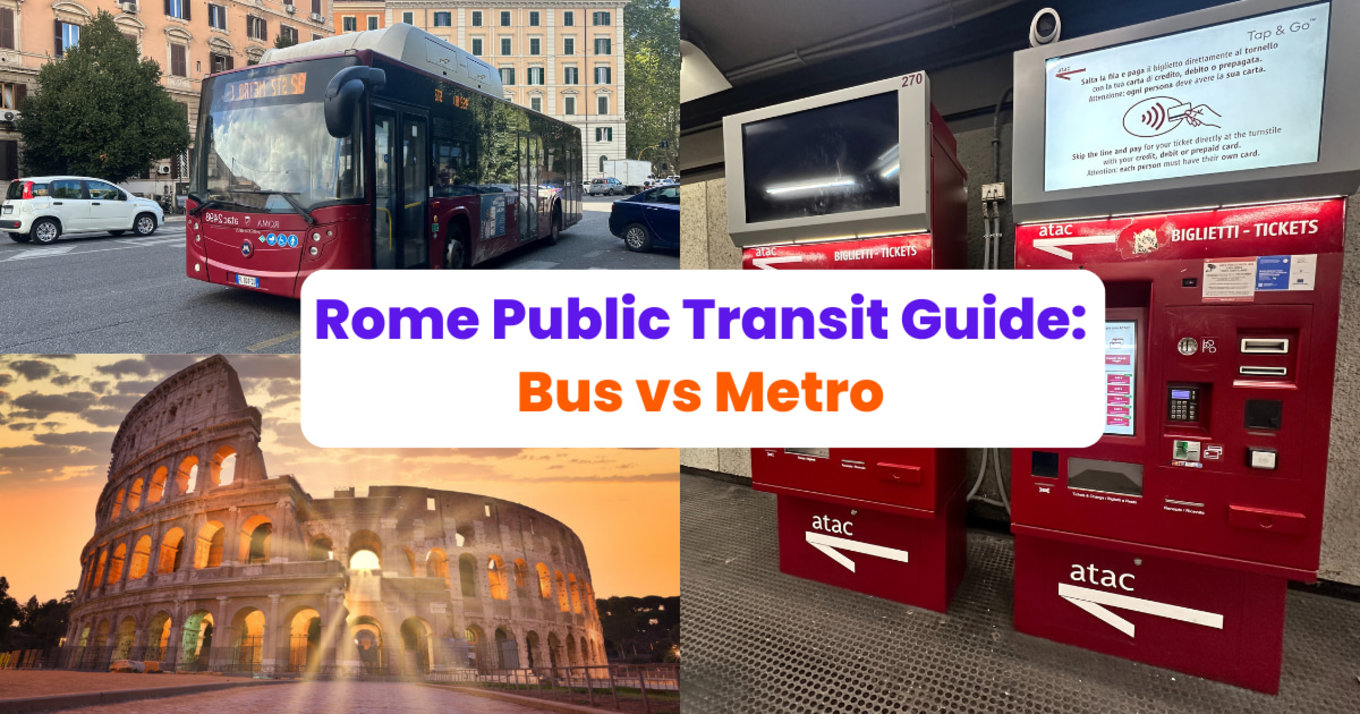
Curious if Rome's public transport will be enough to get around the city and see it all? After two days of exploring the city (and taking the train and buses MANY times), this is my breakdown of what you need to know!
In this guide, I’ll be covering the basics of Rome's public transport, ticket prices, passes, navigation tips, and even how to get to and from the airport by train and bus. Yep, we’re getting into quite a bit, and I guarantee it’ll make you confident to get around as soon as you land.
Aside from using public transit, Rome is best explored with an attraction pass such as the OMNIA Vatican and Rome, which includes entry to over 30 iconic spots in Rome for 24 or 72 hours! If you’re planning more days in Rome and want flexibility, then the Klook Pass Rome bundles together the top things to do, including the Colosseum and the Vatican Museums.
Ticket types and payment methods for the Rome bus and metro
Before you hop on any bus or metro train, this is what you need to know when it comes to tickets!
100-minute Validity Period per Ticket
Each time you use Rome public transit, your ticket is valid for 100 minutes. That means you aren’t charged extra for a transfer on the buses or trains if it’s within the 100-minute validity period. Be sure to tap your card or ticket each time you change transit types.
Using your Credit Card or Apple Pay (Tap&Go)
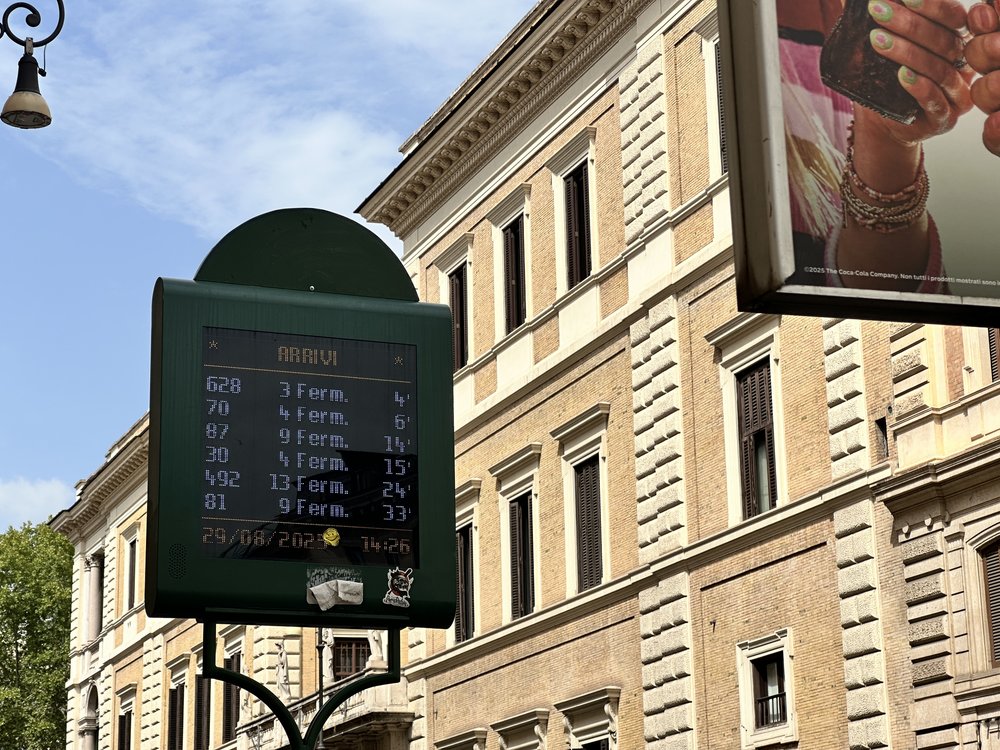
A bus stop in Rome with the live bus times. You won’t find these at every stop!
Rome's public transport accepts credit cards and Apple Pay. As long as your payment method has wireless capabilities, you’re good to go! Just tap your preferred payment method on the ticket machines.
The cost? The same as individual Rome metro and bus tickets.
The maximum daily charge to your virtual payment method is €8.50, which is the cost of a 24-hour Rome transit pass. If you plan to use the metro frequently over a few days, a Rome Transit Card & Pass will save you even more money!
I used my credit card to tap on and off Rome public transit with no issues throughout my journey, taking the metro and buses multiple times a day.
Rome Metro Tickets & Bus Travel Multibit Ticket Passes (for less frequent travel)

Ticket vending machine with Multi-bit and day pass options.
Let’s say you’re worried about pulling out your credit card or phone every time you have to pay for public transit in Rome. It’s a valid concern, especially given the city's pickpocketing problem.
And that’s when the MULTIBIT tickets come in handy! You get a rechargeable card that lets you load 2, 3, 5, or 10 tickets for journeys. Each ticket costs the regular rate of €1.50 for 100 minutes of ride time, so you don’t save any money, but there’s no deadline for using them.
If you need to recharge the pass, you can only do so by one ticket at a time, so I suggest buying a pass with as many tickets as you think you’ll need first. Plus, the card makes a great little souvenir!
Rome Metro Tickets & Bus Unlimited Travel Passes
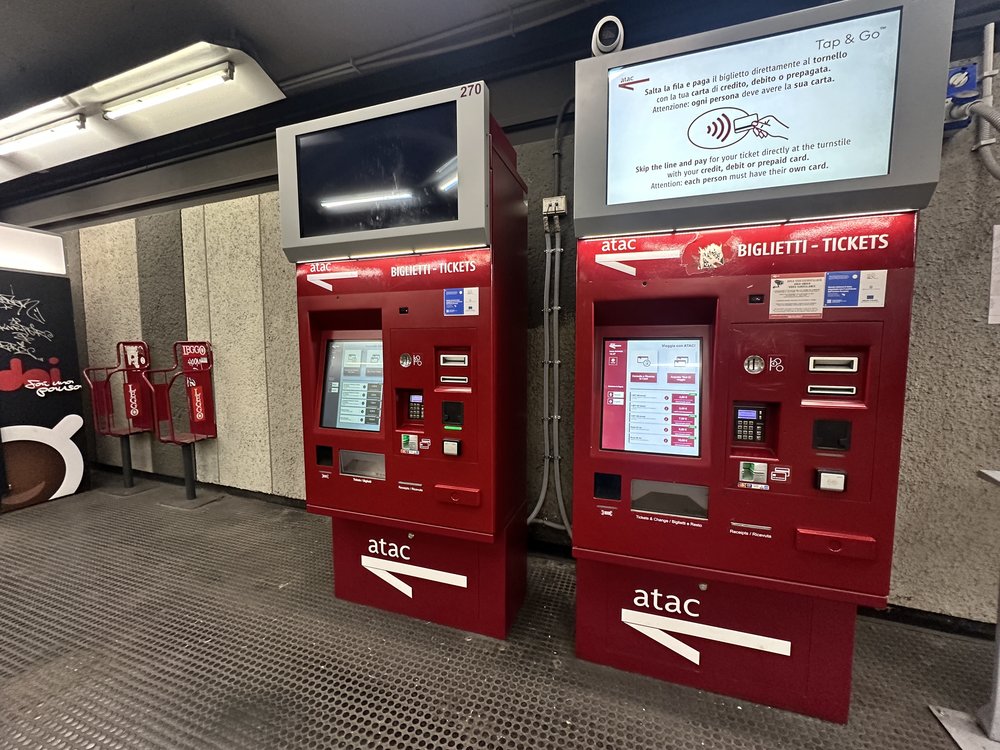
You’ll find ticket vending machines easily in Rome's metro and train stations!
If you’ll be traveling frequently in Rome for a few days, a Rome transit pass will save you money with unlimited rides!
The Rome Transit Passes include these options:
- 24 hours: €8.50 (minimum number of trips to make it worth the cost: 6)
- 48 hours: €15.00 (minimum number of trips to make it worth the cost: 10)
- 72 hours: €22.00 (minimum number of trips to make it worth the cost: 14)
- 7 days: €29.00 (minimum number of trips to make it worth the cost: 20)
If you’re interested in the Rome Metro and Bus Pass options above, you can buy them from ticket vending machines as well as ATAC ticket offices in Rome.
Klook tip: If you take the train to Rome from another city, you can pick up your Rome transit pass at the Rome Termini station when you arrive.
Which Rome Public Transit to Use? Metro vs Bus
During my time in Rome, we used the metro and bus systems A LOT! Both have their pros and cons, and depending on where you stay or your accessibility needs, one may be better for you.
I’ll admit my preference leans towards the metro, but the bus system's coverage cannot be beat.
Taking the Metro in Rome
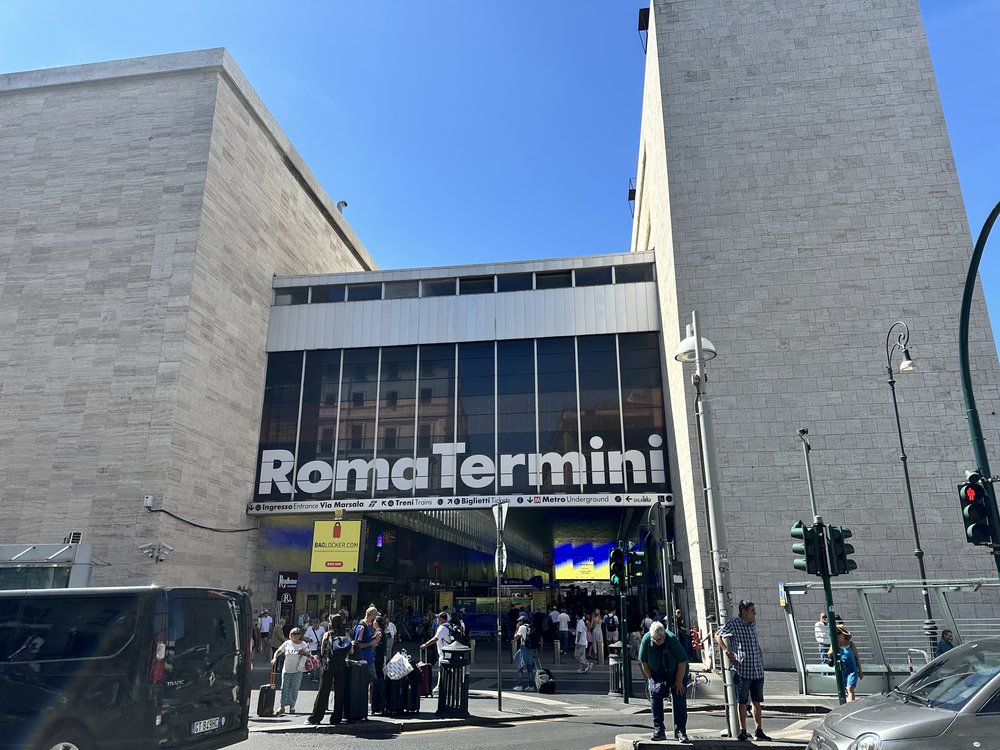
The main train station in Rome: Rome Termini, which connects to the metro and national rails.
Taking the Metro in Rome is one of the fastest ways to get around the city, with three lines connecting famous stops such as the Spanish Steps and the Vatican. We took the metro from our accommodation to the Vatican!
The metro system runs from 5:30 AM to 11:30 PM, with trains running until 1:30 AM on weekends.
Pros vs Cons of the Rome Metro
Pros:
- Frequent trains that typically arrive on time
- Fast transport with no stops in traffic
- Works with Google Maps
Cons:
- Limited lines
- If your accommodation is far from the metro, it’s not very useful
- Not all stops are accessible. Check beforehand if you’ll need an elevator.
- No overnight trains available (11:30 PM - 5:30 AM)
How to navigate the Rome Metro:
One of my favorite things about the Rome Metro is that it’s simple to navigate. As there aren’t many lines like the train systems in Japan or NYC, it’s hard to get on the wrong train in the wrong direction.
To take the Rome metro, Google Maps worked fine with live train times and the correct routes. There is also the Atac Roma app, which has live times.
How to get into the Rome Metro:
To enter the Rome metro, all you need to do is tap your wireless payment, ticket, or pass to go through the gates.
You don’t need to tap out when you leave, but if you transfer to a bus, you need to tap when getting on.
Taking the bus in Rome
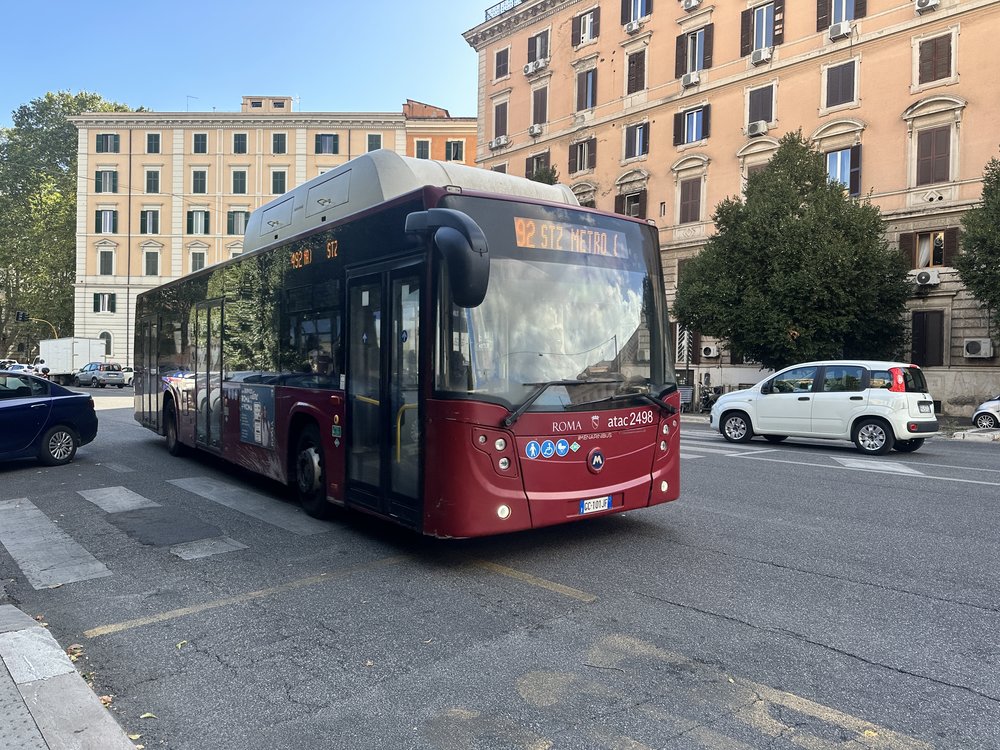
When the Rome metro isn’t a convenient option, trust me, there’s always a bus!
Buses were so convenient for getting around all the nooks and crannies of Rome! We took the buses quite often, and while they aren't always on time, they still got us to where we needed to go!
If you need to get somewhere by a specific time, try to catch an earlier bus to ensure you’ll be on time.
The buses in Rome generally run from 5:30 AM to midnight, with a few that operate overnight.
Pros vs Cons of Rome Buses
Pros:
- Extensive network
- More accessibility-friendly than the metro
- Main routes run quite frequently
- Easy to find bus stops
Cons:
- Google Maps live times are not always accurate
- It can get quite packed
How to navigate getting around on Rome Buses
Planning your routes and bus frequency:
We took the Rome buses from the city center to Aventine Hill, from Trevi Fountain to our hotel, and so on.
We used Google Maps to plan our routes (also consider the Atac Roma app), but I’ll warn you now: the bus times were not always accurate. Sometimes they were, but overall, it;s best to show up at the stop earlier than later.
The best is when there’s a digital timetable at the bus stop, as those times are the most accurate.
Getting on/off the bus:
When boarding buses in Rome, you need to tap each time you board. When getting off, you only need to press the button to request your stop. You don’t need to “tap off” when you get off.
Bus vs Train vs Taxi to and from Rome Airports
Unless you’re taking a train into Rome, you’ll need to get into the city from the airport. Rome has two main airports: Rome Ciampino (CIA) and Fiumicino (FCO), and these are the main modes of transport to and from them.
By Taxi:
The taxi rates to and from the airport are a flat rate and depend on the distance, although most travelers will go to the city center.
To/From Fiumicino (FCO):
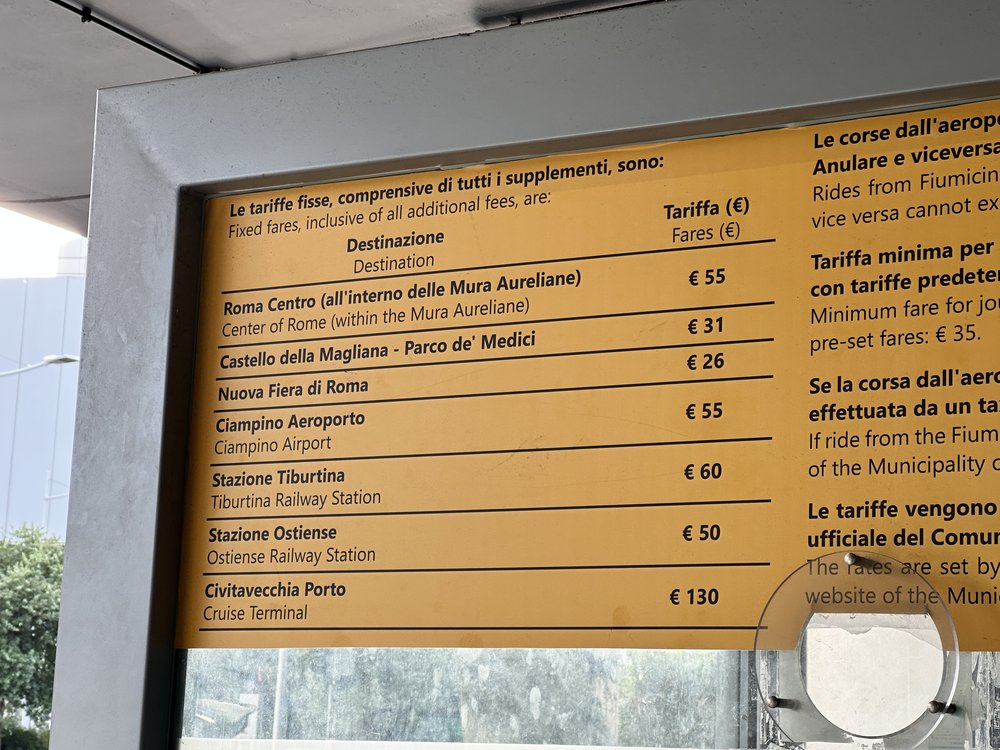
The flat-rate taxi costs from Rome FCO airport.
To and from Fiumicino (FCO) airport, the rates are €55 per one-way journey. If you’re splitting the cost, this can be one of the best ways to get picked up and dropped off right at your hotel.
To/From Ciampino (CIA):
Taxis charge a fixed fare of €40 for the journey. There should be a sign outside the airport in the official taxi line to confirm the cost.
By Train:
To/From Fiumicino (FCO):
One of the most popular and cost-effective ways to get to and from Rome and FCO Airport is by train. The cost of the train is not a part of any of the Rome transit passes listed above, meaning you have to buy a separate ticket.
It only takes about 32 minutes between FCO and Rome Termini Station, which was actually faster than the taxi we took! You can buy your tickets on the spot at one of the many machines at the airport or even pre-book them with the service below.
To/From Ciampino (CIA):
Taking the train to or from the Ciampino (CIA) airport requires a transfer at Ciampino Station. There’s a bus that goes between the station and the airport, known as the Ciampino Airlink. If you have the time and light luggage, this is a very cheap way to get between CIA and Rome.
By Bus:

The airport bus shuttles arrive at and leave from Rome Termini Station.
One thing you must know before taking the airport buses in Rome is that even if you reserve a time, that does not guarantee you a spot at that time. In fact, you can use that ticket for any time of the day.
It’s best to book a ticket for that day (no specified time) and to arrive early to ensure you get a spot.
To/From Fiumicino (FCO):
If you want to save money or are traveling outside the train’s operating hours, several private bus operators connect FCO Airport to Rome Termini Station. The bus operators offer different timetables, so I’d recommend choosing based on the time you need to take the bus.
Two of the most popular buses between Rome and FCO are Terravision and SIT Shuttle.
To/From Ciampino (CIA):
This is what I did when I went to the CIA airport – taking the bus! I took the Terravision bus, and it took about 40-45 minutes.
FAQs about Rome Public Transit
Does Rome have a reliable metro and bus system for tourists?
Yes, it does! While the Rome public transit system doesn’t run 24 hours a day, it is generally quite reliable for getting around Rome and the city's top attractions!
When is it better to take the metro vs. the bus in Rome (speed, convenience, cost)?
If you can, take the metro as it’s usually the fastest and runs on time. If the Rome metro isn’t nearby, then the bus is the next best option. The cost is the same regardless, as each ticket gives you 100 minutes of travel time on any method of public transport.
What kind of ticket/pass should tourists buy for public transport in Rome?
This depends on how much and how long one plans to travel in Rome. If you don’t plan to travel frequently, then single tickets are the best option. If you plan to travel a lot, then check out the Rome pubic transit passes.
Are there special transport passes for tourists in Rome (day passes or travel cards)?
Yes, there are! If you’re planning to travel frequently, then purchase a Rome public transit pass either online or on one of the kiosks.
Is there a separate Rome metro pass and Rome bus pass?
Nope! The passes include both the metro and the bus in Rome.
What safety tips should you know when using public transport in Rome?
The main things to be aware of while taking Rome public transit are pickpockets. Always keep your valuables in front of you and in your sight. No phones in backpockets, either.
Oh yeah…and some of the buses can fly! So hold on if you’re standing up.
Now that you're ready to tackle Rome’s public transit, be sure to see what other unique Rome adventures await you!
What is Klook?
Klook is a leading pan-regional experiences platform in Asia Pacific, purpose built to digitalize experiences and make them accessible to every traveler.
Our mission is to build the digital infrastructure for the global experience economy — empowering merchants to share their passions and travelers to discover the heartbeat of each destination. We operate a mobile-first, curated platform featuring diverse experiences across global destinations.
✨ Follow us for more deals and inspiration for your upcoming travels