Italy has ancient ruins, Renaissance art, dramatic coastlines, and cities built on water, sometimes all within a few hours of each other. The hardest part isn't getting there. It's deciding where to go first.
This guide breaks down the top Italian tourist attractions by region, North, Center, and South, so you can plan a route that fits your time and interests. Whether you have a week or a month, you'll find something here to build your itinerary around. From the Colosseum to the Amalfi Coast, here's where to start.
North Italy
Northern Italy is where you get big cities, dramatic coastlines, and the kind of scenery that stops you mid-sentence. It's home to Venice's canals, Milan's Gothic architecture, and the clifftop villages of Cinque Terre. If you're short on time, the north alone could fill an entire trip.
1. Venice’s Grand Canal and St. Mark's Square
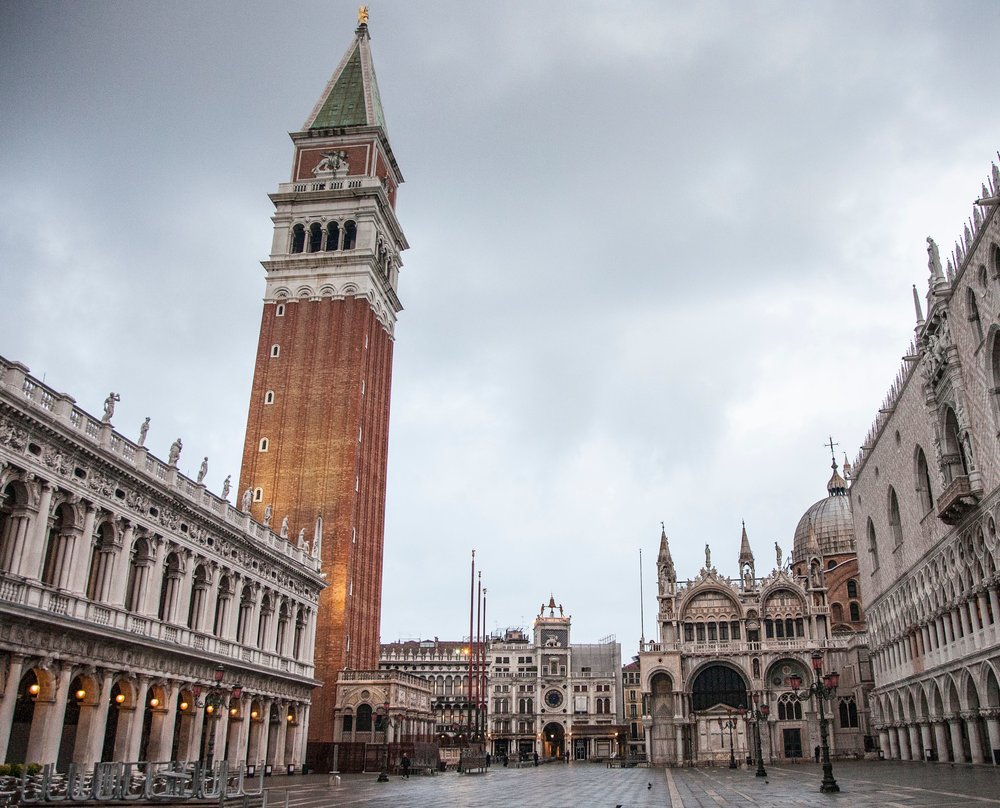
St. Mark’s Square in Venice | Photo Credit: Charl Durand on Pexels
There's nowhere else in the world quite like Venice. The city was built across 118 small islands connected by canals and bridges, and the Grand Canal is its main artery, a breathtaking S-curve lined with Renaissance and Gothic palaces that have stood for centuries. A vaporetto (water bus) ride down the canal at dusk is one of the most cinematic experiences Italy has to offer.
St. Mark's Square is the centerpiece of the city. The Byzantine basilica, the Doge's Palace, and the campanile (bell tower) all share the same piazza, creating a skyline unlike anywhere else in Italy. Book a Doge's Palace & St. Mark's Basilica tour to skip the long lines and get guided access to both landmarks in one go; it's by far the most efficient way to see them.
What to know before visiting Grand Canal and St. Mark's Square
- How to get there: Fly into Venice Marco Polo Airport, then take the Alilaguna water bus or land taxi to the city center. From the main island, walk or take a vaporetto to Piazza San Marco.
- Best time to visit: April to June or September to October; avoid July and August when crowds and heat peak, and steer clear of November to January for high-tide flooding (acqua alta).
- Entry fees: St. Mark's Basilica is free; the Doge's Palace costs around $27–33 USD. Advance booking is strongly recommended.
Klook Tip: If you're visiting in summer, aim to arrive at St. Mark's Square before 9am. The light is beautiful and the piazza is almost empty, by 10am it's a very different story.
2. Duomo di Milano
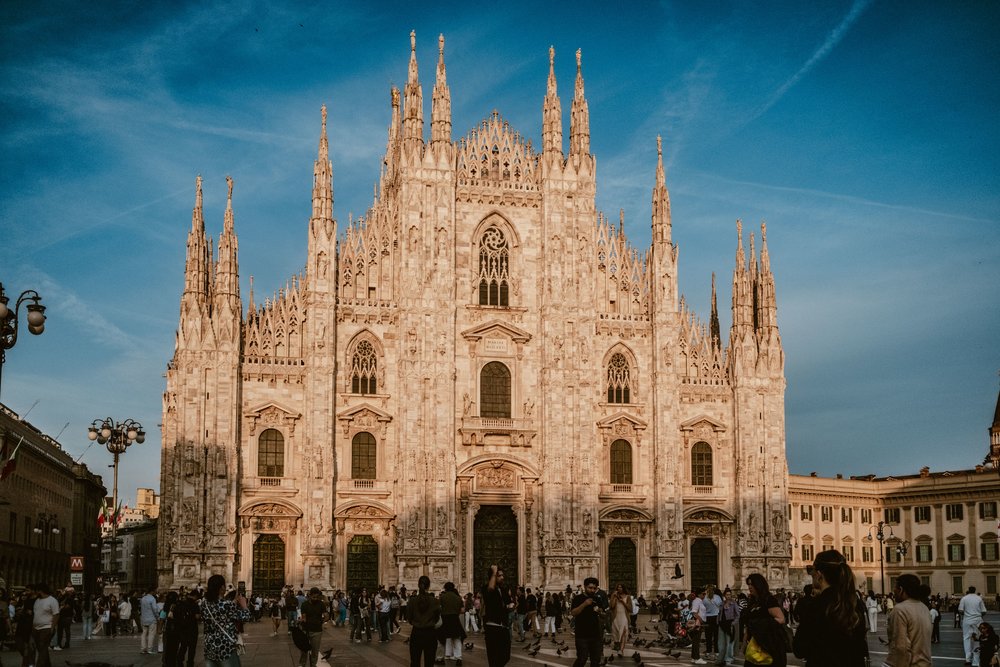
Duomo di Milano | Photo Credit: Paolo Bici on Pexels
Milan is often overlooked in favor of Italy’s more famous destinations, but the Duomo di Milano alone is worth the stop. Construction began in 1386 and took centuries to complete, and its rooftop is covered with more than 3,000 statues and 135 marble spires. It's the largest Gothic cathedral in the world by volume and one of the most intricate buildings you'll ever see.
The Milan Duomo & Last Supper 6-hour walking tour combines the cathedral with a visit to Leonardo da Vinci's The Last Supper at Santa Maria delle Grazie—two of Milan's biggest icons in a single half-day. Entry to The Last Supper requires advance booking weeks (sometimes months) in advance, so a tour that handles this is useful.
What to know before visiting Duomo di Milano
- How to get there: Milan is served by two airports, Malpensa and Linate. The Duomo is in the city center, a short metro ride from either.
- Best time to visit: March to May or September to November.
- Entry fees: Cathedral entrance is free; roof terrace access costs around $14–17 USD. Booking ahead is recommended for the terrace.
Klook Tip: Take the elevator rather than the stairs to the roof, the views across the city (and on clear days, the Alps) are the same, but you'll save your energy for the afternoon.
3. Cinque Terre
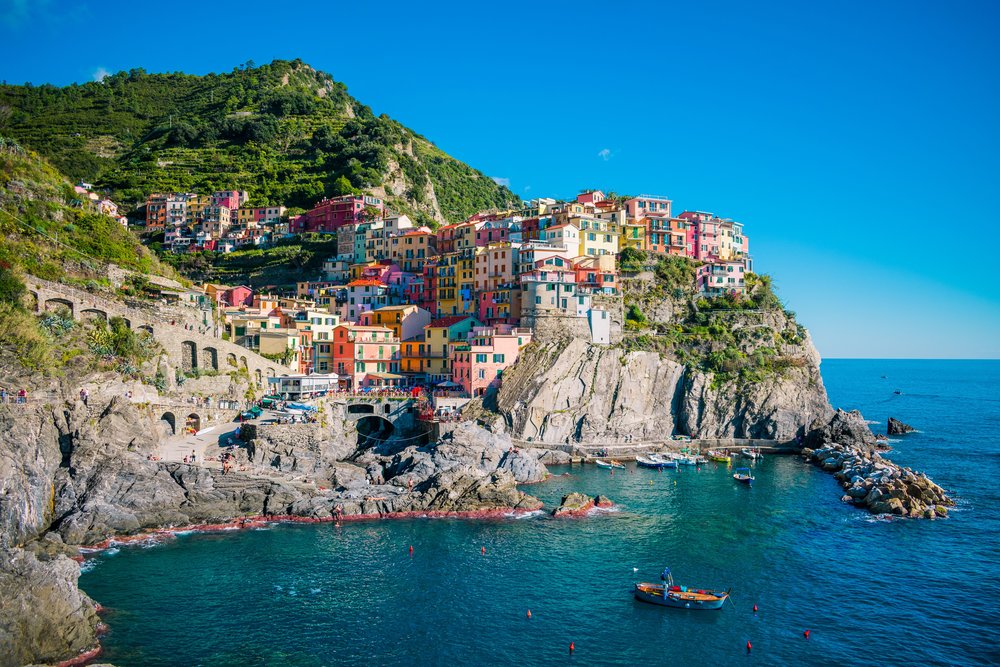
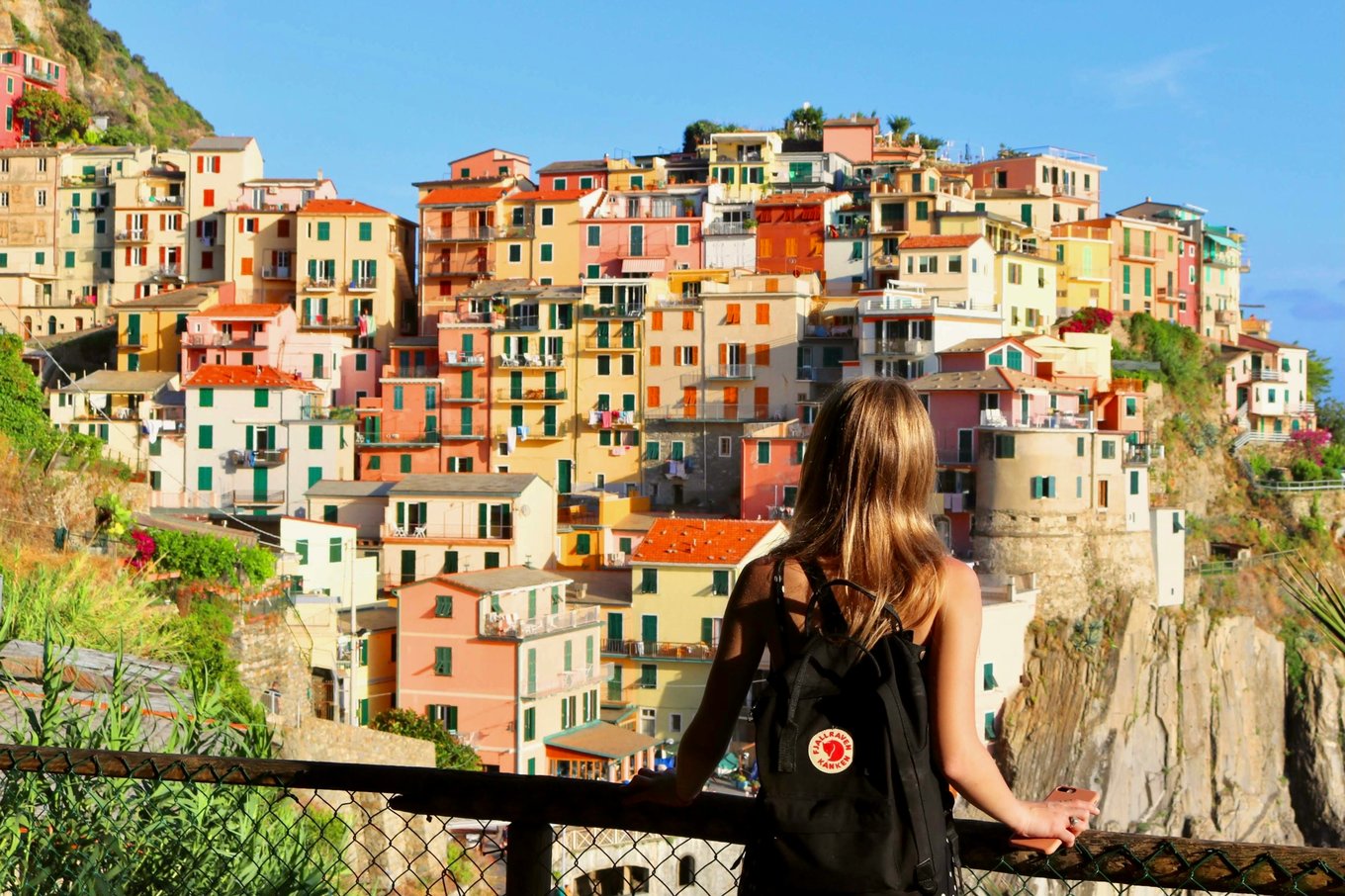
Colorful houses on top of a cliff in Cinque Terre | Photo Credit: Jarod Barton on Pexels
The Cinque Terre, five fishing villages clinging to the Ligurian cliffs above the sea, is one of the most photographed parts of Italy, and it lives up to the images.
Manarola, Vernazza, Corniglia, Monterosso, and Riomaggiore each have their own distinct feel: Vernazza has the best harbor. view, Monterosso has the longest beach, and Corniglia sits higher than the others on a rocky promontory with views in every direction.
The villages are connected by the famous Sentiero Azzurro (Blue Trail), though some sections occasionally close due to landslides. The most famous stretch is the Via dell'Amore between Riomaggiore and Manarola, known for its coastal views and easy walk. As a UNESCO World Heritage Site, some trails require a pass and have visitor limits in place.
What to know before visiting Cinque Terre
- How to get there: Train from Genoa (1.5 hours) or La Spezia (15–30 minutes). A local Cinque Terre train card covers unlimited rides between the villages.
- Best time to visit: May, June, or September. July and August are extremely crowded and hot.
- Entry fees: Trail passes cost around $8–20 USD depending on which paths you want to walk. No advance booking needed for the villages themselves.
Visiting from Milan? This full-day Cinque Terre tour makes it easy to see the colorful villages, coastal scenery, and famous viewpoints without planning the logistics yourself.
4. Leaning Tower of Pisa
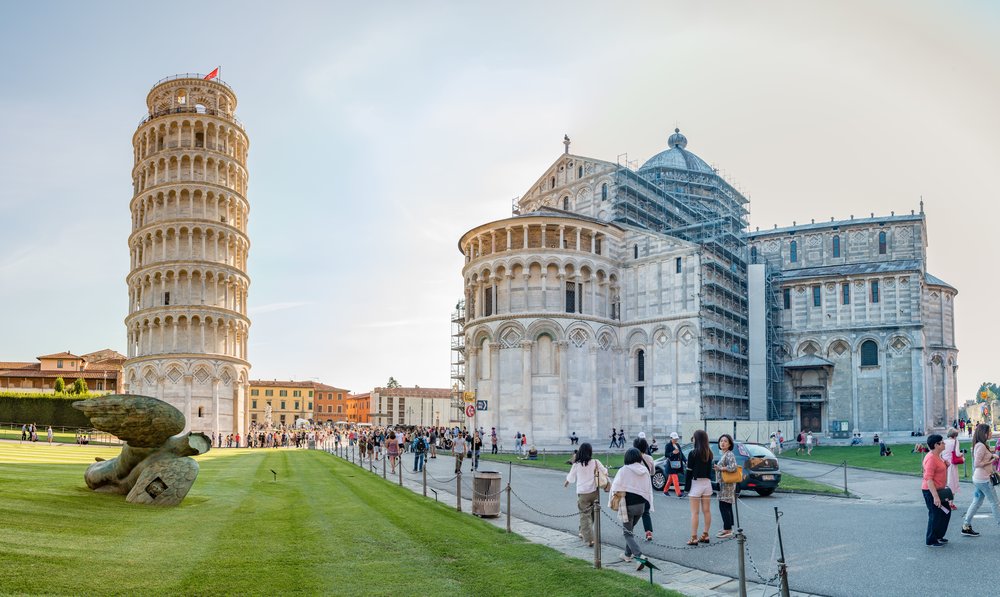
Leaning Tower of Pisa | Photo Credit: Petr Ganaj on Pexels
You've seen it in photos, but the Leaning Tower of Pisa still surprises people when they see it in person; it leans far more in person than most expect. It’s the freestanding bell tower of Pisa Cathedral, set within the Campo dei Miracoli (Field of Miracles), a large lawn that also contains the baptistery and the cathedral itself. Together, the complex is a UNESCO World Heritage Site.
Pisa is usually seen as a half-day trip from Florence (it's just over an hour by train), but it's worth exploring the city beyond the famous square in this half-day Pisa tour. The old town along the Arno River is lovely and has far fewer crowds than the Campo.
What to know before visiting Leaning Tower of Pisa
- How to get there: Direct trains from Florence Santa Maria Novella take around 1 hour. From the Pisa Centrale station, it's a 20-minute walk or short bus ride to the Campo.
- Best time to visit: Shoulder seasons (April to June, September to October).
- Entry fees: Climbing the tower costs around $22 USD; entry to the cathedral is $6 USD. Advance booking for the tower is strongly recommended.
Klook Tip: Book the tower climb in advance, timed entry slots sell out quickly, especially in peak season. Evening slots are quieter and the light is great for photos.
Central Italy
Central Italy is the cultural heart of the country. This is where you'll find Florence's Renaissance art, Rome's ancient monuments, and the Vatican, three of the most visited tourist attractions in the world. Plan extra time here; most people wish they had.
5. Florence Cathedral (Cattedrale di Santa Maria del Fiore)
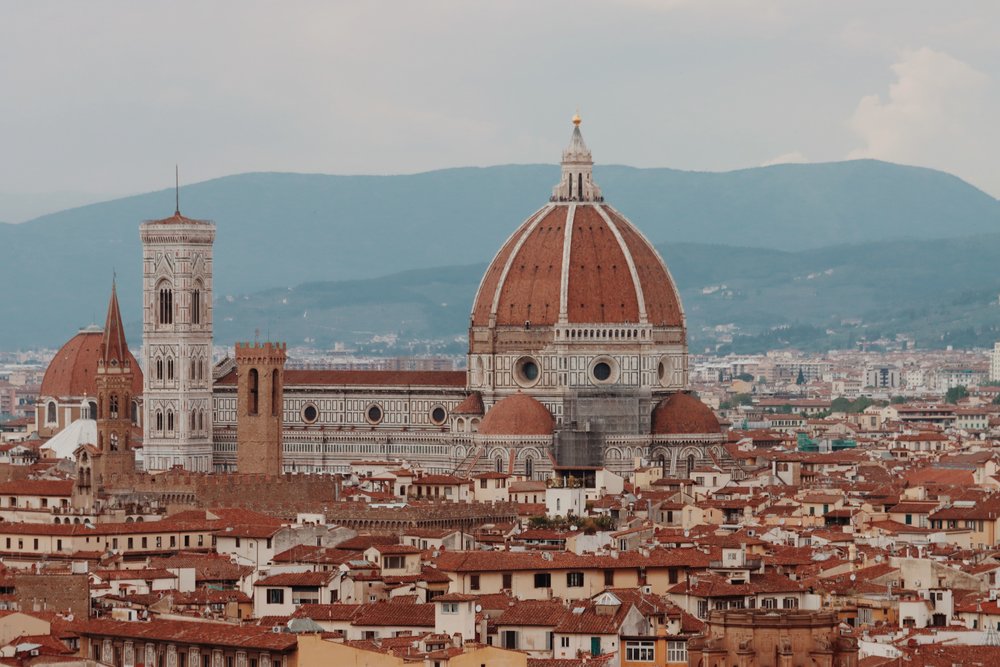
Florence Cathedral | Photo Credit: Efrem Efre on Pexels
The Cathedral of Santa Maria del Fiore, better known as the Florence Cathedral or Duomo, is one of the defining buildings of the Italian Renaissance. Brunelleschi's dome, completed in 1436, was the largest in the world at the time and remains the largest brick dome ever constructed.
If you only do one thing in Florence beyond the cathedral itself, make it the Uffizi Gallery skip-the-line entry. The Uffizi has the world's finest collection of Italian Renaissance art—Botticelli's Birth of Venus and works by Leonardo, Michelangelo, and Raphael—and the queues without advance tickets can run to two or three hours in peak season.
What to know before visiting Florence Cathedral
- How to get there: Florence Santa Maria Novella station is a 15-minute walk from the cathedral.
- Best time to visit: April to June, or October to November.
- Entry fees: Cathedral entry is free; climbing the dome costs $22 USD as part of a combined ticket. Advance booking is essential for the dome climb.
Klook Tip: The combined ticket covers the cathedral, dome, baptistery, campanile, and crypt. Book it well in advance, slots for the dome fill up weeks ahead in summer.
6. Colosseum
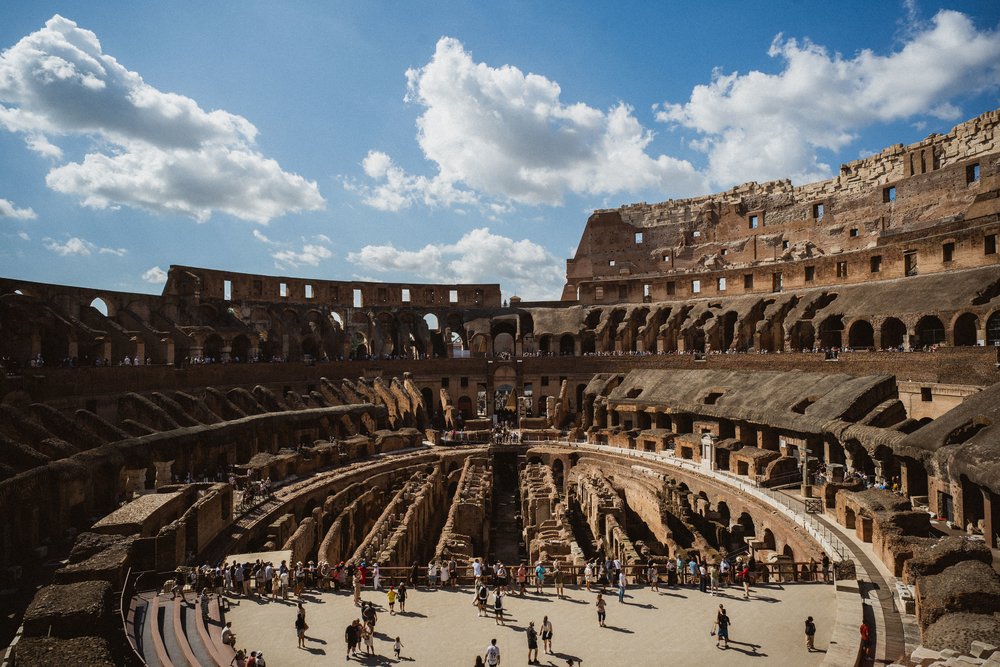
Colosseum in Rome | Photo Credit: John Tekeridis on Pexels
No list of tourist attractions in Italy is complete without Rome's Colosseum. Built between 70 and 80 AD, it held up to 80,000 spectators and hosted gladiatorial contests, animal hunts, and public spectacles for over four centuries. Even partially ruined, it's an extraordinary thing to stand in front of, and even more extraordinary to walk through.
The Colosseum, Arena Access, Palatine Hill & Roman Forum tour gets you onto the arena floor, where the gladiators actually fought, as well as the Roman Forum and Palatine Hill, giving you the full look of ancient Roman history in a single visit.
Queues at the Colosseum without advance booking can reach three hours or more in peak season, so this is one attraction where advance tickets aren't just convenient; they're essential.
What to know before visiting Colosseum
- How to get there: Metro Line B to Colosseo station, a 5-minute walk from the entrance.
- Best time to visit: Spring (March to May) or autumn (September to November). Summers in Rome are extremely hot and crowded.
- Entry fees: A combined Colosseum, Forum, and Palatine Hill ticket costs around $20–24 USD. Arena floor access requires a separate add-on (around $11 USD more).
Klook Tip: Arrive for the first entry slot of the morning. The Colosseum faces east, so the light inside is best early, and you'll be ahead of the bulk of the day's crowds.]
7. Vatican Museums and the Sistine Chapel
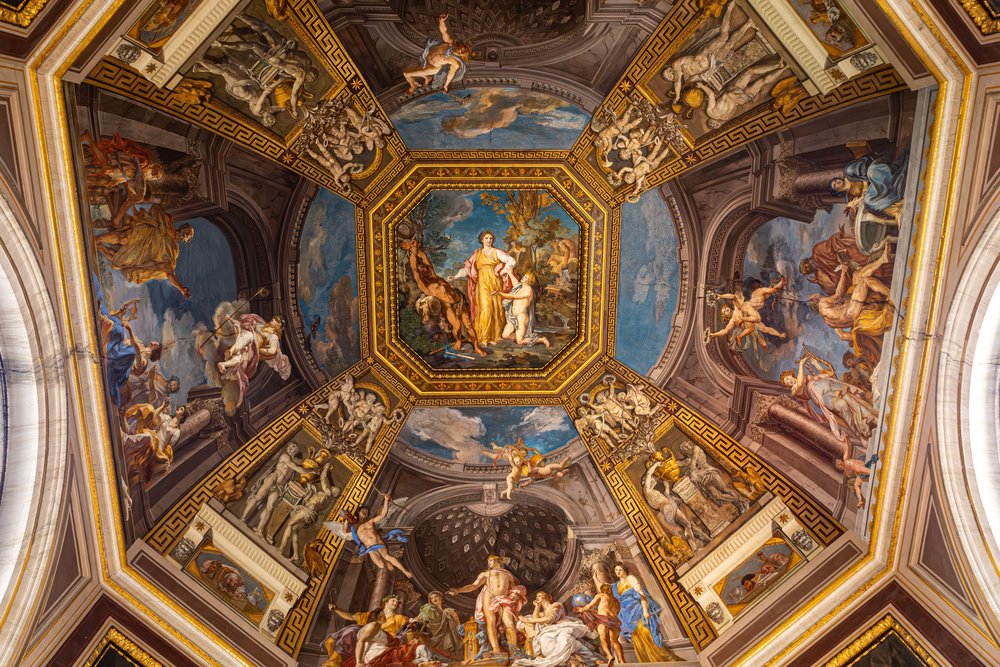
Intricate ceiling frescoes depicting classical scenes from the Vatican Museums | Photo Credit: Regan Dsouza on Pexels
The Vatican Museums contain one of the largest and most important art collections on earth, built up by successive popes over five centuries and spread across roughly 1,400 rooms. Visit the Sistine Chapel, where Michelangelo's ceiling and his later Last Judgement fresco cover every surface in one of the most astonishing achievements in art history.
The Vatican Museums, Sistine Chapel & St. Peter's tour includes skip-the-line entry, a guided walk through the galleries, and access to St. Peter's Basilica. Without advance booking, the wait to enter the Vatican Museums often exceeds two hours, even in the off-season.
What to know before visiting Vatican Museums
- How to get there: Metro Line A to Ottaviano station, then a 10-minute walk. Or take a bus to Piazza Risorgimento.
- Best time to visit: Wednesday mornings when the Pope holds his General Audience (if you want to see the piazza packed), or early on a weekday for the museums themselves.
- Entry fees: Vatican Museums entry costs $19–22 USD. Guided tours with skip-the-line access start from around $38–55 USD.
Klook Tip: Photography is technically not permitted in the Sistine Chapel, though the rule is widely ignored. The guards enforce it in waves, don't expect total silence or total darkness in there.
South Italy
Southern Italy moves at a slower pace, but the sights are just as impressive. The Amalfi Coast delivers some of the most dramatic scenery in Europe, while Pompeii offers a rare look at life frozen in time nearly 2,000 years ago. It's the part of Italy that tends to surprise people the most.
8. Amalfi Coast
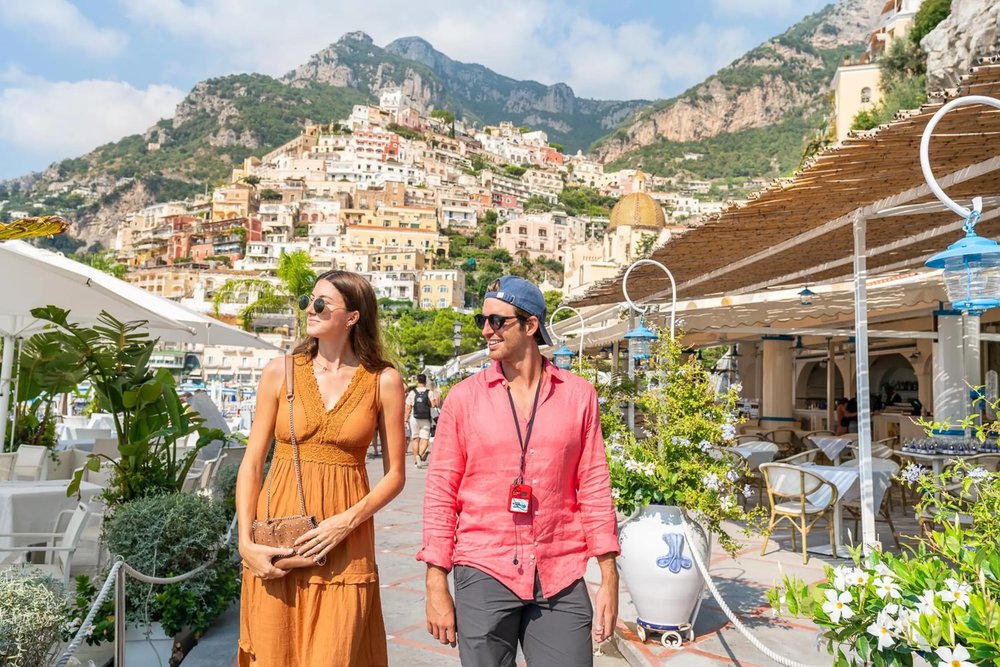
Walking along Amalfi Coast
The Amalfi Coast is one of Europe’s most spectacular coastlines. Along 50 kilometers of cliffs, towns like Positano, Amalfi, and Ravello cling to the hillsides above the Tyrrhenian Sea. The UNESCO-listed coast is best experienced from the water or along the winding coastal road with its famous sea views.
Positano usually attracts the most visitors, but Ravello, up in the hills above the coast, is quieter and has some of the best views on the entire stretch. The Villa Cimbrone gardens look out over the coast from a promontory that locals call the "terrace of infinity." It lives up to the name.
Want to see Positano, Amalfi, and Ravello in one day? This guided Amalfi Coast tour makes it easy without the hassle of planning transport.
What to know before visiting Amalfi Coast
- How to get there: Fly into Naples (NAP) and take a train or bus to Sorrento, then a SITA bus or ferry along the coast. Ferries run between Positano, Amalfi, and Salerno in summer.
- Best time to visit: May to June or September to October. July and August are the busiest and most expensive months; road traffic can become gridlocked.
- Entry fees: No general entry fee; individual gardens and churches charge around $6–11 USD.
9. Pompeii
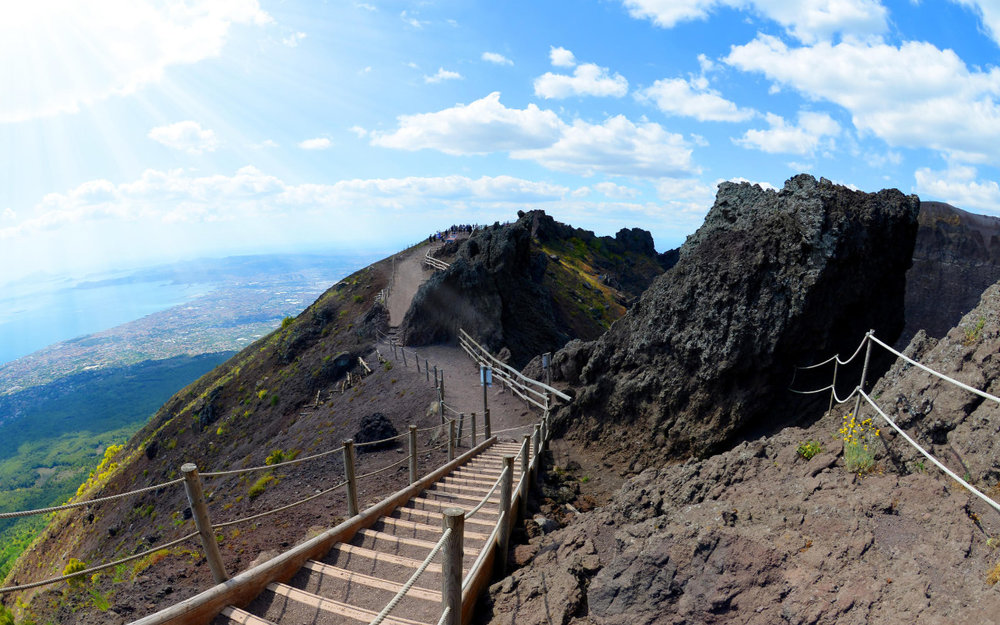
Hiking along Mount Vesuvius in Pompeii, Italy
Pompeii is one of the world’s most remarkable archaeological sites. Buried by the eruption of Mount Vesuvius in 79 AD, the Roman city was preserved for centuries. Today, you can walk its streets and see everything from ancient bakeries to plaster casts of residents. If you're visiting for the first time, a guided Pompeii tour is one of the best ways to understand the area.
The site covers about 44 hectares and takes at least three to four hours to see properly. Most tourists pair it with a Herculaneum day tour, a smaller but better-preserved town also buried by Vesuvius, or go on a Mount Vesuvius crater hiking tour itself (you can see the crater from the rim).
What to know before visiting Pompeii
- How to get there: Take the Circumvesuviana train from Naples to Pompeii Scavi station, which takes about 35 minutes.
- Best time to visit: April to June or September to October. The site has very little shade, so summer visits require planning.
- Entry fees: Around $20 USD for adults. Combination tickets with Herculaneum or Villa of the Mysteries are available.
Klook Tip: Wear good walking shoes and bring water. The site is large, uneven underfoot, and has very limited facilities once you're inside
FAQs about Italy tourist attractions
What are the most visited tourist attractions in Italy?
The most visited Italian tourist attractions are the Colosseum in Rome, the Vatican Museums and Sistine Chapel, and the Amalfi Coast. Florence's Uffizi Gallery and Duomo are also consistently among the most popular, as are Venice's St. Mark's Square and the Doge's Palace. These sites draw millions of visitors each year, so advance booking is strongly recommended.
How many days do you need to see the highlights of Italy?
A minimum of ten to fourteen days gives you a realistic overview of the highlights across the north, center, and south. If you want to cover Rome, Florence, Venice, the Amalfi Coast, and Pompeii at a comfortable pace, allow at least two to three days per city. If you have more time, you can add Cinque Terre, Sicily, or the Italian Lakes.
What is the most beautiful place in Italy?
Many travelers point to the Amalfi Coast as the most visually spectacular part of the country; the combination of cliffs, sea, and colorful villages is hard to beat. Others would argue for the hill towns of Tuscany, the canals of Venice, or the views from Ravello high above the Tyrrhenian Sea.
Check out our guide to the most famous places in Italy for more inspiration across different regions.
What are the best tourist attractions in Italy outside of Rome?
Italy's best sights outside Rome include the Florence Cathedral and the Uffizi Gallery in Florence, St. Mark's Square and the Doge's Palace in Venice, and Cinque Terre on the Ligurian coast. For something a little different, Pompeii and the Amalfi Coast in the south are equally impressive, and typically less crowded than Rome's main attractions.
What is the best time of year to visit Italy's top attractions?
April to June and September to October are the best months to visit Italy's top tourist attractions. The weather is warm but not extreme, crowds are smaller than in summer, and prices for accommodation are generally lower. July and August are the busiest and hottest months, particularly in Rome, Florence, and along the Amalfi Coast.
Start planning your Italy trip ✈️
Italy's best tourist attractions span thousands of years of history and hundreds of kilometers of coastline, which is exactly what makes it such a rewarding country to explore. Structure your trip by region, book the big-ticket sites well in advance, and leave a little room for the unexpected. That's where Italy tends to surprise you most.
Ready to book? Find tickets, tours, and experiences across Italy all in Klook!
Keep exploring Italy with these helpful guides

What is Klook?
Klook is a leading pan-regional experiences platform in Asia Pacific, purpose built to digitalize experiences and make them accessible to every traveler.
Our mission is to build the digital infrastructure for the global experience economy — empowering merchants to share their passions and travelers to discover the heartbeat of each destination. We operate a mobile-first, curated platform featuring diverse experiences across global destinations.