Monday to Sunday 09:00-19:00

11
Tianjin Porcelain House Experience Ticket
Save to wishlist

Opening hours

Suggested duration1-2 hour(s)

赤峰道64号
Packages
Tomorrow
8 Oct
9 Oct
All
Porcelain House tickets
 Valid on the selected date
 No cancellation
 24-hour confirmation
 Package details
Retail: Rp 133,856
Rp 125,825
Porcelain House tickets
Refresh to make things right again

Book now for tomorrow
See less

24-hour confirmation
See less

Valid on the selected date
The voucher is valid only on the specified date (and time if applicable)
See less

No cancellation
No cancellations, or refunds can be made
See less
About this package
What's included

See less
Not included

See less
Things to note
Amendment Policy
- Changes made at least 24 hour(s) before the activity are free
Eligibility
- Children 1.2 meters (inclusive) and under are free; children over 1.2 meters (exclusive) are the same price as adults.
Additional information
- Touching the walls and porcelain bottles with your hands is strictly prohibited during the visit. It is also forbidden to climb buildings or rockeries to avoid damage to the porcelain materials.
- The floors in the interior exhibition hall are mostly pieced together with ceramic tiles, which can be slippery when wet or in humid weather.
- It is recommended to wear non-slip flat shoes. The elderly, children, and those with mobility impairments should be accompanied by family members and walk slowly.
- Please do not bring sharp objects such as scissors and nail clippers into the exhibition hall to prevent accidental scratches on the wall tiles.
- Loud noises, chasing, and horseplay are prohibited inside the building.
How to use
Usage validity
- The voucher is valid only on the specified date (and time if applicable)
How to redeem
- Enter the venue directly with this voucher
Address
- 72 Chifeng Road, Xiaobailou Street, Heping District, Tianjin (near Heping Road commercial street)
Reviews
Klook User
2026/04/05
Fantastic 5.0
Very good complimentary tour provided by the Porcelain house that covered the history of the building.
Guide
- Composed of millions of ancient porcelain pieces and thousands of ceramic fragments, it blends Chinese and Western architectural styles, creating a strong visual impact, truly a "miracle of ceramic art architecture".
- With colorful ceramic decorations and exquisite detail design, every casual shot is a masterpiece, making it a must-visit landmark in Tianjin city.
- Each piece of porcelain holds historical imprints, covering treasures from the Tang, Song, Ming, and Qing dynasties, making it both an architectural masterpiece and a vibrant exhibition hall of ceramic culture.
- The Porcelain House – it is not a "house" in the traditional sense, but a "ceramic art museum" pieced together from millions of ancient porcelain fragments and thousands of complete porcelain pieces. It is also a vivid carrier of the collision of Chinese and Western cultures and the inheritance of intangible cultural heritage. From a French-style mansion in the Republic of China era to today's "Tianjin internet-famous landmark," the Porcelain House, with nearly a century of historical accumulation and over a decade of meticulous renovation, has become a unique cultural symbol of this city.
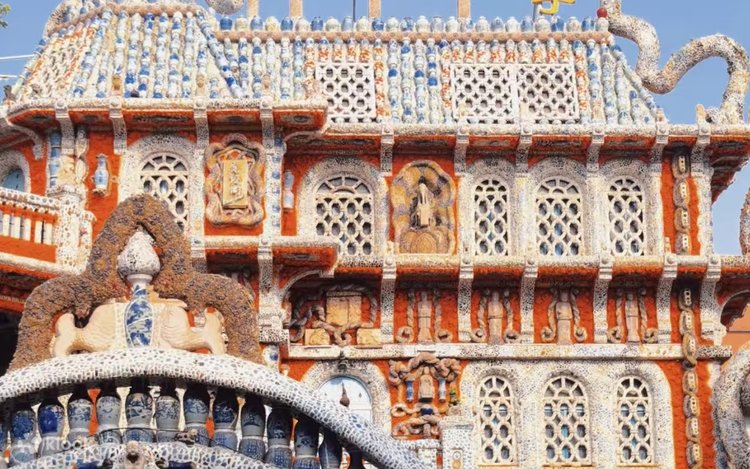
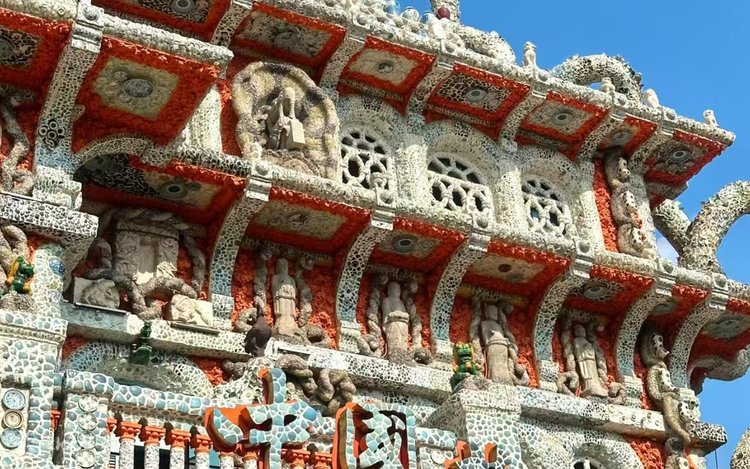
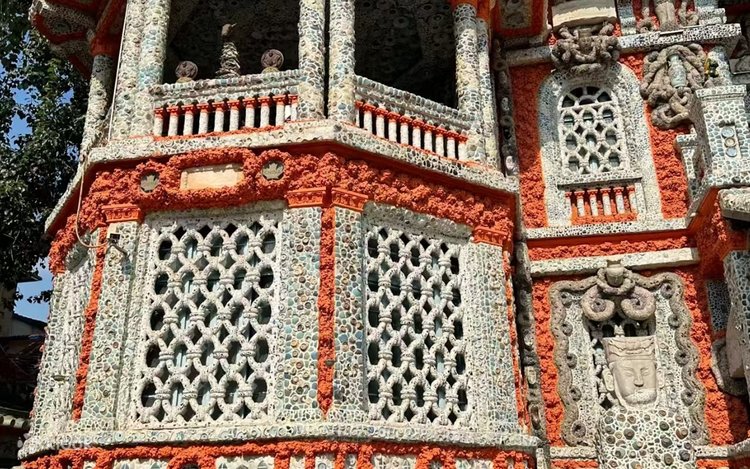
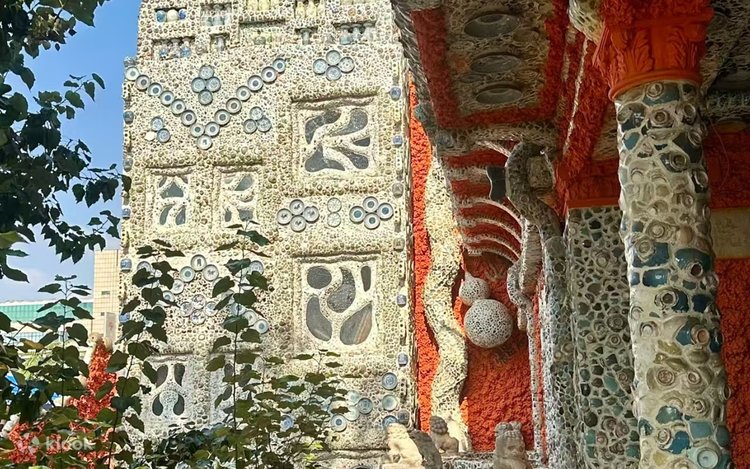
- Approaching the Porcelain House, the first thing that strikes the eye is the "dazzling brilliance" of the entire building wrapped in porcelain pieces. Whether it's the exterior walls, roof, columns, window frames, stair railings, or even the rockeries and sculptures in the courtyard, all are densely covered with porcelain pieces. Under the sunlight, porcelain pieces of different colors reflect a warm luster, like a "flowing scroll of ceramic art."
- According to statistics, the renovation of the Porcelain House cumulatively used 1 million ancient porcelain fragments, 13,000 complete porcelain pieces, over 300 porcelain bottles, and dozens of porcelain plates and bowls. These ceramic materials cover multiple periods from the Ming and Qing dynasties to the Republic of China, with an astonishing variety: including famous kiln porcelains such as blue and white, famille rose, Jun ware, Ru ware, as well as common folk blue and white porcelain fragments; there are both brightly colored "underglaze red" porcelain fragments and elegant "celadon" fragments. Among them are many treasures, such as some official kiln porcelain fragments from the Ming and Qing dynasties, which, despite years of wear, still reveal delicate patterns and exquisite craftsmanship.
- These ceramic materials were not randomly piled up but carefully selected and classified. Zhang Lianzhi's team classified the porcelain pieces by color, era, and pattern, then pieced them together according to architectural structure and aesthetic needs: the exterior walls use blue and white blue-and-white porcelain fragments as the base, adorned with red and yellow famille rose porcelain fragments; the roof is arranged with complete porcelain bottles in a "wavy shape," simulating the effect of traditional architectural tiles; the rockeries in the courtyard are even pieced together with porcelain pieces of different sizes to create the artistic conception of "layered mountains," and a Qing dynasty blue-and-white porcelain vase is even placed at the top of the rockery, becoming a visual focal point.
You might also like...
Retail: Rp 133,856
Rp 125,825
Promo codes

IDR228,833 off min. IDR1,601,831

IDR228,833 off min. IDR1,830,664

IDR11,442 off min. IDR114,416
IDR57,208 off min. IDR686,499

IDR114,416 off min. IDR1,830,664

IDR68,650 off min. IDR1,144,165

IDR45,767 off min. IDR915,332
IDR91,533 off min. IDR2,032,037
All you need to know
Attraction info

Opening hours
See more

Location
The Porcelain House

Guidebook
- Composed of millions of ancient porcelain pieces and thousands of ceramic fragments, it blends Chinese and Western architectural styles, creating a strong visual impact, truly a "miracle of ceramic art architecture".
- With colorful ceramic decorations and exquisite detail design, every casual shot is a masterpiece, making it a must-visit landmark in Tianjin city.
- Each piece of porcelain holds historical imprints, covering treasures from the Tang, Song, Ming, and Qing dynasties, making it both an architectural masterpiece and a vibrant exhibition hall of ceramic culture.
- The Porcelain House – it is not a "house" in the traditional sense, but a "ceramic art museum" pieced together from millions of ancient porcelain fragments and thousands of complete porcelain pieces. It is also a vivid carrier of the collision of Chinese and Western cultures and the inheritance of intangible cultural heritage. From a French-style mansion in the Republic of China era to today's "Tianjin internet-famous landmark," the Porcelain House, with nearly a century of historical accumulation and over a decade of meticulous renovation, has become a unique cultural symbol of this city.
- Approaching the Porcelain House, the first thing that strikes the eye is the "dazzling brilliance" of the entire building wrapped in porcelain pieces. Whether it's the exterior walls, roof, columns, window frames, stair railings, or even the rockeries and sculptures in the courtyard, all are densely covered with porcelain pieces. Under the sunlight, porcelain pieces of different colors reflect a warm luster, like a "flowing scroll of ceramic art."
- According to statistics, the renovation of the Porcelain House cumulatively used 1 million ancient porcelain fragments, 13,000 complete porcelain pieces, over 300 porcelain bottles, and dozens of porcelain plates and bowls. These ceramic materials cover multiple periods from the Ming and Qing dynasties to the Republic of China, with an astonishing variety: including famous kiln porcelains such as blue and white, famille rose, Jun ware, Ru ware, as well as common folk blue and white porcelain fragments; there are both brightly colored "underglaze red" porcelain fragments and elegant "celadon" fragments. Among them are many treasures, such as some official kiln porcelain fragments from the Ming and Qing dynasties, which, despite years of wear, still reveal delicate patterns and exquisite craftsmanship.
- These ceramic materials were not randomly piled up but carefully selected and classified. Zhang Lianzhi's team classified the porcelain pieces by color, era, and pattern, then pieced them together according to architectural structure and aesthetic needs: the exterior walls use blue and white blue-and-white porcelain fragments as the base, adorned with red and yellow famille rose porcelain fragments; the roof is arranged with complete porcelain bottles in a "wavy shape," simulating the effect of traditional architectural tiles; the rockeries in the courtyard are even pieced together with porcelain pieces of different sizes to create the artistic conception of "layered mountains," and a Qing dynasty blue-and-white porcelain vase is even placed at the top of the rockery, becoming a visual focal point.