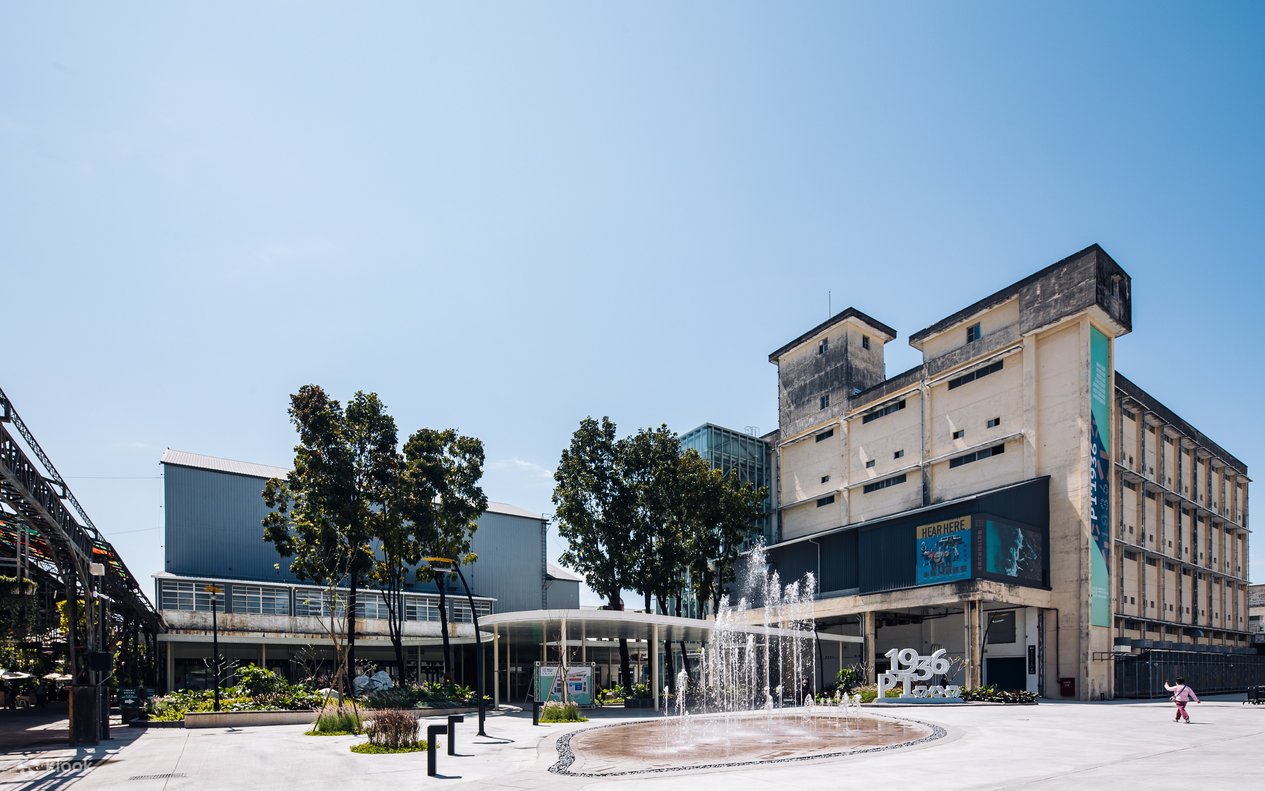
- A grand museum complex bringing together the Pingtung County Museum of Fine Arts, Pingtung Tobacco Culture Hall, Pingtung Hakka Museum, and Pingtung Indigenous Peoples Museum.
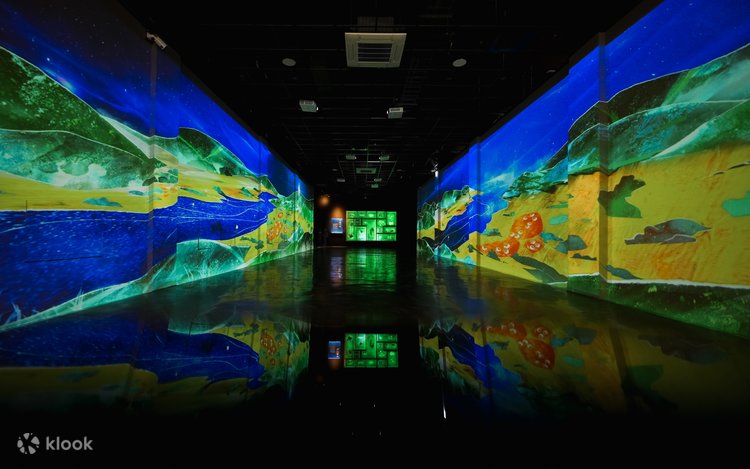
- Featuring multi-sensory and technological experiences, offering a variety of cultural themed special exhibitions.
- A one-stop deep cultural journey, seeing the art, culture, and industry of the world from Pingtung.
- Pingtung County Museum of Fine Arts -
|Collection Special Exhibition|Tuā-íng Khàm Huān (Great Surging Shore)
“Tuā-íng Khàm Huān” takes the surging waves brought by the Kuroshio Current as its starting point, with the magnificent visual and auditory imagery of waves covering the coast. It carries a strong geographical and local declarative tone, and also has the grand intention of embracing an international perspective. “Tuā-íng Khàm Huān” refers to the trend created by large waves hitting and covering the coast. Pingtung’s artistic vision gains a more fluid and vibrant spirit within the imagery of surging currents. The exhibition delves into the geographical characteristics of ocean waves, introducing five sub-themes: “People from Mountains and Seas,” “Confluence of Winds and Currents,” “Pioneers of the Southern Land,” “Aura of the New Era,” and “Future Art Forms.”
This exhibition includes over 100 pieces from the Pingtung County Government Cultural Affairs Department’s collection, which has been continuously cultivated over many years. It also features borrowed works from the Fukuoka Asian Art Museum, National Taiwan Museum of Fine Arts, Taipei Fine Arts Museum, Kaohsiung Museum of Fine Arts, Art Bank, Hongye Art Foundation, Han Sheng Magazine, artists, and their families. Additionally, three artists, Liu Chiu-er, Wu Cheng-chang, and An Sheng-hui, were invited to create new works for this exhibition, echoing Pingtung’s unique cultural atmosphere and further strengthening the connection between local customs and the exhibition’s spirit.
Curators|Huang Chih-wei‧Hsu Yuan-da
Exhibition Period|2026.3.28 to 2027.11.28
Hours|09:00 to 18:00, closed on Mondays
Location|Pingtung County Museum of Fine Arts (Pingtung 1936 Cultural Base ‧ No. 1, Yanchang Rd., Pingtung City)
- Warehouse No. 16 -
|Pingtung Tobacco Culture Hall|Tobacco. Leaf. Factory—The Golden Memory of Re-drying
The technical details in agricultural and industrial production can be said to be the fundamental driving force for cultural accumulation and the advancement of civilization. The Pingtung Tobacco Factory, in this context, is not just Pingtung’s unique industry and cultural asset, but also an important page in human civilization.
On Pingtung’s uniquely fertile soil, tobacco plants transform from green to golden. From sowing and harvesting to processing, the production process embodies regional customs, the wisdom of elders, and the diligent efforts of countless laborers. Focusing on tobacco leaves, they are meticulously processed by various machines: humidification, tipping, de-stemming, re-drying, packaging, and all other complex procedures. The exhibition also witnesses the essence of this unique industry and culture in Taiwan.
Upon arriving at the tobacco factory, the massive factory buildings, constructed sequentially starting in 1936, are the important place where all this was nurtured. Artisans with different specializations moved between machines and tobacco leaves, their exquisite labor skills must be recorded in the memory of civilization.
Today, the Pingtung Tobacco Factory is open to the public with the permanent exhibition “Tobacco. Leaf. Factory—The Golden Memory of Re-drying.” We invite everyone to visit the preserved machinery on-site to explore and understand the processing flow of tobacco production, to see the professional dedication hidden behind tobacco cultivation. Whether it’s the flavor of the land or the participation of artisans, both have shaped the cultural value of tobacco and the tobacco factory. Immerse yourself in this unique time and space, and personally experience this industry and labor memory from green to golden.
|Pingtung Hakka Museum|Liudui Imprint
“Liudui,” a term that has never officially appeared on maps, is nonetheless a description of a specific geographical area and an embodiment of a unique cultural spirit. It is both concrete and abstract; both classical and contemporary; both brave and united, yet gentle and refined. “Liudui” is not only a collective term for the Hakka ethnic group in the Kaohsiung-Pingtung area but also represents the moving life stories on this land over hundreds of years.
During the pioneering period, Hakka immigrants came to the fertile Pingtung Plain, rich in water resources. They dug ponds and built irrigation canals along rivers, diligently reclaimed land, established villages, and began a new chapter with the land. The sweat of their ancestors cultivated abundant crops and nourished every generation, forming prosperous and united communities. On this land, the Hakka people have inherited a traditional ritual life rich in meanings of reverence for heaven, gratitude to earth, thankfulness, and cherishing blessings. The spirit of loyalty, filial piety, integrity, and diligent study and farming has also been passed down through generations.
“Liudui Imprint” re-presents the development of the ethnic group through the life journeys of the Liudui people, showcasing the most unique material and spiritual elements of their culture through art. We invite you to come to Liudui and connect with its heart.
|Pingtung Indigenous Peoples Museum|People of the Slopes (Kacalisian)
Since ancient times, the Paiwan and Rukai people in southern Taiwan have called themselves “kacalisian,” meaning that from the time of creation myths, their origins, residences, farming, and hunting grounds have existed generation after generation on the “land of the slopes.” With Dawu Mountain, Damumu Mountain, Wutou Mountain, and other peaks in southern Taiwan as sacred mountains, they have sustainably passed down their humanistic art and lifeline on the sloping land.
The exquisite craftsmanship and ancient melodies displayed by the indigenous people living in the sloping mountains of Pingtung are definitely closely related to the philosophy and thinking of the ancient language “kacalisian.” In the mountain forests and lands of the slopes, the “hands” and “hearts” of the tribal people intertwine to form a unique and refined aesthetic of life. To this day, because of this special humanistic and artistic background and way of thinking, many new-generation Paiwan and Rukai artists, musicians, and cultural and creative workers have emerged.
The humanistic art of the people of the slopes encompasses every aspect of life, representing “the natural beauty expressed by the soul.” Whether it is the colors of clothing, carving craftsmanship, decorative art, traditional music and dance, or contemporary artistic expression, the people of the slopes have always told stories with an artistic mindset. Mountains, land, and people intertwine to form a unique and refined humanistic art, embodied in daily life.