

If there’s one thing that continues to attract tourists from all over the world to Barcelona, then it might be the legacy Antoni Gaudi has left throughout the city. From churches to residential buildings, his works are known for their unique blend of Gothic and Art Nouveau styles that are often inspired by nature.
The Sagrada Familia may be the most popular work of Gaudi in Barcelona, but it’s far from the only one. Scattered across the city are several other stunning landmarks that showcase his genius. So if you’re heading to this remarkable city, take the time to explore and admire the full range and iconic works of Gaudi in Barcelona! Here we have seven of his works designated as UNESCO World Heritage Sites, that you should definitely put on your list.
Sagrada Familia: The Crown Jewel of Gaudi in Barcelona

The Sagrada Familia in Barcelona, Spain
As mentioned, the Sagrada Familia is Gaudi’s most iconic work in Barcelona. But not only is it the most famous, it’s also the most ambitious! The basilica is still under construction after more than 140 years since construction began. While part of the reason why the construction is taking so long is because it’s entirely funded by private donations, Gaudi’s vision is so intricate with unique shapes, detailed symbolism, and complex geometry that construction is almost impossible especially before modern technology was available.
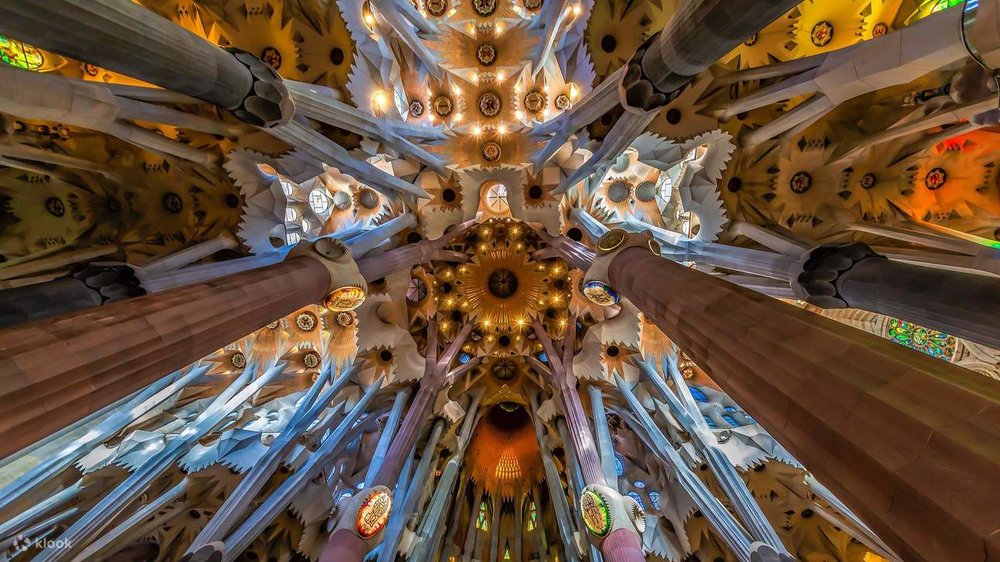
Blending Gothic and Art Nouveau styles, the interior feels like a forest of light and color. The basilica features three facades, 18 soaring towers (once done), and a design rich in symbolism. It’s said that the three facades symbolises the different chapters of Christ’s life from his birth to his spiritual ascension. Guide devoted the last years of his life to the Sagrada Familia and is actually buried inside, in the Chapel of the Virgen del Carmen, one of the four chapels within the basilica. Today, it’s the most visited monument in all of Spain and a must-see for anyone heading to Barcelona.
Park Güell: A Magical Playground of Architecture and Nature

Antoni Gaudi’s Park Guell in Barcelona Spain
Park Güell isn’t just one of the most whimsical, colorful, and imaginative public parks in Barcelona – it’s one of the most magical in the world! Gaudi worked with the land’s natural landscape, designing the park so that its landmarks feel like they grew right out of the hillside. It’s a fascinating blend of nature and architecture. The park is famous for its vibrant mosaics, like The Dragon, which is a mosaic-covered creature guarding the grand staircase, and the Serpentine Bench, a wavy, tiled bench covered in ceramic shards that winds along the main terrace.
There are many other highlights in Park Güell, but one key landmark here is the Gaudi House Museum, where Gaudi lived from 1906 to 1925! It’s now a museum showcasing some of his personal items and furniture he designed, making it a must-see for anyone seeking whimsical inspiration for their own homes. Also, keep in mind that the Monumental Zone, where you’ll see the main architectural features, is a ticketed entry so book your Park Guell Barcelona ticket ahead of your visit!
Klook tip: Visit early in the morning to enjoy fewer crowds and to witness the magical light cascading over the mosaics and ceramic shards. Then, head up to the terrace for one of the best views of the city, with the Mediterranean Sea stretching out in the distance!
Casa Milà (La Pedrera): The Stone Quarry

Antoni Gaudi’s Casa Mila or La Pedrera illuminated at night in Barcelona, Spain
Casa Milà, also known as La Pedrera, is another iconic Gaudi structure in Barcelona, famous for its unique wavy stone facade that looks like it was carved from a mountain (as if it was carved straight from the earth!) – hence the nickname “The Quarry.” The building is known for its artistic chimneys and breaks away from traditional architecture with wavy walls.
In fact, the entire structure has no straight lines or sharp corners! Its design maximizes light and ventilation as it was originally built as an apartment building. Today, it’s a museum and a UNESCO World Heritage Site showcasing Gaudi’s creativity and architectural genius. Be sure to buy tickets in advance, especially for the rooftop and guided tours!
Casa Batlló: The House of Bones and the Dragon

View of Antoni Gaudi’s Casa Batllo in Barcelona, Spain
Gaudi transformed a regular apartment block in Barcelona into the dreamlike Casa Battló, now a UNESCO World Heritage Site.reamlike structure. The building feels alive, as if pulled straight out from a fairytale, with balconies that resemble bones and window frames shaped like flowing water.
Its most iconic feature is the roof which looks like the arched back of a dragon, with shimmering ceramic tiles resembling scales, earning its nickname as the House of Bones or House of the Dragon. Casa Batlló showcases Gaudí's obsession with light, air, color, and movement; it's a definite must-see for those fascinated by fairytales and dragons.
You can visit during the day to explore the museum in full light, or join a night tour with light projections for an even more magical experience. In the summer, the rooftop comes alive with live music, offering an unforgettable setting that truly feels like stepping into another world!
Casa Vicens: Gaudi’s First Masterpiece

Exterior of Casa Vicens by Antoni Gaudi in Barcelona, Spain
Built as a summer home for a wealthy stockbroker in the 1880s, Casa Vicens was Gaudi’s first big architectural project. It’s much smaller and less famous than the Sagrada Familia or Casa Battló, but this house marks the beginning of the style that would later define Gaudi’s career!
Now a museum, Casa Vicens bursts with vibrant colors and playful details, including sunflower motifs and intricate tile work. Inside, you’ll find beautifully restored rooms, ornate ceilings, and a garden that reflects Gaudi’s belief in blending architecture with nature. Considered a hidden gem and less crowded than his other works, it’s a must-see for anyone curious about the early roots of Gaudi’s genius!
Colònia Güell & Crypt: Gaudi’s Hidden Lab

Interior of Colonia Guell by Antoni Gaudi in Barcelona, Spain
Another lesser-known work of Gaudi in Barcelona is Colònia Güell, built as part of a textile workers’ village. It’s home to the Crypt of Colònia Güell, which is an unfinished church that became Gaudi’s testing ground for ideas that he later used in the Sagrada Familia—hence it being considered Gaudi’s “lab.”
The crypt features colorful stained glass and organic forms that, again, seem to grow from the earth itself, which is a signature design by Gaudi. Located just outside of Barcelona, it’s where you can enjoy a quieter and off-the-beaten path Gaudi experience. Join a guided audio Gaudi tour to learn intriguing stories of both the crypt and the village!
Palau Güell: Gaudi’s Urban Mansion for a Tycoon
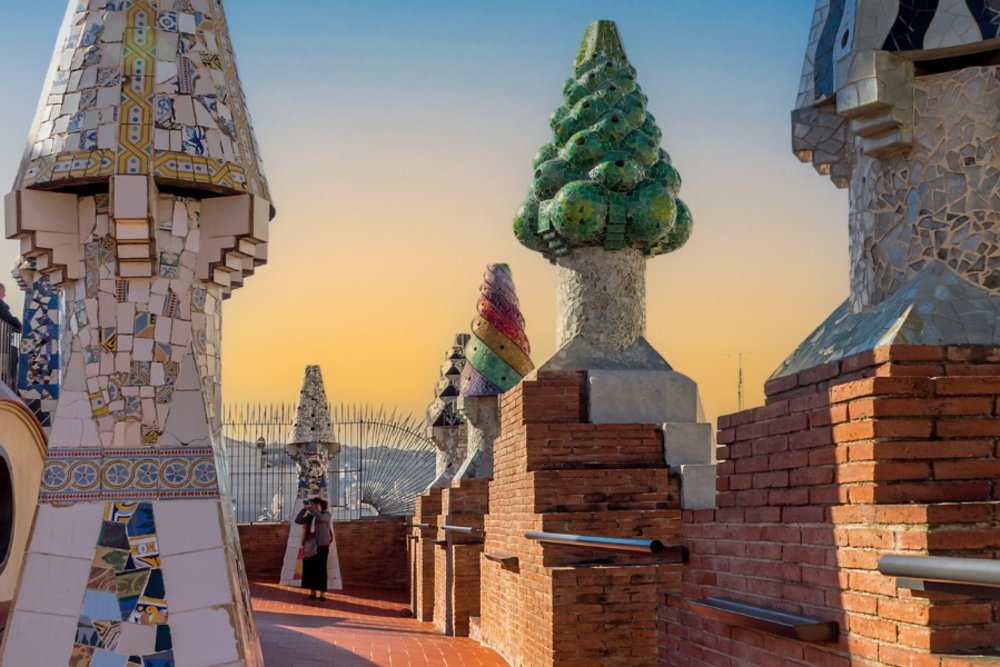
Whimsical chimneys in Palau Guell by Antoni Gaudi in Barcelona, Spain
Palau Güell is another one of Gaudi’s early masterpieces, which is a city mansion built for his patron, Eusebi Güell, between 1886 and 1890. While a little more subdued from the outside, the interior is full of luxurious details with intricate woodwork, stained glass, and a central hall that’s sure to leave any visitor in awe.
As with many of his works, Gaudi played with space, light, and ventilation in clever and playful ways, and the rooftop features a collection of colorful, mosaic-covered chimneys that would later become one of his signature designs. Located just off La Rambla in Barcelona, Palau Güell offers a quieter, and more intimate glimpse into the early evolution of Gaudi’s work.
Tips for Visiting Gaudi’s Structures in Barcelona
1. Book tickets in advance
Gaudi’s sites can sell out quickly especially during the peak season so it’s best to book online. You can get tickets to all seven UNESCO World Heritage Site Gaudi structures ahead of time when you book on Klook. You’ll easily secure your preferred time slots and avoid long lines!
You can also look into combo tickets or passes such as the Klook Pass Barcelona or the Barcelona City Pass to save money and time for your Gaudi tour in Barcelona!
2. Visit early or late in the day
The best time to visit the Gaudi structures in Barcelona is during the early morning or late afternoon, when the crowds are thinner and the lighting is more ideal especially for places like Park Güell or Casa Batlló, where natural light enhances the experience.
3. Get the audio guides
Most structures of Gaudi in Barcelona sites offer audio guides that offer more context of the structures, helping you understand the symbolism (especially because there’s a lot of it!), design techniques, and Gaudi’s intentions behind each intricate detail. Be sure to get an eSim so you can easily download these audio guides on your phone for a more experiential Gaudi tour in Barcelona.
4. Don’t rush the rooftops
The rooftops of Casa Batlló, Casa Milà, and Palau Güell are amazing works of art in themselves so be sure to take your time to appreciate them! Often overlooked by visitors rushing through, these rooftops are where Gaudi’s imagination really comes alive. Slow down, and don’t miss out on this amazing experience.
See Barcelona Through the Eyes of a Genius

Gaudi’s Casa Batllo in Barcelona, Spain
Thanks to the remarkable structures of Gaudi in Barcelona, the city’s architecture just doesn’t stand still – it breathes, bends, and tells a story! His works feel alive, shaped by nature, filled with movement, and rich with symbolism. So whether it’s your first visit or your third, Gaudi’s masterpieces will always leave you looking up in wonder because in Barcelona, architecture isn’t just seen, it’s experienced.
FAQs that travelers like you have on Guadi structures in Barcelona
What is the best Gaudi building to visit in Barcelona?
While there’s not one “best” Gaudi building in Barcelona – each landmark is uniquely remarkable and fascinating – the Sagrada Familia is definitely one of the most iconic and awe-inspiring structures by Gaudi that you should visit in Barcelona.
What are the 3 houses of Gaudi in Barcelona?
For easy reference, the Gaudi buildings in Barcelona that start with Casa are his residential works. These include Casa Batlló, Casa Milà, and Casa Vicens.
Why is Gaudi so famous in Barcelona?
Apart from the fact that Antoni Gaudi spent most of his life and studied architecture there, Gaudi is famous in Barcelona for the incredible legacy he left across the city. From dragon-backed rooftops to tree-like columns and glowing stained glass walls, Gaudi’s works have helped put Barcelona on the map and home to an impressive seven UNESCO World Heritage Sites all linked to his genius.
What is Klook?
Klook is a leading pan-regional experiences platform in Asia Pacific, purpose built to digitalize experiences and make them accessible to every traveler.
Our mission is to build the digital infrastructure for the global experience economy — empowering merchants to share their passions and travelers to discover the heartbeat of each destination. We operate a mobile-first, curated platform featuring diverse experiences across global destinations.
✨ Follow us for more deals and inspiration for your upcoming travels