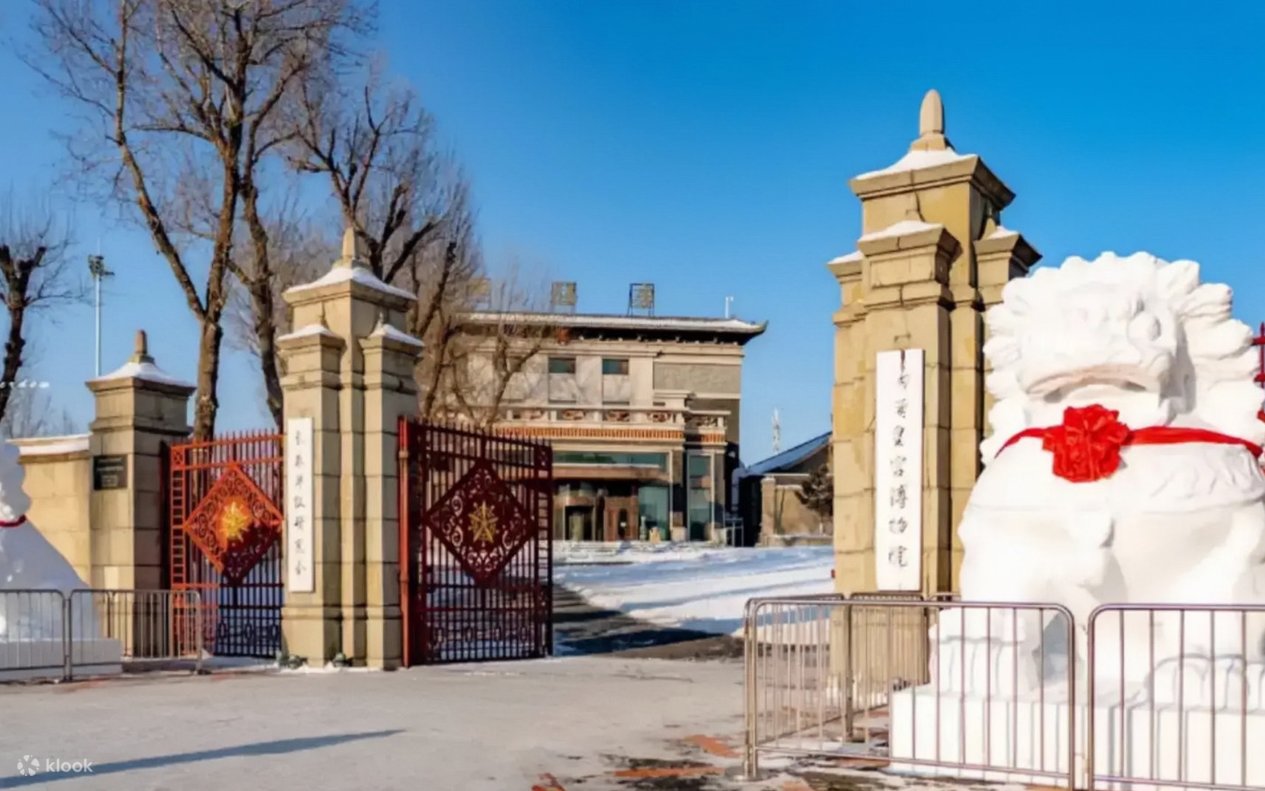
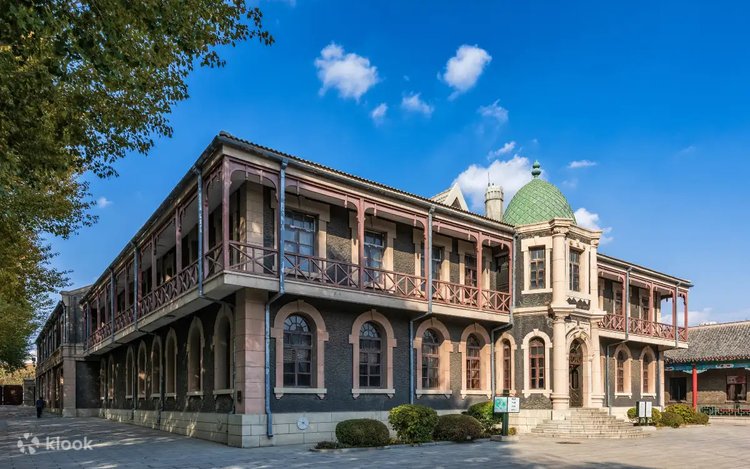
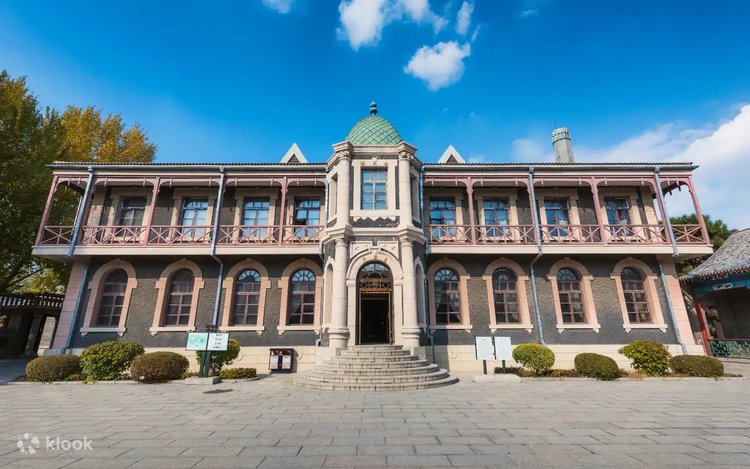
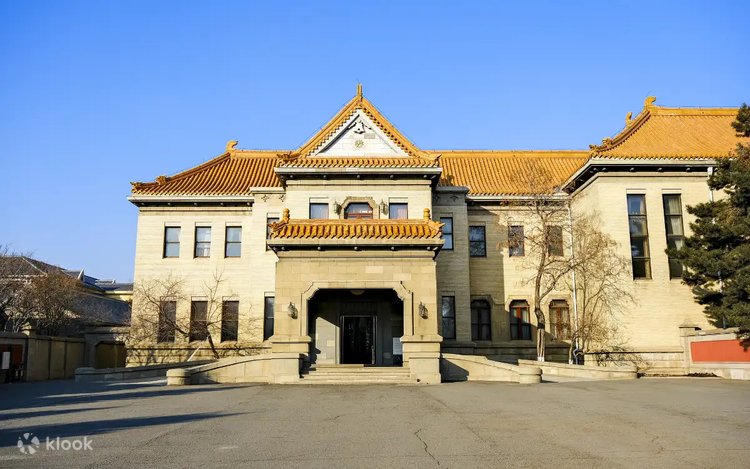
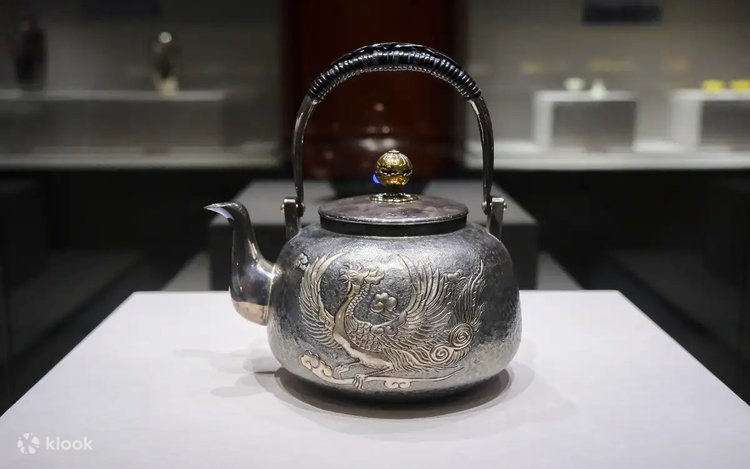
Palace Museum of The Manchurian Regime


Packages
Tickets
 Valid on the selected date
 Conditional cancellation
 24-hour confirmation


- Adult ticket: Adults between 18-59 years old
- Senior ticket: Seniors between 60-64 years old
- Student ticket: Full-time university, middle school, and elementary school students (with student ID card)
- Military ticket: Retired military personnel
- Please read the precautions carefully when placing your order to avoid purchasing errors that may affect your travel plans;
- Children under 1.2 meters can enter for free, accompanied by an adult. Please take good care of your valuables to avoid loss.
- If the scenic spot is closed due to force majeure factors such as climate, natural disasters, or national government departments, affecting the itinerary, we will not bear any legal liability or economic compensation liability, but we can change the usage date for you once for free. All orders placed are deemed to accept this statement.
- Please be aware that orders are subject to actual ticket issuance.
- No refunds will be issued after the use of discounted tickets.
- The voucher is valid only on the specified date (and time if applicable)
- Present your mobile voucher
- Manchukuo Imperial Palace Museum Ticket Office
Admission + "Imperial Xuanmo" Dance & Music Show Ticket
Valid on the selected dateConditional cancellation24-hour confirmationImperial Palace Xuanmo Song and Dance Performance Ticket
Valid on the selected dateConditional cancellation24-hour confirmationReviews
Guide
The Museum of the Imperial Palace of "Manchukuo" is a cultural tourism landmark in Changchun City, combining the dual attributes of "museum + scenic spot." It is currently a national first-class museum, a national key cultural relics protection unit, one of the first batch of national AAAAA-level tourist attractions, a national patriotism education demonstration base, a national research and practice education base for primary and secondary schools, one of the national "most innovative museums," and the most influential project unit of the International Best Heritage Utilization Organization Conference.
The Museum of the Imperial Palace of "Manchukuo" is located at No. 5 Guangfu North Road, Kuancheng District, Changchun City, Jilin Province. Its predecessor was the Changchun Salt Warehouse in the late Qing Dynasty, and in the early Republic of China, it was the official residence of the Jilin-Heilongjiang Salt Administration Bureau, which managed salt affairs in the two provinces. From 1932 to 1945, it served as the imperial residence of Puyi, the puppet emperor of "Manchukuo." In 1962, it became the Exhibition Hall of Imperialist Aggression in Northeast China and the Exhibition Hall of the Puppet Imperial Palace. In 2000, it was officially renamed the Museum of the Imperial Palace of "Manchukuo" and became an important site for patriotic education.
In recent years, with the vision of "becoming a leader in innovative operations for Chinese museums + scenic spots," the Museum of the Imperial Palace of "Manchukuo" has achieved leapfrog development in various businesses and an overall improvement in its comprehensive operations through strategies such as academic establishment, creative prosperity, innovative strengthening, and open sharing. The museum is composed of six functional areas: the imperial core area, the Exhibition Hall of the History of Northeast China's Occupation, the Museum's Eye Art Palace, the M+ Creative Block, the interactive experience area, and the office area.
The Museum of the Imperial Palace of "Manchukuo" currently houses 39 original displays of the "Manchukuo" imperial palace, including Jixi Building, Qinmin Building, and Tongde Hall, as well as 4 large basic exhibitions and 12 special exhibitions. It has collected over 73,000 pieces of art treasures, including a large number of "Manchukuo" imperial palace cultural relics, modern Japanese cultural relics, modern Northeast cultural relics, folk cultural relics, and representative modern and contemporary calligraphy, paintings, sculptures, and works by intangible cultural heritage inheritors.
You might also like...
Explore more on Klook
Everything you need for your Changchun visit


Museum of the Imperial Palace of Manchukuo

Guidebook
The Museum of the Imperial Palace of "Manchukuo" is a cultural tourism landmark in Changchun City, combining the dual attributes of "museum + scenic spot." It is currently a national first-class museum, a national key cultural relics protection unit, one of the first batch of national AAAAA-level tourist attractions, a national patriotism education demonstration base, a national research and practice education base for primary and secondary schools, one of the national "most innovative museums," and the most influential project unit of the International Best Heritage Utilization Organization Conference.
The Museum of the Imperial Palace of "Manchukuo" is located at No. 5 Guangfu North Road, Kuancheng District, Changchun City, Jilin Province. Its predecessor was the Changchun Salt Warehouse in the late Qing Dynasty, and in the early Republic of China, it was the official residence of the Jilin-Heilongjiang Salt Administration Bureau, which managed salt affairs in the two provinces. From 1932 to 1945, it served as the imperial residence of Puyi, the puppet emperor of "Manchukuo." In 1962, it became the Exhibition Hall of Imperialist Aggression in Northeast China and the Exhibition Hall of the Puppet Imperial Palace. In 2000, it was officially renamed the Museum of the Imperial Palace of "Manchukuo" and became an important site for patriotic education.
In recent years, with the vision of "becoming a leader in innovative operations for Chinese museums + scenic spots," the Museum of the Imperial Palace of "Manchukuo" has achieved leapfrog development in various businesses and an overall improvement in its comprehensive operations through strategies such as academic establishment, creative prosperity, innovative strengthening, and open sharing. The museum is composed of six functional areas: the imperial core area, the Exhibition Hall of the History of Northeast China's Occupation, the Museum's Eye Art Palace, the M+ Creative Block, the interactive experience area, and the office area.
The Museum of the Imperial Palace of "Manchukuo" currently houses 39 original displays of the "Manchukuo" imperial palace, including Jixi Building, Qinmin Building, and Tongde Hall, as well as 4 large basic exhibitions and 12 special exhibitions. It has collected over 73,000 pieces of art treasures, including a large number of "Manchukuo" imperial palace cultural relics, modern Japanese cultural relics, modern Northeast cultural relics, folk cultural relics, and representative modern and contemporary calligraphy, paintings, sculptures, and works by intangible cultural heritage inheritors.