Taiyuan Botanical Garden


Packages
Tickets
 Valid on the selected date
 Conditional cancellation
 Instant confirmation


- Adult Ticket: Adults aged 18 and above, but under 60.
- Child ticket: Minors aged 6 or above, and 18 or below.
- Student Ticket: Applicable to full-time university undergraduate/junior college students
- The voucher is valid only on the specified date (and time if applicable)
- Present your mobile voucher
- Scenic spot ticket gate
Reviews
Guide
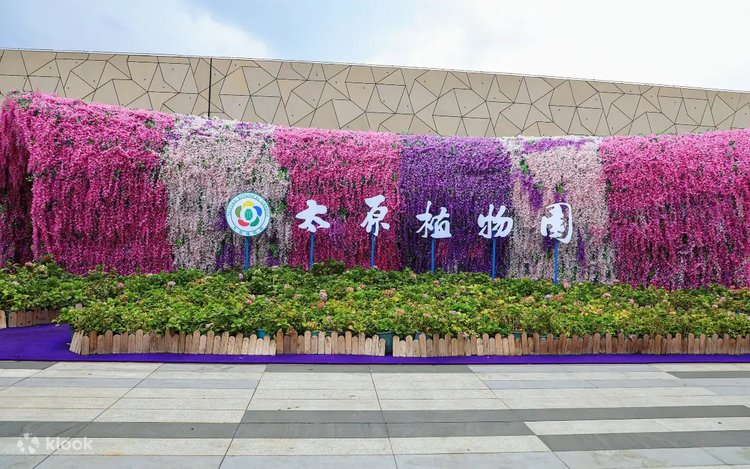
Overview of Taiyuan Botanical Garden
The scenic area is a landscaping project designated by the municipal party committee, selected as the third batch of PPP demonstration projects by the Ministry of Finance, and awarded the Shanxi Province PPP Project Award for Improving Human Settlements. It is located at the foot of Taishan Mountain in Jinyuan District, extending from the Fengyu Gully entrance in the west to the old Jinci Road in the east, from the Fengyu Shahe River in the north to the Taigu Highway in the south, covering a total area of approximately 2,730 mu, with a total project investment of 3.558 billion yuan.
The overall planning of the park is divided into five functional areas: Entrance Management Area, Plant Scientific Classification Area, Plant Scientific Application Area, Plant Evolution Exhibition Area, and Scientific Experiment Area. The construction content includes five major building areas: the main entrance building, exhibition greenhouses, bonsai museum, waterfront restaurant, and research center, as well as twenty-five specialized gardens. More than 3,000 plant species have been collected. The architectural design of the botanical garden project was completed by the internationally renowned design companies DMAA Architecture Design Co., Ltd. of Austria and Valentin Urban Planning and Landscape Design Office of Germany, and the landscape design was completed by the Beijing Forestry University Beilin Landscape Planning and Design Institute.
The scenic area takes the protection of Shanxi Province's biodiversity, plant resources, and historical resources as its mission, collecting temperate plant resources, mainly characteristic plants from the Taihang Mountains and Lüliang Mountains, introducing and domesticating new, excellent, and special varieties suitable for the local area, fully leveraging its popular science and educational functions, and achieving an organic combination of beautiful garden appearance, scientific connotation, and distinctive local cultural resources. It is a comprehensive botanical garden in our province that integrates scientific research, popular science education, tourism, ecological leisure, and cultural tourism, providing citizens with a good place to systematically learn about plant science, as well as for leisure, entertainment, and vacation. At the same time, it is connected to Jinci Temple, Tianlong Mountain Scenic Area, Taishan Longquan Temple Scenic Area, Mengshan Giant Buddha Scenic Area, Jinyang Lake Park, and Jinyang Ancient City Ruins Park, forming a unique tourism brand for Taiyuan City.
In addition, its construction has provided the necessary conditions for our city to consolidate its title as a "National Garden City" and create an ecological garden city. It also plays a very important practical and strategic role in improving the categories of parks in our city, promoting the rapid formation and development of the provincial capital's tourism area, improving the urban ecological environment, building a historical and cultural city, enhancing urban taste, and creating a city of green mountains and clear waters, a harmonious and livable city.
Main Entrance
The main entrance building covers an area of 20,135 square meters, incorporating the architectural style of Shanxi courtyards. It is a comprehensive building that integrates offices, a plant popular science museum, a specimen museum, an auditorium, a restaurant, and tourist reception. Visitors can stand on the cantilever of the main entrance to overlook the entire botanical garden, and in the distance, they can also gaze at Taishan Mountain, with beautiful scenery in full view.
At the main entrance, there are also the Taiyuan Botanical Garden Plant Popular Science Museum and the Insect Specimen Museum. The Taiyuan Botanical Garden Plant Popular Science Museum covers an area of 4,300 square meters. All 118 educational popular science videos in the museum were independently directed and filmed by our garden. The exhibition mainly focuses on the theme of "Vibrant and Everlasting Life" and is divided into seven major exhibition areas: Plant Evolution (Exploring the Origin of Plants), Plant Mysteries (Understanding Plant Structure), Plant Wisdom (Witnessing the Wonders of Plants), Plant Value (Counting the Contributions of Plants), Plant Ecology (Appreciating the Influence of Plants), Plant Culture (Plants and Traditional Chinese Culture), and Jinmei Plants (Distribution and Protection of Shanxi Plants). In the wonderful atmosphere of innovative integration of art and nature, light and shadow, and flowers and leaves dance gracefully with the visit.
The Insect Specimen Museum displays more than 2,000 boxes (over 4,000 specimens) of rare insects and other arthropods. Through the explanation of basic knowledge, it aims to enable people to understand nature, feel nature, and love nature, thereby enhancing their awareness of protecting insects, plants, and the environment.
Insects are closely related to human life and are one of the most successful, diverse, and wonderfully evolved groups of organisms on Earth. From colorful butterflies, honey-making bees that visit flowers, cicadas that sing loudly, to agile dragonflies, and mantises that wield "big knives"; from swarms of ants to annoying mosquitoes, flies, cockroaches, and so on. The variety of insects is beyond the reach of other animals.
Insects are not only numerous in species, but the number of individuals of the same species is also astonishingly large. There are over 1.1 million known insect species worldwide, and possibly millions more waiting to be discovered. Harmonious coexistence between humans and nature has become a consensus in human society today. Only by living in harmony with the animals and plants in nature can humans achieve sustainable development, which is the purpose and significance of our insect specimen popular science exhibition.
Exhibition Greenhouses
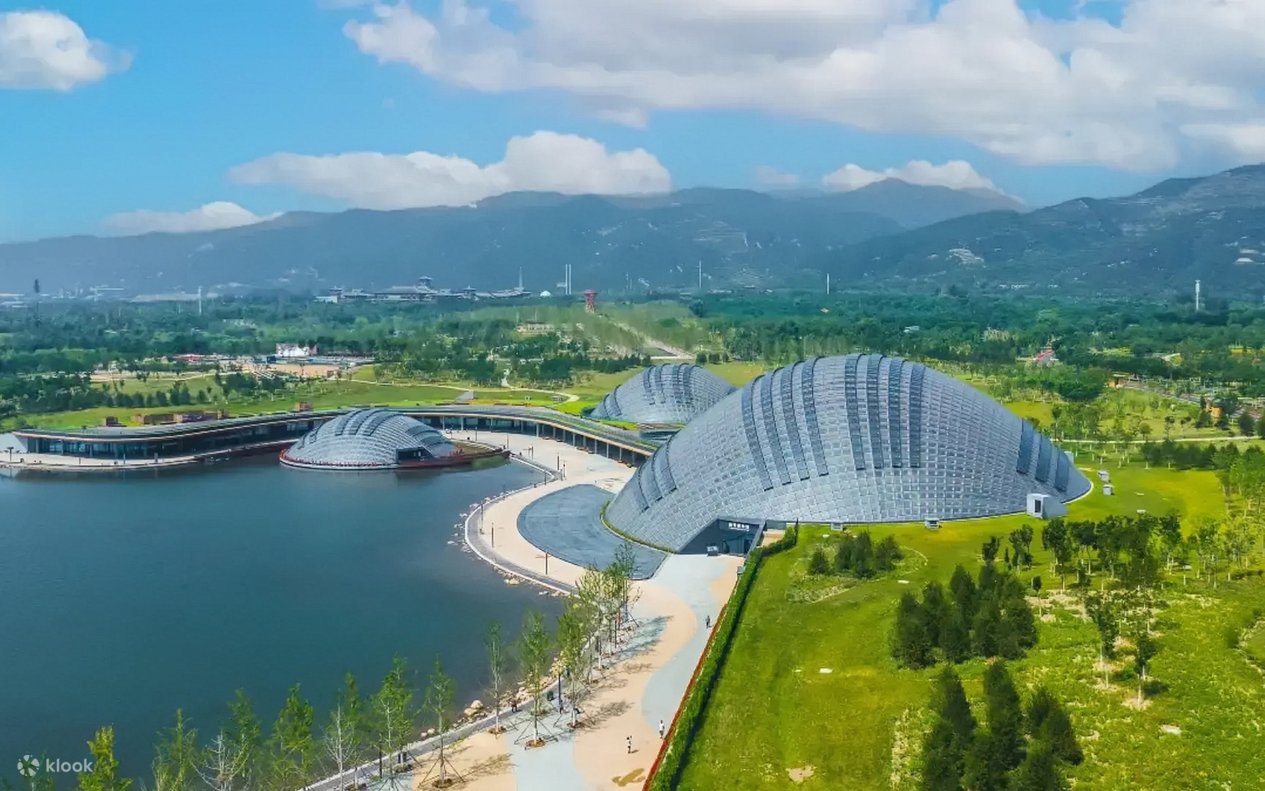
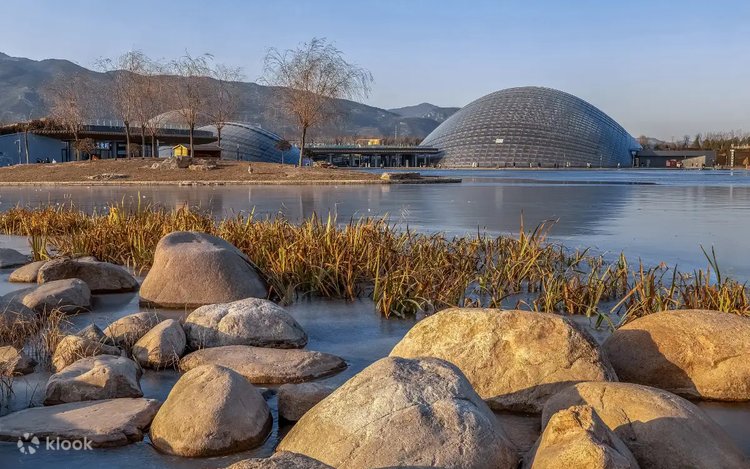
The botanical garden's greenhouse complex consists of three individual greenhouses: the Tropical Rainforest Pavilion, the Desert Plant Pavilion, and the Precious Flower Pavilion, as well as a greenhouse energy center. The three exhibition greenhouses are all built with wooden dome structures, spanning 88 meters. Their construction concept inherits Shanxi's classical wooden structure theory on the basis of modern greenhouse construction, representing a combination of classical and modern, and a humble tribute from the botanical garden to the land beneath its feet. The Tropical Rainforest Greenhouse covers an area of 5,521 square meters and consists of the Tropical Rainforest Spectacle Area, Tropical Rainforest Community Simulation Area, Flying Waterfall Viewing Area, Fun Plant Garden, Palm Garden, and Tropical Aquatic Plant Garden; the Desert Plant Pavilion covers an area of 2,245 square meters, collecting and displaying desert plants from Africa, America, and Australia respectively; the Precious Plants and Seasonal Flowers Exhibition Greenhouse covers an area of 1,470 square meters, mainly collecting and displaying tropical flowers, ferns, shade plants, and so on.
For a long time, the botanical garden's exhibition greenhouses have become a charming place in the hearts of visitors. Beautifully shaped large exhibition greenhouses, such as the Palm House and Princess of Wales Conservatory at Kew Gardens in the UK, the grid-shell large-span hemispherical greenhouse at Missouri Botanical Garden in the US, the New York Botanical Garden Conservatory, and the Longwood Gardens Conservatory in Philadelphia, have not only become the diamonds in the crown of the botanical garden but also symbols of the architecture, culture, and civilization of their respective cities. To a certain extent, exhibition greenhouses can represent the cultural and scientific and technological development level of a city.
Exhibition greenhouses originated in the European Renaissance. At that time, greenhouses served as cultivation and breeding bases for plant introduction, providing experimental materials and venues for scientific research, as well as places for cultivating flowers and trees for family use. With the development of economy, science and technology, and human understanding of nature, exhibition greenhouses have also undergone significant changes. Today's exhibition greenhouses are not only places for plant collection and display, scientific conservation and research, but also green spaces that integrate ecology and environment, popular science and education, culture and art, and tourism and viewing. Therefore, exhibition greenhouses are a multi-level, multi-field, multi-disciplinary intersection, and their construction and operation involve architecture, horticulture, ecology, aesthetics, and management, forming an indoor garden that is artificially controlled and displays plants and their living environments from different regions and climatic conditions.
Tropical Rainforest Pavilion
The Tropical Rainforest Pavilion covers an area of 5,521 square meters, relying on the existing mountain terrain to the north and connecting to a body of water to the south. It showcases diverse landscape spaces through cliffs, precipices, canyons, caves, and flying waterfalls. The mountain reaches a height of 12 meters, with steep slopes and sheer cliffs, while also featuring deep canyons, cascading waterfalls, and babbling streams. The overall layout is well-balanced, creating a naturally varied topography. These nodal spaces are connected by viewing paths such as sunken bridges, boardwalks, platforms, and stepping stones.
The exhibition hall features various typical tropical rainforest plants. The upper layer is dominated by tall trees, with their crowns towering above other tree layers, like "a crane standing among chickens"; the middle layer consists of medium and small trees, interspersed with epiphytic and climbing plants, forming a sky garden. The lower layer has various ground cover plants and ferns, sparsely and densely arranged. The roots of large trees are intertwined and varied in form, as if traversing a beautiful and mysterious plant world of the tropical rainforest, either magnificent and grand, or exquisite and unique, or simple and serene, extremely infectious. The exhibition hall is composed of six areas.
Tropical Rainforest Spectacle Area
The terrain of cliffs and precipices at the entrance leaves visitors entering the exhibition hall in awe. Stone carvings and rock paintings reflecting the regional culture of the rainforest can be seen everywhere on the cliff walls. Following the direction of the cliffs, one can faintly hear the distant rumble of water and see the boardwalk spanning in the air, attracting visitors to explore involuntarily. One can also ascend the steps to a 5-meter-high aerial viewing platform, where the beautiful scenery is unobstructed. The plant configuration in this area mainly focuses on displaying the typical landscape characteristics of the tropical rainforest, such as the eight major phenomena of the tropical rainforest and the "five trees and six flowers" of Buddhist culture.
Tropical Rainforest Community Simulation Area
Cleverly utilizes undulating terrain to showcase typical landscapes of Asian tropical rainforests, American tropical rainforests, and African tropical rainforest plant communities. The jungle is lush with greenery, and the tree canopy is tall and dense. Sky gardens created by epiphytic plants can be seen everywhere, colorful and full of spring. The roots of various plants are diverse in form and unique in character, making visitors feel as if they are in a tropical rainforest, personally experiencing its unique charm.
Flying Waterfall Viewing Area
At the entrance, the sound of the waterfall is heard before it is seen, and after a winding path, it suddenly appears before the visitors. The waterfall is the core landscape of the scenic area, with a height difference of 9 meters, cascading down, formed by stacked stones. A clear pool of water at the bottom of the waterfall combines movement and stillness, integrating plants with mountains and water. The viewing point for the waterfall is the viewing platform, from which one can gaze from a high vantage point, inspiring endless imagination. A hard ground area is left in front of the waterfall for visitors to stroll, enjoy the scenery, rest, and take photos.
Tropical Rainforest Fruit Tree Area
This area is located on the northwest side of the exhibition hall, with the mountain reaching a height of 12 meters and water flowing gently. Various interesting rainforest fruits, such as bananas, papayas, guavas, and jackfruits, are arranged according to the terrain. Each fruit has different suitable growing conditions, but the common characteristic is that they prefer heat and are not cold-tolerant, so they grow in warm, high-humidity places. The tropical rainforest fruit tree area showcases this dazzling and unique phenomenon, creating a rainforest paradise for visitors.
Tropical Rainforest Style Area
This area is located at the west entrance, with relatively flat terrain, concentrating on planting various tall and upright palm plants with diverse and elegant postures. Seasonal flowers are arranged beneath the trees, with bright and vibrant colors, and are replaced periodically according to the season, creating a charming exotic atmosphere.
Tropical Aquatic Plant Garden
With the tall mountain as the background, the entire mountain's water system returns to this body of water in the layout. Visitors walk through the undulating tropical jungle, dazzled and thrilled, arriving at an open body of water, quiet and soothing. Strolling on the wooden bridge, interacting with the water, they can let their spirits soar.
Desert Plant Pavilion
The Desert Plant Pavilion is a landscape greenhouse that integrates species conservation, scientific research, and popular science display. The exhibition hall collects desert plants from Australia, Africa, Asia, and America, showcasing the customs and traditions of different desert regions. This pavilion combines the existing terrain and uses a large-scale layout method, dividing the greenhouse into regional exhibition areas based on the origin of cacti and succulents.
American Desert Plant Area
This area covers approximately 600 square meters and is the main exhibition area within the pavilion. This area features backbone plants such as the saguaro cactus, the golden barrel cactus, the eagle-clawed ferocactus, the bottle palm with a trunk shaped like a wine bottle, the turtle-shell-like trunk of the turtle-shell hibiscus, and the noble and elegant yucca. Other agave and cactus family plants are arranged sparsely and densely, allowing visitors to truly experience the strong Indian-style American desert landscape.
African Desert Plant Area
This area covers approximately 200 square meters, focusing on displaying representative desert plants native to the vast African desert and savanna-desert regions. With the silver-needled, imposing African baobab tree, the vigorous branches and fiery red flowers of the desert rose, the miraculously crafted and awe-inspiring Aloe dichotoma, and the solitary, flowerless and leafless pencil tree as the backbone of the community, complemented by wind-eroded rocks and isolated sand dunes, and interspersed with other desert plants such as Aloe and Sansevieria, visitors feel as if they are in the lonely, vast, and boundless African desert where eagles soar.
Australian Desert Plant Area
This area covers 50 square meters, featuring the tall and majestic Queensland bottle tree shaped like a giant jar, the elegant and handsome blackboy tree known as Australia's "black horse prince," and the robust and powerful Australian cycad as the backbone of the community. Complemented by red soil and red curved rocks, and then sparsely and densely arranged with other small and medium-sized desert plants, it showcases a unique and charming Australian style.
Exquisite Desert Plant Display Cabinets
Mainly display some deformed variations in the shape or epidermal color of certain desert plant species during their growth, such as variegation, cresting, and fasciation. Since the probability of occurrence is very low and they are generally difficult to see, mutated individuals are particularly precious. On one side of the desert greenhouse steps, several sets of glass display cabinets are arranged, mainly to display crested golden barrel cacti, variegated golden barrel cacti, crested African baobab trees, and relatively rare exquisite desert plants such as the Lithops genus of the Aizoaceae family.
The dry stream winds and twists, narrowing from wide to narrow, passing through various exhibition areas to connect the entire desert plant pavilion before disappearing inside the pavilion, symbolizing the desert's longing for water and its long-standing historical culture. In the middle of the site, a giant structure shaped like a bottle tree is made of driftwood for the central peak column, serving as an extension of the entire site's internal space. The raised part in the middle can display some folk culture specimens from various regions.
Seasonal Flower Pavilion
This greenhouse covers an area of 1,470 square meters, introducing the concept of a sunken garden, with roads connecting three landscape levels: high, medium, and low, with a drop of 3 meters, spiraling downwards. The north entrance is the main viewing route, descending step by step through the second-floor viewing platform to the bottom of the entire exhibition hall. The south side has an accessible passage for special groups to reach the bottom. In terms of plants, tropical flowers, ferns, and shade plants are used to create rich landscape layers. The retaining walls with varying heights are a major feature of this exhibition hall, displaying rich wall facade effects with materials such as stainless steel plates, stone, and plants.
Greenhouse Plant Exhibition Area
This area covers 470 square meters, concentrating on displaying precious plants, shade plants, and ferns, with some uniquely shaped and elegant landscape tree species or precious plants interspersed locally.
Carnivorous Plant Exhibition Area
Carnivorous plants use various means to make insects stay on their leaves and stems, then fall into their traps, and then be eaten. The exhibition area displays carnivorous plants through transparent glass display panels, which not only ensures the safety of visitors but also allows them to observe the growth forms of carnivorous plants up close.
Flower Theme Scenic Spot Exhibition Area
This area covers 235 square meters, combining walls and streams, and is built with orchids as the main floral material to create a themed scenic spot. Here, visitors can admire different varieties of orchids and experience an orchid feast. Here, there are different themed flower displays throughout the year, with flowers and scenery, scenery with flowers, and flowers imbued in the scenery, making it a good place for visitors to take photos.
Exquisite Flower Exhibition Area
Concentrates on displaying precious orchid varieties from all over the world in the form of shelves, partitions, driftwood, and display cabinets. Such as: American Cattleya, Southeast Asian "Queen of Orchids" Phalaenopsis, Korean "Orchid New Star" Cymbidium, "Greek Princess" Brassavola, "Elegant Dancer" Oncidium, etc.
Hanging Plant Exhibition Area
This area covers 50 square meters, concentrating on arranging various tropical orchids and other hanging foliage and flowering plants using various carriers. Three large three-dimensional floral art arrangements, arranged at different heights, are pleasing to the eye.
Bonsai Museum
A flower, a leaf, a bodhi; a pot, a scene, a world.
Bonsai originated in China and has a long and rich history. In the long river of human social history, in primitive times, humans lived in groups in nature and depended on nature. With the development of human civilization, people living in cities, although living in cities, still yearn for and love every plant, every tree, every mountain, and every river in nature.
This circular streamlined building adopts a combination of virtual and real techniques, integrating ancient and modern, to showcase the long history, unique techniques, innovative achievements, and cultural connotations of bonsai. In the torrent of inheritance and innovation, it will remain true to its original aspiration and open a new chapter for Jin-style bonsai!
The Bonsai Museum is divided into two floors. Currently, the first floor exhibits strange stones and rockery bonsai, and the second floor exhibits tree bonsai, succulents, and other plants. Screens, railings, tables, and other furniture facilities are used to divide the space and display bonsai and strange stones, showcasing the great art of Chinese bonsai in a situational mode.
Bonsai emphasizes the integration of one scene, two pots, and three stands. The three elements of bonsai complement each other and are integrated, and the integration of multiple artistic elements presents the overall beauty and artistic beauty of the work. The artistic creations of bonsai craftsmen throughout the ages have made small bonsai display a vast world. The beauty of nature can be seen in the bonsai, and the ingenuity of the craftsman can be recognized in the artistic conception.
As the saying goes, bonsai and strange stones are inseparable. Many people who play with bonsai are also strange stone enthusiasts. Because stones are used when making rock-attached bonsai and water-and-land bonsai, if there are strange stones to complement them, it will be even more perfect. In addition, bonsai and strange stones are both elegant hobbies, and there are many similarities between them.
Waterfront Restaurant
The waterfront restaurant covers an area of 2,822 square meters, built by the water. The roof adopts a traditional Chinese raised-beam wooden structure, and the floor-to-ceiling glass design offers an unobstructed view of the botanical garden's beautiful scenery. Dining here is a feast for both the eyes and the taste buds.
Research Center
With a total area of approximately 54 mu, the research center consists of 7 single buildings: a library and specimen museum, staff apartments, an experimental office building, expert apartments, and a garden waste treatment station. To meet the needs of researchers for plant resource introduction and domestication, ex-situ conservation, and scientific research, the research center also has 300 mu of experimental fields.
25 Specialized Gardens
In addition, there are twenty-five specialized gardens, including: Plant Application Garden, Brilliant Autumn Garden Bamboo Garden, APG Classification Garden, Rose Garden, Rare and Endangered Species Garden, Perennial Flower Garden, Lilac Viburnum Garden, Chrysanthemum Garden, Rock Garden, Medicinal Tea Garden, Orchard, Arboretum, Ginkgo Pine and Cypress Garden, Bonsai Garden, Locust Fragrance Garden, Climbing Plant Garden, Water Feature Garden, Brownfield Restoration Demonstration Garden, Peach Blossom Garden, Cherry Plum Garden, Crabapple Garden, Peony and Peony Garden, Poplar Willow Linden Garden, and Magnolia Garden. The beautiful scenery is continuous throughout the year. In spring, flowers bloom profusely; in summer, greenery is lush; in autumn, the garden is golden; and in winter, pines and cypresses stand tall.
Additional information
No pets allowed: No pets allowed
Other restrictions: Skateboards, scooters, children’s bicycles, roller skates, vigor boards, and all other assistive devices are not allowed in the park (except for wheelchairs and strollers).
You might also like...


Taiyuan Botanical Garden

Guidebook
Overview of Taiyuan Botanical Garden
The scenic area is a landscaping project designated by the municipal party committee, selected as the third batch of PPP demonstration projects by the Ministry of Finance, and awarded the Shanxi Province PPP Project Award for Improving Human Settlements. It is located at the foot of Taishan Mountain in Jinyuan District, extending from the Fengyu Gully entrance in the west to the old Jinci Road in the east, from the Fengyu Shahe River in the north to the Taigu Highway in the south, covering a total area of approximately 2,730 mu, with a total project investment of 3.558 billion yuan.
The overall planning of the park is divided into five functional areas: Entrance Management Area, Plant Scientific Classification Area, Plant Scientific Application Area, Plant Evolution Exhibition Area, and Scientific Experiment Area. The construction content includes five major building areas: the main entrance building, exhibition greenhouses, bonsai museum, waterfront restaurant, and research center, as well as twenty-five specialized gardens. More than 3,000 plant species have been collected. The architectural design of the botanical garden project was completed by the internationally renowned design companies DMAA Architecture Design Co., Ltd. of Austria and Valentin Urban Planning and Landscape Design Office of Germany, and the landscape design was completed by the Beijing Forestry University Beilin Landscape Planning and Design Institute.
The scenic area takes the protection of Shanxi Province's biodiversity, plant resources, and historical resources as its mission, collecting temperate plant resources, mainly characteristic plants from the Taihang Mountains and Lüliang Mountains, introducing and domesticating new, excellent, and special varieties suitable for the local area, fully leveraging its popular science and educational functions, and achieving an organic combination of beautiful garden appearance, scientific connotation, and distinctive local cultural resources. It is a comprehensive botanical garden in our province that integrates scientific research, popular science education, tourism, ecological leisure, and cultural tourism, providing citizens with a good place to systematically learn about plant science, as well as for leisure, entertainment, and vacation. At the same time, it is connected to Jinci Temple, Tianlong Mountain Scenic Area, Taishan Longquan Temple Scenic Area, Mengshan Giant Buddha Scenic Area, Jinyang Lake Park, and Jinyang Ancient City Ruins Park, forming a unique tourism brand for Taiyuan City.
In addition, its construction has provided the necessary conditions for our city to consolidate its title as a "National Garden City" and create an ecological garden city. It also plays a very important practical and strategic role in improving the categories of parks in our city, promoting the rapid formation and development of the provincial capital's tourism area, improving the urban ecological environment, building a historical and cultural city, enhancing urban taste, and creating a city of green mountains and clear waters, a harmonious and livable city.
Main Entrance
The main entrance building covers an area of 20,135 square meters, incorporating the architectural style of Shanxi courtyards. It is a comprehensive building that integrates offices, a plant popular science museum, a specimen museum, an auditorium, a restaurant, and tourist reception. Visitors can stand on the cantilever of the main entrance to overlook the entire botanical garden, and in the distance, they can also gaze at Taishan Mountain, with beautiful scenery in full view.
At the main entrance, there are also the Taiyuan Botanical Garden Plant Popular Science Museum and the Insect Specimen Museum. The Taiyuan Botanical Garden Plant Popular Science Museum covers an area of 4,300 square meters. All 118 educational popular science videos in the museum were independently directed and filmed by our garden. The exhibition mainly focuses on the theme of "Vibrant and Everlasting Life" and is divided into seven major exhibition areas: Plant Evolution (Exploring the Origin of Plants), Plant Mysteries (Understanding Plant Structure), Plant Wisdom (Witnessing the Wonders of Plants), Plant Value (Counting the Contributions of Plants), Plant Ecology (Appreciating the Influence of Plants), Plant Culture (Plants and Traditional Chinese Culture), and Jinmei Plants (Distribution and Protection of Shanxi Plants). In the wonderful atmosphere of innovative integration of art and nature, light and shadow, and flowers and leaves dance gracefully with the visit.
The Insect Specimen Museum displays more than 2,000 boxes (over 4,000 specimens) of rare insects and other arthropods. Through the explanation of basic knowledge, it aims to enable people to understand nature, feel nature, and love nature, thereby enhancing their awareness of protecting insects, plants, and the environment.
Insects are closely related to human life and are one of the most successful, diverse, and wonderfully evolved groups of organisms on Earth. From colorful butterflies, honey-making bees that visit flowers, cicadas that sing loudly, to agile dragonflies, and mantises that wield "big knives"; from swarms of ants to annoying mosquitoes, flies, cockroaches, and so on. The variety of insects is beyond the reach of other animals.
Insects are not only numerous in species, but the number of individuals of the same species is also astonishingly large. There are over 1.1 million known insect species worldwide, and possibly millions more waiting to be discovered. Harmonious coexistence between humans and nature has become a consensus in human society today. Only by living in harmony with the animals and plants in nature can humans achieve sustainable development, which is the purpose and significance of our insect specimen popular science exhibition.
Exhibition Greenhouses
The botanical garden's greenhouse complex consists of three individual greenhouses: the Tropical Rainforest Pavilion, the Desert Plant Pavilion, and the Precious Flower Pavilion, as well as a greenhouse energy center. The three exhibition greenhouses are all built with wooden dome structures, spanning 88 meters. Their construction concept inherits Shanxi's classical wooden structure theory on the basis of modern greenhouse construction, representing a combination of classical and modern, and a humble tribute from the botanical garden to the land beneath its feet. The Tropical Rainforest Greenhouse covers an area of 5,521 square meters and consists of the Tropical Rainforest Spectacle Area, Tropical Rainforest Community Simulation Area, Flying Waterfall Viewing Area, Fun Plant Garden, Palm Garden, and Tropical Aquatic Plant Garden; the Desert Plant Pavilion covers an area of 2,245 square meters, collecting and displaying desert plants from Africa, America, and Australia respectively; the Precious Plants and Seasonal Flowers Exhibition Greenhouse covers an area of 1,470 square meters, mainly collecting and displaying tropical flowers, ferns, shade plants, and so on.
For a long time, the botanical garden's exhibition greenhouses have become a charming place in the hearts of visitors. Beautifully shaped large exhibition greenhouses, such as the Palm House and Princess of Wales Conservatory at Kew Gardens in the UK, the grid-shell large-span hemispherical greenhouse at Missouri Botanical Garden in the US, the New York Botanical Garden Conservatory, and the Longwood Gardens Conservatory in Philadelphia, have not only become the diamonds in the crown of the botanical garden but also symbols of the architecture, culture, and civilization of their respective cities. To a certain extent, exhibition greenhouses can represent the cultural and scientific and technological development level of a city.
Exhibition greenhouses originated in the European Renaissance. At that time, greenhouses served as cultivation and breeding bases for plant introduction, providing experimental materials and venues for scientific research, as well as places for cultivating flowers and trees for family use. With the development of economy, science and technology, and human understanding of nature, exhibition greenhouses have also undergone significant changes. Today's exhibition greenhouses are not only places for plant collection and display, scientific conservation and research, but also green spaces that integrate ecology and environment, popular science and education, culture and art, and tourism and viewing. Therefore, exhibition greenhouses are a multi-level, multi-field, multi-disciplinary intersection, and their construction and operation involve architecture, horticulture, ecology, aesthetics, and management, forming an indoor garden that is artificially controlled and displays plants and their living environments from different regions and climatic conditions.
Tropical Rainforest Pavilion
The Tropical Rainforest Pavilion covers an area of 5,521 square meters, relying on the existing mountain terrain to the north and connecting to a body of water to the south. It showcases diverse landscape spaces through cliffs, precipices, canyons, caves, and flying waterfalls. The mountain reaches a height of 12 meters, with steep slopes and sheer cliffs, while also featuring deep canyons, cascading waterfalls, and babbling streams. The overall layout is well-balanced, creating a naturally varied topography. These nodal spaces are connected by viewing paths such as sunken bridges, boardwalks, platforms, and stepping stones.
The exhibition hall features various typical tropical rainforest plants. The upper layer is dominated by tall trees, with their crowns towering above other tree layers, like "a crane standing among chickens"; the middle layer consists of medium and small trees, interspersed with epiphytic and climbing plants, forming a sky garden. The lower layer has various ground cover plants and ferns, sparsely and densely arranged. The roots of large trees are intertwined and varied in form, as if traversing a beautiful and mysterious plant world of the tropical rainforest, either magnificent and grand, or exquisite and unique, or simple and serene, extremely infectious. The exhibition hall is composed of six areas.
Tropical Rainforest Spectacle Area
The terrain of cliffs and precipices at the entrance leaves visitors entering the exhibition hall in awe. Stone carvings and rock paintings reflecting the regional culture of the rainforest can be seen everywhere on the cliff walls. Following the direction of the cliffs, one can faintly hear the distant rumble of water and see the boardwalk spanning in the air, attracting visitors to explore involuntarily. One can also ascend the steps to a 5-meter-high aerial viewing platform, where the beautiful scenery is unobstructed. The plant configuration in this area mainly focuses on displaying the typical landscape characteristics of the tropical rainforest, such as the eight major phenomena of the tropical rainforest and the "five trees and six flowers" of Buddhist culture.
Tropical Rainforest Community Simulation Area
Cleverly utilizes undulating terrain to showcase typical landscapes of Asian tropical rainforests, American tropical rainforests, and African tropical rainforest plant communities. The jungle is lush with greenery, and the tree canopy is tall and dense. Sky gardens created by epiphytic plants can be seen everywhere, colorful and full of spring. The roots of various plants are diverse in form and unique in character, making visitors feel as if they are in a tropical rainforest, personally experiencing its unique charm.
Flying Waterfall Viewing Area
At the entrance, the sound of the waterfall is heard before it is seen, and after a winding path, it suddenly appears before the visitors. The waterfall is the core landscape of the scenic area, with a height difference of 9 meters, cascading down, formed by stacked stones. A clear pool of water at the bottom of the waterfall combines movement and stillness, integrating plants with mountains and water. The viewing point for the waterfall is the viewing platform, from which one can gaze from a high vantage point, inspiring endless imagination. A hard ground area is left in front of the waterfall for visitors to stroll, enjoy the scenery, rest, and take photos.
Tropical Rainforest Fruit Tree Area
This area is located on the northwest side of the exhibition hall, with the mountain reaching a height of 12 meters and water flowing gently. Various interesting rainforest fruits, such as bananas, papayas, guavas, and jackfruits, are arranged according to the terrain. Each fruit has different suitable growing conditions, but the common characteristic is that they prefer heat and are not cold-tolerant, so they grow in warm, high-humidity places. The tropical rainforest fruit tree area showcases this dazzling and unique phenomenon, creating a rainforest paradise for visitors.
Tropical Rainforest Style Area
This area is located at the west entrance, with relatively flat terrain, concentrating on planting various tall and upright palm plants with diverse and elegant postures. Seasonal flowers are arranged beneath the trees, with bright and vibrant colors, and are replaced periodically according to the season, creating a charming exotic atmosphere.
Tropical Aquatic Plant Garden
With the tall mountain as the background, the entire mountain's water system returns to this body of water in the layout. Visitors walk through the undulating tropical jungle, dazzled and thrilled, arriving at an open body of water, quiet and soothing. Strolling on the wooden bridge, interacting with the water, they can let their spirits soar.
Desert Plant Pavilion
The Desert Plant Pavilion is a landscape greenhouse that integrates species conservation, scientific research, and popular science display. The exhibition hall collects desert plants from Australia, Africa, Asia, and America, showcasing the customs and traditions of different desert regions. This pavilion combines the existing terrain and uses a large-scale layout method, dividing the greenhouse into regional exhibition areas based on the origin of cacti and succulents.
American Desert Plant Area
This area covers approximately 600 square meters and is the main exhibition area within the pavilion. This area features backbone plants such as the saguaro cactus, the golden barrel cactus, the eagle-clawed ferocactus, the bottle palm with a trunk shaped like a wine bottle, the turtle-shell-like trunk of the turtle-shell hibiscus, and the noble and elegant yucca. Other agave and cactus family plants are arranged sparsely and densely, allowing visitors to truly experience the strong Indian-style American desert landscape.
African Desert Plant Area
This area covers approximately 200 square meters, focusing on displaying representative desert plants native to the vast African desert and savanna-desert regions. With the silver-needled, imposing African baobab tree, the vigorous branches and fiery red flowers of the desert rose, the miraculously crafted and awe-inspiring Aloe dichotoma, and the solitary, flowerless and leafless pencil tree as the backbone of the community, complemented by wind-eroded rocks and isolated sand dunes, and interspersed with other desert plants such as Aloe and Sansevieria, visitors feel as if they are in the lonely, vast, and boundless African desert where eagles soar.
Australian Desert Plant Area
This area covers 50 square meters, featuring the tall and majestic Queensland bottle tree shaped like a giant jar, the elegant and handsome blackboy tree known as Australia's "black horse prince," and the robust and powerful Australian cycad as the backbone of the community. Complemented by red soil and red curved rocks, and then sparsely and densely arranged with other small and medium-sized desert plants, it showcases a unique and charming Australian style.
Exquisite Desert Plant Display Cabinets
Mainly display some deformed variations in the shape or epidermal color of certain desert plant species during their growth, such as variegation, cresting, and fasciation. Since the probability of occurrence is very low and they are generally difficult to see, mutated individuals are particularly precious. On one side of the desert greenhouse steps, several sets of glass display cabinets are arranged, mainly to display crested golden barrel cacti, variegated golden barrel cacti, crested African baobab trees, and relatively rare exquisite desert plants such as the Lithops genus of the Aizoaceae family.
The dry stream winds and twists, narrowing from wide to narrow, passing through various exhibition areas to connect the entire desert plant pavilion before disappearing inside the pavilion, symbolizing the desert's longing for water and its long-standing historical culture. In the middle of the site, a giant structure shaped like a bottle tree is made of driftwood for the central peak column, serving as an extension of the entire site's internal space. The raised part in the middle can display some folk culture specimens from various regions.
Seasonal Flower Pavilion
This greenhouse covers an area of 1,470 square meters, introducing the concept of a sunken garden, with roads connecting three landscape levels: high, medium, and low, with a drop of 3 meters, spiraling downwards. The north entrance is the main viewing route, descending step by step through the second-floor viewing platform to the bottom of the entire exhibition hall. The south side has an accessible passage for special groups to reach the bottom. In terms of plants, tropical flowers, ferns, and shade plants are used to create rich landscape layers. The retaining walls with varying heights are a major feature of this exhibition hall, displaying rich wall facade effects with materials such as stainless steel plates, stone, and plants.
Greenhouse Plant Exhibition Area
This area covers 470 square meters, concentrating on displaying precious plants, shade plants, and ferns, with some uniquely shaped and elegant landscape tree species or precious plants interspersed locally.
Carnivorous Plant Exhibition Area
Carnivorous plants use various means to make insects stay on their leaves and stems, then fall into their traps, and then be eaten. The exhibition area displays carnivorous plants through transparent glass display panels, which not only ensures the safety of visitors but also allows them to observe the growth forms of carnivorous plants up close.
Flower Theme Scenic Spot Exhibition Area
This area covers 235 square meters, combining walls and streams, and is built with orchids as the main floral material to create a themed scenic spot. Here, visitors can admire different varieties of orchids and experience an orchid feast. Here, there are different themed flower displays throughout the year, with flowers and scenery, scenery with flowers, and flowers imbued in the scenery, making it a good place for visitors to take photos.
Exquisite Flower Exhibition Area
Concentrates on displaying precious orchid varieties from all over the world in the form of shelves, partitions, driftwood, and display cabinets. Such as: American Cattleya, Southeast Asian "Queen of Orchids" Phalaenopsis, Korean "Orchid New Star" Cymbidium, "Greek Princess" Brassavola, "Elegant Dancer" Oncidium, etc.
Hanging Plant Exhibition Area
This area covers 50 square meters, concentrating on arranging various tropical orchids and other hanging foliage and flowering plants using various carriers. Three large three-dimensional floral art arrangements, arranged at different heights, are pleasing to the eye.
Bonsai Museum
A flower, a leaf, a bodhi; a pot, a scene, a world.
Bonsai originated in China and has a long and rich history. In the long river of human social history, in primitive times, humans lived in groups in nature and depended on nature. With the development of human civilization, people living in cities, although living in cities, still yearn for and love every plant, every tree, every mountain, and every river in nature.
This circular streamlined building adopts a combination of virtual and real techniques, integrating ancient and modern, to showcase the long history, unique techniques, innovative achievements, and cultural connotations of bonsai. In the torrent of inheritance and innovation, it will remain true to its original aspiration and open a new chapter for Jin-style bonsai!
The Bonsai Museum is divided into two floors. Currently, the first floor exhibits strange stones and rockery bonsai, and the second floor exhibits tree bonsai, succulents, and other plants. Screens, railings, tables, and other furniture facilities are used to divide the space and display bonsai and strange stones, showcasing the great art of Chinese bonsai in a situational mode.
Bonsai emphasizes the integration of one scene, two pots, and three stands. The three elements of bonsai complement each other and are integrated, and the integration of multiple artistic elements presents the overall beauty and artistic beauty of the work. The artistic creations of bonsai craftsmen throughout the ages have made small bonsai display a vast world. The beauty of nature can be seen in the bonsai, and the ingenuity of the craftsman can be recognized in the artistic conception.
As the saying goes, bonsai and strange stones are inseparable. Many people who play with bonsai are also strange stone enthusiasts. Because stones are used when making rock-attached bonsai and water-and-land bonsai, if there are strange stones to complement them, it will be even more perfect. In addition, bonsai and strange stones are both elegant hobbies, and there are many similarities between them.
Waterfront Restaurant
The waterfront restaurant covers an area of 2,822 square meters, built by the water. The roof adopts a traditional Chinese raised-beam wooden structure, and the floor-to-ceiling glass design offers an unobstructed view of the botanical garden's beautiful scenery. Dining here is a feast for both the eyes and the taste buds.
Research Center
With a total area of approximately 54 mu, the research center consists of 7 single buildings: a library and specimen museum, staff apartments, an experimental office building, expert apartments, and a garden waste treatment station. To meet the needs of researchers for plant resource introduction and domestication, ex-situ conservation, and scientific research, the research center also has 300 mu of experimental fields.
25 Specialized Gardens
In addition, there are twenty-five specialized gardens, including: Plant Application Garden, Brilliant Autumn Garden Bamboo Garden, APG Classification Garden, Rose Garden, Rare and Endangered Species Garden, Perennial Flower Garden, Lilac Viburnum Garden, Chrysanthemum Garden, Rock Garden, Medicinal Tea Garden, Orchard, Arboretum, Ginkgo Pine and Cypress Garden, Bonsai Garden, Locust Fragrance Garden, Climbing Plant Garden, Water Feature Garden, Brownfield Restoration Demonstration Garden, Peach Blossom Garden, Cherry Plum Garden, Crabapple Garden, Peony and Peony Garden, Poplar Willow Linden Garden, and Magnolia Garden. The beautiful scenery is continuous throughout the year. In spring, flowers bloom profusely; in summer, greenery is lush; in autumn, the garden is golden; and in winter, pines and cypresses stand tall.
Additional information
No pets allowed: No pets allowed
Other restrictions: Skateboards, scooters, children’s bicycles, roller skates, vigor boards, and all other assistive devices are not allowed in the park (except for wheelchairs and strollers).