The Grand Palace Reviews
Popular places near The Grand Palace
FAQs about The Grand Palace
What is the Grand Palace in Thailand famous for?
What is the Grand Palace in Thailand famous for?
What is the best time to visit the Grand Palace?
What is the best time to visit the Grand Palace?
How can I get to the Grand Palace?
How can I get to the Grand Palace?
What is the dress code for visiting the Grand Palace?
What is the dress code for visiting the Grand Palace?
Is the Grand Palace Bangkok worth it?
Is the Grand Palace Bangkok worth it?
What to know about The Grand Palace
Exploring The Grand Palace & Wat Phra Kaew - Thailand's Most Sacred Temple
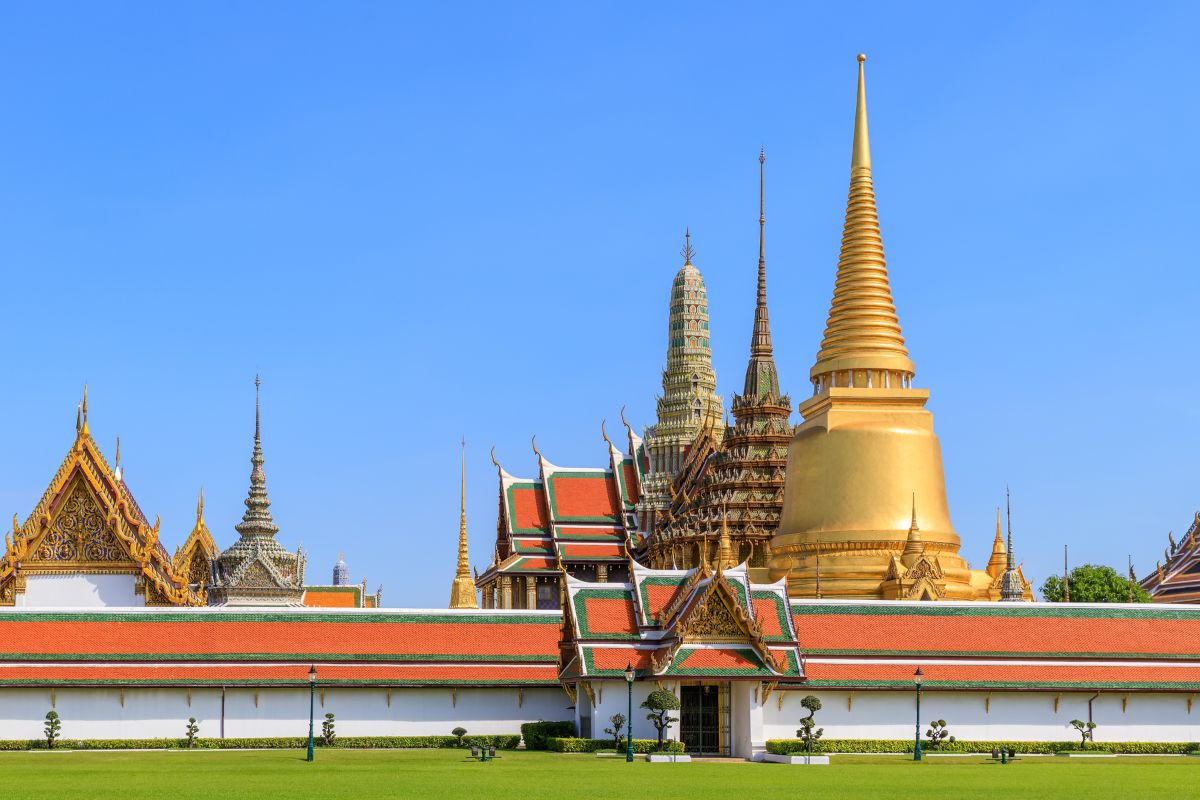
The Grand Palace or Wat Phra Kaew, also known as the Temple of the Emerald Buddha, is regarded as the most sacred Buddhist temple in Thailand. Unlike a traditional monastery, it does not house monks or serve as a primary place of congregation. Instead, it was originally built as the royal chapel for Thai kings and members of the court. Located within the Grand Palace complex in Bangkok, the temple was completed in 1783 under the reign of King Rama I to enshrine the revered Emerald Buddha (Phra Kaew), from which it takes its name. Today, it is open to the public and remains a central symbol of Thai spirituality and heritage.
Rather than being a single structure, Wat Phra Kaew is a vast temple complex comprising numerous significant buildings. Among these, the most important are the ordination hall (ubosot)-the spiritual heart of the temple-and the surrounding galleries adorned with elaborate mural paintings that depict legendary tales and religious narratives. Together, they embody the artistic and cultural grandeur of Thailand's most sacred site.
The Local Area Surrounding The Grand Palace
The neighborhood surrounding the Grand Palace is vibrant and steeped in history, offering a mix of cultural landmarks, bustling markets, and traditional Thai life. Just a short walk away, you'll find Wat Pho, home to the famous Reclining Buddha, and the picturesque Chao Phraya River, where you can catch a boat ride for a unique view of the city. The area is full of charming streets lined with small shops, local eateries, and street vendors selling everything from souvenirs to delicious Thai snacks.
Grand Palace and Emerald Buddha Entrance Fee
The entrance fee for the Grand Palace and Temple of the Emerald Buddha is 500 baht (approximately 14 USD), which grants you access to several key attractions within the complex including:
The Temple of the Emerald Buddha, the Emerald Buddha Museum and the Queen Sirikit Museum of Textiles
The Arts of the Kingdom Museum
Khon (traditional Thai dance) performance at the Sala Chalermkrung Royal Theatre
Children under 120cm can enjoy free entry.
Iconic Sights To Explore At the Grand Palace
Temple of the Emerald Buddha (Wat Phra Kaew)
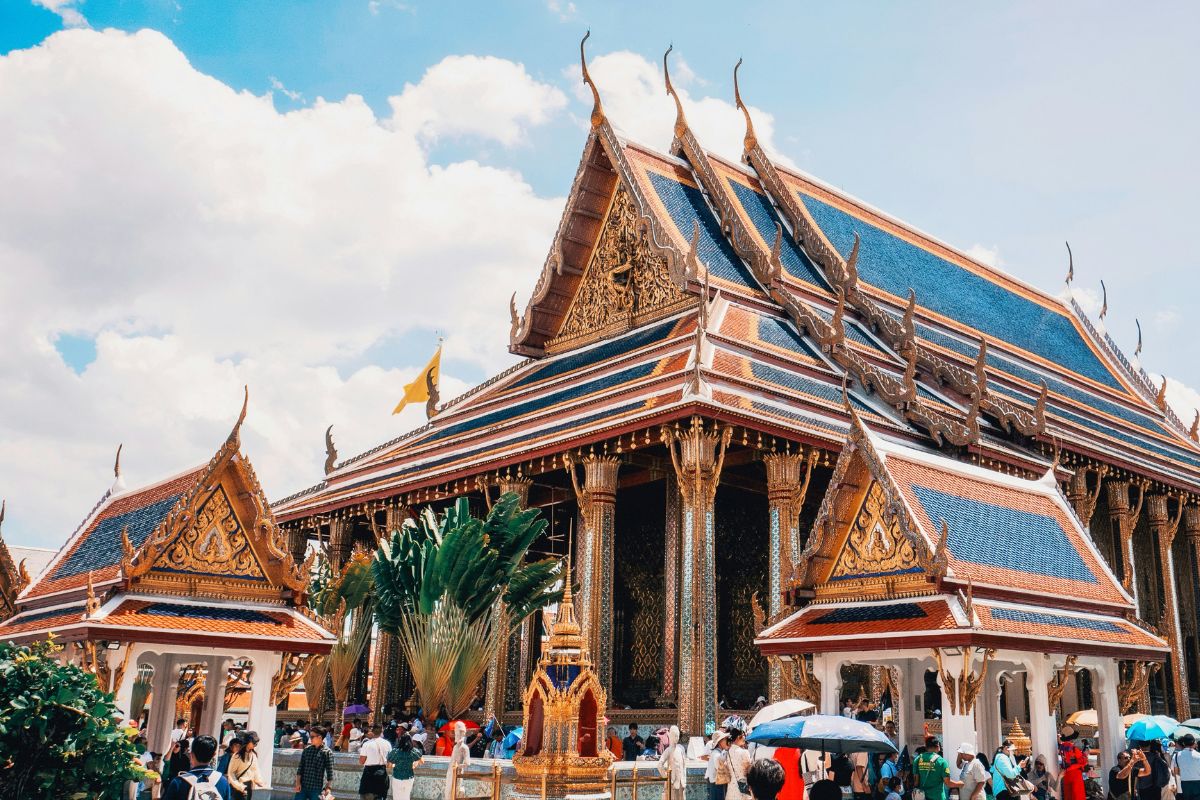
Wat Phra Kaew, or the Temple of the Emerald Buddha, is one of Thailand's most sacred places. It's where the famous Emerald Buddha is located. The temple is beautifully decorated for each season, a tradition started by King Rama I and King Rama III. With its rich history and intricate details, it's a must-see for anyone visiting Thailand!
The Emerald Buddha
At the heart of Wat Phra Kaew sits the Emerald Buddha, a small but highly venerated statue clothed in seasonal garments changed personally by the King of Thailand. This ritual marks the beginning of each new season and symbolizes prosperity and protection for the country.
The Royal Pantheon (Prasat Phra Thep Bidon)
Built to house the Emerald Buddha, it now contains statues of the first kings of the Chakri Dynasty. The pantheon opens only on special occasions but is admired year-round for its stunning spires and intricate design.
The Chakri Maha Prasat Hall
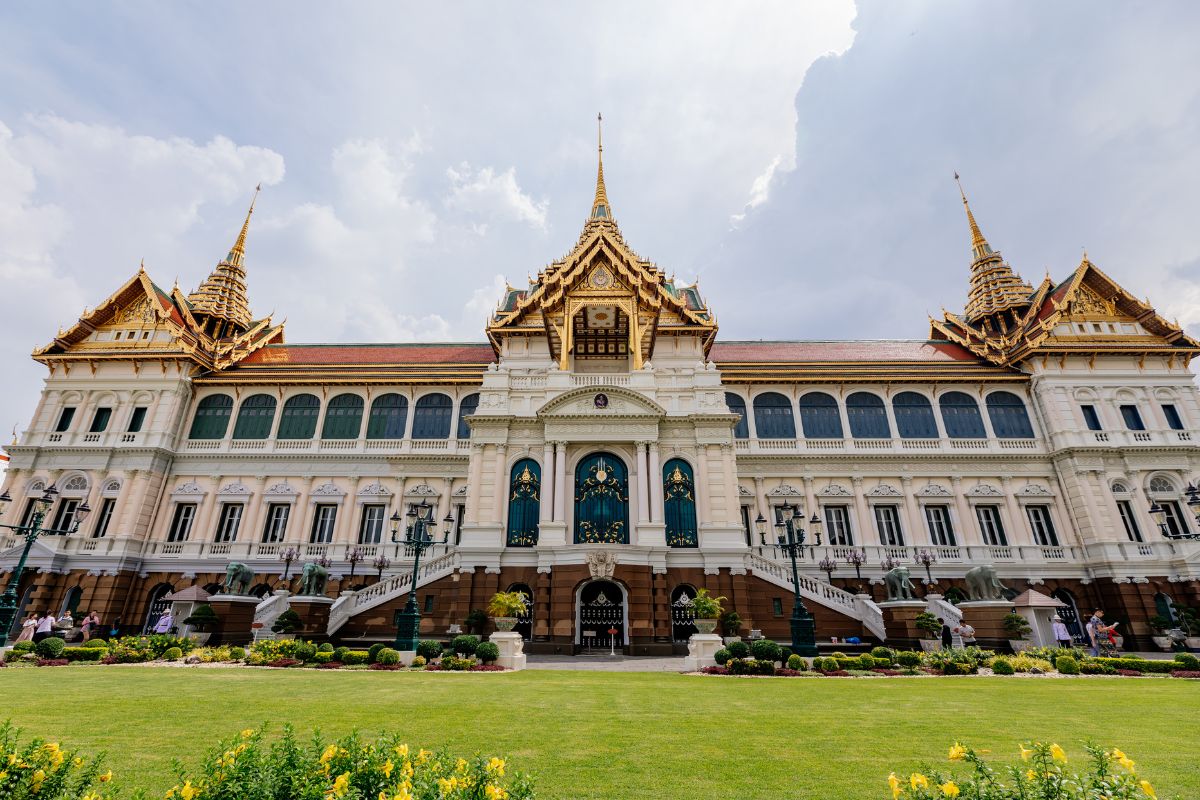
A fusion of Thai and European architecture, this grand hall was once the royal residence and audience hall. Its lower part resembles a European-style building, while the roof retains traditional Thai ornamentation, symbolizing the blending of Western and Siamese influences during King Rama V's reign.
The Dusit Maha Prasat Hall
An exquisite example of classical Thai architecture with a multi-tiered roof and glittering spires. Historically, it was used for lying-in-state ceremonies of kings and important royals. Inside, visitors can see a golden throne decorated with mother-of-pearl inlay.
Phra Mondop
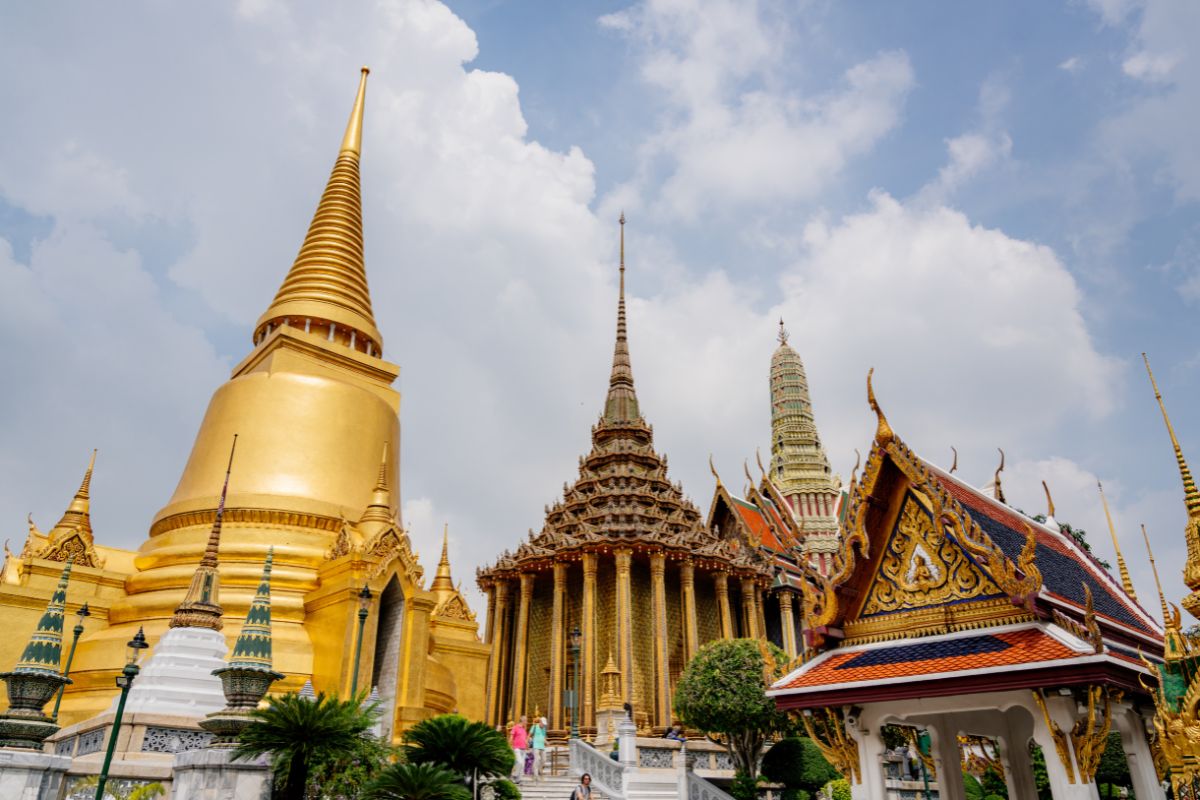
The Phra Mondop is an impressively designed Buddhist library situated within the Grand Palace. It holds the sacred Buddhist scriptures, carefully stored on a stunning bookshelf adorned with Mother of Pearl inlays. At each of its four corners, you'll find stone Buddhas carved in the 9th-century Javanese style. Although visitors can't enter the building, you can still admire its beauty from the outside. The
Phra Maha Monthien Buildings
Constructed by King Rama I, this group of traditional Thai-style buildings includes the Baisal Daksin Hall, where ceremonies with royal audiences such as coronations have taken place since King Rama II.
Phra Thinang Chakri Maha Prasat
A blend of Thai and European architectural styles, this throne hall is used for state functions and royal ceremonies. Its foundation stone was first laid by King Rama V in 1876 and it now houses reception rooms, dining hall and a Throne Hall. The top floor is reserved for crematory relics of the children of the royal family.
Queen Sirikit Museum Of Textiles
The Queen Sirikit Museum of Textiles honors Thailand's queen mother Queen Sirikit's lifelong dedication to preserving and promoting Thai textiles. After seeing the troubles of villagers on a royal visit through the Kingdom of Thailand with King Rama, Queen Sirikit established a foundation with training centres to allow people to create art to increase their income and preserve the nation's high art form.
Thai artisans at the Queen Sirikit institute create art such as Yan Lipao basketry, Khit pattern bamboo basketry and as well as woven, dyed and embroidered textiles. Today, the innate artistic ability of Thai people is honored at this museum.
Khon Performance at Sala Chalermkrung Royal
Don't miss the chance to experience a mesmerizing Khon performance at the Sala Chalermkrung Royal Theatre, located within the Grand Palace. This stunning traditional Thai dance drama, dedicated to honoring His Majesty King Maha Vajiralongkorn, brings to life ancient stories through graceful movements and elaborate costumes. With its captivating music, vibrant visuals, and skillful storytelling, the Khon show offers an unforgettable glimpse into the heart of Thailand's artistic traditions.
The Grand Palace Checklist: Experiences You Absolutely Cannot Miss
The complex is primarily divided into two main zones: The Temple of the Emerald Buddha (Wat Phra Kaew) and the royal residence area.
Marvel at the Temple of the Emerald Buddha (Wat Phra Kaew)
This is considered the most sacred Buddhist temple in Thailand and the main highlight for most visitors. It is not just one building but a whole compound of breathtaking structures.
Visit the Main Chapel (Ubosot): This is the heart of the temple and houses the revered Emerald Buddha. The statue, carved from a single block of jade, is relatively small but is the spiritual and symbolic heart of the Thai kingdom. Observe the intricate details of the murals on the chapel's interior walls, which depict the life of the Buddha.
Admire the Golden Chedis and Stupas: As you walk through the temple grounds, you'll see several gleaming, golden chedis (stupas). The most prominent is the Phra Si Rattana Chedi, a massive, bell-shaped stupa said to contain a relic of the Buddha.
Study the Ramakien Gallery: The walls of the cloister surrounding the temple are covered in 178 detailed murals depicting the entire story of the Ramakien, the Thai version of the Hindu epic Ramayana. It's like a giant, ancient comic book telling a tale of gods, demons, and heroes.
Photograph the Yakshas (Giant Demons): Guarding the entrances to the temple are twelve towering statues of Yakshas, fearsome mythical giants from the Ramakien epic. They are incredibly detailed and make for fantastic photo opportunities.
Explore the Royal Pantheon (Prasat Phra Thep Bidon): This beautifully designed, cross-shaped building contains life-sized statues of the first eight kings of the Chakri Dynasty. Note that it is typically only open to the public on one day a year, Chakri Memorial Day (April 6th), but its exterior architecture is stunning to behold year-round.
See the Model of Angkor Wat: Near the Royal Pantheon, you'll find a detailed stone model of Cambodia's famous Angkor Wat temple, built by King Rama IV to commemorate the historical ties between the two kingdoms.
Explore the Royal Residence and State Buildings
After visiting Wat Phra Kaew, your ticket allows you to enter the central court, which contains the former royal residences and throne halls used for state ceremonies.
See the Chakri Maha Prasat Hall: This is one of the most photographed buildings in the palace. You'll immediately notice its unique architectural style—a blend of a traditional Thai roofline on top of a European-style (Renaissance) building. This design symbolised the kingdom's modernisation while retaining its cultural identity. While you cannot enter the main halls, the exterior is a magnificent sight.
Admire the Dusit Maha Prasat Throne Hall: This is a perfect example of classic Thai architecture. Formerly a venue for royal coronations and state ceremonies, it later served as a funerary hall for kings and queens. Its tiered, gilded roof and intricate details are spectacular.
Visit the Amarin Winitchai Throne Hall: This hall was historically used for receiving foreign ambassadors and for official state speeches. While entry is restricted, you can appreciate its grandeur from the outside.
Visit the On-Site Museums
Your Grand Palace ticket also includes access to museums that provide deeper context into Thai history and culture.
Queen Sirikit Museum of Textiles: Located near the main entrance, this modern, air-conditioned museum is a must-visit. It showcases the stunning traditional Thai outfits and royal gowns worn by Queen Sirikit, celebrating Thai silk and traditional weaving crafts. It offers a cool and fascinating break from the outdoor heat.
Wat Phra Kaew Museum: This museum houses many original artefacts and architectural elements from the temple buildings that have been replaced during restorations. You can see the original seasonal costumes of the Emerald Buddha up close, along with various other sacred objects and relics.
Essential Rules for Visiting The Grand Palace
Follow the dress code
Since the Grand Palace is a sacred place, you'll have to keep in mind the dress code. Visitors need to wear clothes that cover their shoulders and knees, in line with Thai cultural norms for religious sites. Things like sleeveless shirts, short tops, ripped jeans, mini skirts, and even bike shorts are not allowed. You'll find this dress code mentioned pretty much everywhere, including the official Grand Palace website which lists all the restrictions clearly.
Mind the photography and filming restrictions
Photography and video recording are allowed in most of the open areas of the Grand Palace, so you can capture plenty of beautiful shots of the architecture and outdoor spaces. However, things are stricter inside the temples. When it comes to sacred sites like the Temple of the Emerald Buddha, no photos or videos are allowed. This is a cultural and religious rule, as taking pictures inside could be considered disrespectful to the sacredness of the space and distracting to others who are there for prayer or reflection.
Maintain proper conduct
Being respectful is crucial when visiting the Grand Palace, considering its religious and historical significance. One key cultural rule in Thailand is not pointing your feet at sacred objects or statues, especially Buddha images.
It's also important to keep a quiet and respectful demeanor, so avoid loud conversations and be mindful of your surroundings. Don't touch or climb on any structures, as these are sacred and need to be preserved. All of these actions help maintain the peaceful atmosphere of the palace.
Shoes Off Before Entering Sacred Areas
Another important rule is taking off your shoes before entering temples or sacred areas within the palace, like the Temple of the Emerald Buddha. This is a common practice in Thai temples, so it is recommend wearing lightweight, comfy shoes that are easy to take off.
More Must-Visit Places in Thailand
Damnoen Saduak Floating Market
Located about 100 kilometers southwest of Bangkok, Damnoen Saduak Floating Market is one of Thailand's most iconic and lively markets, offering a unique cultural experience. It operates on a network of canals where vendors sell fresh produce, local delicacies, souvenirs, and crafts from traditional wooden boats.
Phi Phi Islands
The Phi Phi Islands, located in the Andaman Sea, are a tropical paradise famous for their stunning beaches, crystal-clear waters, and vibrant marine life. Made up of six islands, the largest and most visited is Phi Phi Don, known for its bustling beach bars, restaurants, and spectacular viewpoints. The smaller Phi Phi Leh is famous for its dramatic cliffs and the iconic Maya Bay, made famous by the film The Beach.
Safari World Bangkok
Safari World Bangkok is one of Thailand's most popular wildlife and leisure parks, offering visitors a fun and educational experience. Divided into two main areas, this sprawling attraction is home to a wide variety of animals from around the world. In the Safari Park, visitors can drive through open enclosures where they can see lions, tigers, giraffes, zebras, and many more animals up close, giving them a truly immersive safari experience. The Marine Park features animal shows with dolphins, orangutans, and birds, as well as a chance to see sea creatures like sharks and stingrays.
Explore more on Klook
Top attractions in Bangkok
- 1 Safari World Bangkok
- 2 ICONSIAM
- 3 Wat Arun
- 4 Centralworld
- 5 Asiatique The Riverfront
- 6 Chatuchak Weekend Market
- 7 Wat Pho
- 8 Wat Paknam Phasi Charoen
- 9 Siam Paragon
- 10 Khaosan Road
- 11 Pratunam
- 12 King Power MahaNakhon
- 13 Banthat Thong
- 14 MBK Center
- 15 Bangkok Shooting Range
- 16 Jodd Fairs
- 17 Yaowarat Road
- 18 Phrom Phong
- 19 Baiyoke Building