


Planning a trip to Lisbon? The capital of Portugal is undoubtedly one of Europe’s most gorgeous cities, with its old charm neighborhoods, hilly landscapes, and riverside attractions. But here’s one thing you must know before you visit: as beautiful as its cobblestone streets are, they are deceptively steep. While it may seem easy to walk everywhere based on the city’s map, you’ll quickly realize that public transport in Lisbon is an absolute essential.
But not to worry! Lisbon has an efficient transport network that is just as fun to explore as the city, with some modes doubling as tourist attractions in and of itself! From the metro and buses to the trams and lifts, we’ve prepared everything you need to know about the public transport in Lisbon. So, before you find yourself out of breath, climbing at a 45-degree angle; here’s your complete guide on navigating the city.
Public Transport in Lisbon 101

The Praça do Comércio in Lisbon, Portugal
To get around Lisbon, there are four main modes of public transportation:
- Metro
- Bus
- Trams (Eléctrico)
- Elevators & Funiculars
There are also ferries, taxis, and trains useful for day trips and crossing the Tagus River, but the modes above are what you’ll mostly rely on within the city.
Lisbon transport cards
Before anything else, you’ll need a reusable transport card. Public transport in Lisbon operates on an integrated public transport network, with a unified ticketing system that uses reloadable smart cards to make trips smoother and more valuable. While you can opt to get a single journey paper ticket that you pay on board with a debit/credit card or cash, these tend to cost more.
Unless you plan to use the public transport in Lisbon once, here are the two types of cards you can choose from:
1. Navegante card

The Navegante card / Photo Credits: Renek78 on Wikimedia Commons
The Navegante card (formerly Viva Viagem) is the standard transport card used for public transport within the city limits in Lisbon. It’s a yellow card that costs €0.50 (~USD $0.58) and can be bought and loaded at ticket machines on the metro, train, ferry stations, airport, and kiosks from other selling points in the city.
You can load it in three ways:
- Single Journey Ticket: Costs €1.80–€3.80 (~USD $2.09–$4.40) depending on the type of transportation you take.
- Zapping: Tap up on travel credit and pay-as-you-go for a ride on the metro, bus, or tram at discounted rates. It’s the best option if you’re using transportation in moderation. The downside is you can only load money in fixed increments of €3–€40 (~USD $3.48–$46.36), so you may have a little leftover credit on the card after use.
- Unlimited 24-hour pass: If you’re going to use public transportation at least more than 4 times, this pass gives you unlimited rides for 24 consecutive hours on all the mentioned modes of transportation around Lisbon and the surrounding areas for €6.80 (~USD $7.88).
Klook Tip: If you’re traveling with family or other people, each person will need their own Navegante card. Also note that this card can only hold one type of pass or ticket at a time. If you’re using the Zapping method with money loaded, you can’t add a 24-hour pass unless the balance hits zero, and vice versa.
2. Lisboa card
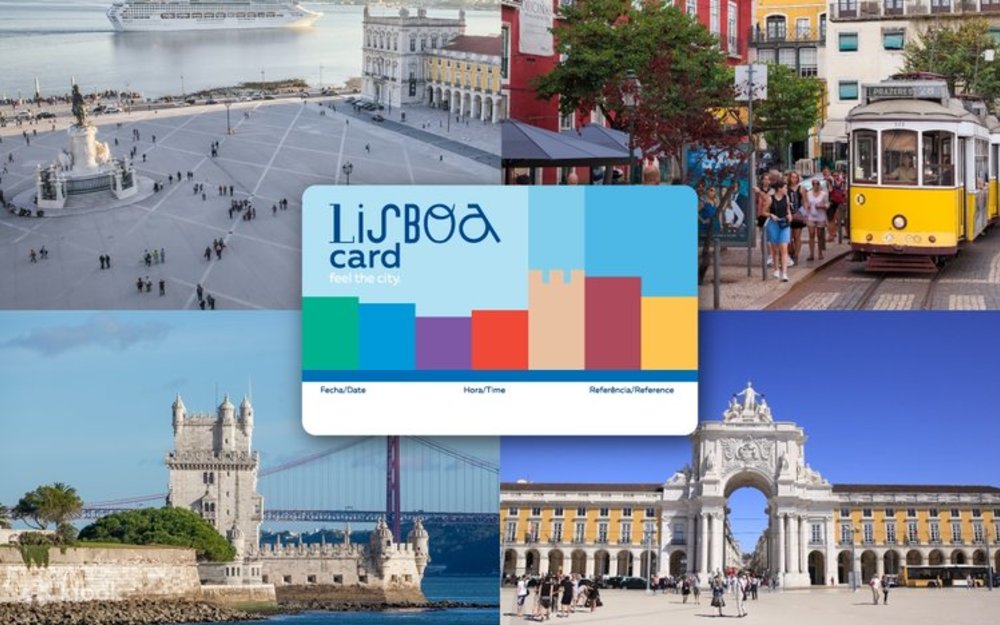
Discover Lisbon with the Lisboa card!
If your Lisbon to-do list includes most of the main sights, attractions, and museums, the Lisbon card is definitely worth considering.
This card includes:
- Unlimited public transportation for 24, 48, or 72 hours
- Free admission to almost 30 museums and attractions (including Belém Tower, National Tile Museum, and Monument to the Discoveries)
- Discounts on other sights, restaurants, shops, and tours
This is a little pricier than the regular pass, ranging from USD $35.91–$71.82. But for ultimate convenience and value for money (especially if you’re hopping between attractions where expenses can pile up), we highly recommend getting the Lisbon City Card!
Choosing your transport card

Belém Tower and blooming purple Jacaranda trees on a sunny day in Lisbon
When deciding between a Lisbon Card and Navegante transport passes, you’ll want to consider your itinerary. If you have a destination-heavy adventure waiting, where you’ll be visiting several attractions and using public transport extensively in a day, the Lisboa card is the way to go. But if you’re looking for a more relaxed trip, wandering neighborhoods and enjoying free sights, zapping credit or a 24-hour transport pass on the Navegante card should be good, too.
How to get around Lisbon
Now that you’ve got your transport card, here’s how to navigate the city like a local:
By Metro
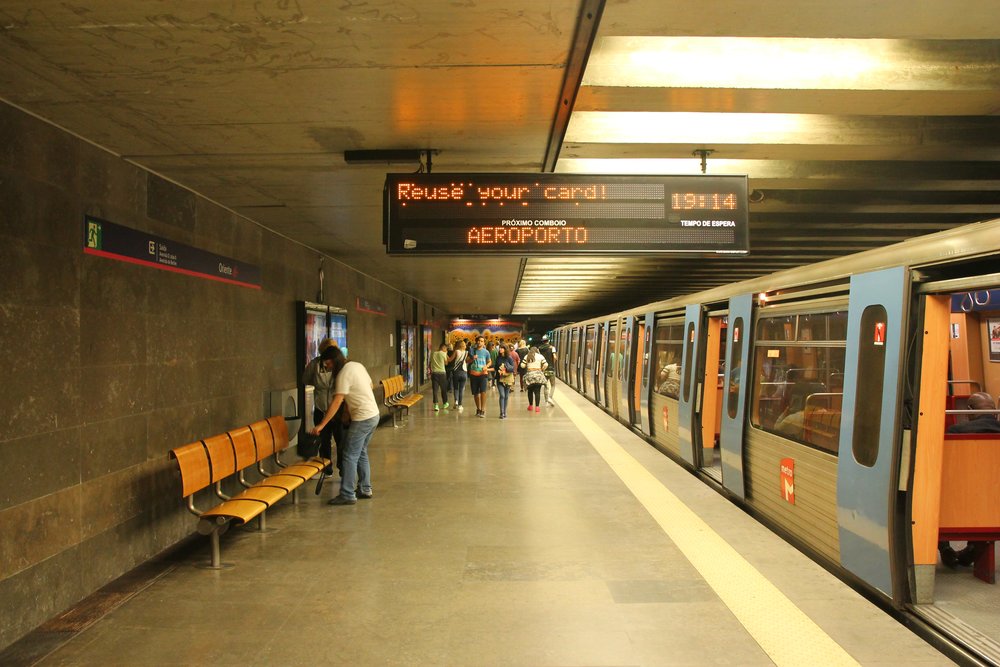
A Lisbon metro train waits at the platform of the Oriente station / Photo Credits: Draceane on Wikimedia Commons
Looking for the fastest and most convenient way to get around the city? The Lisbon metro is going to be your best friend—especially if you’re coming from the airport and going to the city center. The metro has four lines: Blue (Linha Azul), Yellow (Linha Amarela), Red (Linha Vermelha), and Green (Linha Verde). The red line starts right at the airport and connects to all other major lines (green, blue, and yellow), with easy transfers.
To use the metro, just tap your card at the turnstiles in and out of every station. And if you’re planning your route ahead of time, we’d also recommend familiarizing yourself with the Lisbon metro map to help you navigate your way through the lines, stations, and transfer points.
Operating Hours: 6:30 AM to 1:00 AM, daily
By Bus

Bus route for 790 Principe Real along the tram tracks in Lisbon / Photo Credits: Alain Gavillet on Flickr
Another extensive and efficient way to get around, especially in areas the metro can’t reach, is the Lisbon bus. Compared to the other modes of public transport in Lisbon, the bus network offers more variety with routes and options. Here, one-way tickets cost around €2.10 (~USD $2.43), and you just tap your card on the machine at the front entrance as you board the bus.
The most helpful routes for tourists:
- Bus 728: Runs from Praça do Comércio to Jerónimos Monastery in Belém. While many opt to take a tram to Belém, the bus only takes 20 minutes and is much less crowded with tourists.
- Bus 737: If you’re visiting the Castelo de São Jorge, you can take this bus from either Praça da Figueira or outside the Cathedral of Lisbon to avoid a steep walk uphill. It’s also the only public transport in Lisbon that’ll take you directly to the castle entrance.
By Tram

Tram 12 next to Lisbon Cathedral / Photo Credits: Flavio Ensiki on Flickr
The Lisbon tram (or elétricos) is an institution in the capital city, so iconic that it’s become a tourist attraction itself. The most famous is Tram 28, which runs from the beautiful neighborhoods of Alfama and Graça. Another popular route is Tram 15, where you can ride a 45-minute scenic journey to Belém.
Klook Tip: If you plan on riding Tram 28, we recommend riding early in the morning and boarding the first stop at Praça Martim Moniz. And when riding the trams, you’ll want to be mindful of possible long lines and delays as streets in Lisbon are narrow, and there’s a risk of older trains breaking down.
Trams cost €3.20 (USD $3.70) per ride, but honestly, they’re not as efficient as other options. While these trams are charming and historic, it’s actually better to look at them from the outside rather than inside, since they tend to get crowded. Plus, pictures of the tram look cooler! So maybe count these as tourist attractions rather than a mode of transportation.
By Elevator & Funicular
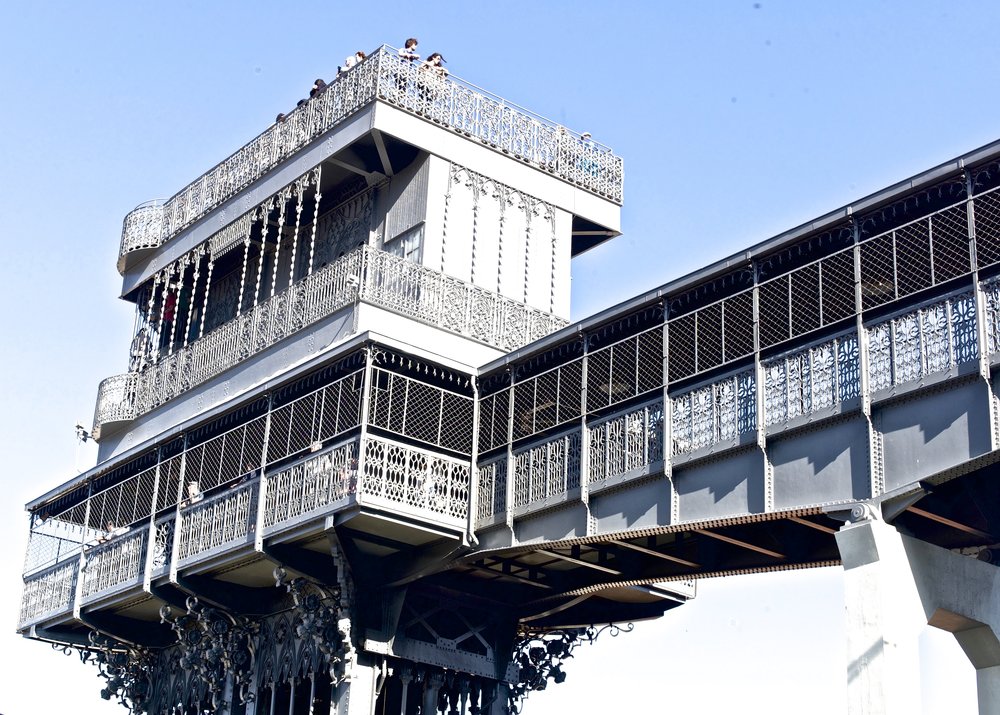
The viewing platform of Santa Justa Lift / Photo credits: Pedro Ribeiro Simões on Flickr
Lisbon’s hills are a real piece of work, but thankfully, the elevators/lifts (elevadors) and funiculars make it lighter on the legs. These are especially useful for trips located throughout the historic center to avoid climbing steep hills. However, they are becoming more and more popular as tourist spots, which can be rather inconvenient when you actually need to use them.
The most popular elevator is the Santa Justa Lift, which costs €6.10 (USD $7.06) for a return ticket. It’s pricier than other public transport in Lisbon, but it comes with access to its viewpoint (plus, if you have the Lisboa card, all costs are covered!).
Klook Tip: As they have become popular destinations, expect some crowds and delays. But if you want to ride the Santa Justa Lift, ride down for a shorter waiting time.
By Trains & Ferries
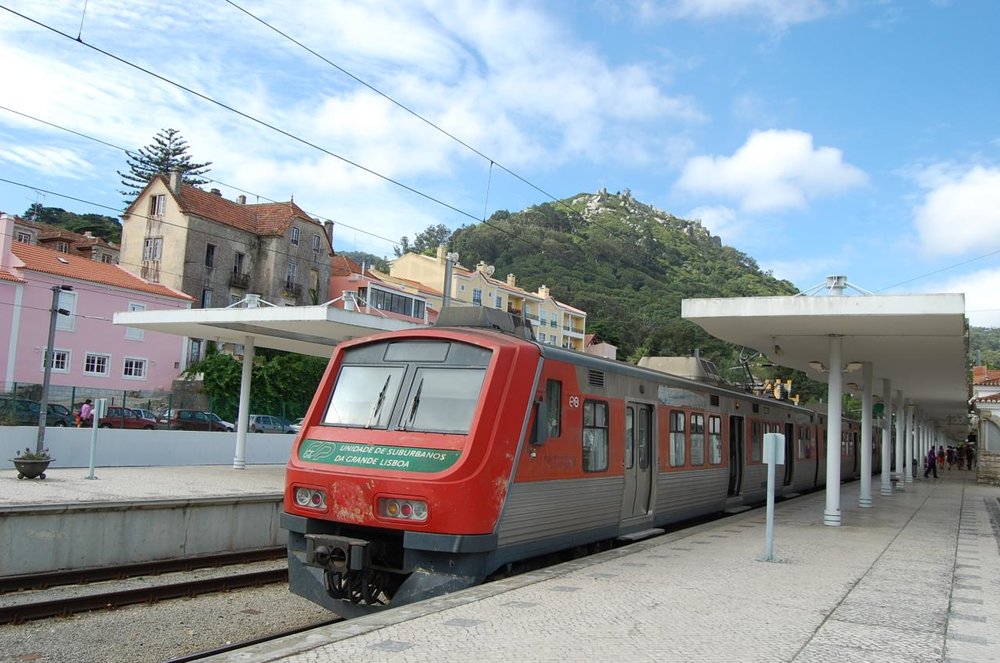
Train from Sinta to Lisbon
Planning a day trip beyond the city? Trains are the way to go, with the most popular trip being Sintra, which takes around 40 minutes. Tickets are separate from metro/bus fares, but if you’re using zapping on your Navegante card, you can get small discounts.

Ferry boats docked in the Tagus River / Photo Credits: Pedro Ribeiro Simões on Flickr
If you're heading to Cristo Rei on the other side of the river, the ferry is an essential offering some of the best river views in Lisbon. Here, you can catch a 15-minute ferry from Cais do Sodré to Cacilhas, then take bus 3001 to the Cristo Rei statue.
FAQs About Public Transport in Lisbon
What types of public transport modes are available in Lisbon?
Lisbon offers metro lines, buses, trams, elevators/lifts, funiculars, and suburban trains.
How do you purchase and use tickets/passes for Lisbon public transport?
You’ll need either a Navegante card (reloadable tickets and passes) or a Lisboa card (unlimited travel and access to attractions). You can purchase the Navegante card at metro, train, or ferry station kiosks or ticket machines, while the Lisbon City Card is available here on Klook. To use the card, just tap it on turnstiles at metro stations and on the machines at buses, trams, and elevators. The system will automatically deduct or recognize your pass.
Are there transport cards in Lisbon suitable for tourists?
Yes! The Navegante is great if you’re more of a pay-as-you-go traveler, but the Lisboa Card is specifically designed for tourists! This bundle includes unlimited rides on public transportation, free access, and discounted admission fees to some of the most popular attractions and museums in Lisbon. If you’re on a mission to see as much as you can in the city, this is definitely the way to go.
Which areas in Lisbon are best reached by tram vs metro vs bus?
The Lisbon metro is best airport transfers and for traveling longer distances, while trams offer a unique experience around the historic center–especially in the Alfama and Graça areas. Meanwhile, buses offer a range of routes across the city that are missed by the metro and trams.
What are the tips for safety or common transport mistakes in Lisbon?
Pickpocketing can happen in crowded spaces, so stay alert, keep bags closed and in front of you, and avoid rush hours if possible. Always make sure to validate your Navegante and Lisboa card before boarding. And on occasions when you can’t access the main transport modes, Uber and other ride-hailing services are great alternatives. Also, wear comfortable shoes for walking and don’t underestimate Lisbon’s hills!
Related reads for your Lisbon trip!


What is Klook?
Klook is a leading pan-regional experiences platform in Asia Pacific, purpose built to digitalize experiences and make them accessible to every traveler.
Our mission is to build the digital infrastructure for the global experience economy — empowering merchants to share their passions and travelers to discover the heartbeat of each destination. We operate a mobile-first, curated platform featuring diverse experiences across global destinations.
✨ Follow us for more deals and inspiration for your upcoming travels