

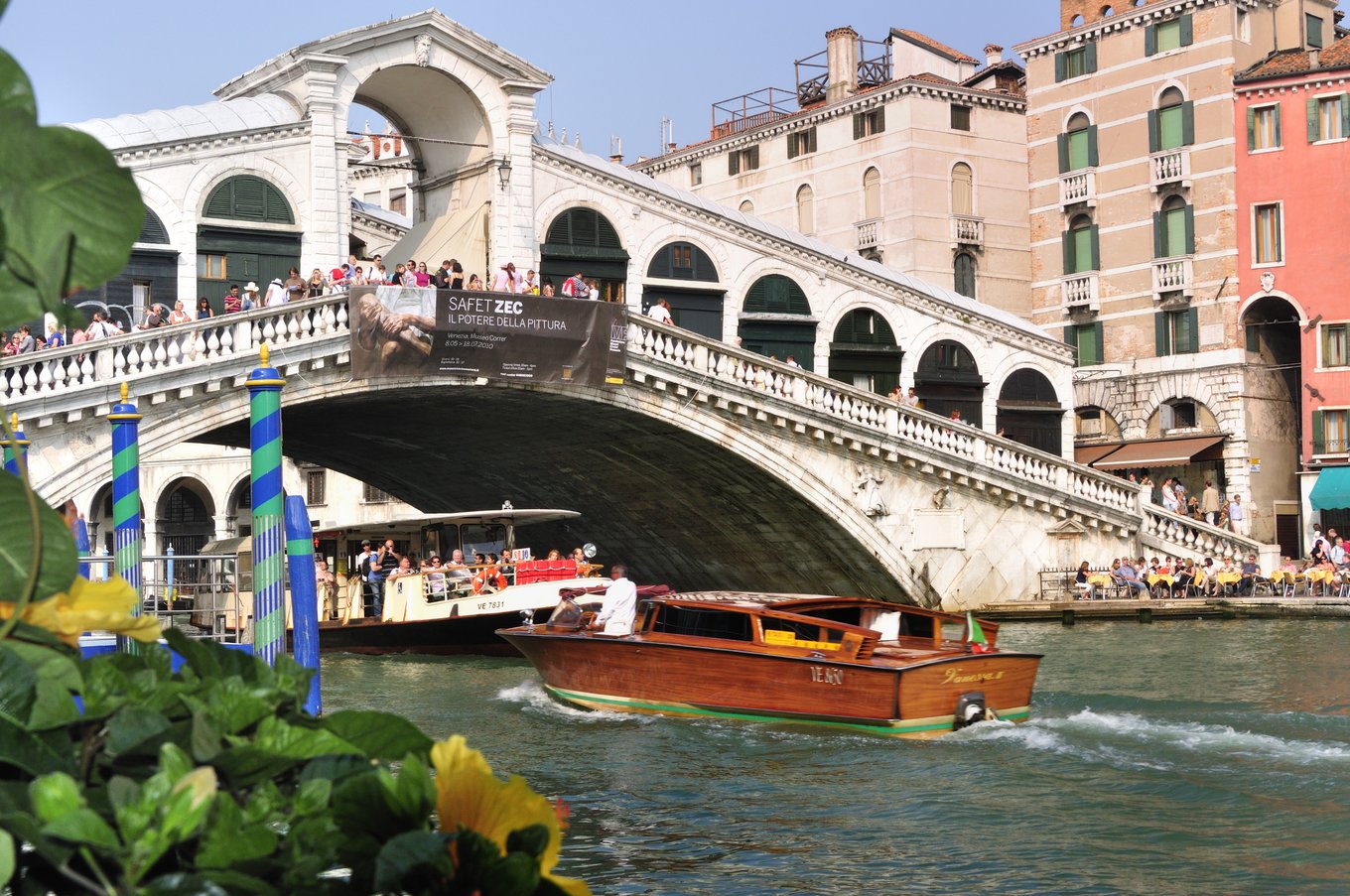
If you’re wondering how to get around Venice, use the vaporetto water bus, the main public transport in the city. This boat network connects many of the city’s major attractions and nearby islands like Murano and Burano, making it the most common way to move around Venice.
But the vaporetto isn’t the only Venice public transport option. You can take a Venice water taxi for faster private rides, hop on a traghetto to cross the Grand Canal, use the People Mover to reach the city entrance, or ride the Alilaguna airport boat.
In this guide, we’ll break down five ways to get around Venice, explain when to use each one, and share practical tips to help you navigate the city more easily!
1. Vaporetto (Venice Water Bus)
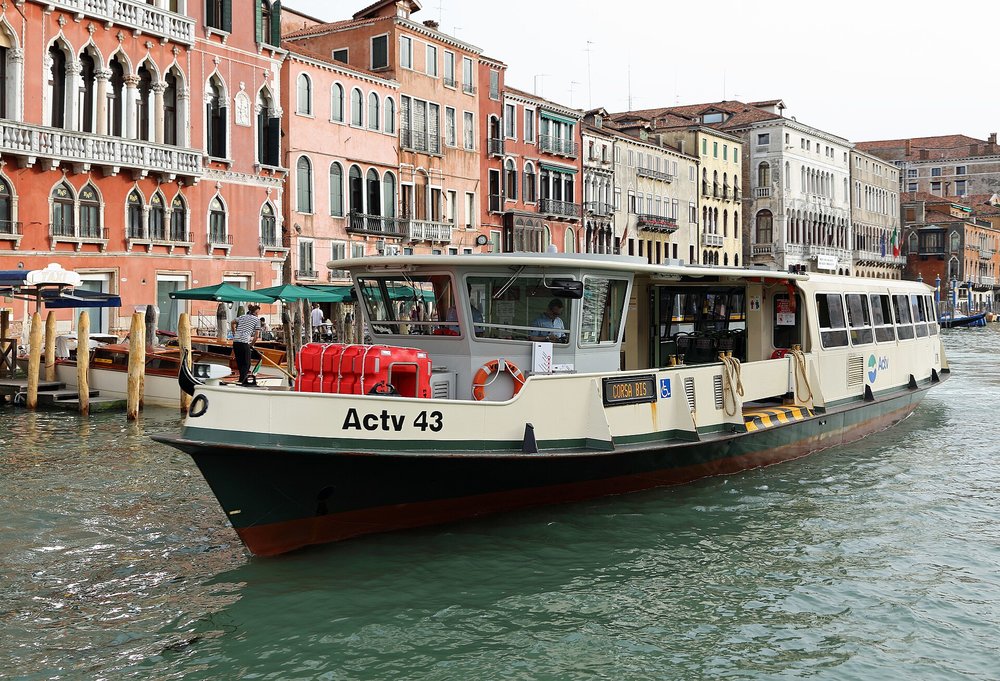
Vaporetto bus in Venice | Photo Credits: Marc Ryckaert on Wikimedia
The vaporetto, or Venice water bus, is the main Venice public transport. It’s like a city bus, except it travels through canals instead of roads.
You’ll want to use the vaporetto when traveling between major attractions. Line 1 is especially popular because it runs along the Grand Canal and stops near famous landmarks like Ponte di Rialto, Ca’ d’Oro, and St. Mark’s Square.
Boats usually arrive every 10-12 minutes, so you won’t have to wait long. If you plan to use the vaporetto several times in a day, it’s a good idea to get a vaporetto pass for unlimited rides.
What to know before taking the vaporetto:
⛴️ Main routes:
- Line 1 (Grand Canal route)
- Line 2 (faster Grand Canal route)
- Lines 4.1/4.2 (Murano circular route)
- Lines 5.1/5.2 (around Venice districts)
⏰ Operating hours:
- Most lines run 5:00 AM to 12:00 AM
- Line N runs 11:30 PM to 5:00 AM
💶 Average fare: €9.50 per ride; vaporetto passes around €25–€65
🎫 How to pay: Buy tickets at ACTV machines, Venezia Unica ticket desks, or online in advance
2. Venice Water Taxi
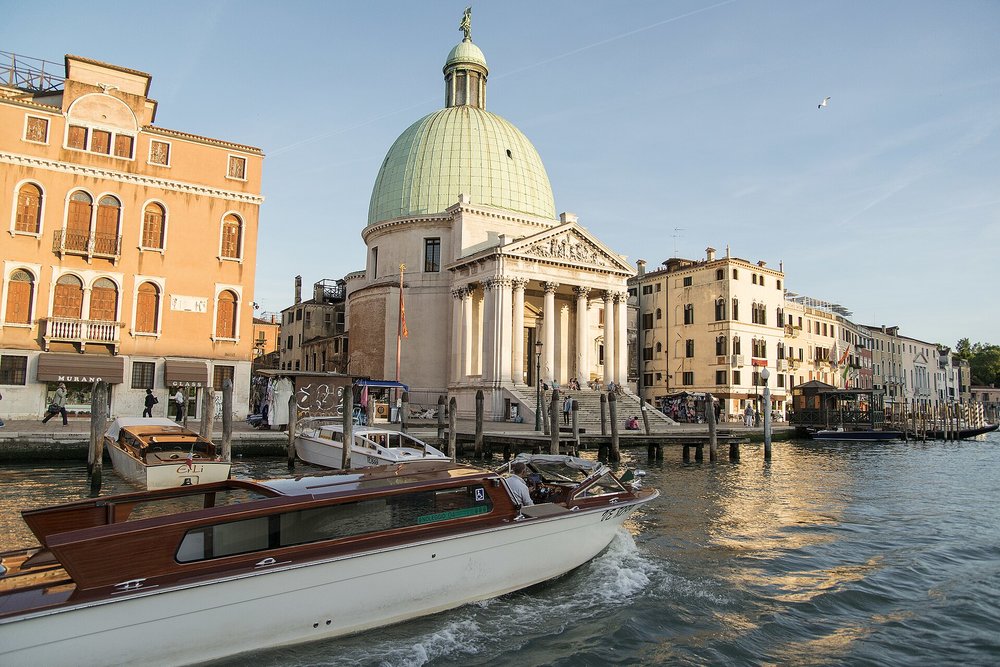
A Venice water taxi is the fastest way to travel through the canals. These water taxis take you directly to your destination, as opposed to vaporettos that make multiple stops along the way.
You’ll want to use a water taxi for airport transfers or hotel drop-offs. Many hotels in Venice even have private docks, so the boat can drop you right at the entrance. Water taxis also run 24/7, which makes them a convenient option if you arrive late at night or have an early flight.
While water taxis are more expensive than other Venice public transport, they’re one of the most convenient ways to get around, especially if you’re carrying luggage!
What to know before taking Venice water taxis:
⛴️Typical routes:
- Venice Marco Polo Airport to San Marco
- Ponte di Rialto
- Train stations
- Major hotels
⏰ Operating hours: 24/7
💶 Average fare: €120–€150 per boat within Venice city center
🎫 How to book: Book online or through water taxi services like Venezia Taxi
3. Traghetto
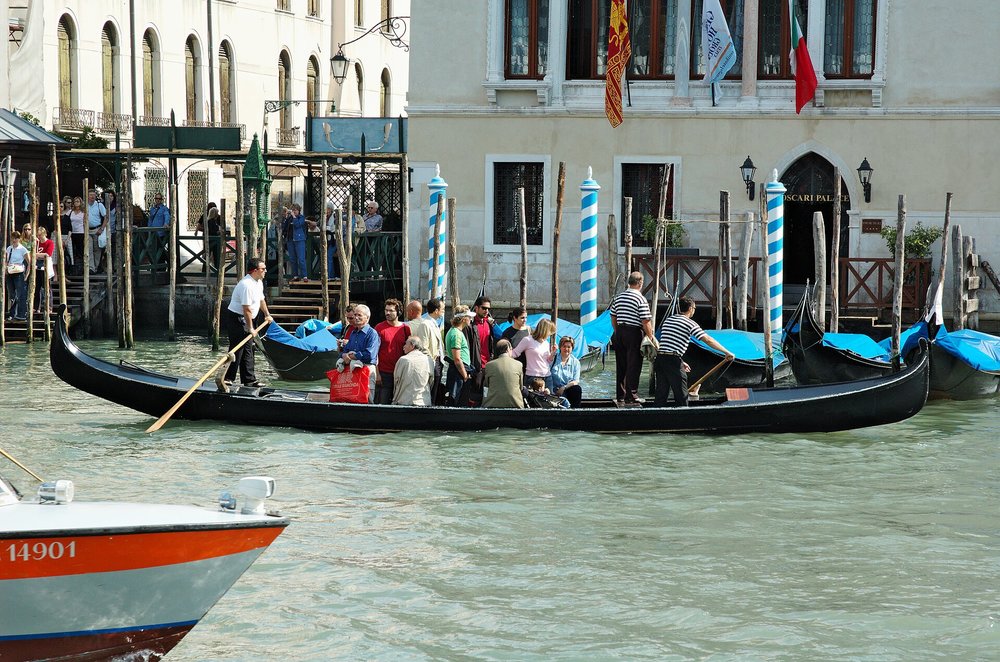
Traghetto gondola ferry | Photo Credits: Gary Houston on Wikimedia
A traghetto is a large gondola ferry that helps you cross the Grand Canal at several points around the city. Since bridges over the canal are far apart, these boats give you a quick way to move between neighborhoods.
You should use a traghetto when you want to cross the Grand Canal without walking all the way to the nearest bridge. The ride only takes a few minutes, so it’s one of the fastest shortcuts in Venice.
What to know before taking a traghetto:
🚣 Main crossings:
- Santa Sofia to Ca’ d’Oro
- San Tomà to Ca’ Rezzonico
- Santa Maria del Giglio to Salute
- Rialto Market to Riva del Carbon
⏰ Operating hours: Around 7:30 AM – 8:00 PM on weekdays; shorter hours on weekends
💶 Average fare: About €2 per person
🎫 How to pay: Cash when boarding
4. Venice People Mover
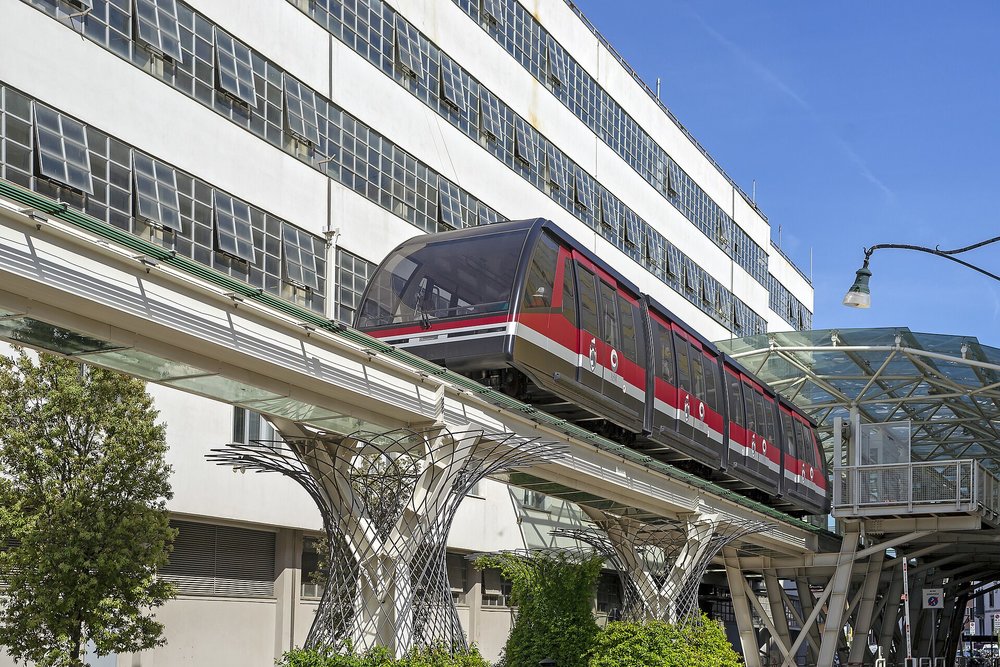
Venice people mover train | Photo Credits: Didier Descouens on Wikimedia
The Venice People Mover is a train that helps you reach the entrance of Venice. While it doesn’t travel through canals, it’s still a part of Venice’s public transport, especially if you arrive by car or cruise ship.
You’ll want to use this to reach Piazzale Roma from places like the parking island or the cruise terminal. Piazzale Roma is the main gateway into Venice, where you can transfer to the vaporetto water bus or start exploring the city on foot.
The ride only takes a few minutes, but it can save you a lot of walking with luggage. Trains run every 7 to 10 minutes, so it’s easy to catch one when you arrive.
What to know before taking a Venice People Mover:
🚊 Main route:
- Tronchetto parking island to Marittima cruise terminal to Piazzale Roma
⏰ Operating hours:
- Monday to Saturday: 7:00 AM – 11:00 PM
- Sunday: 8:00 AM – 10:00 PM
💶 Average fare: €1.50 per ride
🎫 How to pay: Ticket machines at Tronchetto, Marittima, or Piazzale Roma
5. Alilaguna Airport Water Bus

Alilaguna Airport Water Bus | Photo Credits: Abxbay on Wikimedia
Alilaguna is a boat service that takes you from Venice Marco Polo Airport to different parts of the city. You should use this transport if you want to go from the airport to Venice without changing boats or trains.
Alilaguna stops at major areas like St. Mark’s Square, Ponte di Rialto, Murano, and Lido. You’ll also enjoy the ride because it gives you your first views of Venice across the lagoon.
If you're planning your arrival, you need to book your Marco Polo Airport transport by Alilaguna early to see which route stops closest to your hotel!
What to know before taking an Alilaguna:
🚊 Main routes:
- Blue Line (Airport → Murano → Lido → San Marco)
- Orange Line (Airport → Rialto → San Marco)
- Red Line (seasonal airport route)
⏰ Operating hours:
- From around 6:15 AM to 12:40 AM from the airport
💶 Average fare: €15–€18 one way
🎫 How to pay: Buy tickets at the airport ticket desk or online in advance
Venice public transport options at a glance
Transport Type | Best For |
Vaporetto (Water Bus) | Getting around major attractions and exploring Venice affordably |
Water Taxi | Fast, private, door-to-door transfers (especially with luggage) |
Traghetto | Quickly crossing the Grand Canal without using bridges |
People Mover | Reaching Venice from parking areas or the cruise terminal |
Alilaguna (Airport Boat) | Direct airport transfers |
FAQs about Venice public transport
What is the cheapest way to get around in Venice?
The cheapest option is usually the vaporetto system, especially if you buy a Venice vaporetto pass. Single rides cost about €9.50, but unlimited passes for 24, 48, or 72 hours offer better value if you plan to ride multiple times. Traghetti crossings are even cheaper at around €2, but they only cross the Grand Canal and don’t travel through the city.
Is the Venice City Pass worth it?
For many travelers, the Venice City Pass or transport passes are worth it. They bundle transport and attraction tickets into one purchase, which can save time and money. If you plan to visit multiple attractions and use Venice’s public transport frequently, a pass can make planning much easier.
How much is a 3-day vaporetto pass?
A 72-hour Venice vaporetto pass usually costs around €65. This allows unlimited rides on the vaporetto network during the validity period. It’s a great option if you plan to visit different islands like Murano or Burano, since those routes are included.
Does Venice have public transport?
Yes, Venice has a well-developed public transport system. Instead of buses or trains within the city center, transportation mostly happens by boat. The vaporetto network, Alilaguna airport boats, and other water services connect the main districts and nearby islands.
How walkable is Venice?
Venice is extremely walkable. Many attractions are within 15–20 minutes of each other, and wandering through narrow streets is part of the city’s charm. However, using the Venice water bus can save time when traveling longer distances or crossing the Grand Canal.
More Venice inspiration for you

What is Klook?
Klook is a leading pan-regional experiences platform in Asia Pacific, purpose built to digitalize experiences and make them accessible to every traveler.
Our mission is to build the digital infrastructure for the global experience economy — empowering merchants to share their passions and travelers to discover the heartbeat of each destination. We operate a mobile-first, curated platform featuring diverse experiences across global destinations.
✨ Follow us for more deals and inspiration for your upcoming travels