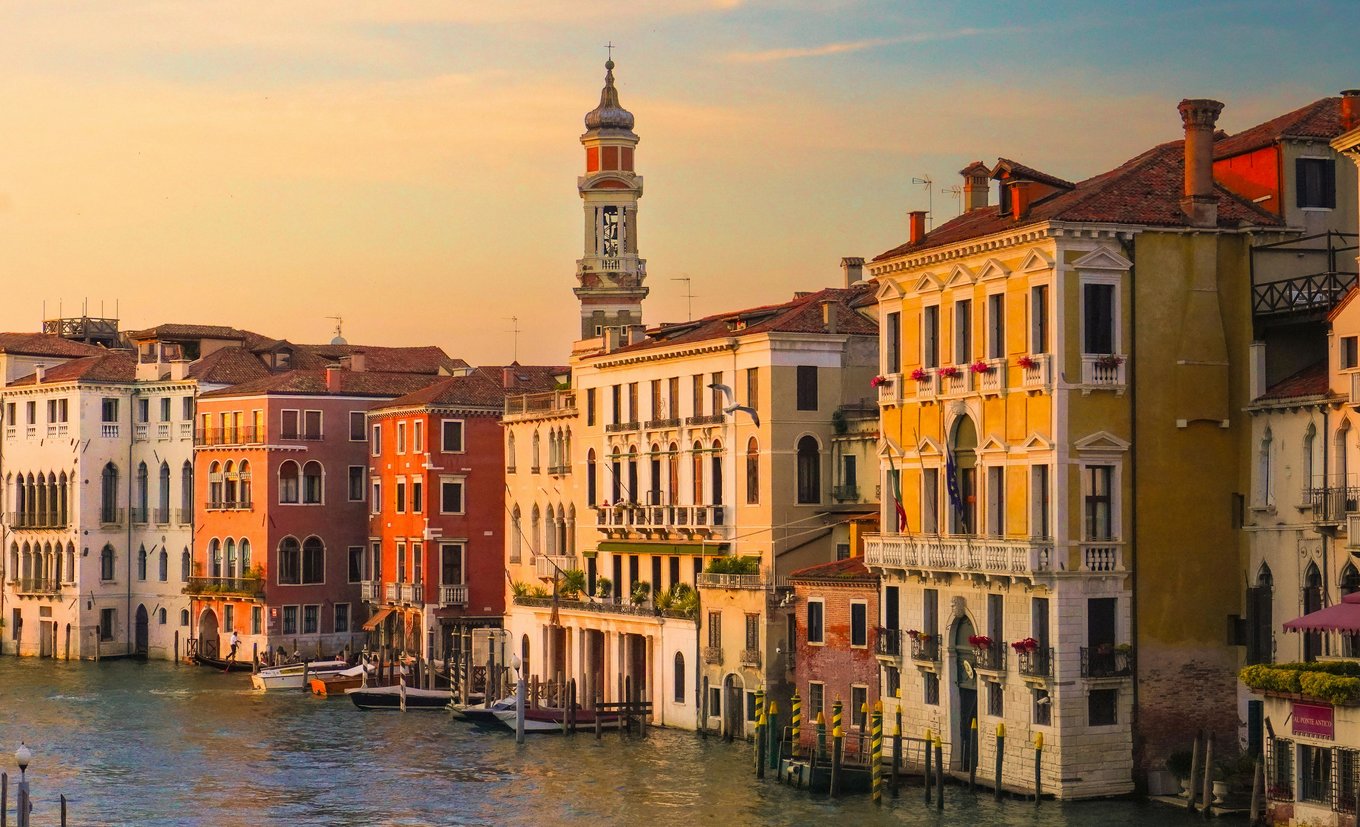
Venice is like an open-air museum built on water. As you explore, you’ll find arched bridges, grand palaces, and detailed churches across the city. Venice architecture is perfect for anyone who loves design, history, or photography.
Now, what makes architecture in Venice, Italy so special? It’s a mix of styles shaped by trade, culture, and time. You’ll find Gothic details next to Renaissance symmetry, and even touches of modern design in its historic streets.
In this guide, we’ll walk you through the must-see buildings in Venice, Italy, plus tips to help you explore them with ease.Ready to fall in love with Venice, one building at a time? Let’s go.
1. St. Mark’s Basilica
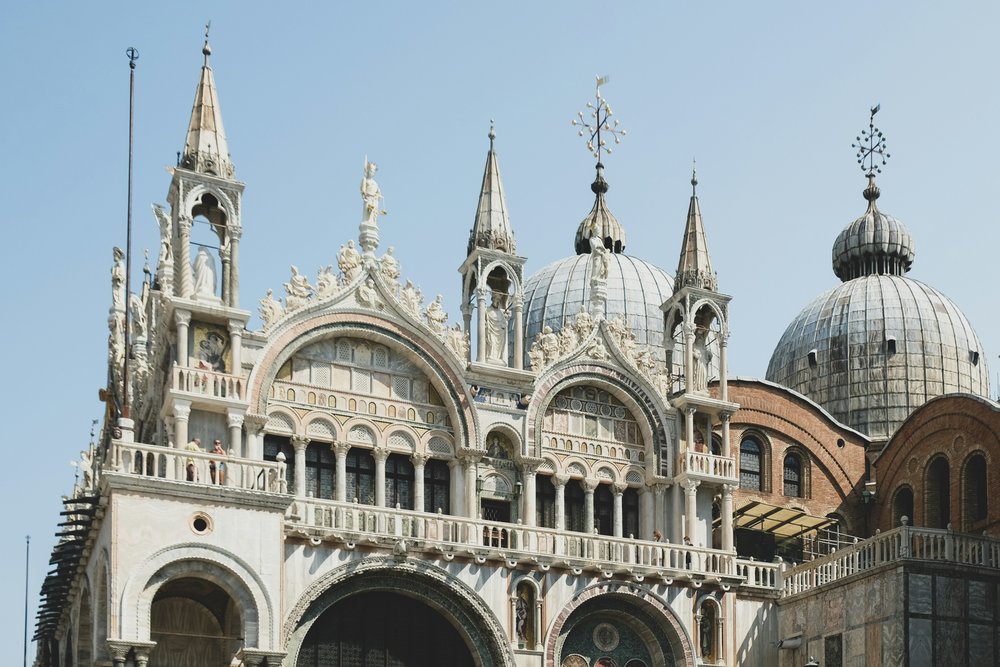
St. Mark’s Basilica | Photo Credit: Sarah Mutter on Unsplash
📍 Address: Piazza San Marco, 328, 30124 Venice
⏰ Best time to visit: Early morning or late afternoon to avoid crowds
Start your journey at St. Mark’s Square, often called “the drawing room of Europe.” This lively square is the heart of Venice architecture and the perfect place to get your bearings.
The star here is St. Mark’s Basilica. Its design has both Byzantine and Venetian styles, with five domes and thousands of golden mosaics that glow in the light. The church follows a Greek cross layout, which gives it a unique shape compared to other European cathedrals. Nearby, the tall Campanile rises almost 99 meters high and offers amazing city views.
2. Doge’s Palace
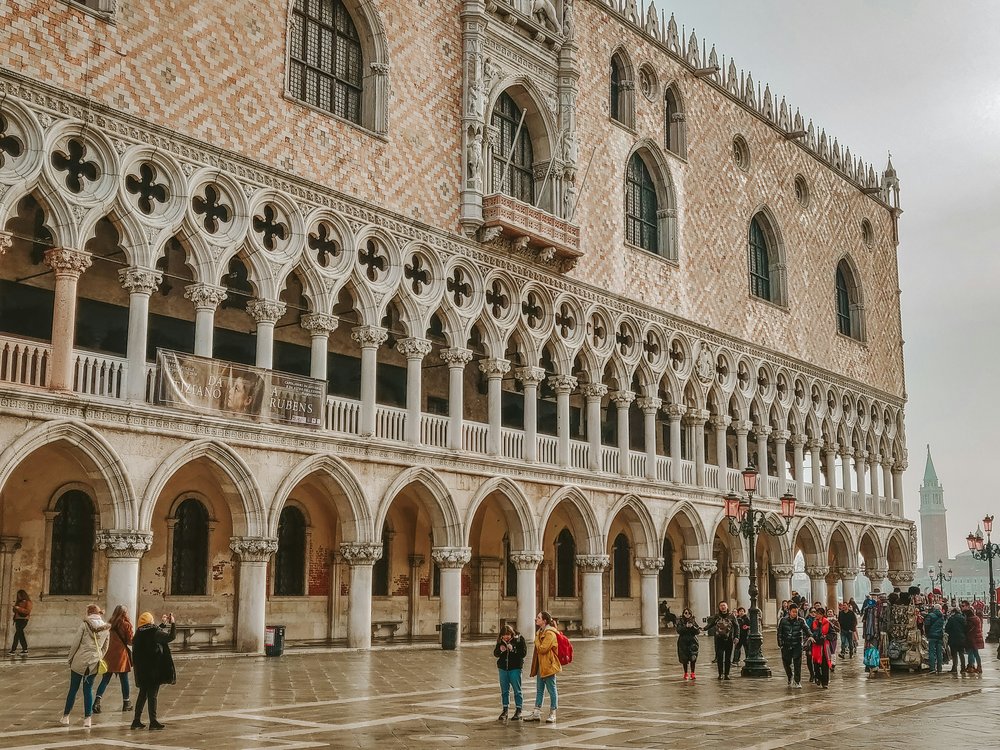
Doge’s Palace | Photo Credit: Denys on Unsplash
📍 Address: Piazza San Marco 1, 30124 Venice
⏰ Best time to visit: Mid-morning on weekdays
Right next to the basilica, you’ll find the stunning Doge’s Palace. This is one of the best examples of gothic architecture in Venice.
From the outside, you’ll see delicate pink-and-white marble, pointed arches, and intricate stone patterns. Its design feels light and airy, even though it’s massive. Inside the palace, you’ll see grand halls full of Venice’s political past, when this building served as the seat of power.
Klook tip: Enter through the Porta del Frumento, which faces the Riva degli Schiavoni waterfront
What makes it special is how it mixes Gothic style with later Renaissance updates. It’s a true symbol of Venice's architecture evolving over time. Visit both iconic spots in one go with a guided Doge’s Palace and St Mark’s Basilica tour.
3. Biblioteca Marciana
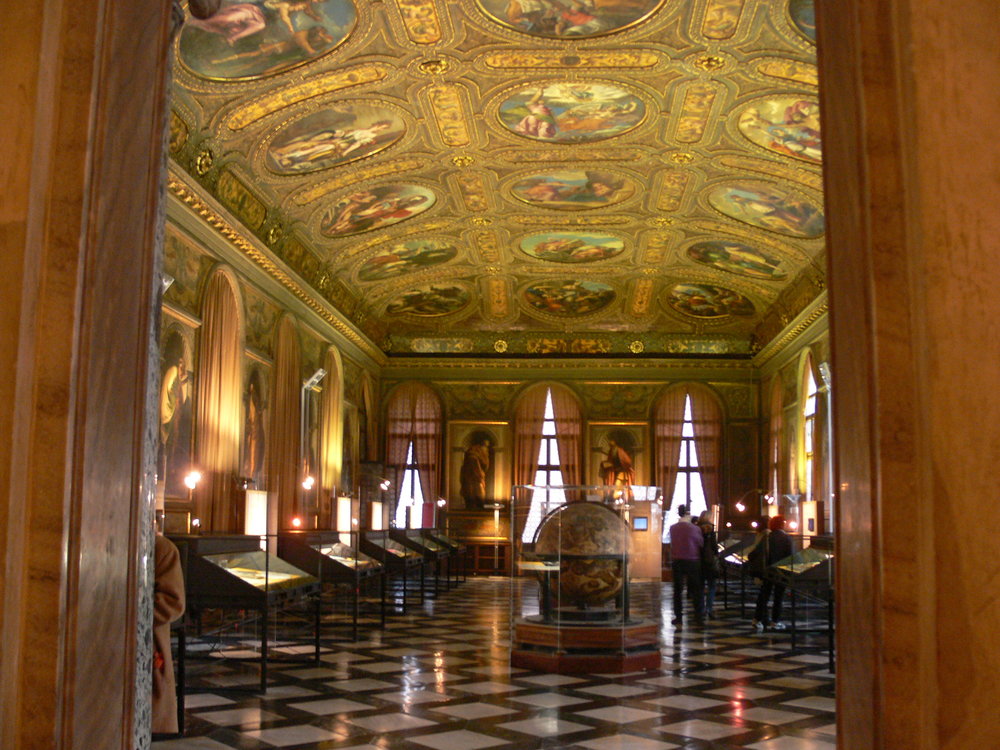
Inside Biblioteca Marciana | Photo Credit: Wikimedia Commons
📍 Address: Piazzetta San Marco 7, 30124 Venice
⏰ Best time to visit: Late morning for great lighting
Across from the Doge’s Palace, you’ll find the Biblioteca Nazionale Marciana, also known as Marciana Library or Library of Saint Mark. This building is a must-see if you’re a fan of renaissance architecture in Venice.
Designed by Jacopo Sansovino, the façade is full of symmetry, columns, and elegant arches, and it’s one of the sites you can visit in the Doge’s Palace and St. Mark’s Museums tour.
The white limestone gives it a clean and polished look, while statues and carvings add playful detail. Inside, you’ll also find old Greek and Latin manuscripts. It reflects a time when Venice wanted to show power through balance and beauty.
4. The Procuratie
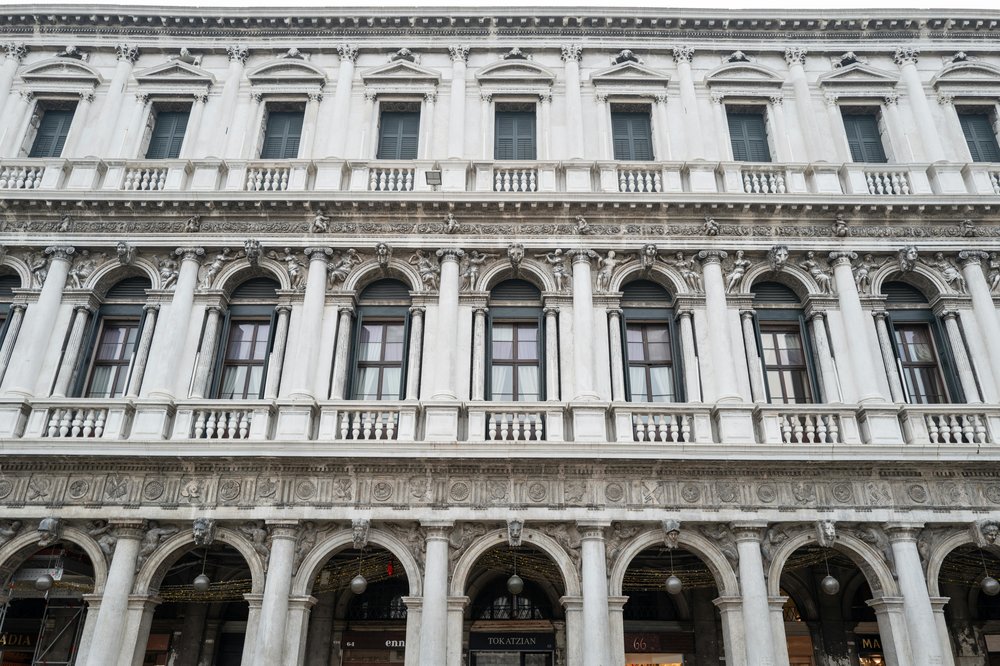
The Procuratie | Photo Credit: Anthony Rahayel on Pexels
📍 Address: Piazzetta San Marco 7, 30124 Venice
⏰ Best time to visit: Morning or afternoon for café hopping
Surrounding St. Mark’s Square are the long, elegant Procuratie buildings. These structures define the square and showcase centuries of architectural change.
Their arcades create shaded walkways with shops and cafés. You’ll find repeating arches, balanced proportions, and clean lines, hallmarks of Renaissance design. The Procuratie Vecchie is especially impressive, being one of the longest buildings in Venice. You’ll likely pass by these buildings on a morning walking tour in Venice.
With recent renovations, you can now go inside parts of these buildings and see how history blends with modern use. It shows how Venice architecture continues to adapt.
5. Caffè Florian
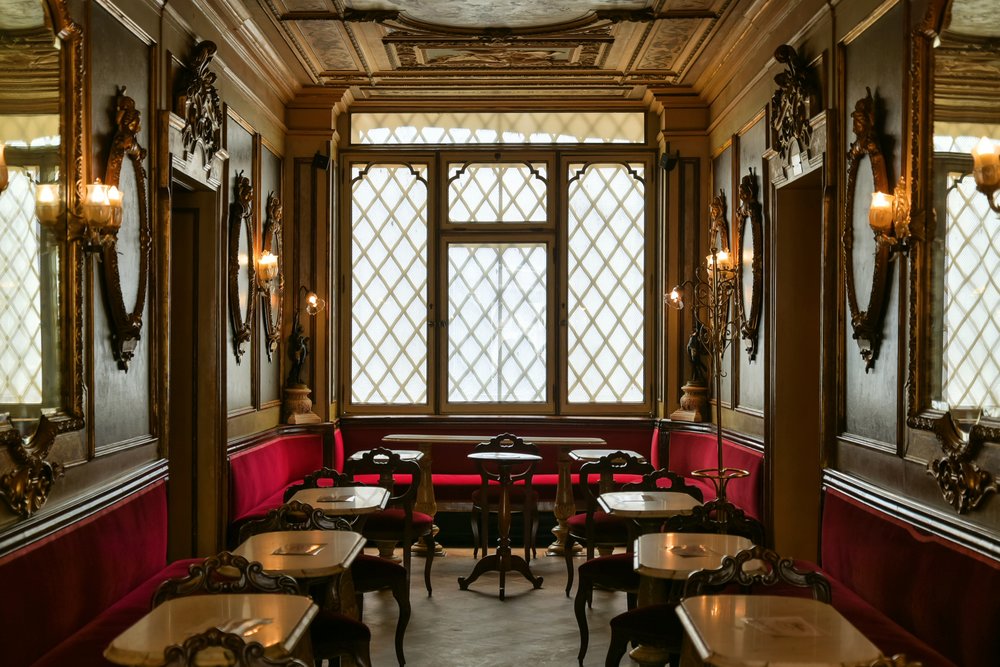
Ornate interior of Caffè Florian, Venice's oldest cafe | Photo Credit: Wikimedia Commons
📍 Address: Procuratie Nuove of Piazza San Marco 57, 30124 Venice
⏰ Best time to visit: Morning or afternoon for café hopping
Take a break at Caffè Florian, Italy’s oldest café. But this isn’t just a place to eat, it’s a work of art. Early visitors included Goldoni, Goethe, and Casanova, as it was one of the first cafés to welcome women. Later, Byron, Proust, and Dickens also visited.
Here, you’ll find ornate rooms with painted ceilings, mirrors, and wood paneling. The interiors were redesigned in the 1800s, blending elegance with storytelling. Each room has its own theme, from romantic scenes to historical figures.
This spot shows how even small spaces contribute to Venice architecture. It’s cozy, detailed, and full of character.
6. Correr Museum
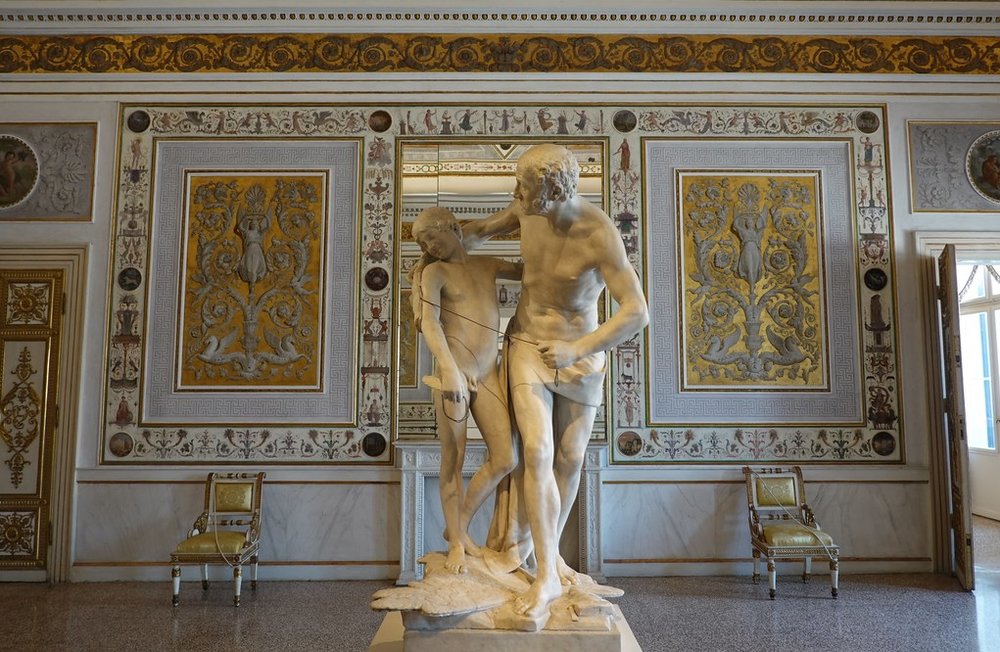
Canova, Daedalus and Icarus (1779) in Correr Museum | Photo Credit: Flickr
📍 Address: Napoleonic Wing of Piazza San Marco 52, 30124 Venice
⏰ Best time to visit: Early afternoon
Located in the Napoleonic Wing, the Correr Museum gives you a deeper look into Venice’s past, and its design.
The building itself reflects neoclassical influences, with grand halls and balanced layouts. Inside, architect Carlo Scarpa added modern touches while preserving original features like terrazzo floors and carved ceilings. You can visit it together with Doge’s Palace on this guided tour of Correr Museum.
This mix of old and new lets you see modern architecture in Venice alongside historic design. It’s a great place for you to see how styles evolve.
7. Santa Maria dei Miracoli
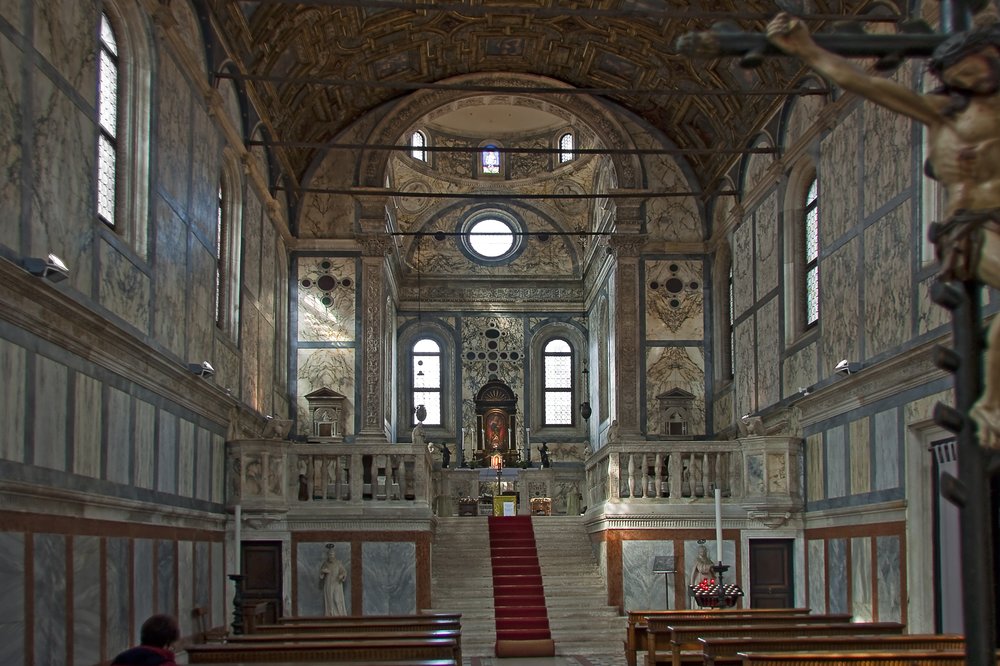
Renaissance Church of Santa Maria dei Miracoli with patterned marble | Photo Credit: Wikimedia Commons
📍 Address: Campo dei Miracoli, 30121 Venice
⏰ Best time to visit: Morning for fewer crowds
Santa Maria dei Miracoli, or Church of Saint Mary of Miracles, is often called the “marble jewel box” of Venice. And once you see it, you’ll understand why.
Built in the late 15th century, it’s one of the best examples of Renaissance architecture in Venice. In this hidden Venice tour, you'll see its colorful marble panels arranged in neat patterns. The curved pediment and domes show Byzantine influence, creating a unique blend of styles.
Its compact size makes it easy to explore, but every detail is carefully crafted. It’s proof that Venice architecture shines in both big and small spaces.
8. Scuola Grande di San Teodoro
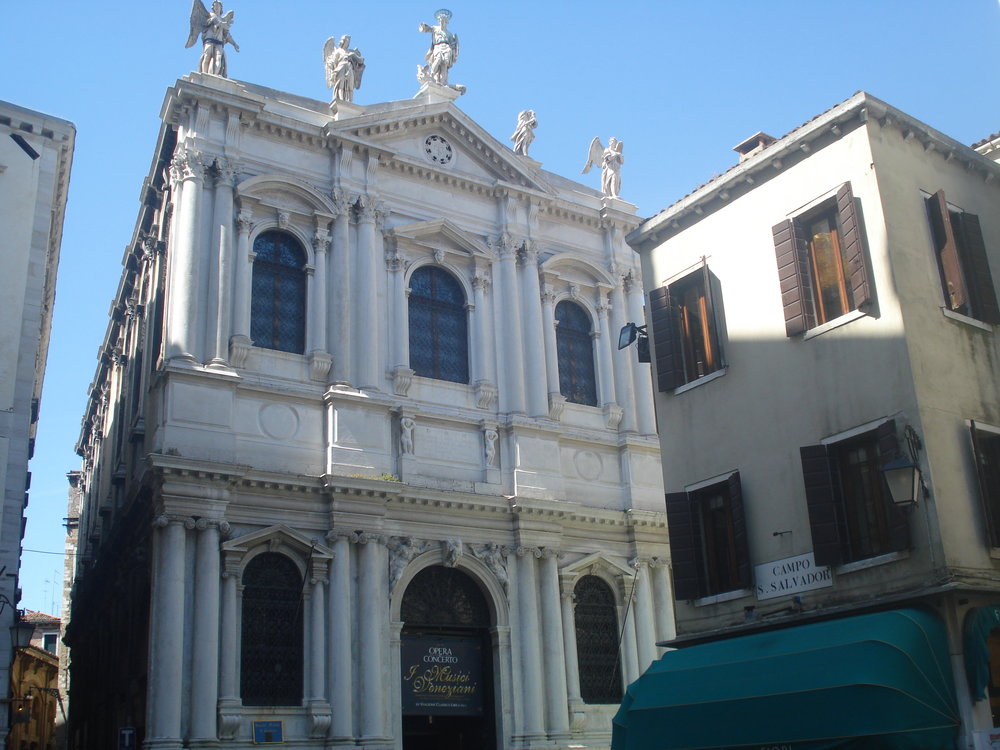
Scuola Grande di San Teodoro | Photo Credit: Wikimedia Commons
📍 Address: Campo S. Salvador, 4810, 30124 Venice
⏰ Best time to visit: Evening during concerts
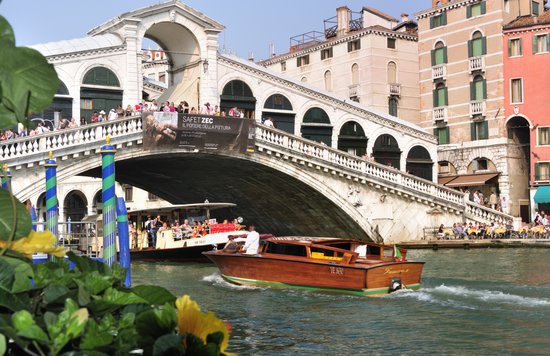
Near Ponte di Rialto or Rialto Bridge, this lesser-known gem offers a mix of Renaissance and Baroque design.
The exterior of Scuola Grande di San Teodoro is simple, but inside, it’s grand. High ceilings, gilded details, and rich paintings fill the space. It was once used as a charitable institution and later became a cultural venue.
Today, it hosts concerts, such as Baroque and Vivaldi performances, making it a lively place to experience Venice architecture in action.
Klook tip: Check concert schedules in advance and book your tickets online to secure a seat, especially during peak travel seasons
9. House of Marco Polo
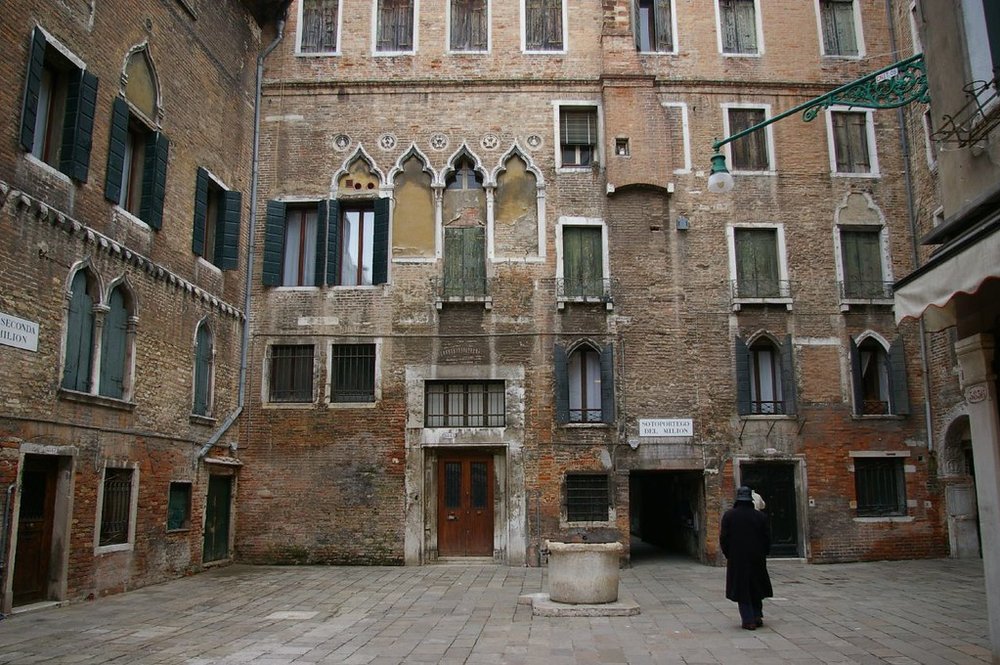
House of Marco Polo | Photo Credit: Flickr
📍 Address: Corte Seconda del Milion, 30121 Venice
⏰ Best time to visit: Anytime, as it’s quick to see
If you want a more peaceful stop, visit the site of Marco Polo’s home. He was one of Venice’s most famous explorers. While much of the original building is gone, the remaining archway still stands.
This simple structure shows you the everyday side of Venice architecture. It’s not grand like the palaces, but it tells a story of daily life in the city. The Romanesque arch design is sturdy and practical. Sometimes, the smallest details, like arches, stonework, and carvings, reveal the most about a place.
FAQs about Venice architecture
What are the most famous architectural landmarks in Venice?
The most famous landmarks include St. Mark’s Basilica, Doge’s Palace, and the buildings around St. Mark’s Square. These spots highlight the best of Venice architecture, from Gothic to Renaissance styles. They’re also easy to visit since they’re close to each other. Start here if it’s your first time in Venice.
What style of architecture is Venice known for?
Venice is known for its mix of Gothic, Byzantine, and Renaissance styles. This mix makes architecture in Venice, Italy truly unique. You’ll see pointed arches next to domes and symmetrical facades. The city’s history as a trading hub shaped this rich design mix.
Where can I see Gothic architecture in Venice?
The Doge’s Palace is the best place to see gothic architecture in Venice. Its detailed façade and pointed arches are classic examples. You can also spot Gothic elements in other older buildings across the city. Walking tours are a great way to find them.
Are there any must-see palaces in Venice?
Yes, Doge’s Palace is a must-see. It’s both beautiful and historic, once serving as the center of government. Many other palaces line the Grand Canal as well. Each one adds to the charm of buildings in Venice, Italy.
What is the best way to explore Venice’s architecture?
Walking is the best way to explore Venice architecture. The city is compact, and every street has something to see. Guided tours like the Venice walking tour help you understand the history behind the designs. You can also use Klook to book tours and skip the hassle.
Plan your Venice trip better with our travel guides!
What is Klook?
Klook is a leading pan-regional experiences platform in Asia Pacific, purpose built to digitalize experiences and make them accessible to every traveler.
Our mission is to build the digital infrastructure for the global experience economy — empowering merchants to share their passions and travelers to discover the heartbeat of each destination. We operate a mobile-first, curated platform featuring diverse experiences across global destinations.