
If you’re wondering about the easiest way to get around Milan, the answer is simple: the Milan metro. It’s fast, affordable, and connects almost every major attraction, train station, and neighborhood in the city.
You don’t need to worry about traffic or getting lost. With the Milan metro, you can move around Milan quickly and confidently, even on your first day.
In this guide, you’ll learn how the system works, which lines to take, how to ride the metro, and simple tips to make your trip smooth. By the end, you’ll be ready to use Milan public transport like a local!
How does the Milan metro work?
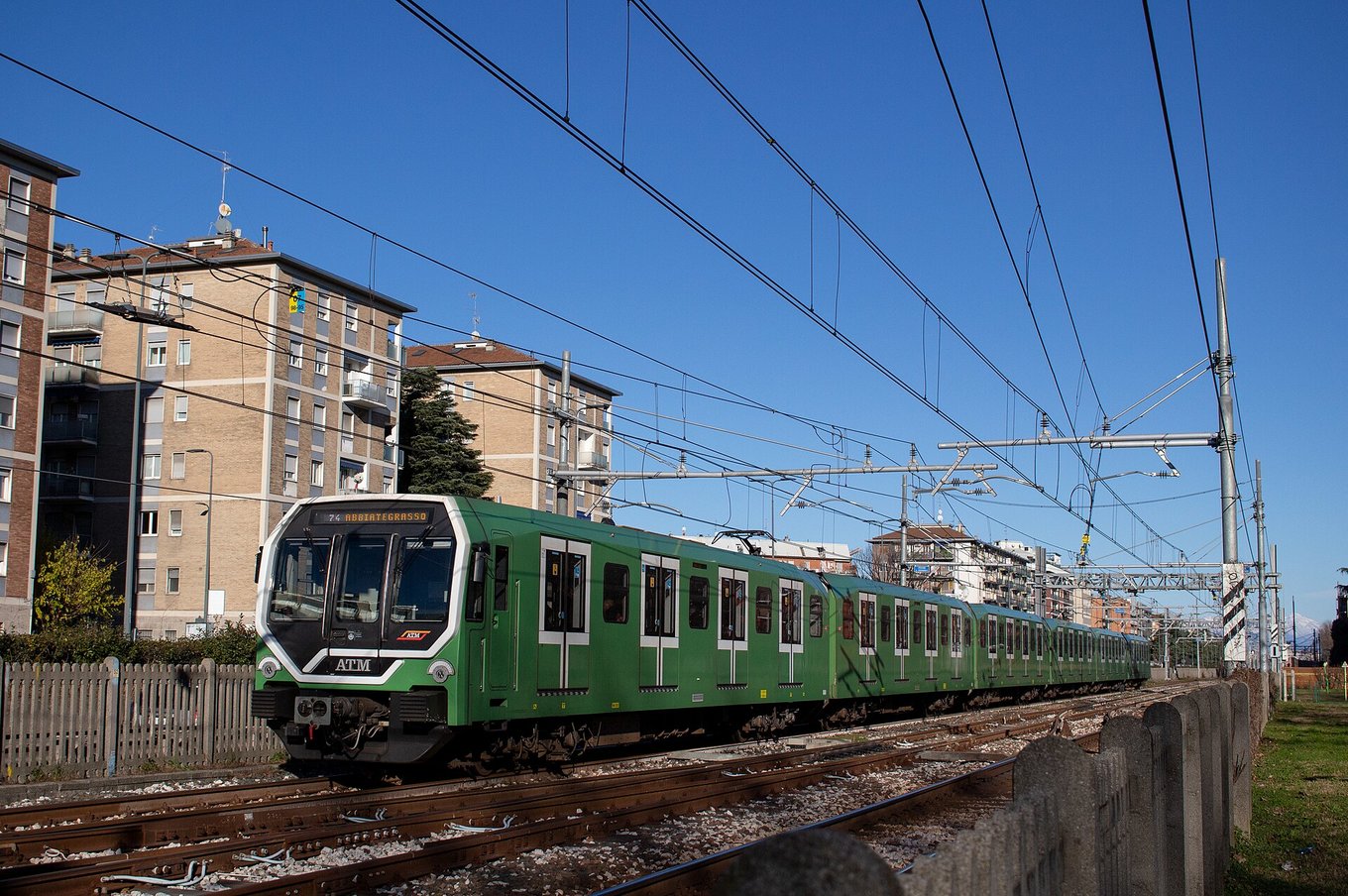
The Milan metro (Metropolitana di Milano) is the biggest metro system in Italy. It has more than 100 stations and five main lines (M1 to M5). Each line has a color, so it’s easy to follow on Milan metro maps.
You’ll notice that every metro station in Milano is clearly marked with a red “M” sign. Inside, signs are simple, and most have English translations, which makes it easy for you to find your way.
Milan metro operating hours:
• Runs daily from around 5:30 AM to 12:30 AM
• Last trains usually leave just after midnight
Milan metro frequency:
• Every 2 to 3 minutes during rush hour
• Every 5 to 10 minutes during evenings and quieter times
How much does it cost to ride the Milan metro?
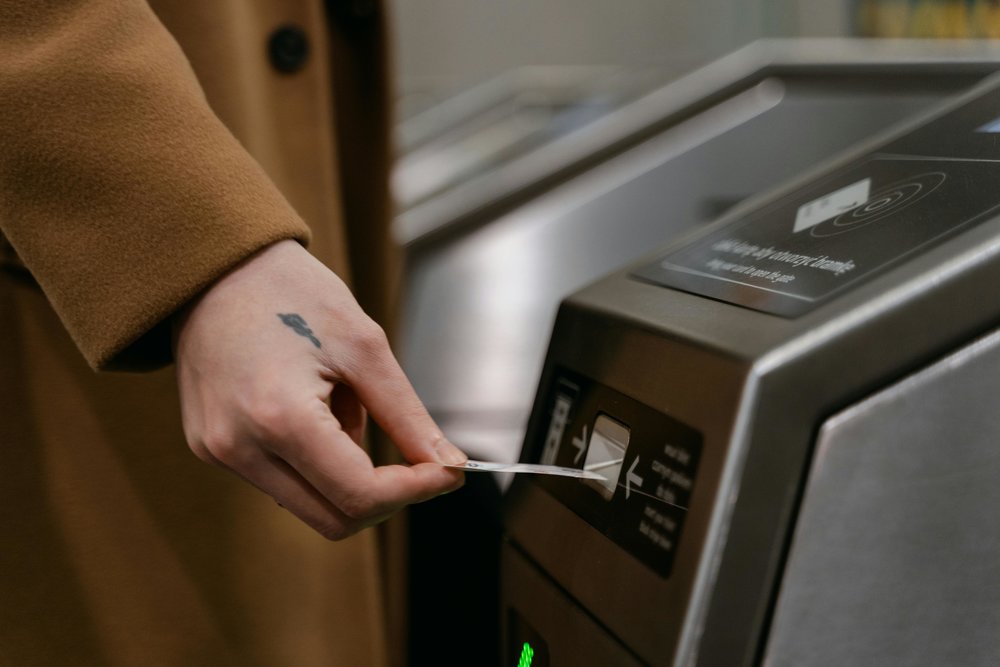
Milan metro ticket | Photo Credits: MART PRODUCTION on Pexels
A single ticket usually costs around €2.20, valid for 90 minutes. During that time, you can switch between metro lines, buses, and trams within the same zone. This makes it a great option if you’re only taking a few rides.
If you plan to explore more, get a Milan City Card for unlimited 24-hour rides on all Milan public transport. Want more value? Upgrade to the Milan City Pass, which includes transport plus access to top attractions like the Duomo Cathedral, Teatro alla Scala Museum, and more!
Which Milan Metro line should you take?
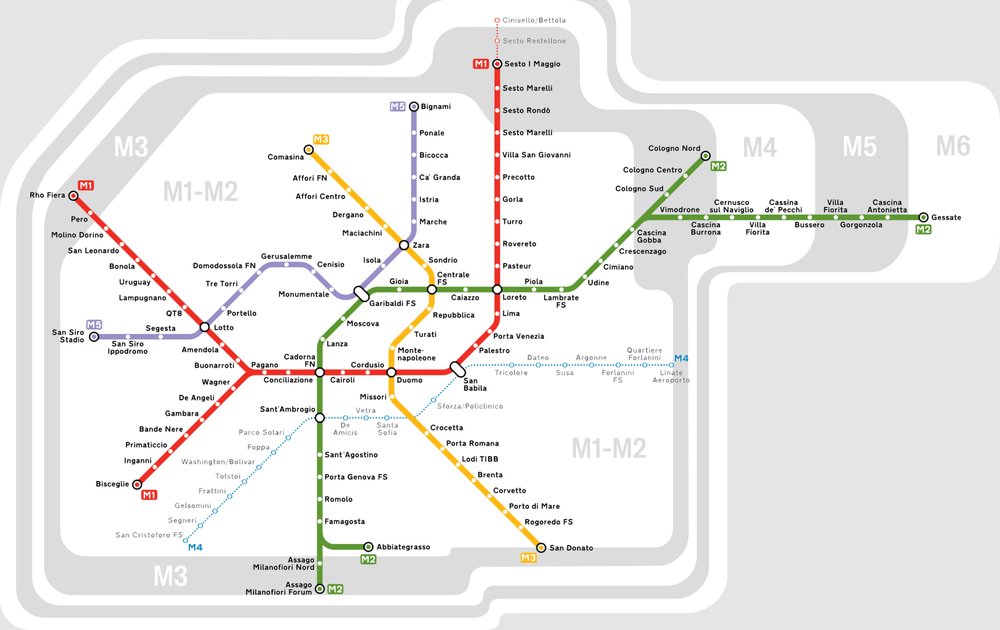
Milan metro map | Photo Credits: Marioreddy21 on Wikimedia
Each Milan metro line has a color, which makes it much easier for you to follow signs and read Milan metro maps. Here’s a more detailed guide so you know exactly which line to take for Milan’s top attractions:
M1 (Red Line)
This is the most useful line for sightseeing. Take it to the Duomo metro station in Milan for the Duomo Cathedral and nearby museums. It also stops at Galleria Vittorio Emanuele II and Porta Venezia, a great area for shopping, cafes, and walking through Indro Montanelli Park.
M2 (Green Line)
Use this line to explore the Navigli canals, one of the best areas for nightlife, food, and sunset views. It also stops at Porta Genova (closest to Navigli) and Garibaldi, where you can visit modern spots like Piazza Gae Aulenti and Corso Como.
M3 (Yellow Line)
This line is great for both sightseeing and connections. It stops at Duomo (another access point to the cathedral) and Milano Centrale, the main train station. You can also use it to reach areas near Via Torino, a popular street for shopping.
M4 (Blue Line)
This is your go-to line for airport transfers. It connects Milan Linate Airport directly to the city center. You can also use it to reach areas like San Babila, which is close to luxury shopping streets like Via Montenapoleone.
M5 (Purple Line)
Take this line if you’re heading to San Siro Stadium for a football match or concert. It also passes through Porta Garibaldi, giving you access to trendy neighborhoods, restaurants, and modern city views.
How to ride the Milan metro?
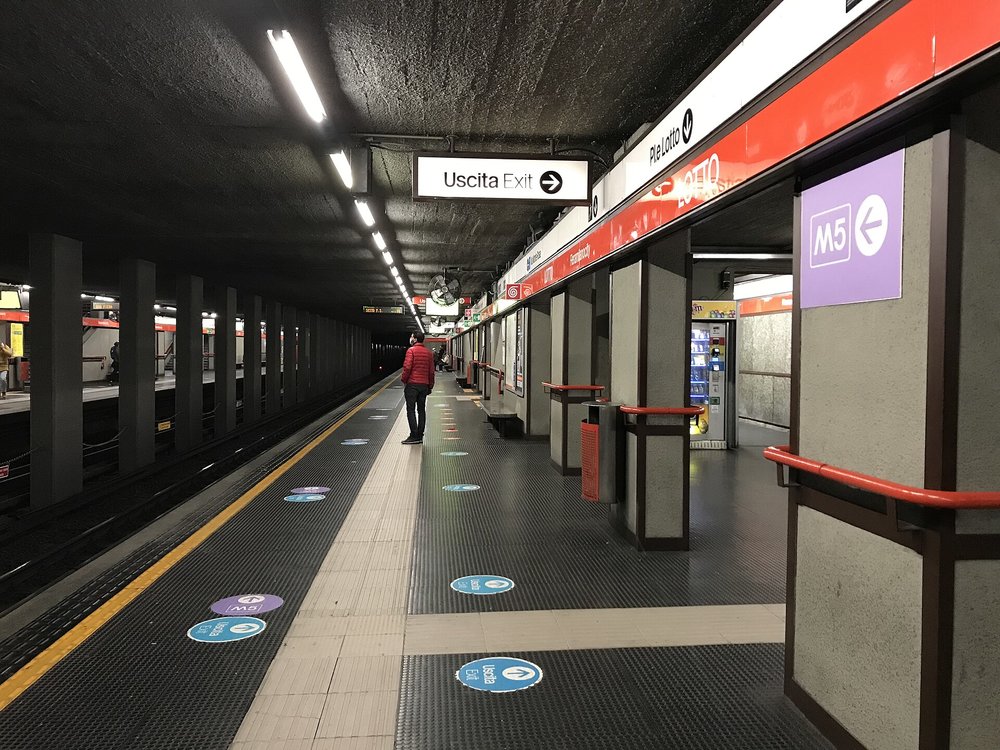
Riding the metro in Milan | Photo Credits: Joaquin008 on Wikimedia
Using the Milan metro is simple once you know the steps. First, find the nearest station by looking for the red “M” sign. Then check the Milan metro maps to choose the right line and direction.
Next, buy your Milan metro tickets at a machine or use contactless payment. Many travelers now just tap their card or phone at the gate, which is quick and easy.
Before entering, make sure you tap or validate your ticket. Then follow the signs to your platform. Always check the final stop of the train so you know you’re going the right way!
Tips for riding the Milan metro
• Avoid rush hour (7–9 AM, 5–7 PM) so you can ride more comfortably
• Keep your ticket until you leave the station
• Stand on the right side of escalators and let others pass on the left
• Use apps like Google Maps for directions; having an Italy eSIM can go a long way to help you stay connected easily.
FAQs about the Milan metro
How do you pay for the Milan metro?
You have several easy ways to pay. You can buy Milan metro tickets at machines, ticket counters, or convenience shops. You can also use contactless cards or mobile wallets to tap and enter. If you plan to ride often, a Milan metro pass is a smart choice because it gives you unlimited rides for a set time.
Does Milan have a metro?
Yes, Milan has a modern and reliable metro system. The Milan metro has five lines that cover most of the city. It is one of the best ways to travel quickly and avoid traffic.
How do tourists get around in Milan?
Most tourists use the Milan metro because it’s simple and efficient. You can also use trams and buses as part of Milan public transport. Many visitors combine the metro with walking to explore nearby streets and attractions.
What is the cheapest way to travel around Milan?
The cheapest way is to use the Milan metro fare system with single tickets or day passes. A Milano metro pass is great if you plan to travel a lot in one day. It helps you save money compared to taking taxis.
How to buy tickets for the Milan Metro?
You can buy Milan metro tickets from ticket machines, metro counters, or apps. Machines are easy to use and usually have English options. Contactless payment is also widely available, so you can skip paper tickets.
Is the Milan Metro tap-to-pay?
Yes, the Milan metro supports tap-to-pay. You can use your credit card, debit card, or phone to enter the gates. This makes it very convenient, especially if you don’t want to carry cash.
More Milan travel guides for you
What is Klook?
Klook is a leading pan-regional experiences platform in Asia Pacific, purpose built to digitalize experiences and make them accessible to every traveler.
Our mission is to build the digital infrastructure for the global experience economy — empowering merchants to share their passions and travelers to discover the heartbeat of each destination. We operate a mobile-first, curated platform featuring diverse experiences across global destinations.