Milan is one of those cities that rewards you for simply looking up. Walk through its streets and you'll pass medieval bell towers, ornate 19th-century arcades, sleek glass skyscrapers, and brutalist landmarks, sometimes all within a few blocks of each other. Few cities in the world layer their architectural history this visibly.
If you're planning a trip and want to understand the city through its buildings, this guide covers the best architecture in Milan: from the Gothic heights of its famous cathedral to the forest-clad towers of Porta Nuova. Here's what to put on your list!
1. Duomo di Milano
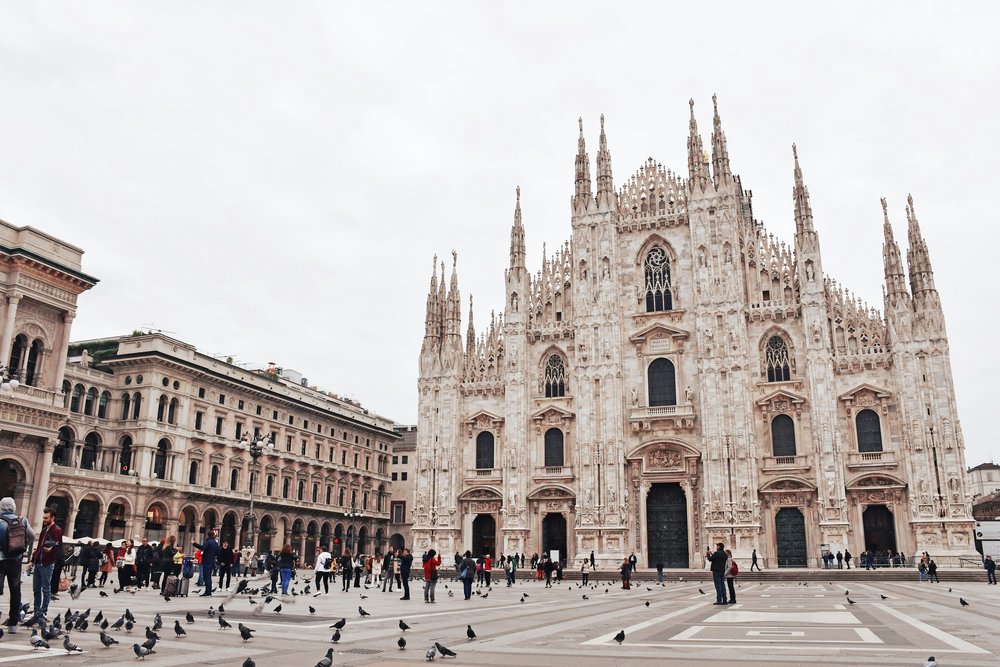
Duomo di Milano dominating Piazza del Duomo in central Milan | Photo Credit: Daryan Shamkhali on Unsplash
Address: Piazza del Duomo, 20122 Milan
How to get there: Take metro Line M1 or M3 to Duomo station — the cathedral is directly outside the exit
There's no better place to start than the Duomo. Milan's cathedral is one of the largest Gothic churches in the world, and it took nearly 600 years to complete. The result is a jaw-dropping mass of white marble, with 135 spires, over 3,400 statues, and a rooftop terrace that puts you face-to-face with the ornamental details most tourists only see from below.
The interior is just as impressive. Huge stained-glass windows fill the nave with colored light, while the geometric marble floors stand out with their detailed patterns. Although the Duomo is mainly Gothic in style, parts of the cathedral also show Renaissance and Baroque influences, especially in some chapels and decorative details.
Plan ahead and visit the Duomo rooftop for some of the best views in central Milan. Going earlier in the day is a good way to avoid the biggest crowds, especially during peak season.
Klook Tip: Head up to the rooftop either early morning or around sunset for the best light and fewer crowds. On clear days, you can see the Alps in the distance.
2. Galleria Vittorio Emanuele II
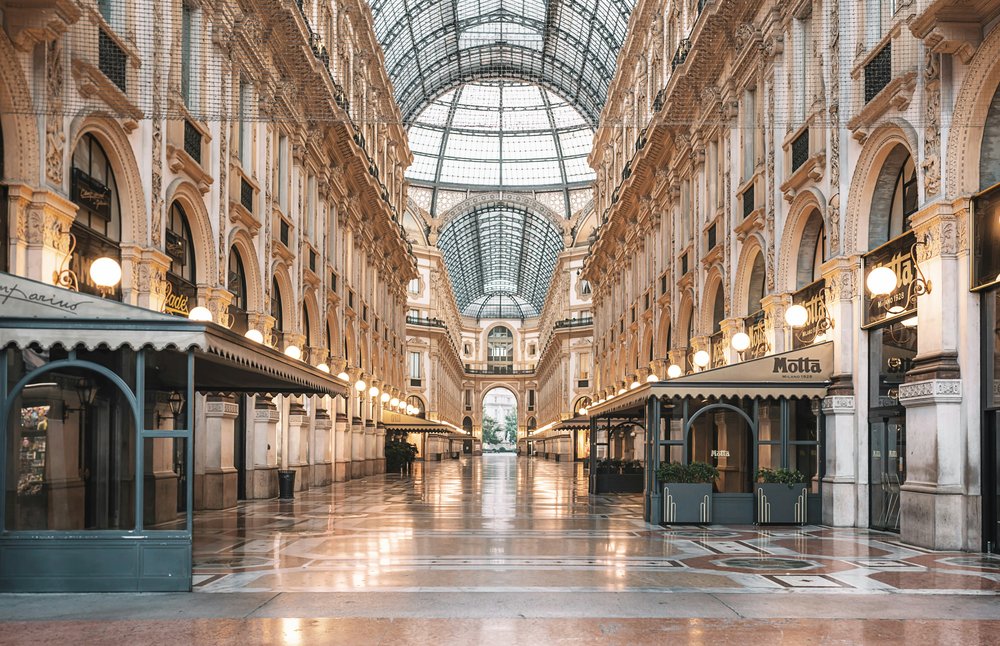
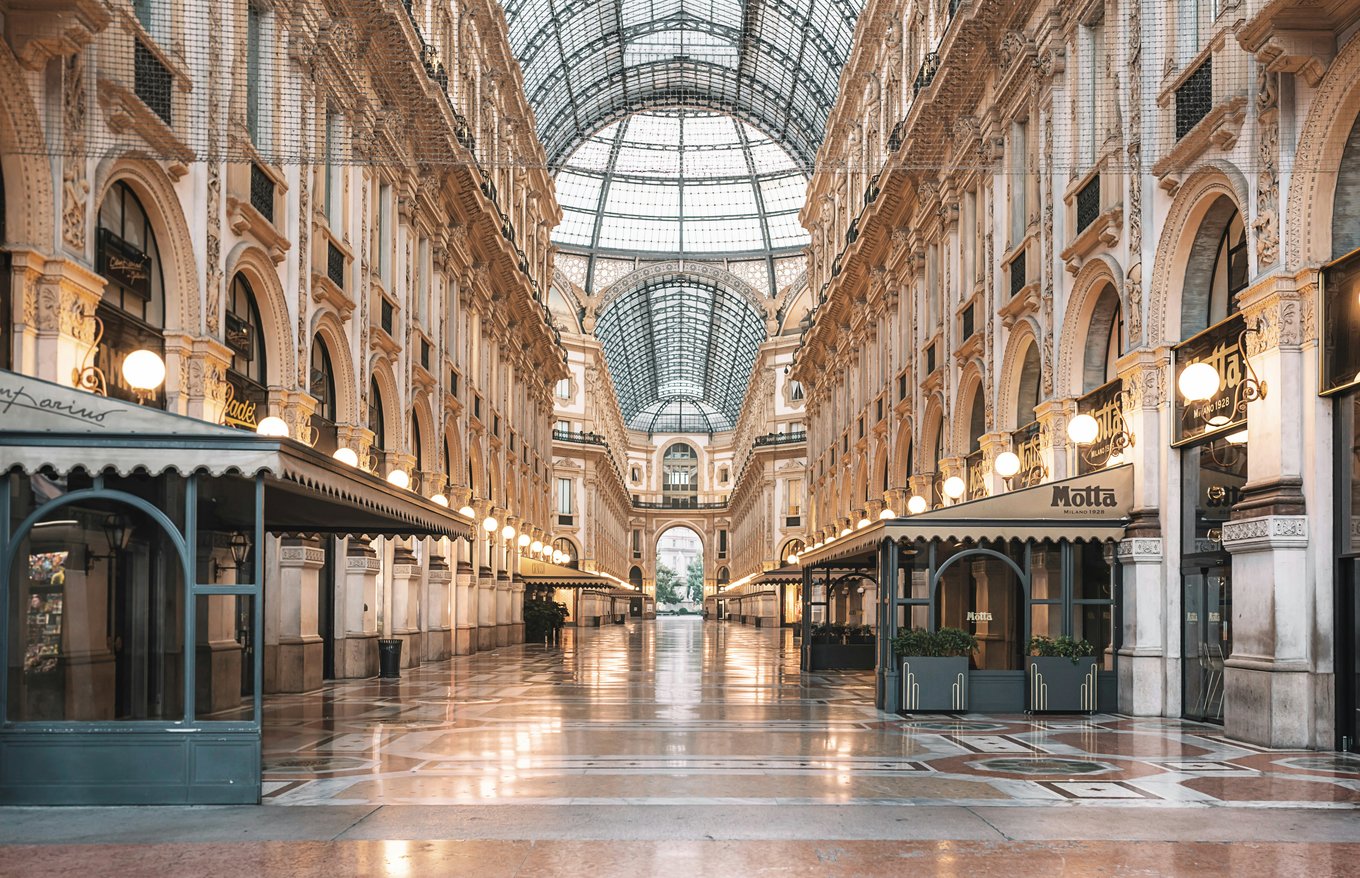
Interior of Galleria Vittorio Emanuele II with its iconic glass roof | Photo Credit: Federico Di Dio photography on Unsplash
Address: Piazza del Duomo, 20123 Milan
How to get there: The Galleria entrance is directly beside the Duomo in Piazza del Duomo
Right next to the Duomo, this 19th-century shopping arcade is arguably the most beautiful in Europe. Built between 1865 and 1877, the Galleria Vittorio Emanuele II features a stunning iron-and-glass barrel vault ceiling, a central octagonal cupola, and a mosaic floor that tourists have been photographing for over 150 years.
The Galleria is part of Milan's architectural story in a major way. It was one of the first buildings in Italy to use iron and glass construction on this scale, making it a milestone in 19th-century European architecture. Today it's still a working arcade lined with luxury boutiques and historic cafés, so it serves a practical purpose even while functioning as a landmark.
3. Bosco Verticale (Vertical Forest)
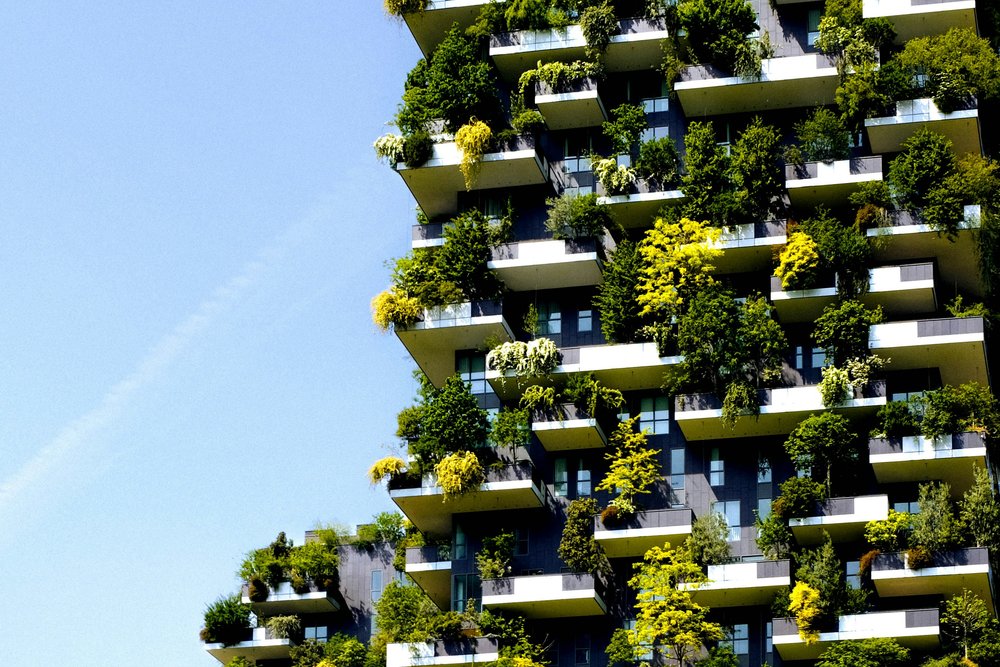
Bosco Verticale covered in trees and greenery in Milan’s Porta Nuova district | Photo Credit: Zach Rowlandson on Unsplash
Address: Via Gaetano de Castillia 11, 20124 Milan
How to get there: Take metro Line M2 or M5 to Garibaldi FS station, then walk about 10 minutes
Few buildings in Milan have generated as much global attention in recent years as the Bosco Verticale, two residential towers in the Porta Nuova district. Designed by architect Stefano Boeri, the towers are covered with roughly 900 trees, 5,000 shrubs, and 11,000 plants across their facades giving the impression of a living, vertical forest rising from the city.
The project goes beyond looks alone. The greenery helps insulate the buildings, lower energy use, improve air quality, and create space for birds and insects to thrive. Bosco Verticale has also received several international architecture awards and is considered one of the most important examples of modern architecture in Milan.
See more peaceful and scenic escapes like Bosco Verticale in our guide to the best gardens in Milan!
4. Fondazione Prada
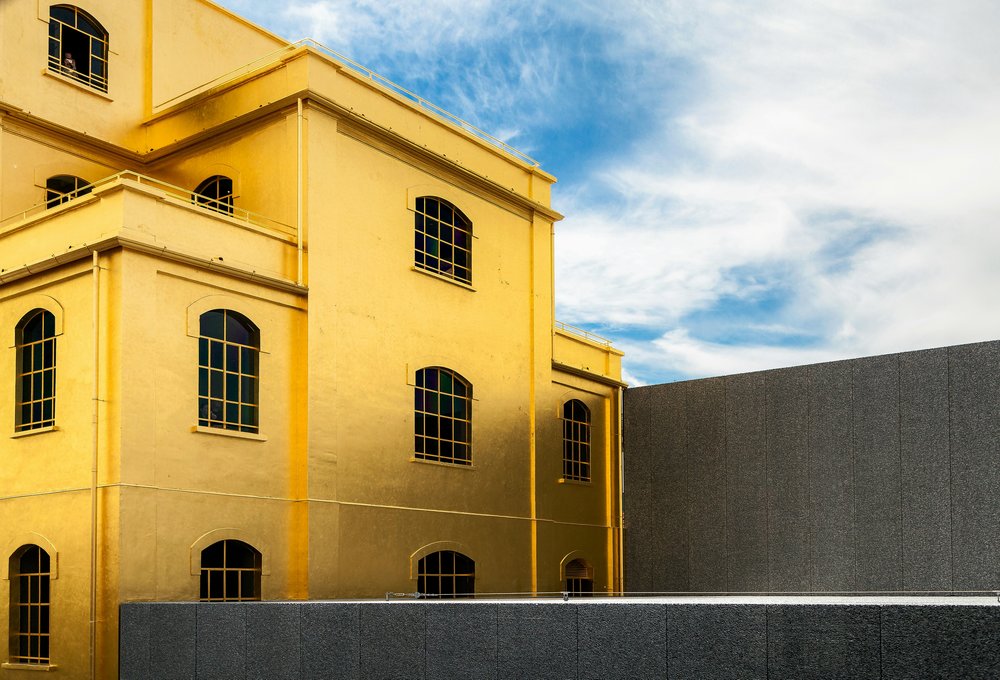
The gold-clad Haunted House building at Fondazione Prada | Photo Credit: Gaetano Cessati on Unsplash
Address: Largo Isarco 2, 20139 Milan
How to get there: Take metro Line M3 to Lodi T.I.B.B. station, then walk about 10 minutes
Fondazione Prada is one of the most well-known examples of contemporary architecture in Milan. Built on the site of a former gin distillery, the museum combines seven restored industrial buildings with three striking modern additions, including the gold-covered “Haunted House” tower.
The design mixes old and new throughout the campus, pairing raw industrial spaces with sleek modern materials and clean lines. It’s one of the city’s most ambitious modern architecture projects and also home to a strong lineup of contemporary art exhibitions, making it worth spending a few hours exploring.
Klook Tip: The bar inside Fondazione Prada, designed by filmmaker Wes Anderson, is a popular stop in its own right. It's called Bar Luce and it's worth a coffee break even if you're not visiting the exhibitions.
You can reach Fondazione Prada easily on your own, or join a Milan city highlights walking tour that takes in major architectural landmarks across the city.
5. Castello Sforzesco (Sforza Castle)
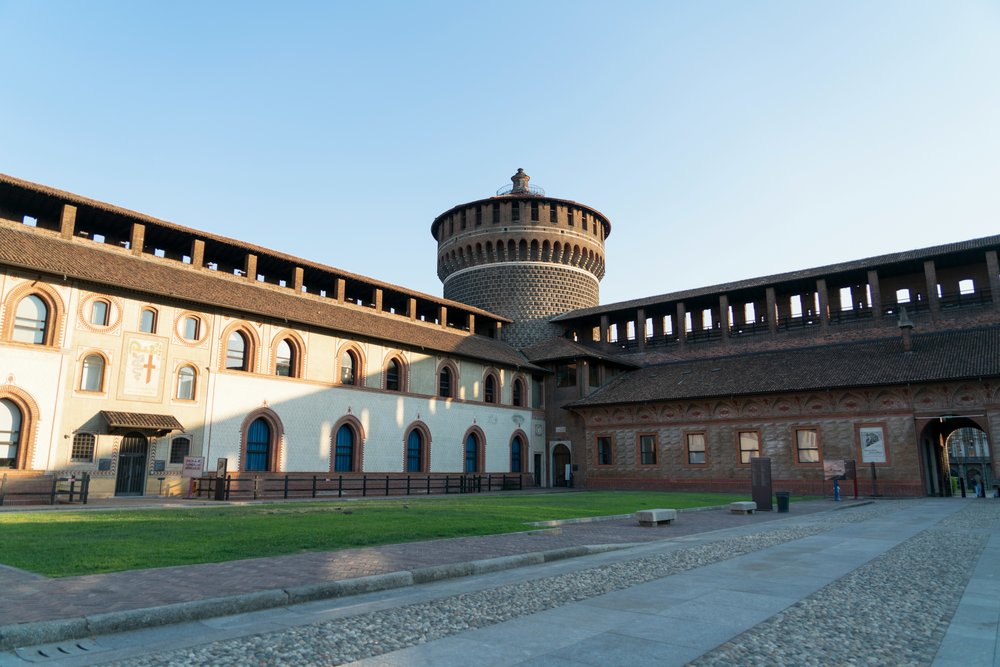
Courtyard and tower inside Castello Sforzesco in Milan | Photo Credit: Marian Florinel Condruz on Unsplash
Address: Piazza Castello, 20121 Milan
How to get there: Take metro Line M1 to Cairoli station, the castle is right outside the exit
Built in the 15th century by Francesco Sforza, Duke of Milan, Castello Sforzesco is one of the largest citadels in Europe. Just beside Parco Sempione, the castle has changed significantly over the centuries, parts were destroyed and rebuilt, it served as military barracks during the Napoleonic era.
Its towers, defensive walls, and drawbridge are classic examples of medieval military architecture in northern Italy, while areas like the Corte Ducale courtyard show later Renaissance influences.
Inside, you’ll find that the castle has several museums, including collections of medieval art, Egyptian artifacts, and Michelangelo’s unfinished Rondanini Pietà.
6. Villa Necchi Campiglio
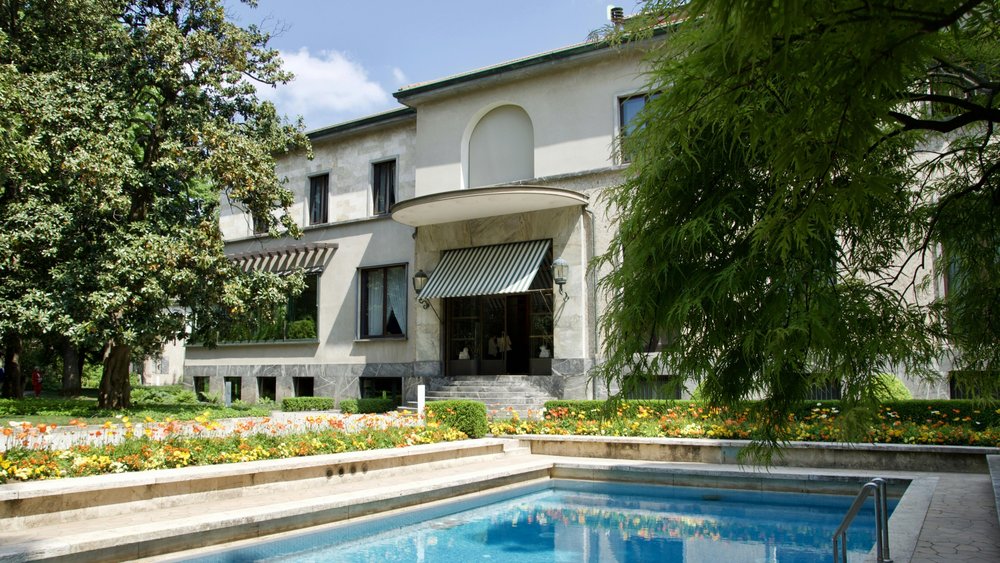
Villa Necchi Campiglio surrounded by gardens and a swimming pool
Address: Via Mozart 14, 20122 Milan
How to get there: Take metro Line M1 to Palestro station, then walk about 8 minutes
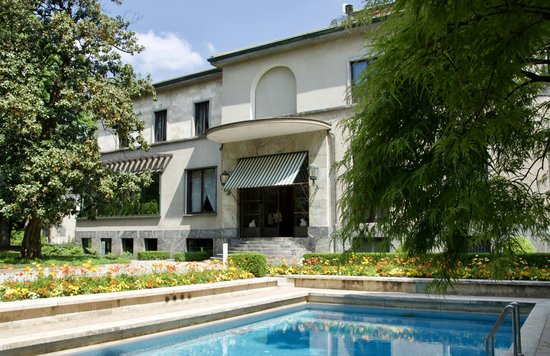
An underrated spot, Villa Necchi Campiglio is a 1930s modernist house in the Porta Venezia neighborhood. It’s one of the best examples of Rationalist architecture in Milan, a modernist style focused on clean lines, simple geometric shapes, and practical design rather than heavy decoration.
The interiors are well-preserved, with original furniture, artwork, and even a heated swimming pool in the garden, a major luxury for the time. Today the villa is managed by FAI (the Italian National Trust) and is open to tourists. It also appeared in the 2009 film I Am Love, which introduced it to a wider international audience.
7. Torre Velasca
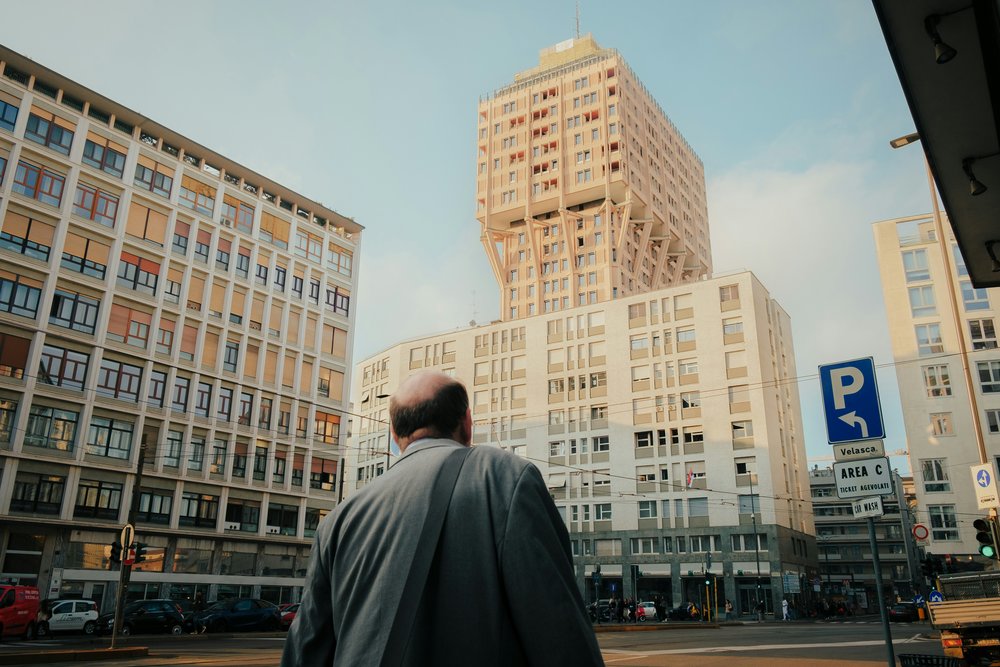
Torre Velasca rising above central Milan with its distinctive design | Photo Credit: Ouael Ben Salah on Unsplash
Address: Piazza Velasca 5, 20122 Milan
How to get there: Take metro Line M3 to Missori station, then walk about 5 minutes
If brutalist architecture in Milan is what you're after, Torre Velasca is the landmark to see. This 26-story tower in the city center is one of the most distinctive buildings in postwar Italy. Its upper floors extend outward over the base, inspired by medieval towers in Lombardy.
Torre Velasca sparked debate when it was built because of its unusual, top-heavy design, but today it’s seen as one of the most important works of 20th-century Italian architecture. It’s also just a short 10-minute walk from the Duomo.
Klook Tip: The area around Torre Velasca is great for an architecture walk. Nearby landmarks include the Duomo, Palazzo Reale, Fondazione Prada Osservatorio, and churches like San Bernardino alle Ossa.
8. Santa Maria delle Grazie
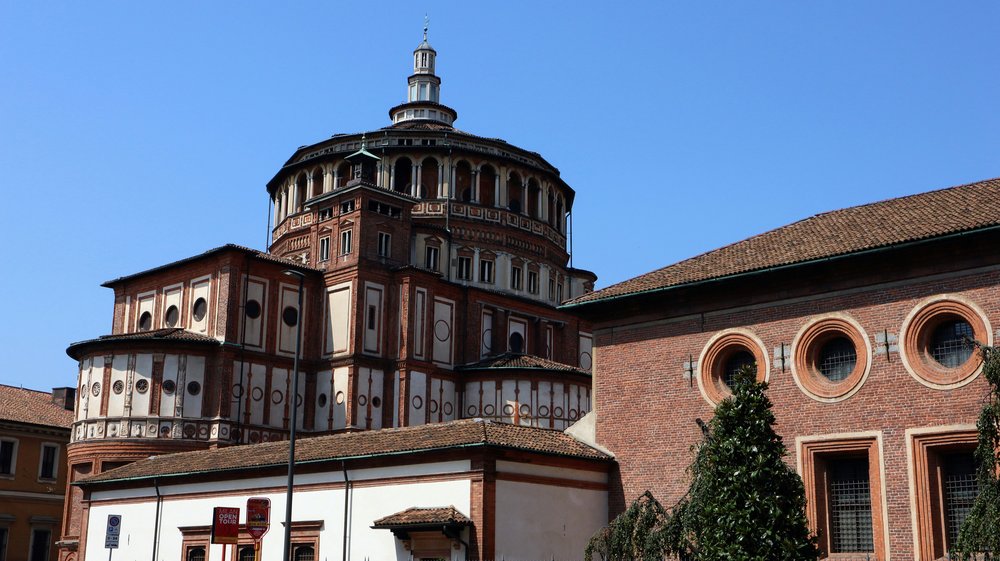
Santa Maria delle Grazie, home of Leonardo da Vinci’s The Last Supper | Photo Credit: Satvik on Unsplash
Address: Piazza di Santa Maria delle Grazie 2, 20123 Milan
How to get there: Take metro Line M1 or M2 to Cadorna FN station, then walk about 10 minutes
Most tourists come here for Leonardo da Vinci's The Last Supper, which is painted on the refectory wall adjacent to the church. But the church itself is one of the finest examples of Renaissance architecture in Milan and deserves attention in its own right.
Construction began in 1463 in Gothic style, and the building was later modified by Donato Bramante, one of the leading architects of the Italian Renaissance, who added the apse and the sacristy in the 1490s.
The apse added by Bramante is a masterpiece of Renaissance proportion — a cylindrical form topped with a dome, contrasting beautifully with the Gothic nave. The exterior alone is worth studying before you step inside. Since this is the site of The Last Supper, reservations are essential and entry is strictly timed.
9. Pirelli Tower (Pirellone)
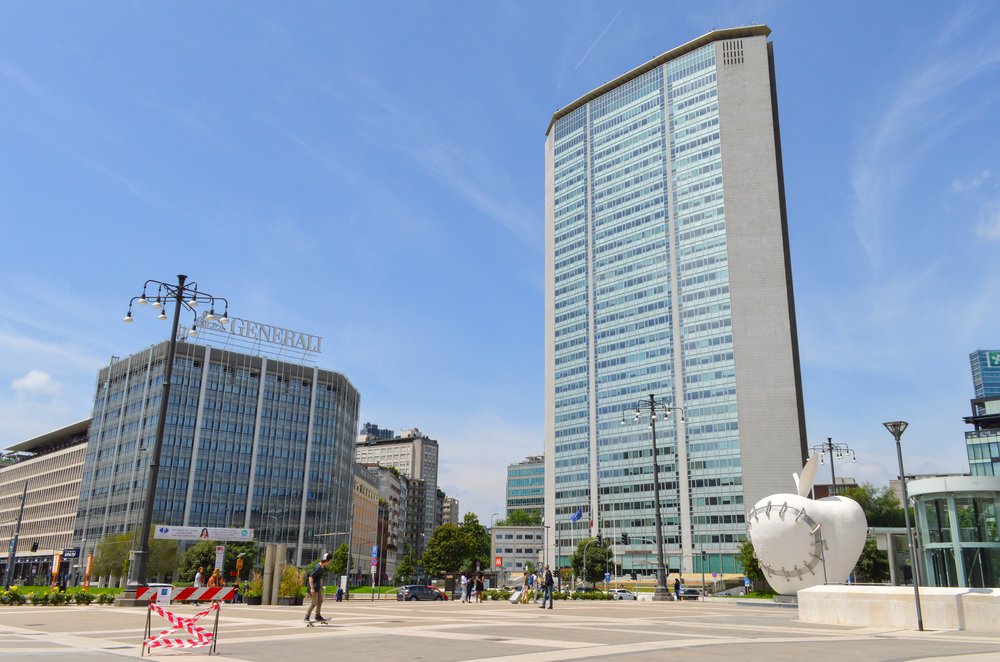
Pirelli Tower skyline view near Milano Centrale station | Photo Credit: Wikimedia Commons
Address: Piazza Duca d’Aosta 1, 20124 Milan
How to get there: Located beside Milano Centrale station — take metro Line M2 or M3 to Centrale FS
The Pirelli Tower, completed in 1958 and designed by Gio Ponti, was the tallest building in Italy at the time and remains one of the most elegant postwar skyscrapers in Europe. Its slim, tapered form stands out against the bulkier commercial towers of the same era.
Now the seat of the Lombardy regional government, the Pirellone sits directly in front of Stazione Centrale (Milan Central), Milan's grand central train station. The station's monumental facade is a landmark in its own right, making this corner of the city a must-visit if you’re interested in famous architecture in Milan from the 20th century.
10. Palazzo della Ragione (Ragione Palace)
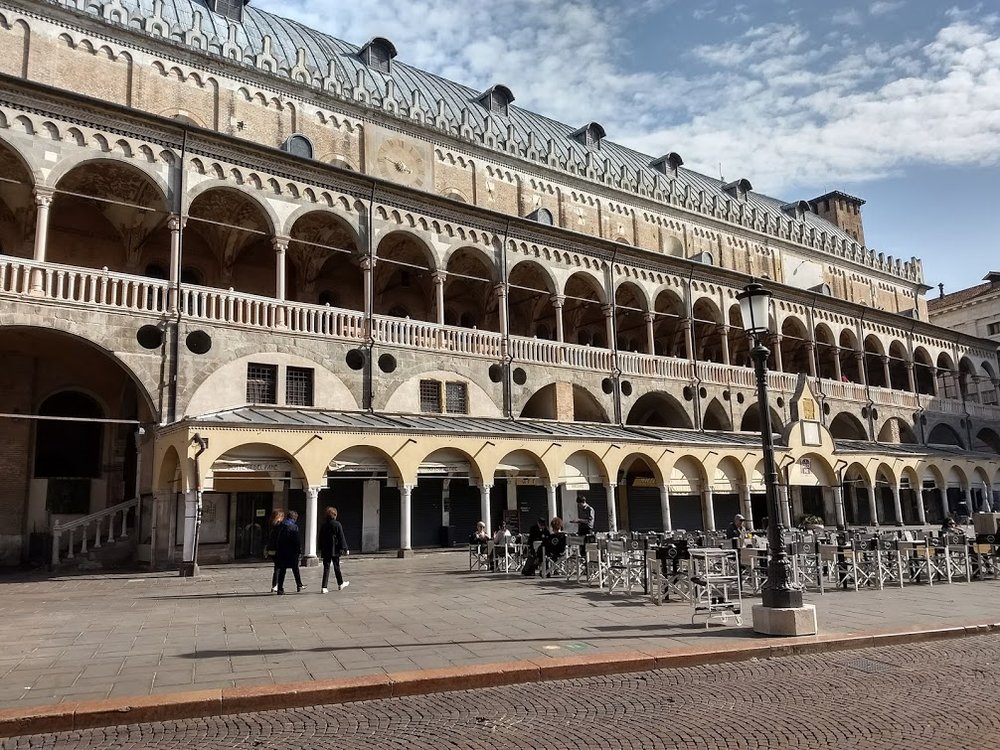
Palazzo della Ragione arcade in Piazza dei Mercanti, Milan | Photo Credit: Wikimedia Commons
Address: Piazza dei Mercanti, 20123 Milan
How to get there: Walk about 3 minutes from Piazza del Duomo, or take metro Line M1 or M3 to Duomo station
Head to Piazza dei Mercanti, just west of the Duomo, for a rare surviving medieval square in central Milan. The Palazzo della Ragione, built in 1233, served as the city's main court of justice, and its open ground-floor arcade is one of the earliest examples of civic architecture in northern Italy.
The piazza has barely changed since the 13th century. It sits alongside the Loggia degli Osii, packing several centuries of Milan architecture styles into one compact space. Most tourists walk straight past it on the way to the Duomo, which is exactly what makes it worth stopping for.
FAQs about best architecture in Milan
What are the best architectural landmarks to see in Milan?
The Duomo di Milano is the obvious starting point, it’s the city’s most iconic building and one of Europe’s great Gothic landmarks. Beyond that, Galleria Vittorio Emanuele II, Bosco Verticale, and Torre Velasca are all worth seeing for their architectural importance. If you’re interested in modern architecture in Milan, add Fondazione Prada and the Pirelli Tower to your itinerary as well.
Which buildings in Milan are most famous for their design?
The Duomo, with its hundreds of marble spires and rooftop views, is the city’s most photographed landmark. Bosco Verticale gained international attention after winning the International Highrise Award in 2014, while Torre Velasca is known for its distinctive silhouette. The Galleria Vittorio Emanuele II is also widely admired as one of Europe’s best examples of 19th-century iron-and-glass architecture.
What architectural styles can you find in Milan?
Milan has a wide mix of architectural styles such as the Gothic Duomo and Renaissance landmarks like Castello Sforzesco and Galleria Vittorio Emanuele II. The city also features Rationalist and postwar modernist buildings such as Villa Necchi Campiglio, Torre Velasca, and the Pirelli Tower, alongside contemporary projects in Porta Nuova like Bosco Verticale. Art Nouveau architecture is especially visible around Porta Venezia.
Is Milan known for modern or historic architecture?
Both. Milan has an impressive collection of historic architecture, from medieval and Renaissance landmarks to grand 19th-century buildings. At the same time, it’s one of Italy’s most modern and design-focused cities, with contemporary districts like Porta Nuova showing how new architecture blends with older parts of the city. It’s one of the best places in Europe to see historic and modern architecture side by side.
What are the must-see churches and cathedrals in Milan?
The Duomo di Milano is the city’s must-see church, known for its massive scale and detailed Gothic design. Santa Maria delle Grazie is another key landmark, famous for both its architecture and Leonardo da Vinci’s The Last Supper.
For older religious architecture, Sant’Ambrogio is one of Milan’s best Romanesque churches, while San Lorenzo Maggiore and its Roman columns connect the city back to its ancient Roman roots.
Ready to see Milan's architecture for yourself?
If you're planning a focused architecture itinerary or just have a few days in the city, Milan delivers at every turn. Grab your Duomo di Milano tickets to start at the top, hop on the Milano Hop-on Hop-off Bus to cover more ground efficiently, or join a walking tour for expert context on what you're seeing.
More Milan travel guides for you
What is Klook?
Klook is a leading pan-regional experiences platform in Asia Pacific, purpose built to digitalize experiences and make them accessible to every traveler.
Our mission is to build the digital infrastructure for the global experience economy — empowering merchants to share their passions and travelers to discover the heartbeat of each destination. We operate a mobile-first, curated platform featuring diverse experiences across global destinations.