


Flights are booked, the hotel's locked in, and then someone in the group chat asks, "Wait, do we need an arrival card?" Chances are you do, and it's an easy one to check off at home. The China arrival card is a free online form from China's National Immigration Administration (NIA), and you can fill it out from your couch.
The NIA launched the digital version on November 20, 2025, and most guides say you can submit it up to 72 hours before landing. This guide covers who needs it, the official channels, what to have ready and how to save your QR code.
You'll also find a quick China entry requirements check and a few ideas for after you clear immigration. If you're still planning the wider trip, start with Mainland China.
What the China arrival card is and who needs it
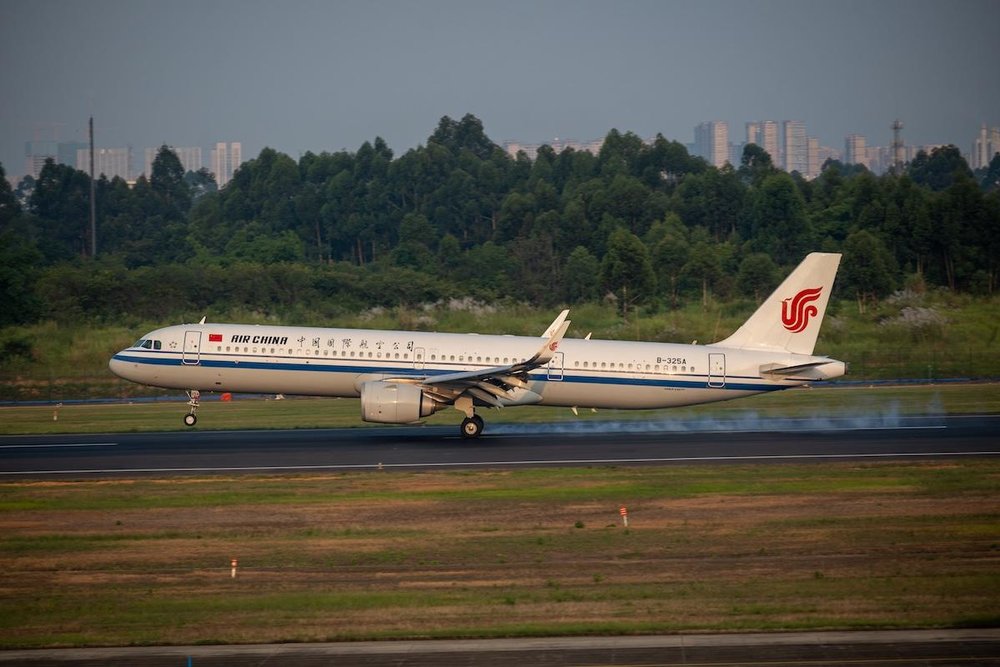
Air China | Image credit: 738NGX via Pixabay
The card looks like a customs form, but it's really your entry details sent ahead of time instead of scribbled at the border. If you're a foreign national entering China, it applies to you, with a visa or visa-free. Each person files their own card.
Seven groups are exempt:
- Holders of China's Foreign Permanent Resident ID Card
- Non-Chinese holders of a Mainland Travel Permit for Hong Kong and Macao Residents
- Anyone on a group visa, or eligible for group visa-free entry
- Passengers in direct transit within 24 hours who stay in the port's restricted area
- Cruise passengers entering and leaving on the same ship
- Anyone using designated fast lanes
- Foreign staff of exit-entry transport vehicles
Reports differ on how strictly the card is checked at the border. If you're not clearly in one of those groups, file it anyway. It's free, and it spares you the paper form at the port.
Official channels and how to avoid fake sites
Search for the card and you'll find plenty of lookalike sites, and some of them charge fees. The NIA issued a warning about fraudulent websites in December 2025 and states that the online service is free. Stick to these official routes:
- The NIA website and its Government Service Platform
- The NIA 12367 app
- The WeChat or Alipay mini-program (search "NIA 12367" in either app)
- The official arrival card QR code, scanned on your phone
Klook Tip: If a page asks for payment, close it. The official China arrival card costs nothing.
What to have ready before you start
Four things are all you need at the keyboard:
- Your passport, the one you'll use to enter China
- Your flight number (or train or vessel details) and arrival port
- The address of your first night's stay in China
- A phone number and email address, which the form may also ask for
The form works in 13 languages, including English, so you don't need to read Chinese. If your hotel isn't booked yet, take care of that first, because the form asks for your first-night address.
How to fill out the China arrival card, step by step
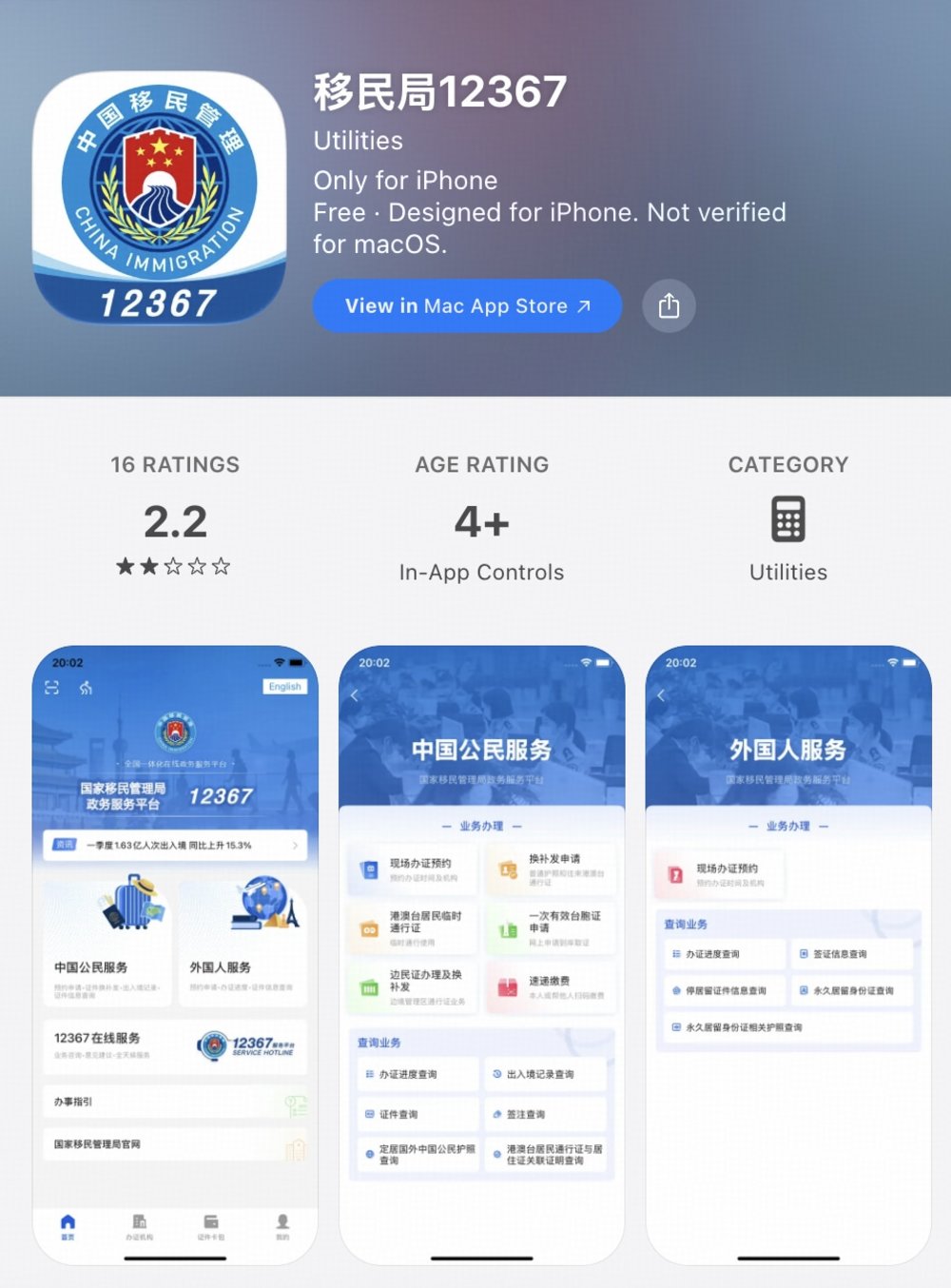
NIA12367 app
Here's the flow.
- Open the NIA 12367 app, or search "NIA 12367" in WeChat or Alipay.
- Pick your language and start a new card.
- Enter your passport and personal details.
- Add your flight, arrival port and first-night address.
- Check every field, then submit.
- Save the QR code that appears straight away.
For the China arrival card Alipay route, set up payments and data in the app first. If that sounds like a hassle, the NIA website or app works just as well, and our useful apps for China guide covers Alipay and the other installs worth making.
Stable data matters here, because you'll want to submit the form and reopen the QR code on your phone. A China eSIM starts from $3.09, with options up to unlimited data on China Unicom and China Telecom networks.
Klook Tip: The eSIM is data only, so keep your regular SIM on for calls and texts. Install it before you fly and keep it turned off until you land.
Save your China arrival card QR code (and a plan B)
The QR code is what you'll show at immigration, so save it the moment it appears. Take a screenshot, email yourself a copy, and carry a power bank in case your phone runs low. Check which plug you'll need in our China power plug for tourists guide.
If your flight or hotel changes after you submit, file a fresh card to be safe. Can't get online at all? Scan the QR code at the port, use the smart devices on site, or fill out a paper card at the immigration inspection area.
Klook Tip: File the evening before you fly, once your flight details are final.
Do you still need a visa?
The arrival card isn't a visa, and that's where first-timers get mixed up. If you hold a visa or you're entering visa-free, you file it either way, but it doesn't replace either one.
Citizens of more than 40 countries can enter visa-free for up to 30 days, and that policy currently runs through December 31, 2026. Our China visa-free entry rules guide has the country list, and it's worth checking the latest China entry requirements for your passport the week you fly.
Planning a short layover instead? China 240-hour visa-free transit covers citizens of 57 countries for up to 10 days, as long as they hold an onward ticket with a confirmed seat to a third country or region. Kyrgyzstan and Vietnam joined the list in August 2026.
Only passengers who stay in the airport's restricted area and leave within 24 hours are exempt from the card, so leaving the airport means filing it.
A Beijing private layover tour starts from $214.79, with 4 to 8 hour options and a guide and driver. It suits a long gap between flights, with Great Wall, Tiananmen Square and Forbidden City options. The catch: there's no refund if you can't exit customs, so check your eligibility first.
For Guangzhou, the Guangzhou layover private day tour starts from $194.85 and runs 3 to 12 hours depending on the package. The page notes you'll need a layover of more than six hours to leave the airport, so check your connection time before picking a package.
After you clear immigration: getting into the city
Immigration done, bags collected, and now you just need to reach the hotel. Booking a China airport transfer before you fly means a driver is waiting at arrivals with a name sign, and the meet and greet is free.
In Beijing, a Beijing airport transfer to central areas like Wangfujing, Qianmen and Chaoyang starts from $21. The Beijing Capital airport transfers page lists vehicles that seat 3 to 17 passengers. The listing doesn't spell out how long drivers wait for delayed flights, so enter your arrival time when you book.
Landing in Shanghai instead? Shanghai airport transfers work the same way, with Disney Resort rides from $20 and Lujiazui and Bund rides from $27. The Shanghai Pudong airport transfers page also covers Yu Garden and People's Square from $28, and Jing'an Temple from $31.
Klook Tip: Enter your flight arrival time when you book, so your driver knows when to expect you.
Where to head first
Where you go first depends on which airport you land. In Beijing, Tiananmen Square is the city's central landmark and a common first stop. If you're adding the Forbidden City nearby, Klook's tour page notes that tickets need booking seven days ahead.
In Shanghai, start with Yu Garden, a classic garden in the old-town district. Cross to Pudong for the Oriental Pearl TV Tower, the skyline icon. For more ideas, browse things to do in Shanghai.
FAQs about China arrival card
What is the China arrival card?
It's a free online form you fill out to send your entry details to China's National Immigration Administration. The digital version launched on November 20, 2025, at all open ports of entry. Paper cards are still available at ports as a backup.
How do I fill out the China arrival card online?
Open an official channel, like the NIA 12367 app or the WeChat or Alipay mini-program, then enter your passport, flight and first-night address. Submit the card and save the QR code straight away. If your plans change later, file a new card.
How early can I fill out the China arrival card?
Up to 72 hours (three days) before you land, according to most travel guides. The NIA's own notices only say before arrival without giving a number, so check the form when you open it. Filing the evening before your flight works well, since your details are final by then.
Is the China arrival card free?
Yes, the China arrival card is free. The NIA confirmed in December 2025 that the online service costs nothing, and it has warned about lookalike sites that charge fees. If a page asks for payment, close it.
Do I need the China arrival card if I'm entering visa-free?
Yes, you need to file it too. The card isn't a visa, so you still need to qualify under the visa-free rules; it only sends your entry details. Check the latest rules the week you fly.
Do I need to print the China arrival card QR code?
You probably don't need to print it. Most guides recommend saving a screenshot and emailing yourself a copy. If your phone dies at the border, you can fill out a paper card at the port.
Who is exempt from the China arrival card?
Seven groups are exempt, including holders of China's Foreign Permanent Resident ID Card and non-Chinese holders of a Mainland Travel Permit for Hong Kong and Macao Residents. The rest cover group visa holders, short direct-transit passengers, same-ship cruise passengers, fast-lane users and foreign transport staff. Reports differ on enforcement, so if you're unsure, file one.
Ready for the China trip?
Once the form is saved, the border part is done. What's left is the easy bit: a QR code in your screenshots, an eSIM ready to turn on, and a driver holding your name at arrivals. File your China arrival card the evening before you fly, then lock in your eSIM and airport transfer.
More China travel guides for you



What is Klook?
Klook is a leading pan-regional experiences platform in Asia Pacific, purpose built to digitalize experiences and make them accessible to every traveler.
Our mission is to build the digital infrastructure for the global experience economy — empowering merchants to share their passions and travelers to discover the heartbeat of each destination. We operate a mobile-first, curated platform featuring diverse experiences across global destinations.