Jut Art Museum Current Exhibition:Creating for the Everyday - Aino, Elissa and Alvar Aalto

- First Retrospective in Taiwan of Finnish Architect Alvar Aalto
- A Creative Partnership Centered on “Home
- Two Exhibition Venues Offering a Holistic Perspective on Life and Architecture
- Hands-On Experience with Iconic Furniture Designs
Cosa aspettarsi
Exhibition Information
- Exhibition Title|Creating for the Everyday – Aino, Elissa and Alvar Aalto
- Exhibition Period|2025.8.16 SAT-2026.1.25 SUN
Main Venue|Jut Art Museum (No.178, Sec. 3, Civic Blvd., Da’an Dist., Taipei City 106, Taiwan)
- Exhibition Period|2025.8.16 SAT-2026.1.25 SUN
- Opening Hours|TUE-SUN 10:00-18:00 (last admission 17:30);Closed on Mondays
- Admission|General TWD 150, Concessions TWD 100 (Student, seniors aged 65 and above, and groups of 10 or more)
- Free Admission for the disabled and a companion, children aged 12 and under (Concessions or Free Admission upon presentation of valid proof)
- Student Day on WED|Free Admission once on Wednesdays upon presentation of valid student ID
Satellite Venue|NOKE 3F Uncanny (No. 200, Lequn 3rd Rd., Zhongshan Dist., Taipei City 104053, Taiwan)
- Exhibition Period|2025.10.14 SAT-2025.11.30 SUN
- Opening Hours|SUN-THU 11:00-21:30, FRI-SAT 11:00-22:00
- Admission|Free admission
JUT Art Museum Website|http://jam.jutfoundation.org.tw/ JUT Art Museum FB|https://www.facebook.com/JUTARTMUSEUM JUT Art Museum IG|https://www.instagram.com/jutartmuseum/
❖ ❖ ❖
About the Exhibition
As an iconic figure in 20th century modernist architecture, Alvar Aalto’s innovative design blended functionality with a humanistic spirit. Extended from the scale of “home” to public buildings and urban spaces, his creations featured the fusion of nature, light, and materials, and have had a profound and enduring impact on contemporary architectural concepts and design praxis.
This exhibition is a collaboration between the Jut Art Museum and the Alvar Aalto Foundation. Starting from Alvar Aalto’s life history and featuring a fine selection of important manuscripts, models, and furniture from the Foundation’s collection, this exhibition is the first of its kind in Taiwan to systematically introduce Aalto’s partnerships with his two architect wives, Aino and Elissa Aalto, in architecture, design, and daily life during different periods. In their close collaborations, “home” was a space for living and working, as well as the fountainhead of inspiration and creativity. This exhibition explores the connection between architecture and people’s quotidian existence from the perspectives of their “home” and “co-creation,” and realizes the philosophy of “creation is life.”
In the 21st century, when our environment and lifestyle are undergoing a sea change, we seek to revisit the 50-year journey of co-creation among the Aaltos, appreciate Nordic culture’s emphasis on nature, light, and living spaces, and stimulate visitors’ reflections on creativity, cooperation, and symbiosis with nature, thereby raising new possibilities for cities and future living.
Official website introduction:
This exhibition will unfold in two venues. More than 160 pieces original drawings, design objects and scale models will be on display in the main venue—the Jut Art Museum—from 16 August 2025 to 25 January 2026, delving deep into the lives and careers of three architects. From 4 October to 30 November 2025, the satellite venue “Uncanny” at NOKE will host the extended exploration of the philosophy and applications of the Aaltos’ furniture design.
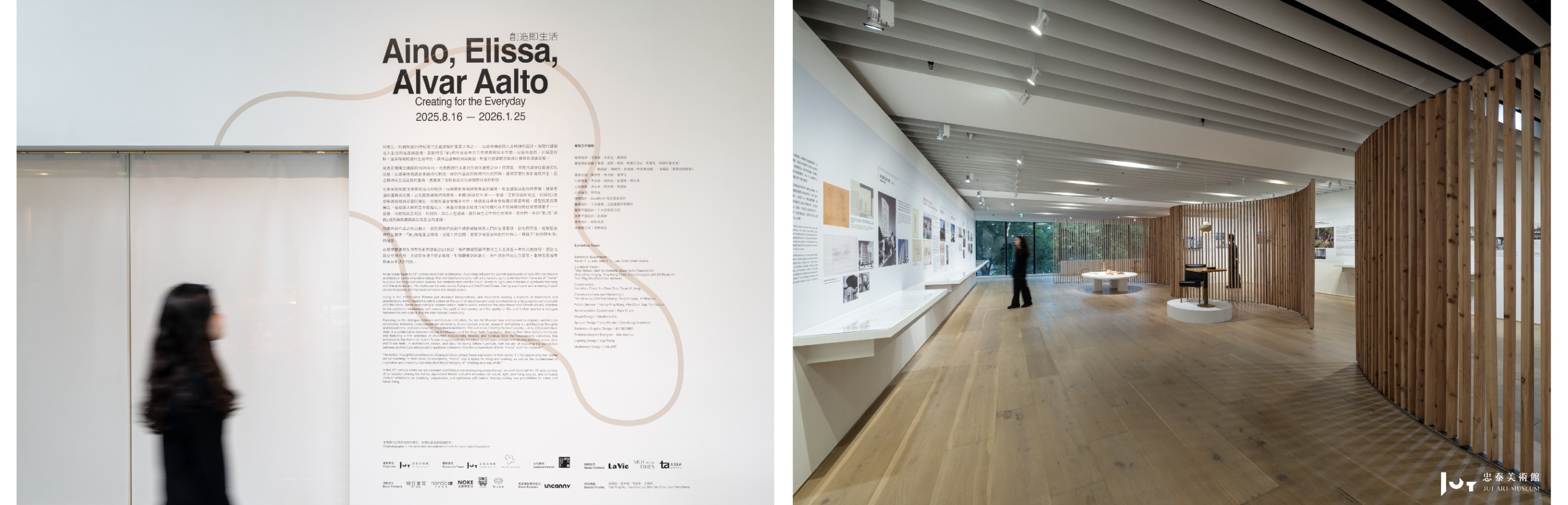
The Jut Art Museum and the Alvar Aalto Foundation join hands to interpret the Aaltos’ “home” and “co-creation.”
This year, the Jut Art Museum and the Alvar Aalto Foundation—an iconic institution in the field of Nordic modern architecture research—co-curated Alvar Aalto’s first major retrospective in Taiwan. Instead of celebrating the achievement of any single architect, this exhibition presents Alvar Aalto’s partnerships with his two architect wives—Aino and Elissa Aalto—in architecture, design, and daily life, exploring the connection between architecture and people’s quotidian existence from the perspectives of their “home” and “co-creation” along the axes of their five “homes.” In their close collaborations, “home” was a space for living and working, as well as the fountainhead of inspiration and creativity that embodied their philosophy of “creating for the everyday.”

“Alvar Aalto”—A Finnish design paradigm established by three architects
Alvar Aalto was one of the most influential Nordic architects of modern times. Yet, “Alvar Aalto” is not only a personal name, but also a symbol of the half-century collaboration and attainment of design ideals by three architects: Alvar, Aino, and Elissa.
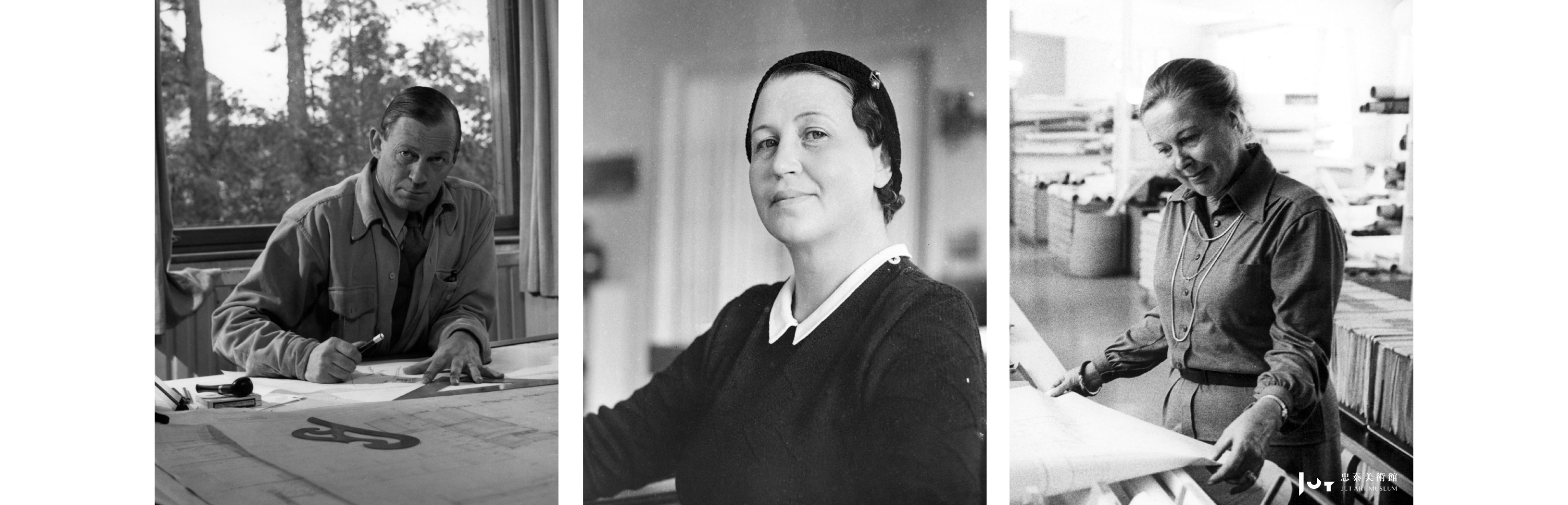
Aino Aalto, his first wife, forged her design career alongside Alvar Aalto from the 1920s to the 1940s after they got married. As a couple, they founded the renowned furniture brand “Artek,” with Aino serving as the brand’s first design director and establishing its signature style. Many years after Aino’s death, Elissa Aalto, Alvar’s second wife, had engaged actively in the core work of Aalto’s office since the 1950s. Following Aalto’s decease in 1976, Elissa dedicated her life to carrying on Alvar Aalto’s philosophy, led the architect’s office and its building projects, and participated in the inner workings of the Alvar Aalto Foundation, so as to perpetuate the spirit of Alvar Aalto’s design.
These three architects collaborated in relays, creating designs that encompassed residential buildings, public buildings, furniture, and lighting. Together, they formed the humanistic architectural style of “Alvar Aalto,” setting great store by people, nature, and ideal lifestyle. Living in the post-1920 period when Finland just declared independence and entered modernization, these three architects treated their native culture as the point of departure and responded to the international society through architecture. Their works embodied the importance that Finnish society attaches to the spirit of democracy and the quality of life, becoming one of the indispensable emblems of Nordic modern architecture and design aesthetics.
The warmth of “home”: Incubating ideal living spaces in nature
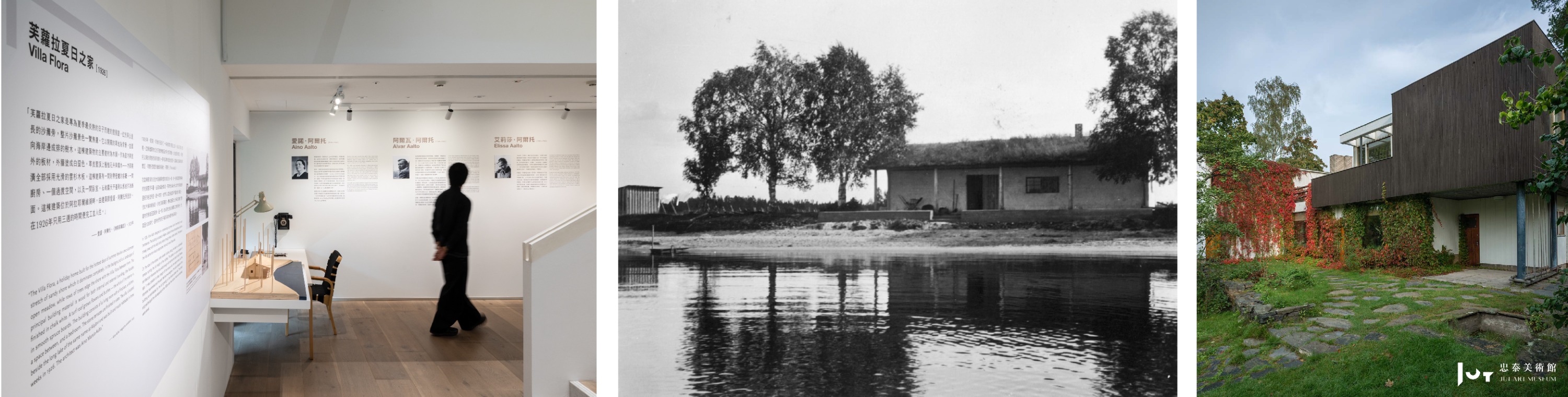
Finland, a “land of a thousand lakes,” is known for its remarkable forest cover. Its one-of-a-kind natural environment has influenced the local living culture. The Aaltos tended to incorporate natural elements into their designs. Starting from “home,” this exhibition features multiple magnum opuses by the Aaltos in which the Finnish philosophy of life finds expression, including the “Villa Flora” designed by Aino for her family in 1926, a summer retreat well blending wood and plants with the surroundings whilst mirroring the Finnish lifestyle in a symbiotic relationship with nature. Designed by Alvar and Aino, “The Aalto House” is a building that reconciles the functions of a family’s home and an architect’s office. A huge amount of natural materials and large windows connect the interior with the exterior, conveying a sense of living in harmony with nature. Managed by the Alvar Aalto Foundation, the Aalto House has been a museum open to the public all year round. These works not only demonstrate the Aaltos’ meticulous handling of living spaces and respect for nature, but also radiate the warmth of “home”—a congenial place where one can live in harmony with nature and incubate an ideal lifestyle.
Caring for “cities”: Public Buildings that meet people’s physical and mental needs
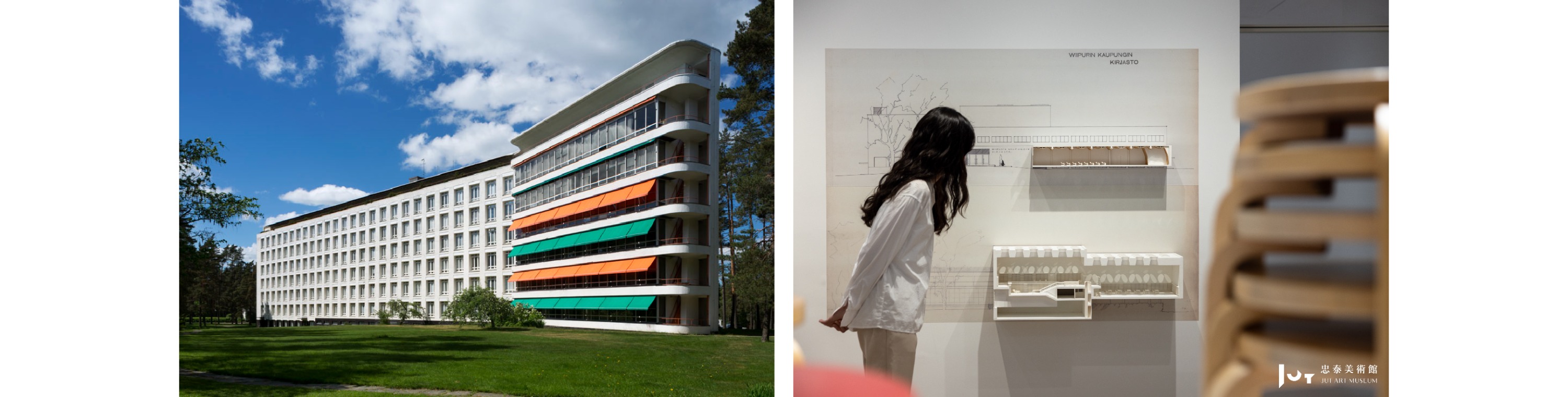
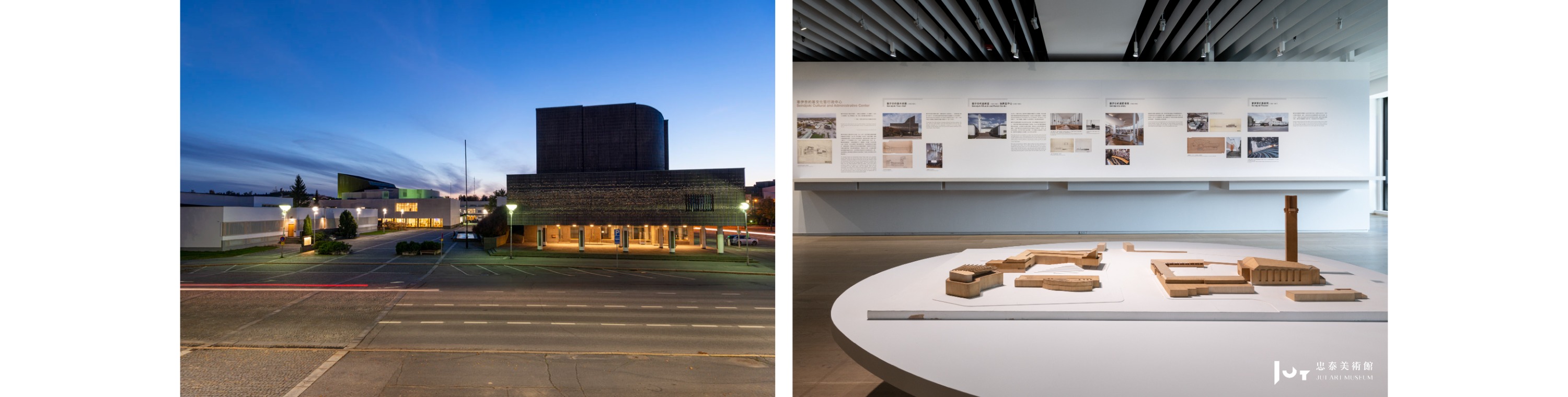
Finland has been ranked the happiest country in the world for eight years in a row since 2018. Its emphasis on equality, caring, and social well-being had been indicated as early as in Alvar Aalto’s design in the early 20th century. Addressing the tuberculosis patients’ needs and aiming to facilitate their physical and mental recovery, the “Paimio Sanatorium” in a pine forest in southwestern Finland was designed as a healing building in terms of lighting, acoustics, furniture, interior design, and air quality. Currently located in Russia, the “Viipuri Library” was designed with readers’ experience at its core. There are 57 skylights providing plenty of light for reading without glare, creating a bright, comfortable, and well-organized reading space. The “Seinäjoki Cultural and Administrative Center” in western Finland comprises a large cluster of public edifices — the church and parish center, town hall, library, theater, and government offices, forming a symbolic city center. After Alvar’s decease, Elissa brought this project to completion, making it one of his masterpieces that materialized his urban design philosophy.
More than architecture: Experimenting with materials and design details to create a paradise on earth
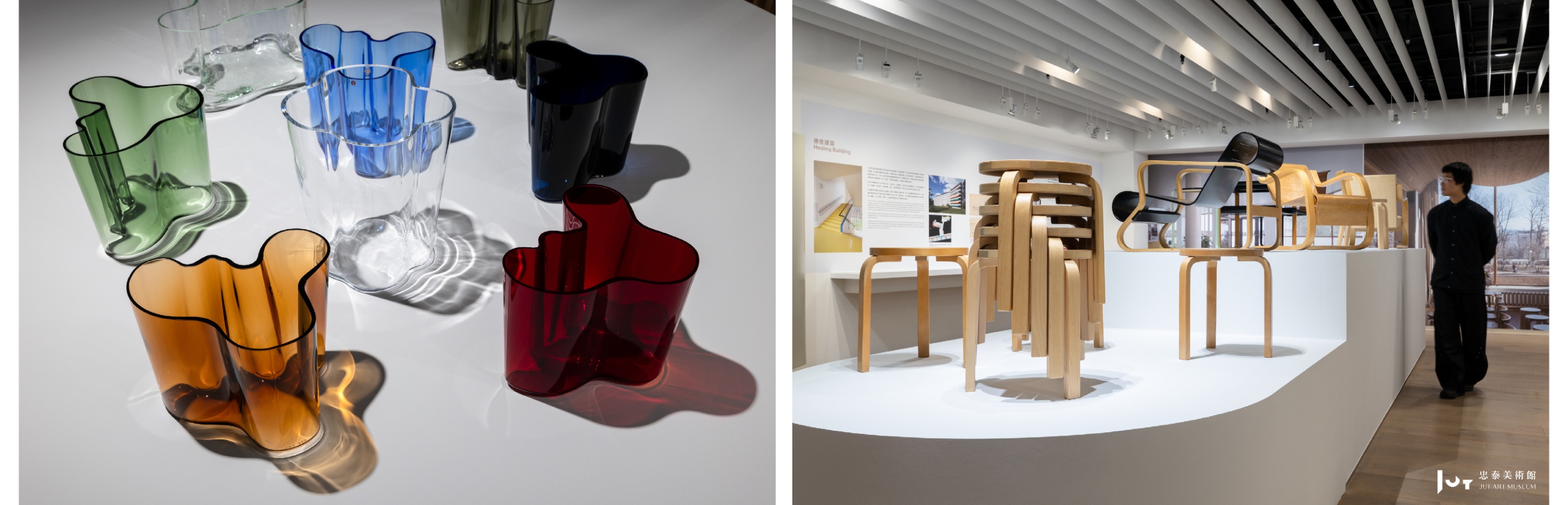
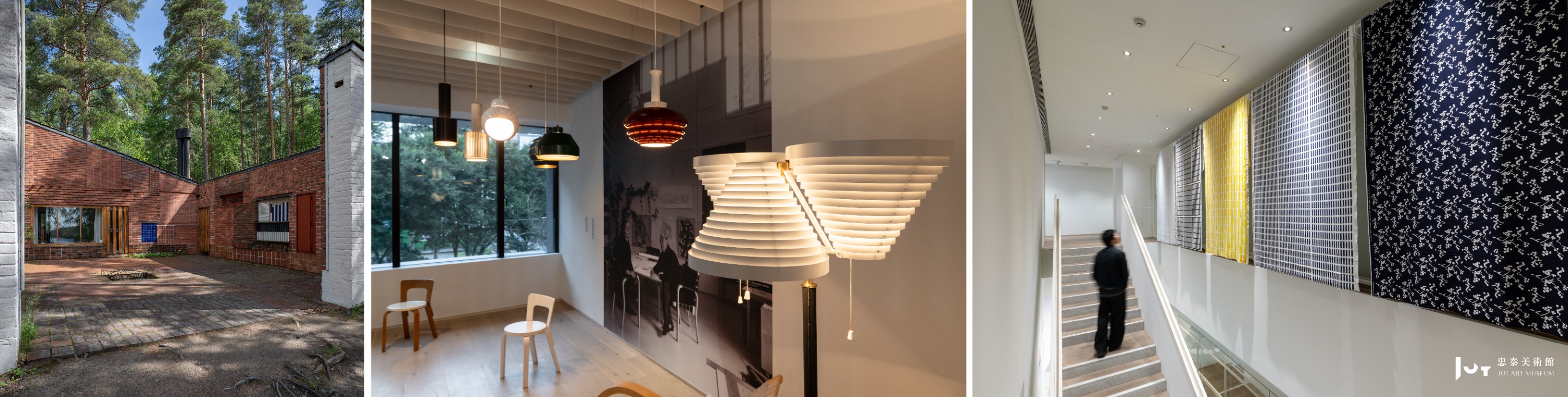
Alvar Aalto treated each building as a “complete work of art.” He not only focused on the spatial forms of buildings, but also created different textures and sensory experiences for living spaces by experimenting with challenging materials and details. He deliberately rendered the red-brick texture visible on the façades, instead of covering them with plaster and paint as was more conventional in public architecture. He worked with ceramics factories in developing rod-shaped tiles, showing the rhythmic interplay between light and shadow on the façades. Alvar Aalto and master metalsmith Viljo Hirvonen also joined hands to develop the “Beehive” lamp and a series of bronze home decoration items. Furthermore, inspired by natural totems, the Aaltos designed some printed fabrics that extended architectural vocabulary to people’s quotidian existence. Alvar and Elissa built a “Muuratsalo Experimental House”. They used this lakeshore summer house as an experimental site for living, ranging from sundry brick arrangements in the courtyard to designing a boat to get to the island, reflecting the philosophy of “creating for the everyday” in all aspects.
The two exhibition venues work in tandem to present a comprehensive perspective on architecture and life.
The Jut Art Museum has long focused on dialogues between architecture and cities, with exhibition content covering architectural art, architectural trend research, and globally celebrated architects. This retrospective on one of the iconic figures in the field of Nordic modern architecture also aims to continue the museum’s exploration of cities and future life through a multicultural perspective that transcends geographical confines.
This exhibition is presented across two venues. The main venue, Jut Art Museum, opens from 16 August 2025 to 25 January 2026 and requires a ticket for entry. Classic furniture such as the legendary “Stool 60” is also on display in the main venue to offer visitors firsthand experience.
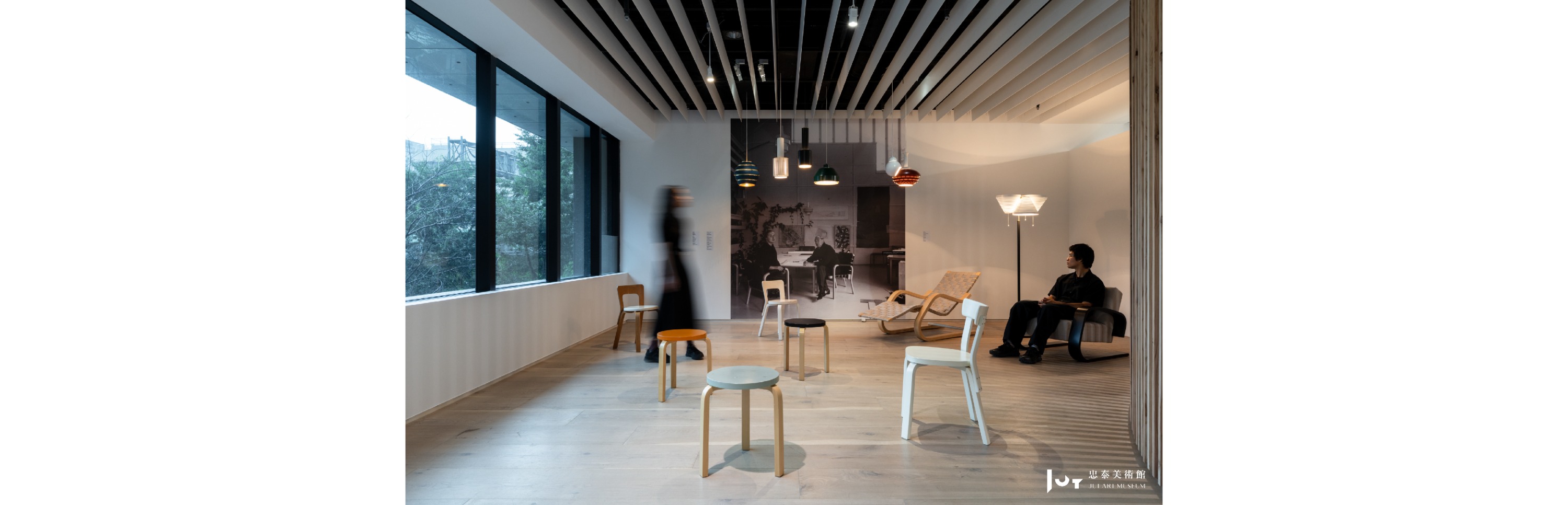
The satellite venue, Uncanny, will open on 4 October 2025 with free admission. This space features the extended exploration of the philosophy and applications of the Aaltos’ furniture design. The Jut Art Museum expects to connect architecture with life via these two venues, revealing a full picture of the Aaltos’ practical philosophy of “creating for the everyday.” Thematic lectures and expert guided tours will be offered during this exhibition. For detailed information, please visit the museum’s official website.
❖ ❖ ❖
How to Getting There
- Location|Jut Art Museum No. 178, Section 3, Civic Blvd., Da’an District, Taipei City
- By MRT – Zhongxiao Xinsheng Station (Exit 4), approx. 10-minute walk – Zhongxiao Fuxing Station (Exit 1), approx. 10-minute walk
- By Bus – Jut Art Museum Stop:669, 919 – NTUT (Jianguo) Stop:202 Shuttle, 298 (incl. shuttle), Red 57
- By YouBike – Bade Market Station:approx. 1-minute walk
- By Car There is no parking space in the Jut Art Museum, please use the nearby public or commercial parking lot.
Good to know
【Ticket Notice】
- Each ticket admits one person only. Please present the QR code of your e-ticket at the Jut Art Museum Information desk for scanning and verification before entering. Each ticket is for single use only and cannot be reused.
- Visitors using free or Concessions tickets must present valid ID or documentation for on-site verification. Those who do not meet the requirements will be asked to purchase a ticket according to your actual status.
- Children for free admission (ages 0–12) must be accompanied by at least one ticket-holding adult. Each adult may accompany up to two children and must supervise them throughout the entire visit. (Children must present valid ID; if not available, free admission will be granted if the child’s height is under 90 cm. Age is calculated in full years as of the date of visit.)
- This ticket is a valuable item. If lost, damaged, or unreadable, it will not be reissued, and no other proof will be accepted for admission or ticket reprinting.
- Tickets are valid only during the exhibition period (until 2026.01.25). Expired tickets are void. For refunds or exchanges, please process through KLOOK before 2026.01.25. Requests after this date will not be accepted. Please refer to KLOOK’s refund policy for details.
- Please do not purchase tickets from unauthorized sources. The organizer reserves the right to deny admission to anyone holding counterfeit tickets. Offenders involved in ticket fraud will be reported to the authorities.
- For matters not covered above, please refer to the Jut Art Museum official website, Facebook, and Instagram for the latest announcements.The organizer reserves the right to interpret and modify the event details.
【Visiting Notice】
- To protect your safety and the exhibitions, check larger items (over 20 * 30 * 20 cm), such as large luggage, long umbrellas, or suitcases, strollers at the information desk or coin lockers. If you need small bags for your cash and valuables, please contact the information desk.
- Photography is allowed, but no flashlights, tripods, selfie sticks, or videography. To protect intellectual property and copyrights, commercial photography please apply in advance.
- Please watch your steps and slow down your pace while visiting. Please do not step over some exhibits, in order to avoid personal injury and damage to the exhibits. Please do not touch the exhibits. If any damage to the works is caused, relevant responsibility will be borne.
- For optimal visitor experiences, please refrain from touching exhibits, raising voices, running, or sitting on the floor. Switch your phones to silent or vibration mode.
- No food, smoking, gums, betel nuts, illicit items, or dangerous objects.
- No pets, except for guide dogs.
- The information desk provides pencils if needed. Other stationaries are not allowed.
- Additional announcements or special notices will be posted on-site. We appreciate your cooperation and apologize for any inconvenience caused.
- To ensure the quality and safety of the exhibition experience, visitor capacity is limited. When the venue reaches its maximum capacity, crowd control measures will be implemented, and ticket sales will be temporarily suspended. Please follow the staff’s instructions and wait in line for admission. (Last entry time: 5:30 PM)
- Opening hours and visitor regulations are subject to change. For the latest updates, please refer to the Jut Art Museum official website, Facebook, and Instagram.The organizer reserves the right to interpret and modify the event details.
Posizione