About the event
Sai Kung Hoi Arts Festival 2023 Introduction
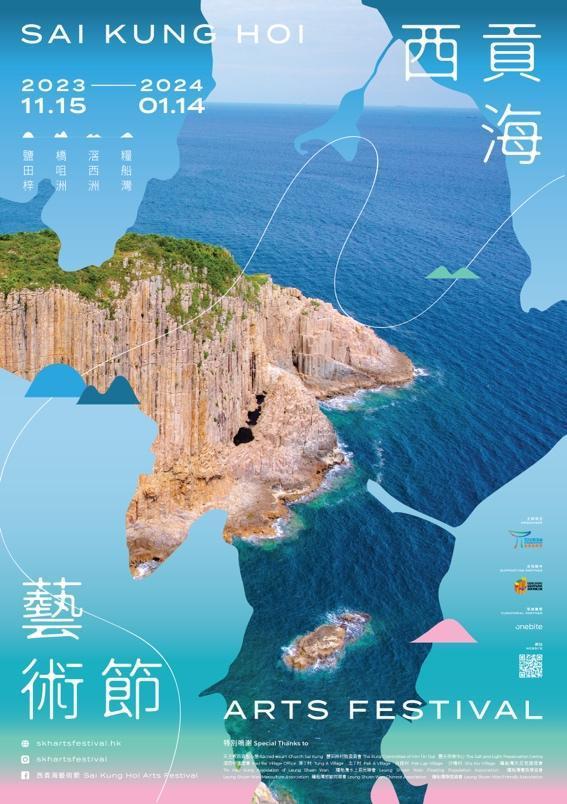
The much anticipated second edition of the Sai Kung Hoi Arts Festival (i.e. Sai Kung “Sea” in Cantonese) is set to captivate visitors from November 15, 2023, to January 14, 2024. Organised by the Tourism Commission, curated by One Bite Design Studio and supported by the Hong Kong Geopark, this three-year festival provides visitors with an immersive experience integrating art, culture, and exploration.
The Sai Kung Hoi Arts Festival has expanded its reach from two islands (i.e. Yim Tin Tsai and Sharp Island) last year to four islands (adding Kau Sai Chau and High Island) this year, some of which had limited access for the public previously. A total of 18 artworks (one in Sai Kung, eight in Yim Tin Tsai, three in Sharp Island, three in Kau Sai Chau and three in High Island) will adorn the nooks and crannies of the islands, making the festival a perfect way for visitors to re-encounter the well-loved natural gem of Sai Kung. Eight artworks on Yim Tin Tsai and Sharp Island are fondly retained from the first event, some with evolved presentations. The remaining ten artworks are newly installed, and are inspired by conversations, stories, and materials derived from the Sai Kung islands, making them channels of communication of the hidden narratives of the land. In addition, more than 400 free guided tours with different themes to provide in-depth stories about the islands will be held daily, except all Mondays which are “self-exploration days”. There will also be more than 90 free public programmes spanning workshops, performances, experiences, and talks on Fridays, weekends, and public holidays, ensuring a variety of activities for everyone to enjoy. Most importantly, the programmes celebrate a high level of community involvement which is core to the festival.
This year's festival theme, "再島敘 Joy Again, Stories”, offers a sense of joy and a deepened relationship among the community, the land of Sai Kung, and visitors. Visitors will be welcomed by Joy Again, Stories: Dashing Through Weather’s Lapse by onebite and The Moving Atlas, an installation outlining the topography of the ocean and islands around Sai Kung, at Sai Kung Waterfront Park. This artwork also shows a collaboration between a research group (The Moving Atlas) and an artist (One Bite Design Studio) to co-design artwork. Together with another research group (Fragrant Village) and an artist (Napp Studio) who have created artwork to be placed in High Island, the curator has fostered collaboration of these two pairs to document the ever-growing relationships and further explored the stories behind the mesmerising islands. Both research groups have worked very closely with the villagers during the creation process to collect stories through interviews and casual chats. The stories collected were shared with the artist groups and later became the bedrock of these artworks.
“Following a successful opening year of the Sai Kung Hoi Arts Festival, we wish to bring more diversified artworks and events to the visitors this year. Looking like dots on the map, islands co-created the unique identity of Sai Kung Hoi. This year, we would like to focus on the connections between these dots to lines between the islands as well as each visitor. Each line represents not only a different story, but also a different experience which evolves, grows, and transforms through time, space, and interactions. From islands to people, we hope to bring visitors all joy again through stories,” said Alan Cheung from the curatorial team.
The Sai Kung Hoi Arts Festival invites locals and tourists to embark on a reflective journey through art, nature, and culture. This unique journey celebrates the beauty of Hong Kong's islands while showcasing the boundless creativity of artists and the dialogues between researchers and the islanders. For more information and updates on the Festival, please visit the official website.
Artwork details on Kau Sai Chau and High Island
This year, the Sai Kung Hoi Arts Festival welcomes two new islands, Kau Sai Chau and High Island, onto its vibrant map. Each island boasts three captivating artworks, including one that emerged from the overwhelming response to the open call for submissions.
About Kau Sai Chau Kau Sai Chau is the biggest island in Sai Kung which has a fishing village, Kau Sai Village, at the south end of the island. The village is famous for its Hung Shing Festival on the 23rd day of the second lunar month each year. The Hung Shing Temple and Kau Sai Village Story Room display the history and culture of Kau Sai Village to visitors and highlight the importance of conservation through an exhibition of traditional fishing tools, cultural relics and herb specimens.
Artworks at Kau Sai Chau
01 Sails by Inkgo Lam
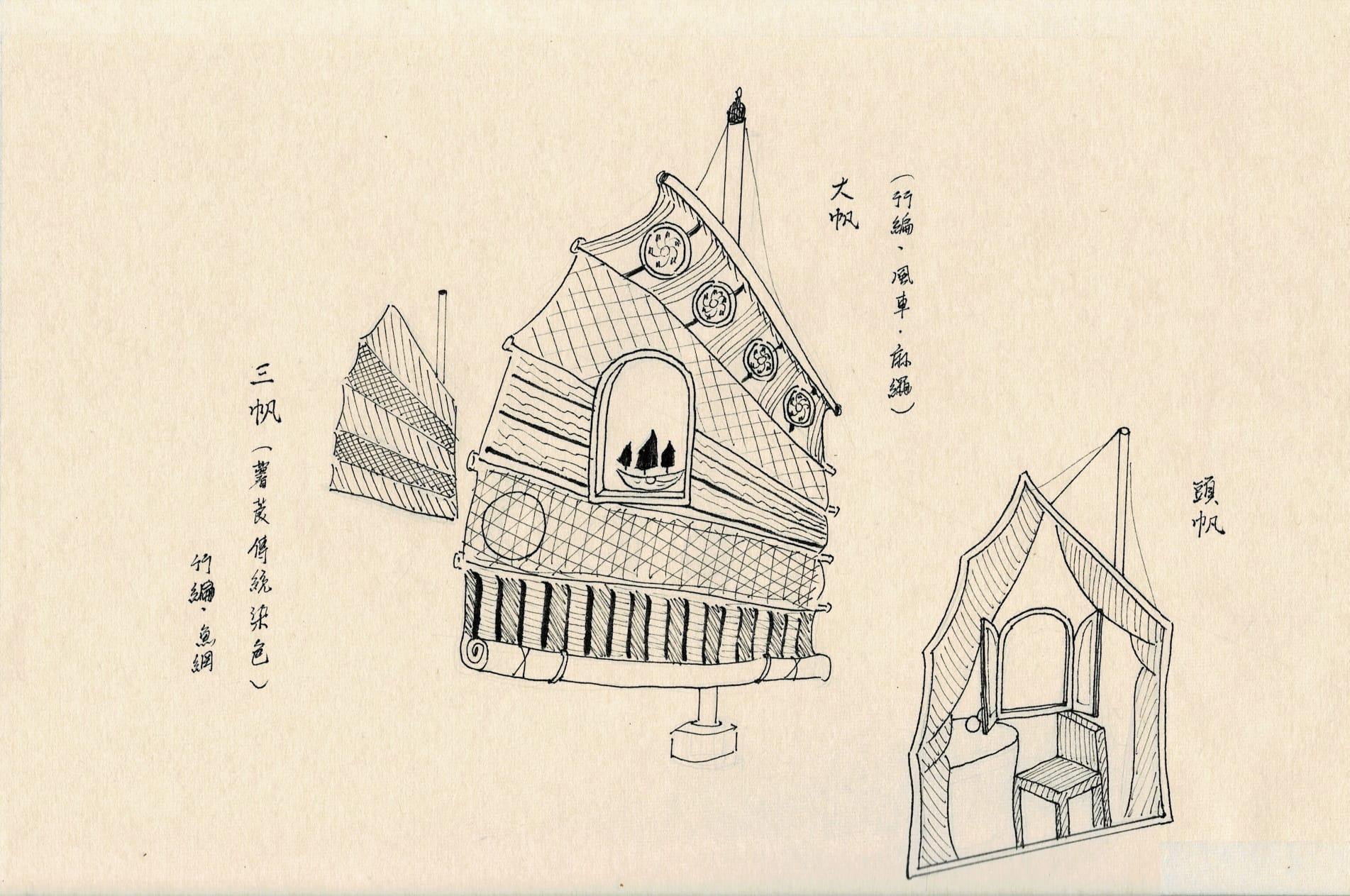
Sails is a group of large-scale bamboo artworks in the shape of traditional boat sails, depicting the childhood island life of the villagers in Kau Sai Chau. Each sail has a unique name: "Head Sail", "Main Sail", and "Third Sail." The artwork presents three different states while showcasing Hong Kong’s much-prided bamboo weaving techniques.
Inkgo Lam Ka Yu (b. 1992, Hong Kong) graduated from the Department of Fine Arts in the Chinese University of Hong Kong in 2014. She is a contemporary artist who specialises in making bamboo. In 2020, she started learning bamboo steamer making from Master Lui Ming. In 2021, Inkgo’s bamboo artworks were exhibited at Art Basel Hong Kong and from 2022, her works were featured in Hong Kong, Japan, Canada and London which are also collected by private collectors. Since childhood, Inkgo has admired the perseverance of traditional craftsmen. She hopes to continue the traditions of heritage crafts in Hong Kong and transform bamboo into the language of art, bringing the aesthetics of ancient Chinese art to the contemporary stage.
02 Our Celestial Commons by The HKU Village Commoning Team
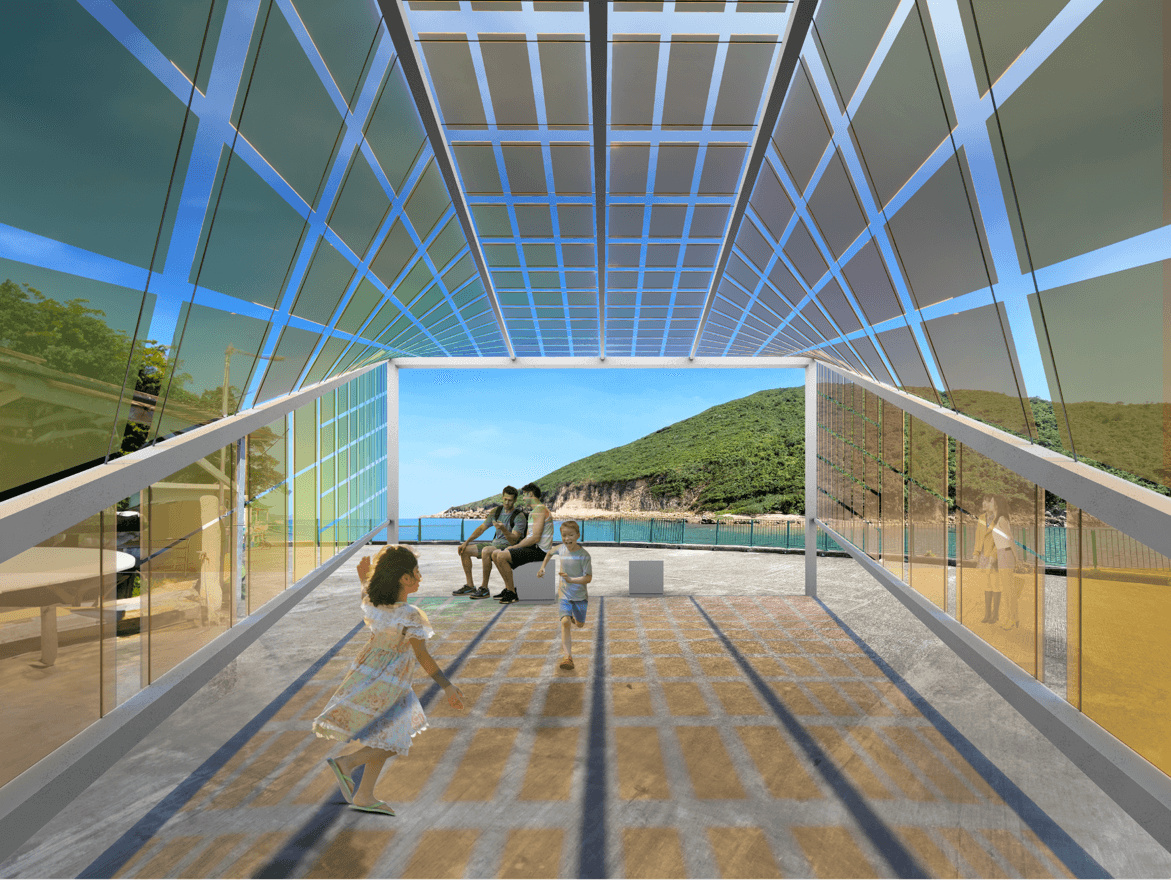
The HKU Village Commoning Team, villagers, and the “sky” come together to create a canopy that is comprised of the sky’s natural colours and patterns collected from villagers; different colours, different stories, but from the same sky. Piece by piece, story by story, all of the elements intertwine, embodying the emotions of Kau Sai villagers. Gazing at the thousands of colours of the sky, the colourful pieces flutter in the breeze, and the light and shadow gently cast upon you − gathering under the canopy, villagers and visitors are blissfully reunited with the “sky”.
Our Celestial Commons is created by The HKU Village Commoning Team, a research initiative established since 2021 at the University of Hong Kong (HKU). Led by Ms. Vincci Mak, Senior Lecturer in Division of Landscape Architecture in the HKU, the team seeks to derive a community-led model of village revitalisation that enables local stakeholders to take a greater role in initiating the revitalisation of their village assets. Utilising “commoning” as a conceptual framework, this model emphasises the collective management of resources that can lead to the creation of new values, particularly in fostering a sense of pride, and ownership of place and empowering the community as a whole.
03 Weaving Waves Pavilion by Su Chang, Sherman Lam, and Andie Lam
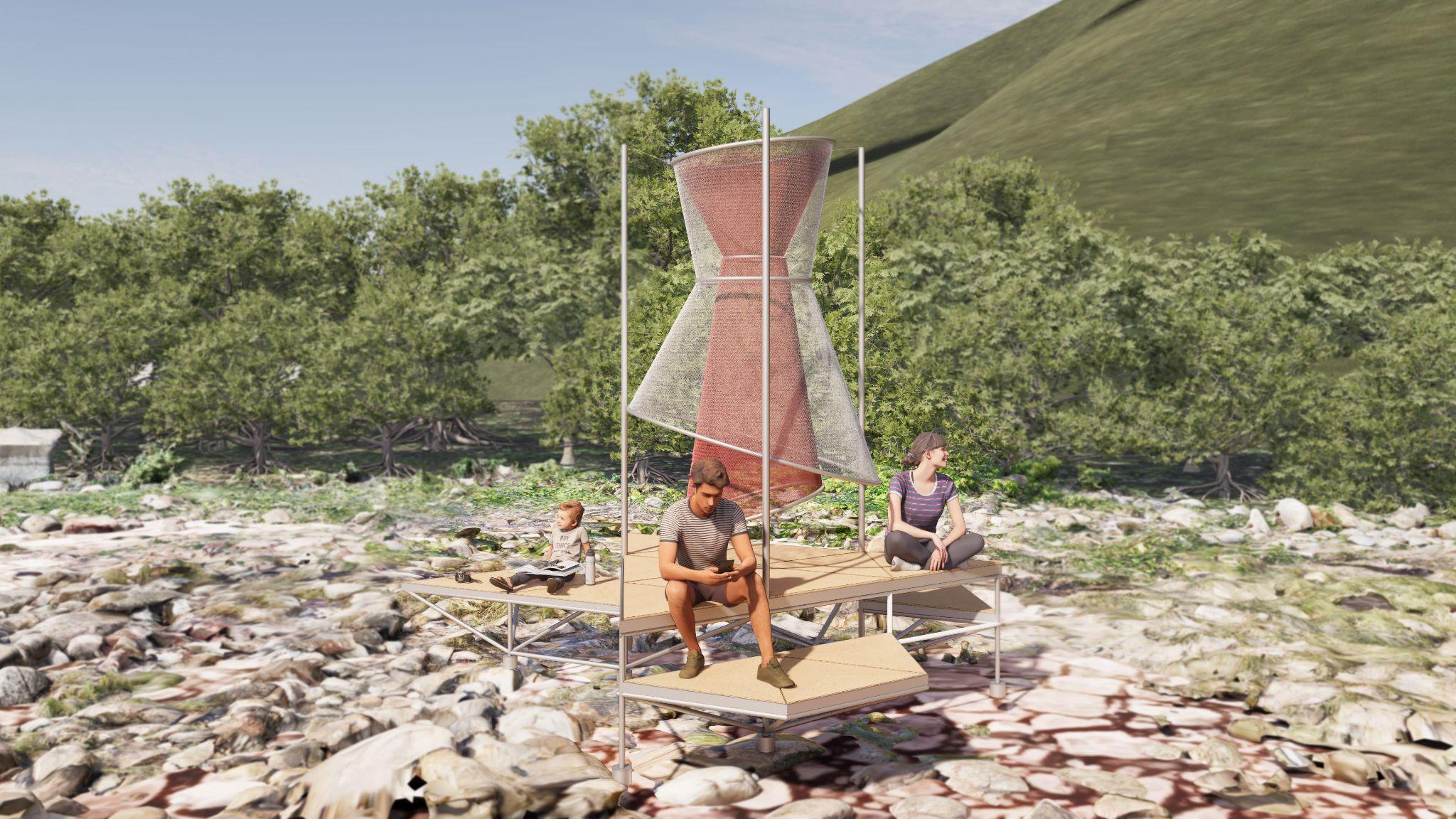
This group of artists is the winner of the open call for proposals in Kau Sai Chau.
The design of the “Weaving Waves Pavilion” is inspired by Kau Sai’s fishing history, drawing attention from the daily construction of the fishermen's community. Learning from the structural logic of the fishing cage commonly found in Hong Kong, the design of the pavilion utilizes fishing nets and galvanized steel rings to create a lightweight tensile structure.
Su Chang is the principal of Su Chang Design Research Office and an adjunct assistant professor in the University of Hong Kong. His teaching and design research revolves around architecture’s relationship with the water environment. Sherman Lam and Andie Lam graduated from the Faculty of Architecture in the University of Hong Kong. Sherman interprets his thoughts in the form of photography and architecture and explores the relationship among nature, our living space, and people. Andie loves drawing and nature and is concerned with the development of Hong Kong’s rural sites.
About High Island
High Island (Leung Sheun Wan, onomatopoeic translation of the Chinese name 糧船灣) historically served as a shelter and a supply station for ships to replenish their food and water, as suggested by the Chinese characters. There are four villages on High Island, the Hakka villages Tung A, Pak A and Pak Lap, and the fishing village Sha Kiu, as well as a fishermen community at the inner bay. The Tin Hau Kung Association (i.e. the Tin Hau Temple Association) of High Island celebrates the Tin Hau Festival on the 23rd day of the third lunar month every year. It is the only Tin Hau Festival in Hong Kong that has a sea parade in evennumbered years, which is listed as an Intangible Cultural Heritage of Hong Kong.
Artworks at High Island
01 One-Sixth Land by Sammy Chow, and Ceci Yiu
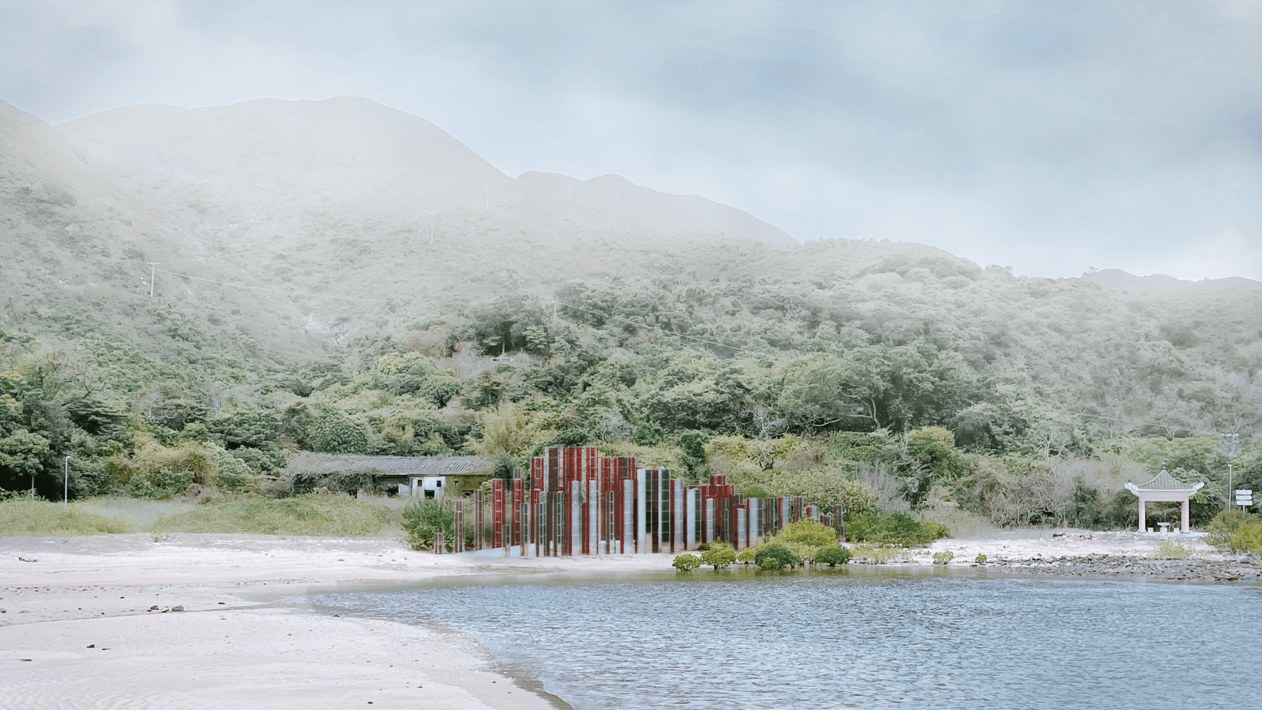
This group of artists is the winner of the open call for proposals at High Island.
High Island is known for its stunning natural landscape such as the famous hexagonal rock columns, and the Tin Hau Temple where fishermen used to pray. One-Sixth Land celebrates these iconic depictions, geographical features and representative colours to create a unique and beautiful piece. Portions of the pillars feature ropes that capture the vertical patterns, while others act as mirrors, reflecting the natural view of the sea and the landscape. The artwork offers visitors a sense of the vast beauty of High Island from afar, then allow them to explore it up close.
Sammy Chow is an artist with architectural background. Through his artwork, he aims to convey the rich culture and fascinating stories of a local community through a variety of abstract forms and attractive colours that capture the essence of the subjects.
Ceci Yiu likes to express her passion for art in various forms and explore different cultures through her works. As a theatre creator, she cooperates with various artists and teams in diverse productions and collaborations. She is committed to creating design flexibly and designing in life leisurely.
02 Rhythmic LANE by Napp Studio & Architects, and Fragrant Village
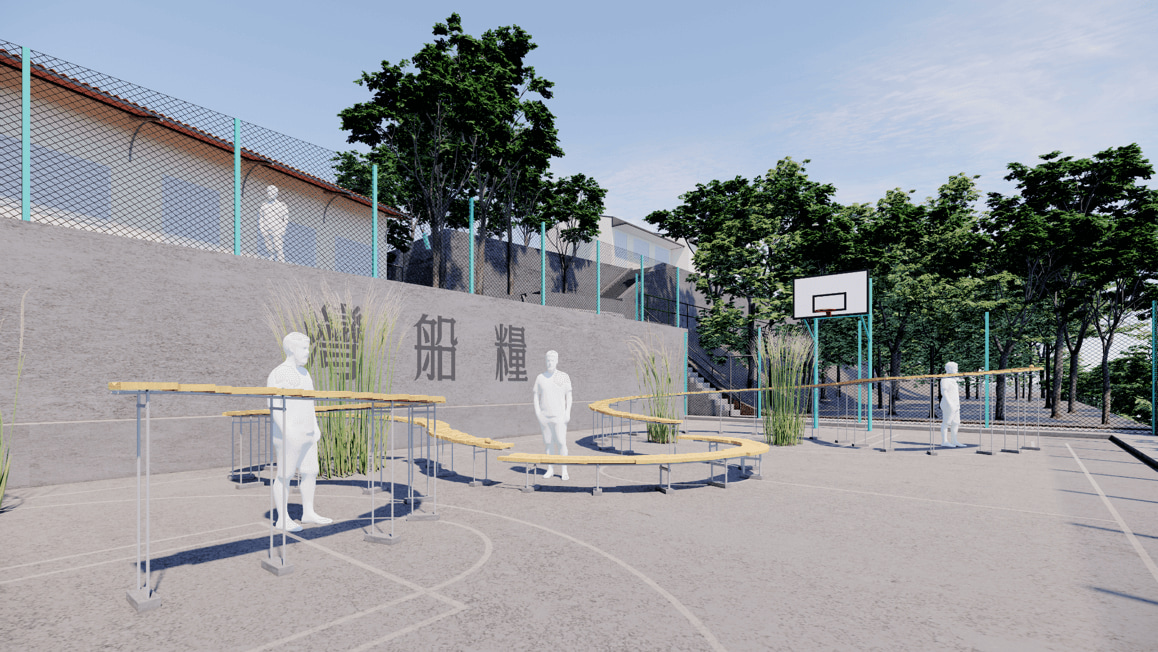
Just as the school serves as a meeting place for people from different villages, sound has the power to bring together individuals of diverse backgrounds and origins. In High Island, various kinds of sound serve as signals, such as the sound indicating the departure for fishing and the sound of the school bell calling people together. Each sound carries a distinct rhythm that both students and villagers will find familiar.
The artists explore how sound could be incorporated into the installation to evoke a collective memory of the community. The school playground, abandoned for many years, bears witness to the passage of time and the changes in the local area. Nature has begun to reclaim the space, with grasses sprouting from the cracks. In addition to collective memory, the artwork also explores how humans can respect the nature and the surrounding landscape while developing a site.
Napp Studio & Architects was founded by Aron Tsang and Wesley Ho. Aron is a Registered Architect. After receiving MArch and BA(AS) from The University of Hong Kong with Distinction, he worked in Hong Kong, Seoul and Stockholm. His work was featured at multiple awards and publications. Wesley received MArch in Harvard Graduate School of Design and BA(AS) in the University of Hong Kong. He worked in New York, Hong Kong and Associate Principal at KPF HK. His work was exhibited in US, Europe and China.
Fragrant Village was founded in 2016 and mainly focuses on curating music and art projects about villages in Hong Kong inspired by the land and the villagers, aiming to invite the public to enter these villages and experience their history, culture, and ecology. Fragrant Village curated the "Village School Anthem Project" exhibition from 2021-2023 by collecting school songs of village schools and researching village school history, which reflects the context of Hong Kong's urban development, to preserve the little-known community history and use village school songs as the key to open the community and share art.
03 Dear Sea by Niko Leung
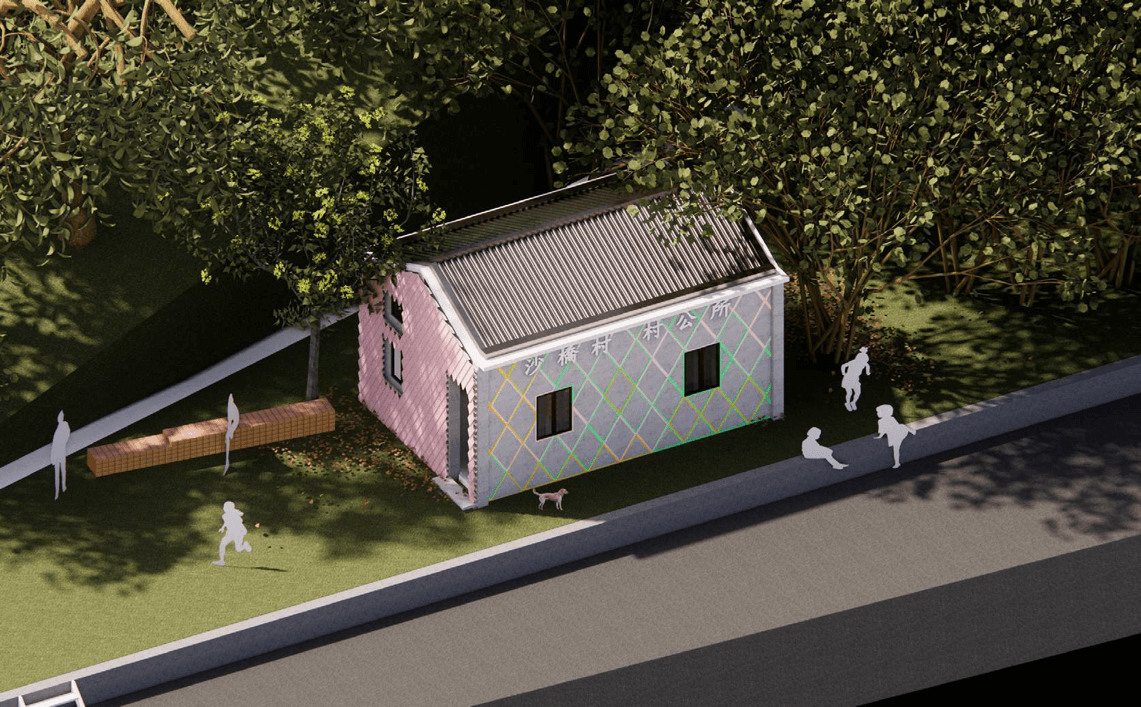
This art installation is located at the village office of Sha Kiu Village, one of High Island's four villages on land. Originally designed as an activity centre for the village, the 300-square-foot building has fallen into disrepair and has mostly been abandoned. The villagers wish to bring it back to life and put it to better use in the future.
Artist Niko Leung has put on a new skin for the village office, on the east elevation, a fish net woven with ropes is co-created with the villagers, new signage in ceramics is hand-built with a clay body formulated with recycled soil from construction site in Sai Kung; on the south elevation, the same clay but painted with a slip made of soil and sea water from the village, is used to make 800 diamond-shaped ceramic tiles, resembling the fish net pattern while symbolically taking the tile-making process as the “brick by brick” journey of villagers coming ashore.
Niko is a Hong Kong-based product designer working in the realm of object, material research, installation and spatial design. Niko holds a bachelor’s degree in design (Cum Laude) from Design Academy Eindhoven, the Netherlands. She teaches visual art, spatial design and design and applied technology at Lee Shau Kee School of Creativity in Hong Kong. She has been a resident artist in Jingdezhen (China), Fiskars (Finland), Den Bosch (Netherlands) and Arita (Japan).
– New Artworks at Sai Kung Town and Yim Tin Tsai
About Sai Kung Town
The second-largest area in Hong Kong in terms of landmass, Sai Kung is dubbed the ‘back garden of Hong Kong’, known for its fishing villages, beautiful scenery, hiking trails, beaches and islands, geological formations and low-key lifestyle. To truly know Sai Kung, however, you need to get out of its urban zone and hit its nature trails. Most of the areas are covered in country parks, from the Hong Kong UNESCO Global Geopark to Sai Kung Country Park East and West. These verdant green spaces are a major reason why Sai Kung has remained unspoiled by urbanisation — the parks are reserved for nature conservation. There’s also Hoi Ha Wan Marine Park, which is protected by law, and the start of the renowned 100-kilometre MacLehose Trail is found in Sai Kung too.
Artworks at Sai Kung Town
01 Joy Again, Stories: Dashing Through Weather’s Lapse by onebite, and The Moving Atlas
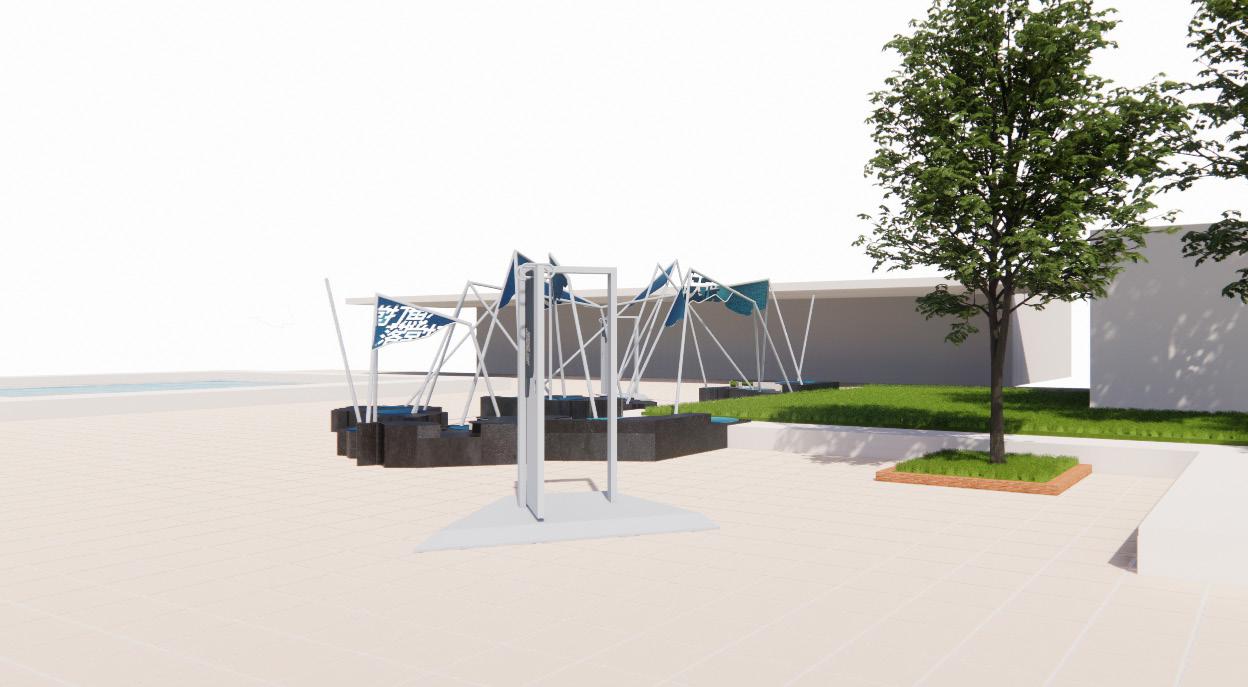
“Joy Again, Stories: Dashing Through Weather’s Lapse” aims to weave the tales of Sai Kung’s islanders and residents, inviting the audience to a journey between the present weather and the islanders’ reminiscences and recollections. The weather, an ageless overseer of all lives, bears witness to Sai Kung's development while listening to the islanders' lives and their fleeting moments.
The project views the weather as a profound witness, leading people through a whimsical “weather forecast” portal. It instantly propels one into an island-hopping journey, fostering an imagined recollection of the memories belonging to the inhabitants of Sai Kung.
About Yim Tin Tsai
The story of Yim Tin Tsai began centuries ago when their ancestors Chan MangTak and his wife moved from Shenzhen and built Yim Tin Tsai village. Housing the Hakkas of the Chan family, the islanders made a living by salt-making and fishing and numbered over 200 during the most prosperous period. In 1864, Father S. Volonteri and Father G. Origo were sent to Yim Tin Tsai to spread the Gospel. Ten years later, all the islanders were baptised and they donated a large open space to the Catholic Church to build a church and school in the village, and St. Joseph was made a patron saint of Yim Tin Tsai. The unique history of salt-making, Hakka culture and Catholicism were what made Yim Tin Tsai so special.
New Artworks at Yim Tin Tsai
01 Stone and Shrine Circle by Match Chen and Wich Chau
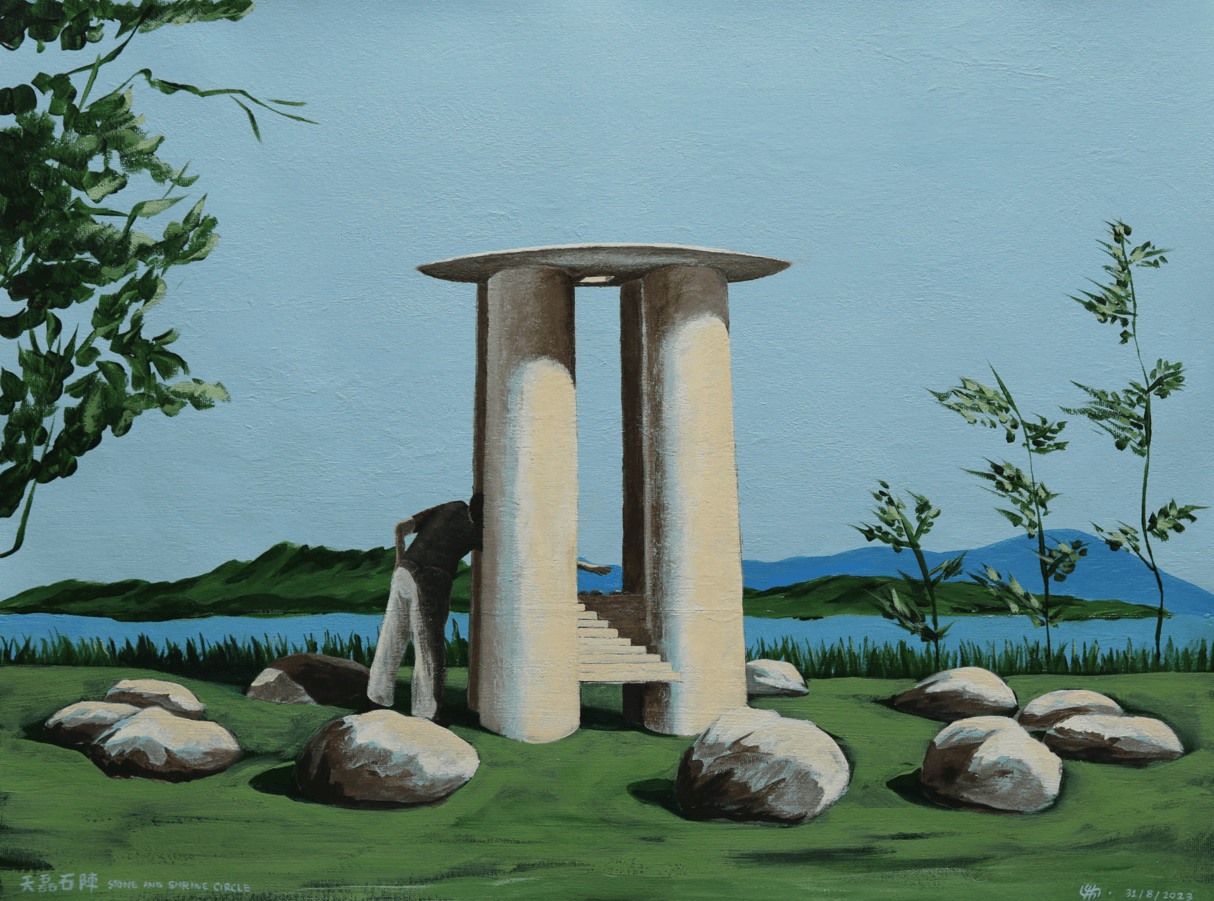
“Stone and Shrine Circle” combines natural giant stones and environmental installations to symbolise the salt of Yim Tin Tsai and the biblical rock. The artwork consists of three parts representing divine gifts, humanity, and 12 stone foundations symbolising time. Its purpose is to connect people to the heavens while offering breath-taking views of the Sai Kung Hoi and sky. The main structure incorporates the Chinese concept of "heavenly roundness and earthly squareness," representing the transmission of heavenly intentions. Sunlight and rainwater pass through square holes symbolising salt crystals, descending onto stone clusters representing people below
Match Chen is one of the founders of local KaCaMa Design Lab which has years of experience in sustainable and community design. The Lab specialises in promoting local handicrafts and interdisciplinary creations, integrating abstract concepts into their installation art.
Wich Chau is an emerging artist from Hong Kong co-founded local design firms The Cave Workshop and JAAK Design. The firms take an experimental approach to design furniture, public spaces, and installation art, and to explore the possibilities of urban spaces and life through questioning.
02 The Glazed Island by Keith Chan, Stephen Ip, and Arnold Wong
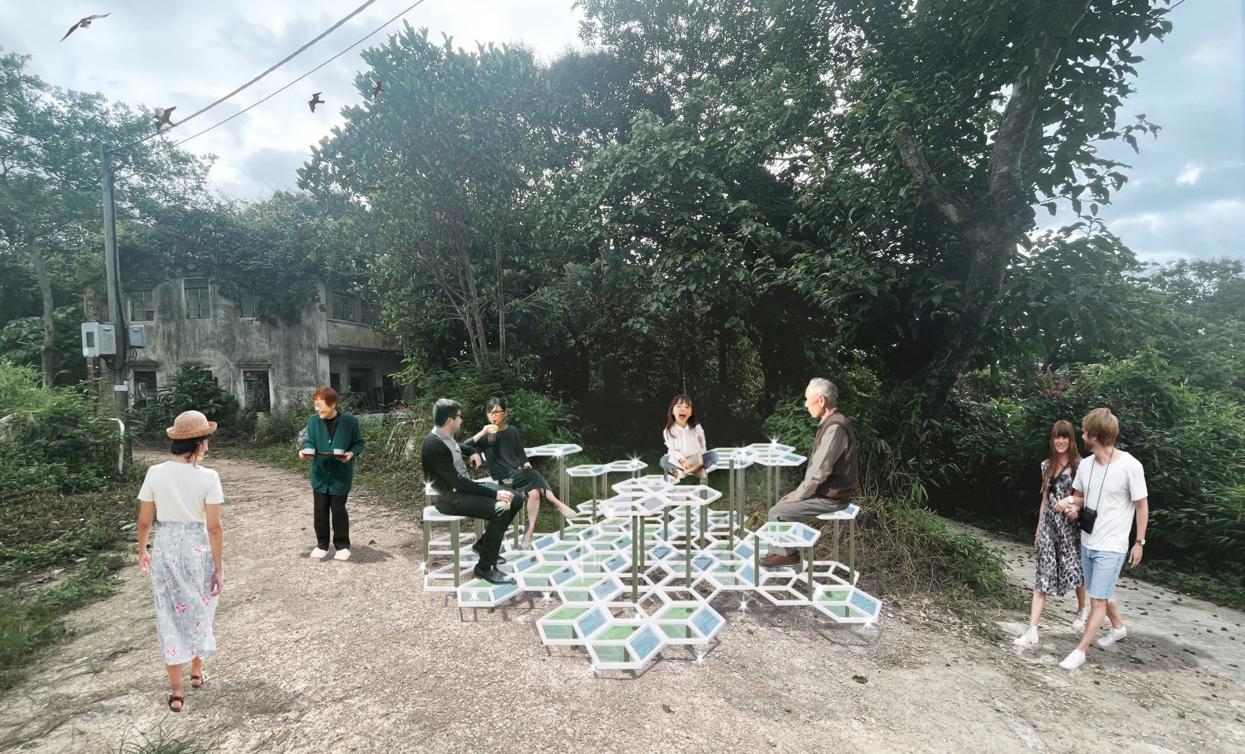
The artists of The Glazed Island are inspired by the unique environment and geography of Yim Tin Tsai, its rich cultural context, the history of its saltpans, and the story of villagers returning to rebuild the community. They create a small floating communal “island” that let villagers and visitors gather together. The form of the island also echoes with the geography of Yim Tin Tsai. Two natural elements – “hexagons” and “cubes” with their strong linkage to Sai Kung and salt crystals forms a design language that tells the story of Yim Tin Tsai in a subtle way.
Keith Chan, Stephen Ip and Arnold Wong graduated in Faculty of Architecture from The University of Hong Kong. While working in architectural firms, they have already been actively participating in architecture and design-related research, activities, exhibitions and competitions. Their works appeared at the Venice Biennale Architecture, Hong Kong Biennale of Urbanism\Architecture, HKIA REVEAL Exhibition, Wharf Designer Chair Exhibition, deTour etc, and have won numerous awards including the Design For Asia Awards, the HKIA Young Architect Award, and the A&D 40 under 40 Awards.
03 Island Log by MADE, Sim Shum
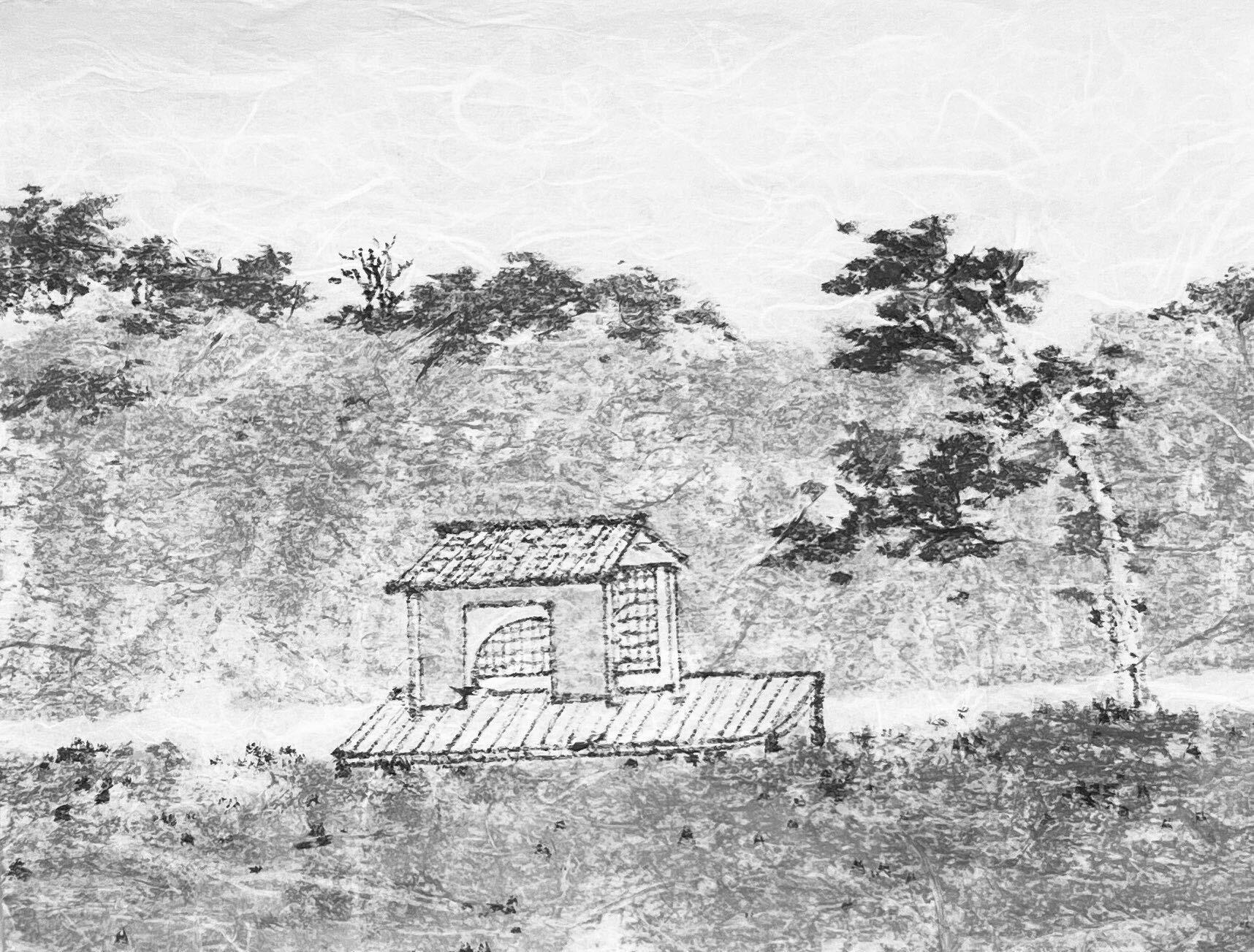
A pavilion is constructed in front of the saltpans. The roof of the pavilion will be made of wooden tiles, using the wood collected from the island. The bottom and one side of the pavilion will extend to form a platform that interacts with the nearby large tree, creating a natural shaded area. The pavilion provides a space for visitors to rest and to read stories. The artwork records the stories of the island residents and the landscape of saltpans, while also encouraging visitors to freely create their own stories about the landscape as they gaze outward from the pavilion. This allows viewers to have their own interpretations while reading the stories of the island residents.
MADE believes craft is a living art. They think, order, prototype, and make it happen. With what they have made, you can sit down, lean on, walk in, and uphold with a touch of handcrafted warmth. They aim to transform sustainable wood into sustainable living, reviving wisdom from the past, nature, and the local community, as they MADE with craft by collaborations from sustainable sources out of joy in Hong Kong.
Based in Hong Kong, Shum Kwan Yi, Sim attained her Master of Philosophy and Bachelor of Arts in Visual Arts at The Hong Kong Baptist University. During her study, she spent a semester in Nagoya Zokei University of Art & Design, Japan through a university exchange programme. Shum specialises in ink art. Her practice narrows down the gap between traditional aesthetics and daily life experience in seeking the covert meanings embedded in landscape painting and the new definitions of the "shanshui" motifs in the context of our society.
Sai Kung Hoi Arts Festival 2023 Details
- Sai Kung Hoi Arts Festival 2023
- Date: 15 Nov 2023 - 14 Jan 2024
- Venue: Yim Tin Tsz | Kiu Tsui Chau | Kau Sai Chau | Liang Chuan Wan
Source of the above information: PR