Photos
About the event
From longing to set foot on the Moon to envisaging to live on Mars, humans have always been looking at the starry sky and dreaming of soaring in this vast universe.
China has been achieving her space exploration dream step-by-step through her own successful research and development of artificial satellites, rockets, manned spacecraft and space station to carry out missions and scientific research in space, expanding human understanding of the Earth and the universe.
From the mythical medicine-pounding Jade Rabbit (Yutu) on the Moon, to the Yutu lunar rover, setting foot on the Moon in China’s Lunar Exploration Program; and from the fire deity Zhurong in ancient mythology, to Zhurong Mars rover, leaving marks on the Martian surface in China’s Mars Mission. China has not only been making the people’s deep space exploration dream come true, but also building their future.
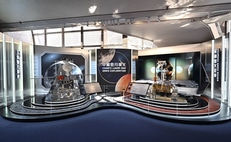
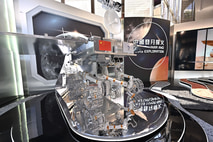
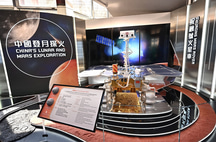
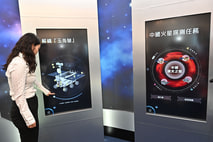
The exhibition introduces the key achievements and future outlook of China’s lunar and Mars exploration missions. Visitors will be able to study the structures and functions of the Yutu lunar rover and Zhurong Mars rover through their full-scale models, and acquire an insight into the remarkable achievements in China’s aerospace development.
Presented by the Leisure and Cultural Services Department
Organised by the Hong Kong Space Museum
Website: hk.space.museum/en/web/spm/exhibitions/special-exhibitions/clme.html
The exhibition is also one of the activities in the Chinese Culture Promotion Series. The LCSD has long been promoting Chinese history and culture through organising an array of programmes and activities to enable the public to learn more about the broad and profound Chinese culture. For more information, please visit www.lcsd.gov.hk/en/ccpo/index.html.
About the organizer
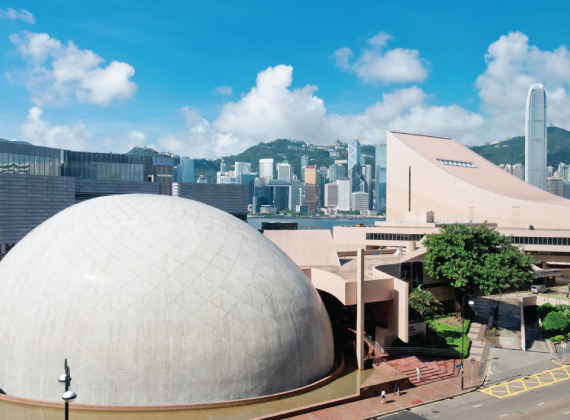
Strategically located at the seaside of Tsim Sha Tsui, the Hong Kong Space Museum commenced its construction in 1977. Mr. Joseph Ming Gun LEE of the Public Works Department was the chief architect of the project. Hong Kong Space Museum was commissioned in October 1980. It is the first local planetarium for the popularisation of astronomy and space science. The unique egg-shaped dome renders the 8000-square-metre museum to be one of the most famous landmarks in Hong Kong.
The Museum comprises two wings - east and west. The former, the planetarium's nucleus, has an egg-shaped dome structure. Beneath it are the Space Theatre, the Hall of the Cosmos, OMNIMAX projector room, workshops and offices. The west wing houses the Hall of Space Exploration, the Lecture Hall, the Gift Shop and offices.
Inside the Space Theatre, there is a hemispherical projection dome with a diameter of 23 metres. Boasting the first OMNIMAX film projector in the eastern hemisphere, the Museum is also the first planetarium in the world to possess a fully automatic control system at its Space Theatre. Each year, the Museum produces Sky Show to be displayed using the digital planetarium projection system, and introduces the best foreign 3D Dome Shows to Hong Kong.
The Museum has two thematic exhibition halls: the Hall of the Cosmos and the Hall of Space Exploration on the ground and first floors respectively. The exhibits, predominately interactive, enable visitors to learn through a series of entertaining and educational experiences.
Last but not the least, the Museum organises plenty of extension activities each year, including Stargazing in light-flooded city, Starry Wonderland, fun astronomy classes, lectures and astronomy film shows, and observation programmes for special astronomical events etc. You can also find a lot of information related to stargazing, basic astronomy, astronomical news and educational resources in the Museum's homepage.
Opening Hours
Monday, Wednesday to Friday: 1pm - 9pm
Saturday, Sunday and public holiday: 10am - 9pm
Christmas Eve and Chinese New Year’s Eve: closed at 5pm
Closed on Tuesdays (except public holiday), and the first two days of the Chinese New Year