Tickets for Shaanxi Song and Dance Theater's "Tang Dynasty Music and Dance" performance
Yang Guifei's "Rainbow Skirt Feathered Dress Dance"—Decoding the Supreme Aesthetics of the Tang Dynasty + "Hua Qing Yan" + Female Group Dance "White Ramie Dance" + Sheng Solo "Song of the Oriole in Spring" + Female Group Dance "Ta Ge" + Male Group Dance "
Shaanxi Grand Theatre of Song and Dance


- 《Classic Revival: Reliving the Glory of the Tang Dynasty》 is rooted in the historical culture of the Tang Dynasty, deeply exploring elements such as court music and dance, and folk arts. From the arrangement of music and dance, costumes, makeup, to stage scenery, it fully recreates the style of the Tang Dynasty. Whether it is the graceful court music or the lively folk songs and dances, it authentically showcases the prosperity of the Tang Dynasty.
- 《Diverse Arts, Showcasing the Charm of Tang Rhyme》 The women's group dance "Bai Zhu Dance" showcases the gentleness and grace of Jiangnan women with its flowing long sleeves and light dance moves; the men's group dance "Vajra Warriors" is powerful and vigorous, shaping the image of strong warriors through dynamic body movements, forming a harmonious artistic effect with the women's dance. The women's group dance "Ta Ge" vividly recreates the joyful scene of folk stepping and singing in the Tang Dynasty, full of life; "Ni Chang Yu Yi Dance", as the pinnacle of Tang Dynasty music and dance, the dancers wear gorgeous costumes, dance lightly and gracefully, and vividly display the artistic conception of fairy-like飘飘.
- 《Ancient Rhyme and New Voice, Millennium Elegant Music Reproduction》 The Sheng solo "Chun Ying Zhuan" delicately depicts the melodious and sweet chirping of spring warblers with the unique timbre of the Sheng; the Suona ensemble "Da Zao" is lively and festive, full of strong folk life atmosphere; Chang'an Drum Music "Ya Zi Ban Zui" and "Lao Hu Mo Ya" use a variety of percussion instruments such as drums, gongs, and cymbals, and vividly simulate the interesting scenes of ducks playing and tigers roaring through changes in rhythm and timbre, making people feel as if they are in the scene.
- 《Ingenious Arrangement, Creating a Visual and Auditory Feast》 The program sequence and connection are carefully designed, with alternating soothing and elegant dances and instrumental solos, creating a relaxed and measured viewing rhythm; and through grand group dances such as "Da Tang Li Yue", the entire performance is brought to a climax, showing the magnificent momentum of the Tang Dynasty's prosperity. On the stage, music and dance are perfectly integrated, and lights and scenes complement each other, bringing the audience a soul-stirring visual and auditory feast.
- 《Cultural Inheritance, Demonstrating National Self-Confidence》 As China's first classical court music and dance, "Imitation Tang Music and Dance" carries profound cultural heritage and historical memory. Over the past forty years, after five generations of artists' inheritance and innovation, it is not only the protection and inheritance of Tang Dynasty music and dance art, but also an important window to show the excellent traditional Chinese culture to the world, demonstrating the Chinese nation's cultural self-confidence and artistic charm.
- 《VIP Exclusive, Tea Fragrance Accompanies Elegant Music Appreciation》 Purchase VIP seats to enjoy exquisite tea. While watching the performance, sip fragrant tea in the melodious Tang music and graceful dance, relax your body and mind, and let the tea fragrance and the artistic charm of the Tang Dynasty intertwine, comprehensively upgrading the viewing experience from visual, auditory to taste, and enjoying an elegant and pleasant cultural journey.
What to expect
- The "Tang Dynasty Imitation Music and Dance" consists of "Hua Qing Yan," the female group dance "White Ramie Dance," the Sheng solo "Spring Oriole Song," the female group dance "Treading Song," the male group dance "Vajra Warriors," the female group dance "Wild Goose Pagoda Buddha Light," the Suona ensemble "Date Picking," the female group dance "Rainbow Feather Dress Dance," the Chang'an Drum Music "Ducks Quarreling," "Tiger Grinding Teeth," and the dance "Great Tang Ritual Music."
- The "Tang Dynasty Imitation Music and Dance" brings together the best of songs and dances from past dynasties, integrating poetry, lyrics, song, and instrumental performance. It blends bells, drums, zithers, and lutes with light song and graceful dance, while also incorporating the essence of numerous ethnic minorities and foreign cultures along the Silk Road in the Western Regions, fully reflecting the prosperous scene and customs of the Tang Dynasty when hundreds of countries paid tribute and various ethnic groups merged. In 2013, it was selected into the "Third Batch of Intangible Cultural Heritage of Shaanxi Province" list.
- Based on a wealth of historical data and research results, it showcases an open, inclusive, and integrated spirit. The stage presentation imitates the unique form, repertoire, style, and rhythm of Tang Dynasty music and dance to enhance the formal beauty and ceremonial sense of the art of music and dance. As an intangible cultural heritage of Shaanxi Province, "Tang Music and Dance" integrates music, dance, poetry, song, painting, and costumes. The program's titles, genres, and paradigms are all derived from historical records such as the "Old Book of Tang," "New Book of Tang," "Tang Huiyao," "Complete Tang Poems," "Records of the Court Entertainment Office," and "Miscellaneous Records of the Music Bureau," which document Tang Dynasty grand compositions, scattered music, seated music, standing music, soft dance, and vigorous dance.
- The "Tang Dynasty Imitation Music and Dance" brings together the best of songs and dances from past dynasties, integrating poetry, lyrics, song, and instrumental performance. It blends bells, drums, zithers, and lutes with light song and graceful dance, while also incorporating the essence of numerous ethnic minorities and foreign cultures along the Silk Road in the Western Regions, fully reflecting the prosperous scene and customs of the Tang Dynasty when hundreds of countries paid tribute and various ethnic groups merged. In 2011, it was selected into the "Third Batch of Intangible Cultural Heritage of Shaanxi Province" list.
- "Huaqing Palace" is where Emperor Xuanzong of Tang and Consort Yang watched performances and summoned civil and military officials. Its scale is magnificent and gorgeous, and its momentum is majestic. Under the performance of ancient musical instruments, it shows the prosperous and glorious momentum of the Tang Dynasty.
- The "White Ramie Dance" is a folk dance that was recorded as early as the Jin Dynasty, and it became even more popular in the Tang Dynasty. The dancers' long sleeves are all made of white ramie, and when they dance, the sleeves flutter nimbly, resembling colorful clouds chasing the moon, elegant and refined, hence the name "White Ramie Dance."
- "Spring Oriole Song" is said to have originated when Emperor Taizong of Tang held the crown prince ceremony. Just as a yellow oriole flew by, it was regarded as an auspicious sign, so he ordered the music officials to compose music to celebrate, hence the name. This song is cheerful, crisp, melodious, and is one of the representative works of Sheng Tang music and dance.
- "Treading Song" is a dance in which girls greet the spring breeze, singing and dancing as they go on an outing. The dance depicts the scene of ancient girls yearning for a happy and beautiful life.
- "Vajra Warriors" mask dance has been recorded in ancient China and was very popular in the Tang Dynasty. This dance expresses the Tang people's desire for a peaceful life by expelling epidemic ghosts and defeating evil.
- The dance "Wild Goose Pagoda Buddha Light" depicts the grand wisdom and auspiciousness brought to the people of the ancient Chang'an during the Tang Dynasty by the Wild Goose Pagoda and the Buddha light, signifying national peace and prosperity for generations to come.
- "Date Picking" is selected from folk musical instruments, and the Suona's "ka cavity" expresses the harvest season. Old people and children gather together to enjoy themselves, showing a family's joyful scene of celebrating the harvest.
- "Rainbow Feather Dress Dance" is one of the most famous dances in the Tang Dynasty court. Legend has it that Emperor Xuanzong of Tang was good at music. One day, he dreamed of visiting the moon palace and witnessed many fairies wearing colorful and beautiful costumes dancing and singing lightly in the sky. After waking up from the dream, he composed the music and handed it over to his beloved concubine Yang Yuhuan to choreograph.
- "Ducks Quarreling" and "Tiger Grinding Teeth" These two percussion pieces, the former is taken from Xi'an drum music, and the latter is taken from Weibei folk drum music. The music vividly portrays the lively and interesting quarrel of ducks and the majestic posture of a tiger walking in the wind.
- "Great Tang Ritual Music" shows the unprecedented prosperity of the Tang Dynasty and the style of a great power through solemn and brilliant celebration scenes and colorful music and dance performances, demonstrating the charm and elegance of Eastern music and dance culture.

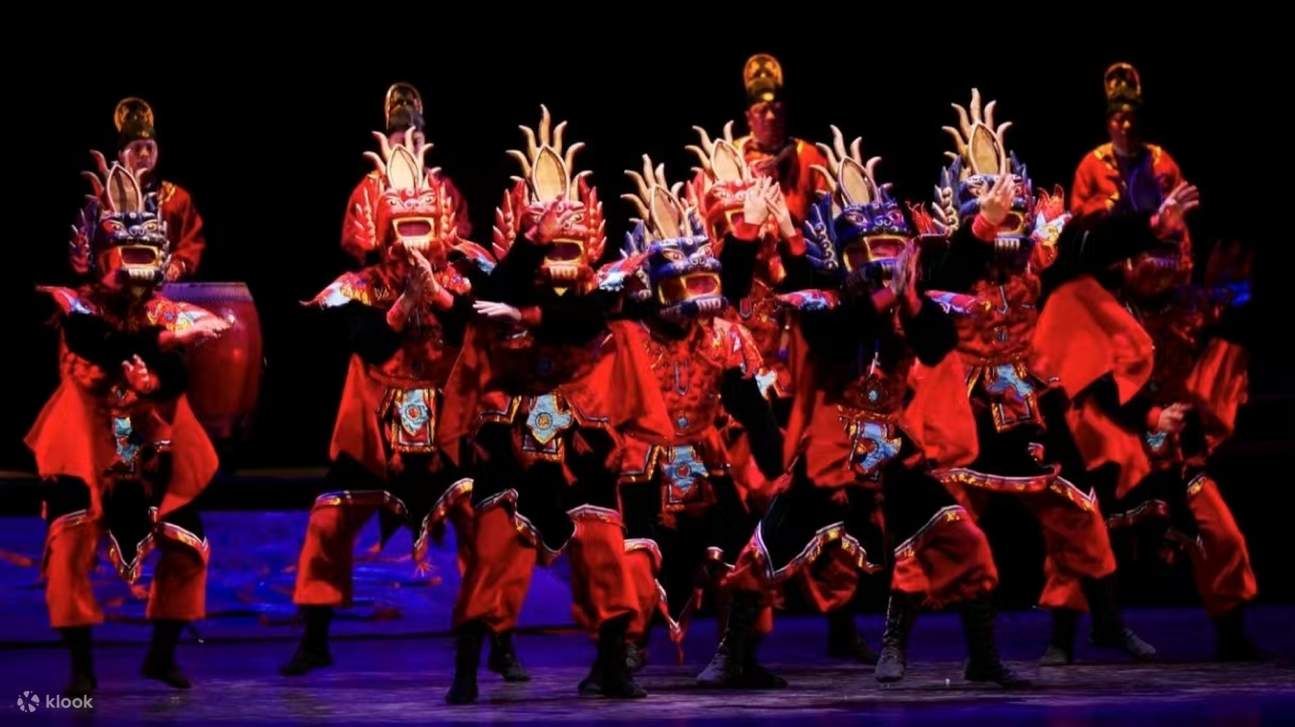
The Vajravarahi mask dance has been recorded in ancient China and was very popular in the Tang Dynasty. This dance expresses the Tang Dynasty people's yearning for a peaceful life by exorcising evil spirits and overcoming evil.

Percussion Music: "Ducks Quarreling" and "Tiger Grinding Teeth." The former draws inspiration from Xi'an Drum Music, while the latter is rooted in Weibei folk drum music. These pieces vividly depict the lively and playful squabbling of ducks and the majes

The dance "Pagoda Buddha Light" depicts the Tang Dynasty, where the ancient Chang'an's Wild Goose Pagoda and the Buddha's light shone brightly, bringing great wisdom and auspiciousness to the people of that time, national prosperity and peace, and lasting

"Huaqing Palace" was where Emperor Xuanzong of Tang and Yang Guifei watched performances and received civil and military officials. It was magnificent and gorgeous in scale, and majestic in its momentum, showcasing the prosperous and glorious atmosphere o

The stage presentation emulates the unique form, repertoire, style, and rhythm of Tang Dynasty music and dance, enhancing the aesthetic beauty and ceremonial feel of the performance art.

The Suona Ensemble – "Picking Jujubes" is selected from folk instruments and uses the reed of the suona to express the joyful scene of old people and children gathering together to enjoy themselves during the harvest season, showcasing a family's joyful c
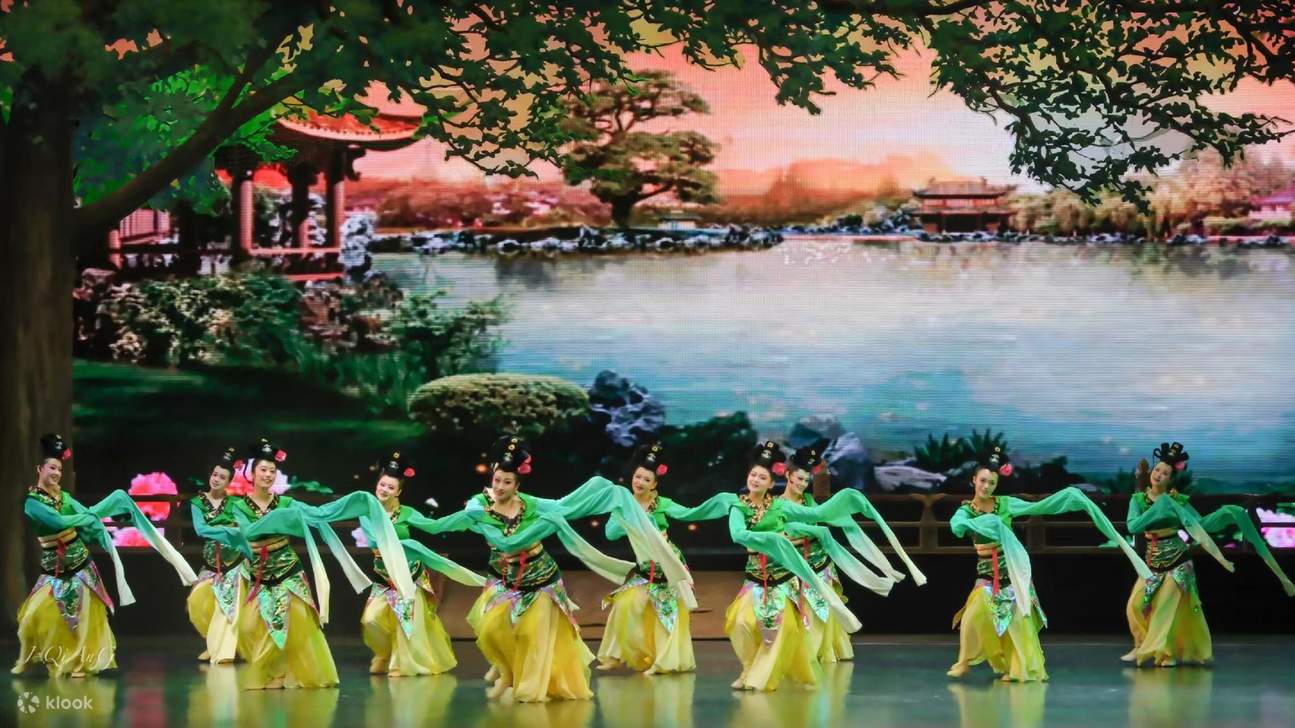
"Ta Ge" (Stepping Song) depicts young girls singing and dancing in the spring breeze, expressing their longing for a happy and fulfilling life in ancient times.
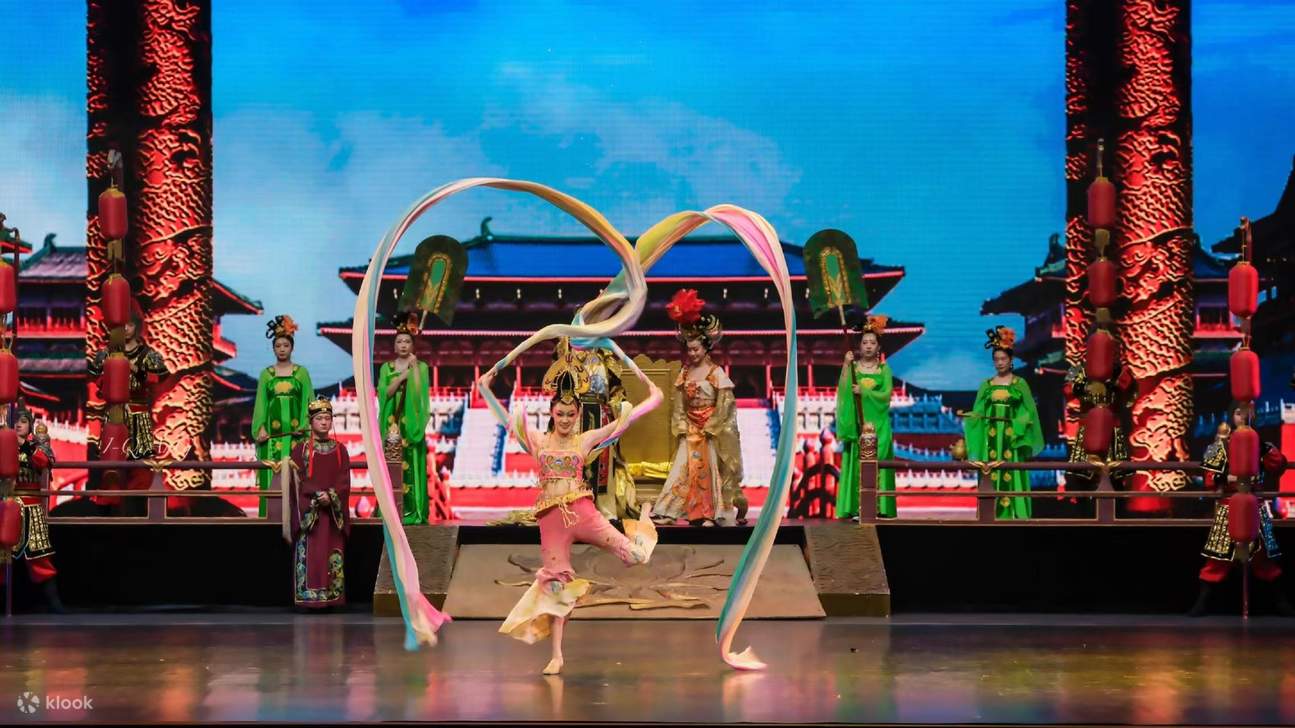
"Tang Dynasty Ritual Music and Dance" showcases the unprecedented prosperity and grandeur of the Tang Dynasty and its national character through solemn and glorious celebrations and colorful music and dance performances, demonstrating the charm and elegan

"The White Ramie Dance" is a folk dance with records dating back to the Jin Dynasty. It became even more popular during the Tang Dynasty. The dancers' long sleeves are made of white ramie fabric. When they dance, the agility and swaying of the long sleeve

The women's group dance, "Dance of the Rainbow Skirt and Feathered Robe," is one of the most famous court dances of the Tang Dynasty. Legend has it that Emperor Xuanzong of Tang, who was skilled in music, once dreamed of traveling to the lunar palace. The

Sheng Solo - "Spring Oriole's Song": Legend has it that during Emperor Taizong of Tang's crown prince investiture ceremony, an oriole flew by, considered a sign of good fortune. Consequently, the emperor ordered court musicians to compose a celebratory pi

"Tang Dynasty Imitation Music and Dance" draws on the strengths of songs and dances from various dynasties, integrating poetry, lyrics, songs, instrumental music, and dance. It blends bells, drums, zithers, and lutes into gentle song and dance, incorporat


Shaanxi Grand Theatre of Song and Dance


Shaanxi Grand Theater of Song and Dance "Tang Dynasty Music and Dance" performance seating chart. Seat selection is not supported, only zone selection.
Good to know
Theater Address: Shaanxi Grand Theater, 161 Wenyi North Road, Beilin District, Xi’an, Shaanxi Province Theater Hours: Monday to Sunday 09:00~22:30 Show Time: 19:30 Ticket check-in begins 30 minutes before the show. Please arrive approximately 1 hour before the show to exchange your tickets. Redemption Method: Simply provide the name used when placing the order with Klook to redeem your ticket at the Shaanxi Grand Theater.
Location
Contact us
Got a question about this activity? Ask us on live chat!