Photos
About the event
■ Duration |2025 / 3 / 15 - 4 / 26
■ Opening | 3 / 15 (Sat) 3 PM
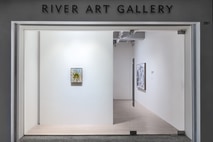
■ Venue | RIVER ART GALLERY
■ Exhibiting Artists |IChin Liao, Kazuma Koike, Tessar Lo
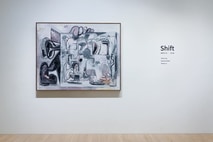
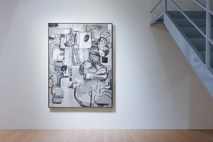
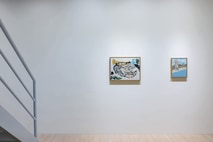
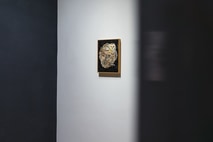
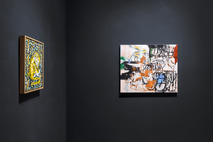
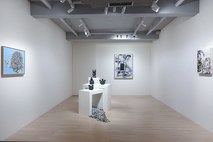
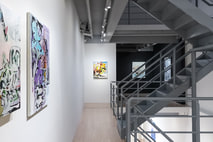
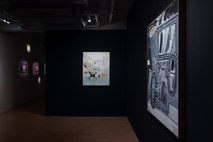
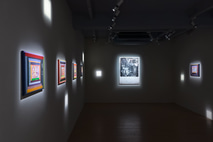
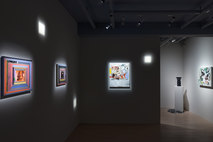
RIVER ART GALLERY is pleased to present the group exhibition “Shift,” featuring three artists from different cultural backgrounds: Chinese-Indonesian Canadian artist Tessar Lo, Japanese artist Kazuma Koike, and Taiwanese artist IChin Liao. This exhibition is conceptually framed around the philosophical paradox of the “Ship of Theseus,” weaving together the artists’ works to explore the relationships between identity, memory, and transformation. “Shift” signifies movement, change, and reconstruction, directly responding to the core question posed by the “Ship of Theseus”—when all components of an object are replaced one by one, with none of the original parts remaining, is it still the same object? This paradox challenges our perceptions of individual and collective identity changes, further questioning the boundaries between “constancy” and “change.” The exhibition title, “Shift,” also underscores the dynamic process of “change,” aiming to spark profound discussions on contemporary societal transformations through the compelling works of these three artists.
The term “Shift” carries both active and passive implications, suggesting how things are propelled into different stages or states. In digital tools and design software, the Shift key is an essential function associated with actions such as “reordering,” “composing,” and “transforming”—echoing the fluidity and reconstruction of memory, culture, and identity in artistic creation. In 2024, the Metropolitan Museum of Art hosted an artistic intervention led by MSCHF titled “Sink of Theseus.” The project involved gradually replacing components of a museum sink, with the removed original parts being cast into a new artwork. This intervention directly responded to the core question of the “Ship of Theseus” while highlighting the dialogue between “Shift” and “Sink”—the former focuses on evolution and reconstruction, while the latter signifies dissolution and disappearance. This further reinforces the concept of the philosophical paradox, the critical reflection of the exhibition, and its relevance to contemporary discourse.
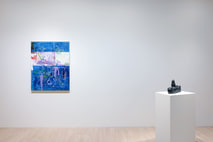
The exhibition integrates the works of the three artists in an interwoven display, using dynamic curation to emphasize the fluid process of change, with the flowing stone arrangements suggesting visual imagery of currents and migration. Tessar Lo, as a Chinese-Indonesian Canadian artist, engages in continuous cultural dialogues through his work, with a particular strength in deconstructing and reassembling cultural symbols. His exhibited pieces embrace openness and diverse media, deconstructing and reconstructing elements related to his identity, exploring the interaction between existence, time, materiality, and metaphysics. His works embody adaptation, restoration, dissolution, and reconstruction—qualities that reflect the ongoing changes, adjustments, and documentation inherent in life’s journey. Through harmonious and interesting visuals, his art touches upon intricate and multi-layered life narratives.
Japanese artist Kazuma Koike presents a series of sculptures and paintings centered around “fictional ancient artifacts.” His work interweaves mythology and historical memory to explore the reconstruction of time and culture. By employing visual symbols such as ancient deities, potteries, large felines, and plants, he creates a distinct sense of suspension as if his works exist outside conventional notions of time and space. His work contemplates the harmonious coexistence of disparate elements and questions how the meaning of objects alters through reconfiguration.
Taiwanese artist IChin Liao interprets life experiences through abstract visual language, responding to the paradoxical coexistence of societal order and chaos. Deeply influenced by philosophy, psychology, and literature, her practice extends into the exploration of the subconscious and dreams. Liao engages in a dynamic interaction with the canvas through her intuitive brushwork, preserving the traces of her strokes. Through this process, she not only highlights the fluidity of temporal and spatial dimensions but also constructs symbolic representations of memory and perception. The blank spaces in her paintings invite viewers to interpret the works through their own personal experiences, fostering a deep emotional connection with the art.
Through “Shift,” RIVER ART GALLERY aims to present how these three artists, each with their unique artistic language, explore the complexities of selfhood and the world across time and space, positioning visual art as a bridge for reflection and expression that guides viewers into infinite imaginative realms. In an era of rapid globalization and cultural convergence, “Shift” highlights the fluidity of identity and environment, prompting viewers to reflect on the dynamic nature of identity and transformation. We sincerely invite you to come and drift in this immersive dialogue—an exploration that traverses cultures, history, and contemporary discourse.
About the organiser
RIVER ART GALLERY was founded in 1998 in Taichung, Taiwan. The gallery’s initial years were known for, the director, Ray Hung’s interest in sculptural art; and in the process, discovering renowned Taiwanese artists, such as Li Chen and Hung Yi. After over two decades of focusing on working with Taiwanese artists domestically, the gallery gradually opened up its program to an international roster in 2021, with the presence of the new director, Ella Hung, the youngest daughter of gallery founder, Ray Hung. Ella Hung’s present-day program resides in a brand new, four-level, 1600 sqft gallery space in the heart of Taichung City.
The gallery made its first steps to broadening its roster with the addition of artists who are somewhat close to home, such as Taiwanese-Canadian artist; Yi-Shuan Lee, and Taiwanese-American artist; Timothy Bair. The decision for working with these 90s born artists who have spent time living outside of their motherland, is a direct way for the gallery to reintroduce a much more expansive, and yet contemporary, idea of what Formosan culture stands for on an international stage.
Now, a few years into Ella Hung’s program at River Art Gallery, along with the much larger premises to accommodate the demands of the wide range of exhibition practices in its steadily growing roster of internationally recognized artists; River Art Gallery strives to take on an even greater presence on the global stage, with a commitment to invigorate academic as well as educational purposes. The gallery’s program is based on a determination to build and grow alongside the top innovative figures of today, in radically rethinking the exhibition as a form and taking it as a critical medium.