Famen Cultural Scenic Area


Packages
Admission ticket + park shuttle bus ticket
 Valid on the selected date
 Conditional cancellation
 Instant confirmation


- Adult ticket: Adults aged 19-59
- The voucher is valid only on the specified date (and time if applicable)
- Direct verification and use with "ID card"
- Scenic spot ticket gate
Park battery car ticket
Valid on the selected dateConditional cancellationInstant confirmationTickets
Valid on the selected dateConditional cancellationInstant confirmationReviews
Guide
Famen Cultural Scenic Area is located in Famen Town, about 10 kilometers north of Fufeng County, Baoji City, and was first built in the late Eastern Han Dynasty. This "royal temple" of the Tang Dynasty became a Buddhist holy land revered nationwide because it enshrined the highest object in Buddhism—the "finger bone relic" of Sakyamuni Buddha.
See all the treasures of Famen Cultural Scenic Area
As a tourist, if you want to see all the treasures of Famen Cultural Scenic Area, you must visit three places: the underground palace within the Famen Temple monastery at the old site, the Treasure Museum, and the Heshisharili Pagoda within the cultural scenic area. This is because three "shadow bones" (specially made from jade to match the shape and size of the true bone, serving to protect it) are stored in the underground palace; the treasures unearthed from the Tang Dynasty imperial family's offerings to Buddha are displayed in the Treasure Museum; and the precious "Buddha finger (true body) relic" is enshrined in the Heshisharili Pagoda on the east side of the cultural scenic area.
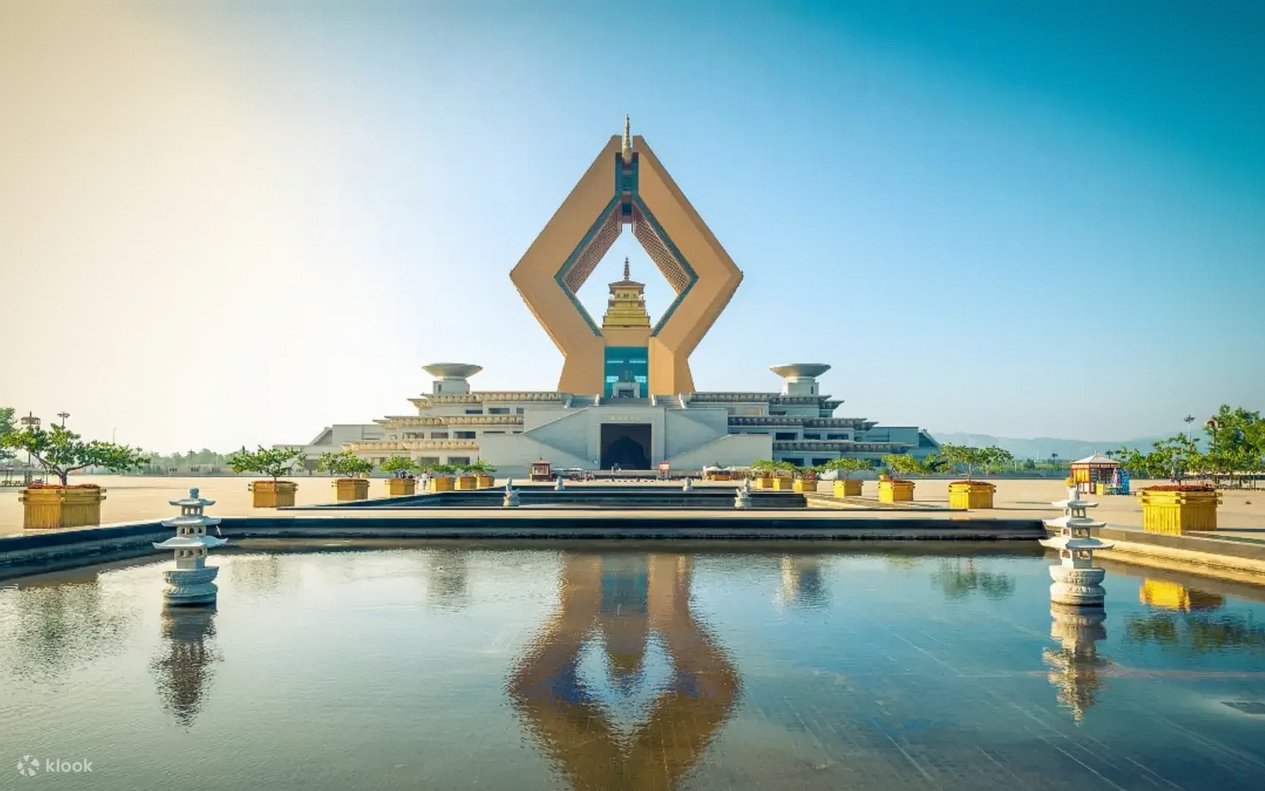
If you enter the scenic area from the Shamen Square on the west side of the cultural scenic area, what appears before you is the approximately 1-kilometer-long Buddha Light Avenue. On both sides of the avenue stand ten giant bodhisattva statues shining with golden light. At the eastern end of the avenue is the Heshisharili Pagoda, and there are sightseeing vehicles available on the avenue. The Buddha's finger bone relic is only open to the public on the first and fifteenth days of each lunar month, weekends, and major holidays.
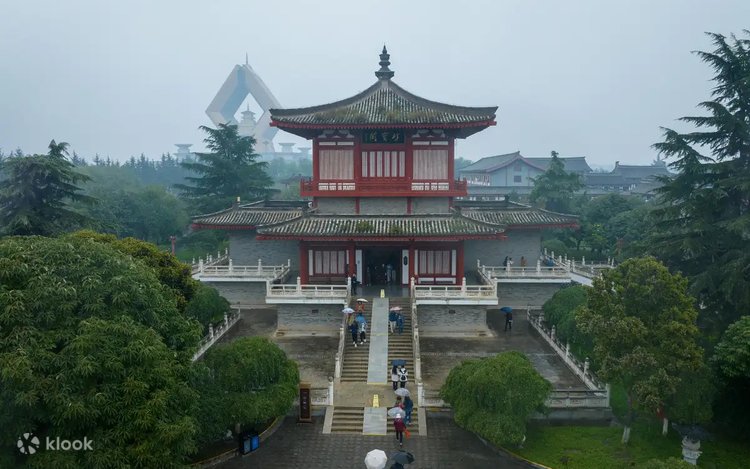
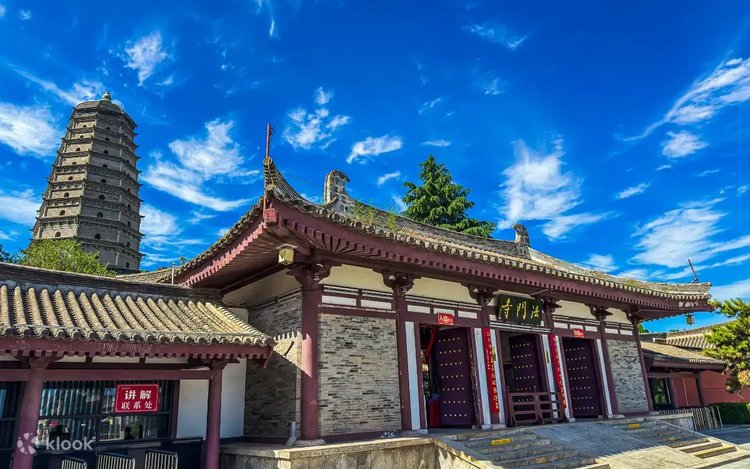
The southwest side of the cultural scenic area is the Famen Cultural Scenic Area monastery and the Treasure Museum. Below the True Body Pagoda within the monastery is the underground palace where the "Buddha finger relic" was discovered. Today, you can closely observe the three "shadow bones" in the underground palace. After exiting the underground palace, you can also stroll freely in the serene monastery, which features a bell and drum tower, the Mahavira Hall, and a liberation pond, all typical Tang Dynasty style architecture.
One hundred treasures are housed in the Treasure Museum
In the adjacent Treasure Museum (also known as the museum), exquisite cultural relics unearthed from the underground palace are displayed. You can admire hundreds of treasures offered by the Tang imperial family to Buddha, each one astonishing. These include: the eight-layered reliquary for enshrining the relic, the twelve-ring tin staff, a pure gold pagoda, a white marble spirit canopy, secret color porcelain, and tea sets used by the emperor, among others. Some of these treasures are made of pure gold, and the craftsmanship of some has been lost, reflecting the wealth of the Tang Empire at that time.
You might also like...



Famen Temple Buddhist Cultural Scenic Area

Guidebook
Famen Cultural Scenic Area is located in Famen Town, about 10 kilometers north of Fufeng County, Baoji City, and was first built in the late Eastern Han Dynasty. This "royal temple" of the Tang Dynasty became a Buddhist holy land revered nationwide because it enshrined the highest object in Buddhism—the "finger bone relic" of Sakyamuni Buddha.
See all the treasures of Famen Cultural Scenic Area
As a tourist, if you want to see all the treasures of Famen Cultural Scenic Area, you must visit three places: the underground palace within the Famen Temple monastery at the old site, the Treasure Museum, and the Heshisharili Pagoda within the cultural scenic area. This is because three "shadow bones" (specially made from jade to match the shape and size of the true bone, serving to protect it) are stored in the underground palace; the treasures unearthed from the Tang Dynasty imperial family's offerings to Buddha are displayed in the Treasure Museum; and the precious "Buddha finger (true body) relic" is enshrined in the Heshisharili Pagoda on the east side of the cultural scenic area.
If you enter the scenic area from the Shamen Square on the west side of the cultural scenic area, what appears before you is the approximately 1-kilometer-long Buddha Light Avenue. On both sides of the avenue stand ten giant bodhisattva statues shining with golden light. At the eastern end of the avenue is the Heshisharili Pagoda, and there are sightseeing vehicles available on the avenue. The Buddha's finger bone relic is only open to the public on the first and fifteenth days of each lunar month, weekends, and major holidays.
The southwest side of the cultural scenic area is the Famen Cultural Scenic Area monastery and the Treasure Museum. Below the True Body Pagoda within the monastery is the underground palace where the "Buddha finger relic" was discovered. Today, you can closely observe the three "shadow bones" in the underground palace. After exiting the underground palace, you can also stroll freely in the serene monastery, which features a bell and drum tower, the Mahavira Hall, and a liberation pond, all typical Tang Dynasty style architecture.
One hundred treasures are housed in the Treasure Museum
In the adjacent Treasure Museum (also known as the museum), exquisite cultural relics unearthed from the underground palace are displayed. You can admire hundreds of treasures offered by the Tang imperial family to Buddha, each one astonishing. These include: the eight-layered reliquary for enshrining the relic, the twelve-ring tin staff, a pure gold pagoda, a white marble spirit canopy, secret color porcelain, and tea sets used by the emperor, among others. Some of these treasures are made of pure gold, and the craftsmanship of some has been lost, reflecting the wealth of the Tang Empire at that time.