Open on the 1st and 15th day of each lunar month from 06:30 to 16:30.
1
Chongyuan Temple
Save to wishlist

Open today: 07:30-17:00Last entry at 16:30

阳澄环路333号
Packages
Tomorrow
2 Oct
3 Oct
All
Adult ticket
1 Chongyuan Temple Scenic Area Entrance Ticket
 Valid on the selected date
 Conditional cancellation
 24-hour confirmation
 Package details
Retail: € 2.90
€ 2.75
Adult ticket
Refresh to make things right again

Book now for tomorrow
See less

24-hour confirmation
See less

Valid on the selected date
The voucher is valid only on the specified date (and time if applicable)
See less

Conditional cancellation
Non-changeable, no split support
If it's more than 24 hours before the play date and the ticket has not been exchanged or used, a full refund can be requested.
If it is within 24 hours of the play date, or if tickets have been exchanged, or if admission has occurred, or if it has expired and not been used, no refunds or rescheduling will be provided.
See less
About this package
What's included

See less
Not included

See less
Things to note
Eligibility
- Same price applies to all ages
Booking limitations
- It is recommended to book 5-10 days in advance during peak season, and 1-3 days in advance during off-peak season.
- Effective immediately upon successful order payment.
Additional information
- Dress appropriately, no bare shoulders or back.
- Keep quiet and do not touch the Buddhist statues or ritual instruments.
- Re-entry is not allowed after you leave the venue
How to use
Usage validity
- The voucher is valid only on the specified date (and time if applicable)
How to redeem
- No need to exchange tickets; enter directly by verifying the QR code of your official electronic voucher.
- Admission address: Ticket office at the East Gate of Chongyuan Temple, No. 333 Yangcheng Ring Road, Suzhou Industrial Park, Suzhou City, Jiangsu Province
Address
- No. 333, Yangcheng Ring Road, Suzhou Industrial Park, Suzhou City, Jiangsu Province
Reviews
Kevin *
2026/06/12
Fantastic 5.0
Booking with Klook: Convenient Access
Guide
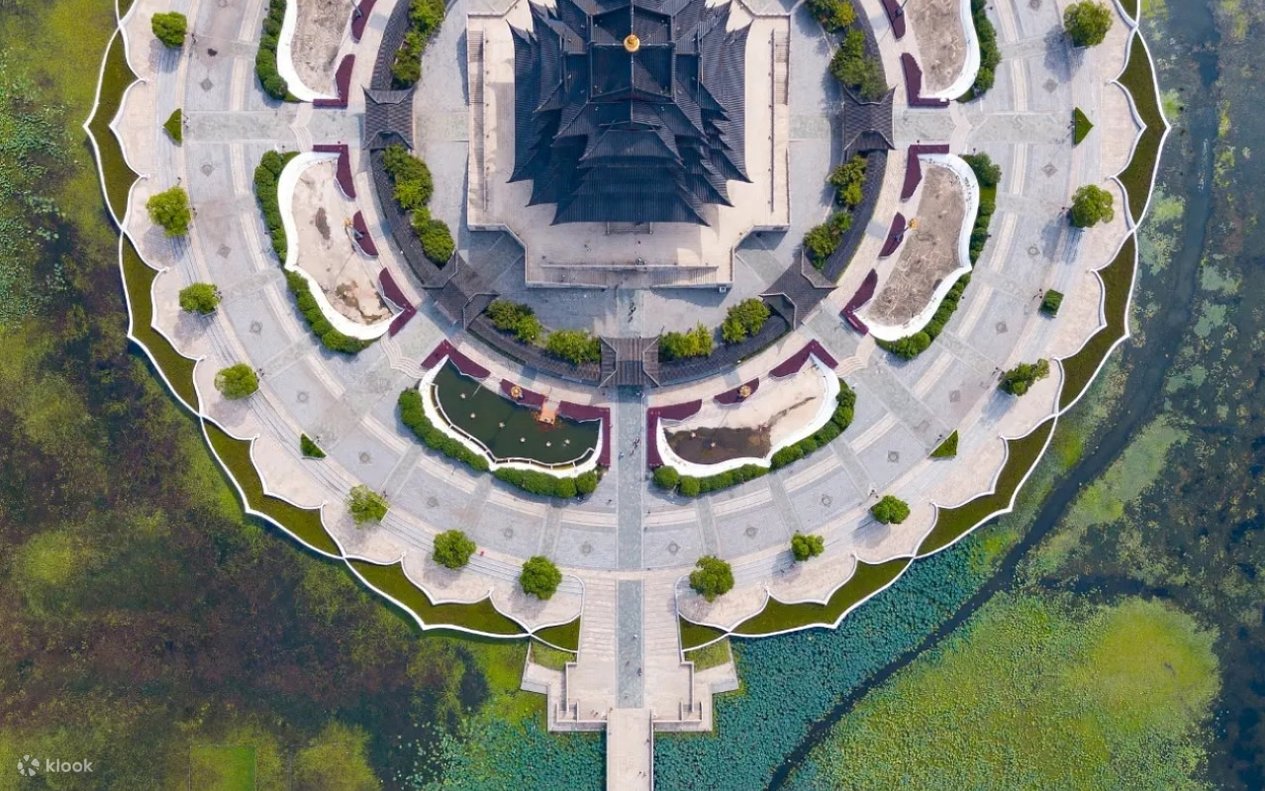
Chongyuan Temple was first built in the second year of Tianjian (503 AD) during the Southern and Northern Dynasties under Emperor Wu of Liang. It has a history of over 1,500 years and was completed just one year after Hanshan Temple. The rebuilt Chongyuan Temple is located on the scenic Yangcheng Lake Peninsula and boasts ten national records, including the tallest indoor Guanyin statue in the country at 33 meters and the largest single Daxiong Hall in China. It is a Buddhist holy site that embodies the unique style of a lotus Buddhist kingdom and a Guanyin Bodhimanda.
You might also like...
Retail: € 2.90
€ 2.75
All you need to know
Attraction info

Opening hours
See more
All year
Mon ~ Sun
07:30 - 17:00Last entry at 16:30

Location
Chongyuan Temple

Guidebook
Chongyuan Temple was first built in the second year of Tianjian (503 AD) during the Southern and Northern Dynasties under Emperor Wu of Liang. It has a history of over 1,500 years and was completed just one year after Hanshan Temple. The rebuilt Chongyuan Temple is located on the scenic Yangcheng Lake Peninsula and boasts ten national records, including the tallest indoor Guanyin statue in the country at 33 meters and the largest single Daxiong Hall in China. It is a Buddhist holy site that embodies the unique style of a lotus Buddhist kingdom and a Guanyin Bodhimanda.