Eiffel Tower Reviews
Popular places near Eiffel Tower
FAQs about Eiffel Tower
When is the best time to visit the Eiffel Tower?
When is the best time to visit the Eiffel Tower?
How can I get to the Eiffel Tower using public transportation?
How can I get to the Eiffel Tower using public transportation?
How can I avoid long lines at the Eiffel Tower?
How can I avoid long lines at the Eiffel Tower?
What are the different floors of the Eiffel Tower?
What are the different floors of the Eiffel Tower?
Can I take the stairs to the top of the Eiffel Tower?
Can I take the stairs to the top of the Eiffel Tower?
Is the Eiffel Tower accessible for visitors with disabilities?
Is the Eiffel Tower accessible for visitors with disabilities?
Does the Eiffel Tower light up every night?
Does the Eiffel Tower light up every night?
What to know about Eiffel Tower
Eiffel Tower: The Timeless Icon of Paris
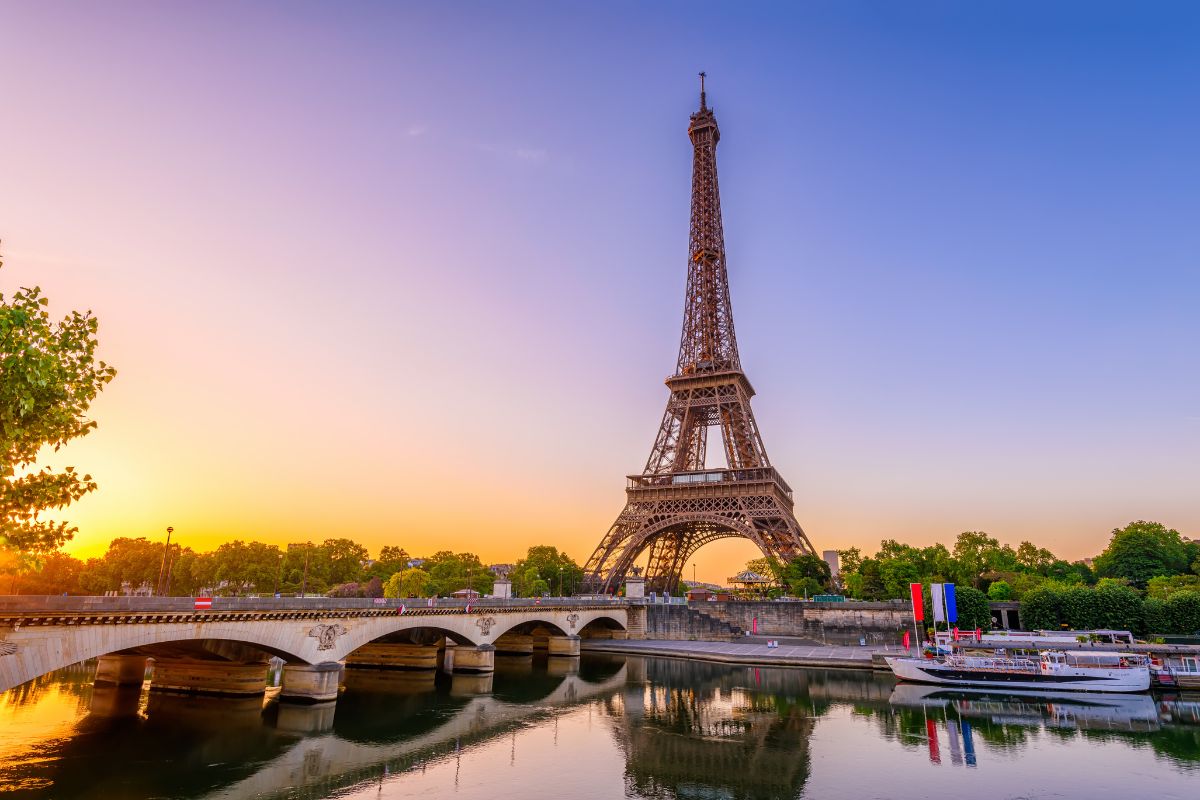
History of the Eiffel Tower: How the Eiffel Tower Came to Be
The Eiffel Tower (La Tour Eiffel) is one of the most iconic landmarks in the world and the enduring symbol of Paris. Designed by Gustave Eiffel and his engineering team, it was built as the centerpiece of the 1889 Exposition Universelle (World's Fair), commemorating the 100th anniversary of the French Revolution. At the time, however, the tower was met with fierce criticism—many of France's leading artists and intellectuals dismissed its bold, industrial design as an eyesore.
Construction began in January 1887 and took just over two years, employing more than 300 workers. Completed in March 1889, the tower rose to 324 meters (1,063 feet), making it the tallest structure in the world until New York's Chrysler Building surpassed it in 1930. Originally intended to be dismantled after 20 years, it was saved by its crucial role in radio transmission during the early 20th century. The tower also played a strategic role in World War I, when it was used to jam German communications.
Over the years, public opinion transformed, and the Eiffel Tower grew to be celebrated as a national treasure and a symbol of French ingenuity. Its importance was officially recognized when it was designated a monument historique in 1964 and later inscribed as a UNESCO World Heritage Site in 1991. Today, it welcomes over 7 million visitors annually and remains not only a feat of engineering but also a cultural icon, immortalized in art, literature, and film across the world.
Inside the Icon: A Guide to the Eiffel Tower's Three Floors
The Ground Floor: The Esplanade
The experience of the Eiffel Tower begins long before you start your ascent. The Esplanade is a vast, open space beneath the tower's iconic arches that serves as both a grand entrance and an attraction in its own right. It's a place to marvel at the sheer scale of the structure from below and discover several hidden details often missed by visitors in a rush to get to the top.
Entering the Iron Lady
Your first encounter with the Eiffel Tower is a walk through its beautifully maintained gardens. Landscaped paths and tranquil ponds flank the Esplanade, offering a moment of calm and providing some of the best ground-level photo opportunities of the entire structure. Before you can access the area directly beneath the tower, you must pass through one of the modern glass pavilions that house the security checks, located between the tower's four massive pillars. This process, while necessary, marks your official entry into the world of the "Iron Lady," building anticipation for the journey upwards.
Bust of Gustave Eiffel
As a poignant tribute to the visionary engineer, a gilded bronze bust of Gustave Eiffel is prominently displayed under the North Pillar (Pilier Nord). Created by the sculptor Antoine Bourdelle, this is a key point of homage where visitors can pause to appreciate the man behind the masterpiece. Standing before the sculpture offers a direct connection to the tower's creator before you experience the revolutionary structure he designed and built.
Historic Lift Machinery
For a fascinating glimpse into 19th-century industrial technology, head to the East and West Pillars (Pilier Est and Pilier Ouest). Here, you can peer through glass windows into the original engine rooms and see the immense hydraulic machinery that powered the first elevators in 1889. While modern systems are now in place, these preserved mechanisms serve as a "behind-the-scenes" look at the incredible Industrial Revolution-era engineering that made ascending the tower possible. It's a detail that highlights the tower's dual identity as both a beautiful monument and a groundbreaking feat of technology.
Shops & Services
The Esplanade is equipped with several amenities for visitors. You'll find official souvenir shops (La Boutique Officielle) offering certified Eiffel Tower merchandise, from scale models and keychains to books and apparel. For a quick bite, there are several "grab-and-go" food stalls and buffets offering classic French snacks like crêpes, waffles, sandwiches, and drinks. This makes it a convenient place to get refreshments while waiting in line or to purchase mementos after your visit. You'll also find information desks to help you plan your ascent.
Engraved Names
Look up from the Esplanade towards the facade just above the first-floor arches, and you will see one of the tower's most elegant details. Gustave Eiffel chose to honor 72 of France's most distinguished scientists, engineers, and mathematicians of his time by having their surnames engraved in large, gold letters around the perimeter. This "invocation of science" was a tribute to the spirit of discovery that the tower was meant to celebrate during the 1889 World's Fair. The names, including those of Foucault, Lagrange, and Lavoisier, are a beautiful and often-overlooked homage to the intellectual foundations of the era.
The First Floor: The Experience Level (57m high)
Often bypassed by visitors eager to reach the summit, the first floor of the Eiffel Tower is a destination in its own right. Renovated with modern and thrilling features, it offers a unique blend of historical discovery, dining, and breathtaking sensations, all while suspended 57 meters (about 187 feet) above Paris.
The Glass Floor
This is the undeniable highlight and main thrill of the first floor. A significant portion of the floor is made of solid, transparent glass, creating the exhilarating and slightly terrifying sensation of walking on air. Peering straight down through your feet, you can see the intricate ironwork of the tower's base and the crowds on the Esplanade below, appearing like tiny ants. It's a dizzying, unforgettable perspective that tests your nerve and provides a spectacular photo opportunity, allowing you to capture a unique shot of the ground directly beneath the Iron Lady.
Cultural & Historical Exhibits
Winding around the outer walkway of the first floor is an immersive "cultural path" that brings the tower's history to life. Through a series of interactive touch screens, digital albums, projections, and replica artifacts, you can delve into the story of Gustave Eiffel and his masterpiece. The exhibits detail the tower's challenging construction, its controversial reception by Parisian artists, its crucial role as a radio and television antenna, and its evolution into a beloved global icon. This open-air museum is a fascinating way to connect with the tower's rich heritage.
Preserved Spiral Staircase
Tucked away on the first floor is a preserved, vibrant red section of the original spiral staircase. This very staircase once connected the second floor to the summit and was personally used by Gustave Eiffel to access his private office at the top. The rest of the staircase was dismantled and auctioned off in the 1980s, making this 4.3-meter segment a rare and tangible piece of the tower's 1889 structure. It's a chance to literally stand on the same steps as its creator.
Relaxation & Souvenirs
The first floor is arguably the most relaxing level of the tower. It features a spacious outdoor terrace that follows the tower's perimeter, complete with benches and seating areas where you can linger and enjoy the views at a more leisurely pace than the often-crowded upper levels. There are also food counters offering snacks and drinks. An additional gift shop on this floor provides another opportunity to purchase official souvenirs, often with fewer queues than the shops on the ground or second floor.
The Second Floor: The Classic Panoramic View (115m high)
The second floor, perched 115 meters (about 377 feet) above the city, is often considered the sweet spot for viewing Paris. It's high enough to offer a breathtaking, sweeping panorama, yet close enough to the ground to distinguish individual landmarks and appreciate the city's architecture in rich detail. The floor itself consists of two levels: a lower main level that is enclosed and protected from the elements, and an upper open-air terrace for an even clearer perspective.
The Main Observation Deck
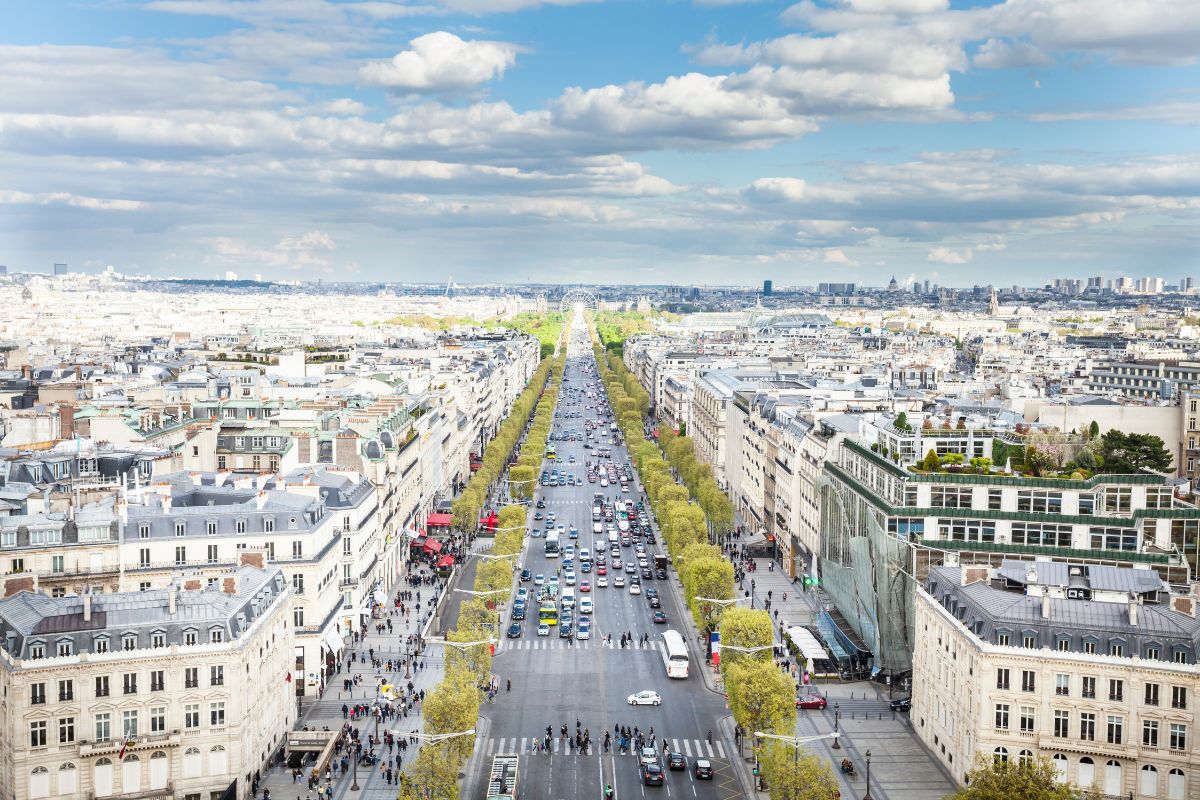
This is the view that has captivated visitors for over a century, the one most famously featured in photographs and films. From this altitude, the city of Paris unfolds before you like a detailed, living map. It is widely regarded as the best level for photography because the elevation is perfect for capturing both the grandeur of the cityscape and the specifics of its monuments. You can clearly identify and photograph key landmarks, including:
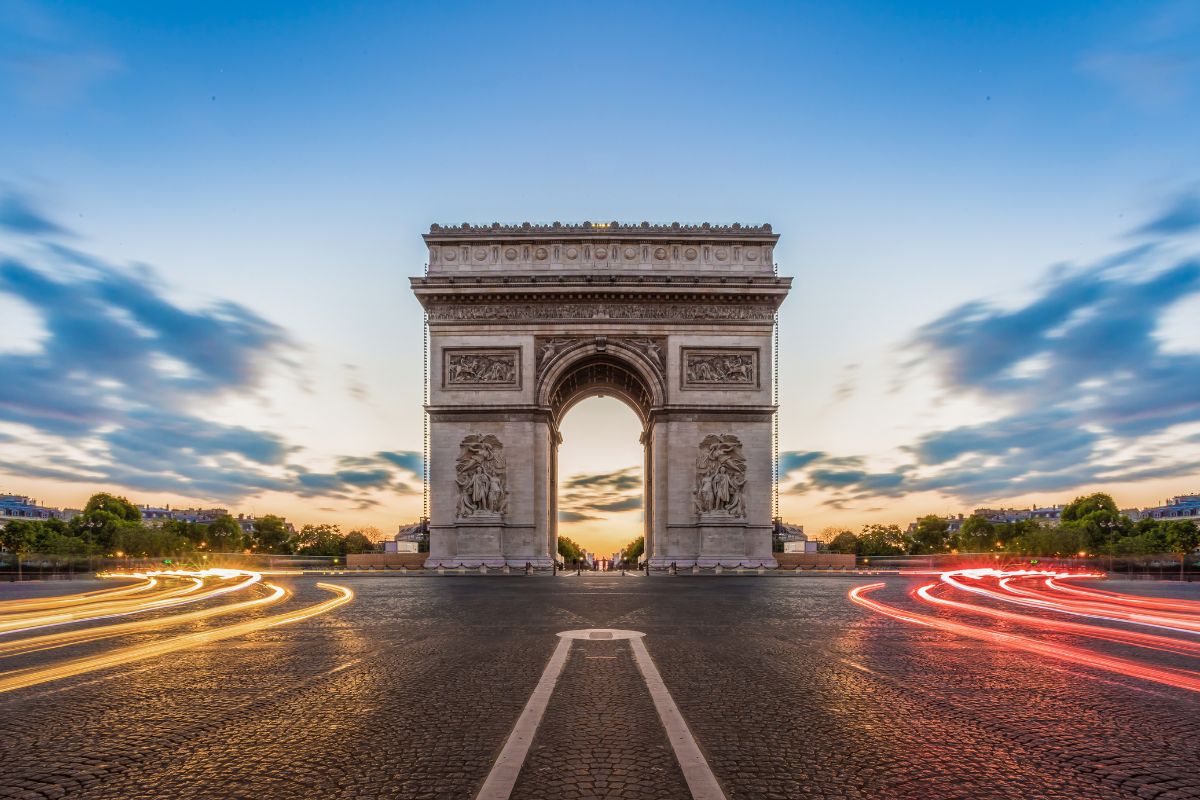
The Arc de Triomphe standing proudly at the end of the Champs-Élysées.
The vast Louvre Museum with its iconic glass pyramid.
The golden dome of Les Invalides, the final resting place of Napoleon.
The white basilica of Sacré-Cœur perched atop the hill of Montmartre.
The winding path of the Seine River and its famous bridges.
The historic heart of the city on the Île de la Cité, featuring Notre Dame Cathedral.
The observation deck has protective grilles for safety, but there are dedicated openings specifically designed for camera lenses to allow for clear, unobstructed photos.
Gourmet Shops
For a more casual indulgence, the second floor features several boutique-style gourmet shops. The most popular among these is a macaron bar, where you can purchase boxes of the delicate and colourful French almond meringue cookies in various flavours. You will also find counters selling high-quality chocolates, premium sandwiches, and other snacks, allowing you to enjoy a small taste of Parisian luxury while soaking in the magnificent views.
Telescopes
To get an even closer look at the city's details, several high-powered, coin-operated telescopes are positioned around the observation deck. These are often digital and feature interactive screens that can help you identify landmarks. You can zoom in on the intricate facades of distant buildings, observe the traffic navigating the complex intersection around the Arc de Triomphe, or watch the boats cruising along the Seine.
The Gateway to the Summit
For visitors with tickets to the very top, the second floor serves as a crucial transit point. After arriving here on the main elevators from the ground floor, you will disembark and join a separate queue for the final ascent. A smaller set of four glass-walled elevators (ascenseurs Duo-lifts) then transports you from this level directly up to the Summit. It's important to be aware that there can often be an additional wait here, so be sure to factor that into your schedule when planning your visit.
The Summit: The Top of Paris (276m high)
The final ascent to the Summit is an experience in itself. After changing elevators on the second floor, you'll step into a smaller, glass-walled lift that whisks you vertically up the slender peak of the tower. The journey offers a thrilling, rapidly expanding view, building anticipation for the moment you arrive at the pinnacle of the Iron Lady, 276 meters (906 feet) above the streets of Paris.
The Ultimate 360° View
The view from the Summit is profoundly different from the lower levels. While the second floor presents Paris like a detailed map, the Summit offers a breathtaking, god's-eye perspective. The city transforms into a vast, sprawling metropolis, and individual landmarks become part of a grander urban tapestry. The sheer scale of Paris becomes apparent, and on a clear day, your gaze can extend for up to 70 kilometers (over 40 miles), far beyond the city limits into the surrounding Île-de-France region. You are above almost everything, feeling the wind and hearing the muffled hum of the city far below. It's a humbling and awe-inspiring panorama that truly makes you feel like you are on top of the world.
Gustave Eiffel's Restored Office
Tucked away within the enclosed gallery is one of the Summit's most fascinating secrets: a recreation of Gustave Eiffel's private apartment. This small office was a personal retreat for the engineer, where he conducted meteorological observations and hosted prestigious guests. The space has been meticulously restored to its original 19th-century appearance, complete with period wallpaper, wooden furniture, and scientific instruments. Peering through the windows, you'll see a charming scene depicted with wax figures: Gustave Eiffel welcoming the celebrated American inventor Thomas Edison, who is presenting him with a phonograph. It's a captivating glimpse into a moment frozen in time, a personal space hidden within a public monument.
Indoor & Outdoor Decks
The Summit is cleverly designed with two levels to accommodate all weather conditions.
The Indoor Deck: The elevator first arrives at a fully enclosed gallery. Protected from the elements by large panoramic windows, this level allows you to comfortably enjoy the 360° view regardless of wind, rain, or cold. This is where you'll find Gustave Eiffel's office and several orientation maps to help you identify landmarks.
The Outdoor Deck: A short flight of stairs leads from the indoor gallery up to the open-air platform. This is the true top. While protected by a high safety grille, this level is open to the elements, allowing you to feel the wind and experience the height in a more direct and thrilling way. This is where the Champagne Bar is located and where you can get the most unfiltered sense of being at the very pinnacle of Paris.
Gustave Eiffel's Private Apartment
At the summit, visitors can discover the private apartment of Gustave Eiffel, featuring period furnishings and lifelike figures of Eiffel and his notable guests, including Thomas Edison. This space demonstrates the history of the tower and its significance as a symbol of France.
Built for the 1889 Exposition Universelle, the Eiffel Tower remains the most-visited monument in the world, a true masterpiece of art and engineering, erected as a testament to innovation and the French Revolution.
Cuisine & Dining Experiences at Eiffel Tower
Dining at the Eiffel Tower is a unique experience that combines French cuisine with breathtaking views. The options cater to various tastes and budgets, ranging from quick takeaway snacks to luxurious fine dining. For all seated restaurants, booking far in advance is absolutely essential.
Le Jules Verne (Second Floor)
Experience: The pinnacle of fine dining at the Eiffel Tower. This is a world-renowned, Michelin-starred gastronomic restaurant offering an exclusive and sophisticated experience. It's the ideal choice for a major celebration, a romantic proposal, or the ultimate culinary splurge.
Cuisine: Contemporary French haute cuisine. The menu is refined and artistic, featuring multi-course tasting menus (5 or 7 courses for dinner) that showcase the best of French ingredients and culinary techniques.
Ambiance: Intimate, elegant, and modern. The restaurant's sleek interior is designed to complement the stunning views, with the tower's iron latticework forming a dramatic backdrop. Guests are seated with privileged views of Paris.
Access: A private elevator from the South Pillar provides direct and exclusive access for restaurant guests, bypassing the main tourist queues.
Practical Info:
Reservations: Required months in advance.
Dress Code: Smart and elegant. Jackets are recommended for men; sportswear is not permitted.
Price Point: $$$$ (Gastronomic Fine Dining)
Madame Brasserie (First Floor)
Experience: A chic and contemporary Parisian brasserie that offers high-quality dining in a more relaxed (and more accessible) atmosphere than Le Jules Verne. It's perfect for a special lunch, a romantic dinner, or a family meal that feels both elegant and comfortable.
Cuisine: Modern French brasserie-style food with a focus on seasonal and locally sourced ingredients, curated by celebrated chef Thierry Marx. The menu is sophisticated yet approachable.
Ambiance: The restaurant features a stylish, nature-inspired interior with large windows that provide incredible views from within the tower's structure. It feels bright and airy during the day and intimate and sparkling at night.
Access: Your restaurant reservation includes a dedicated ticket for the lift to the first floor.
Practical Info:
Reservations: Highly recommended, especially for dinner.
Dress Code: Smart casual.
Price Point: $$$ (Upscale Brasserie)
The Champagne Bar (The Summit)
Experience: The most romantic and celebratory "bar" in Paris. Located at the very top of the Eiffel Tower, this small counter offers the unforgettable experience of toasting with a glass of champagne while enjoying the highest possible view of the city.
Cuisine: Primarily beverages. The bar serves a selection of French champagne, available as brut or rosé, served chilled in a special flute. Non-alcoholic options are also available.
Ambiance: Thrilling and exclusive. You are on the open-air deck, 276 meters high, feeling the wind and soaking in the 360° panorama. It's less of a lounge and more of a "moment"---a perfect final touch to your visit.
Access: You must have a ticket to the Summit to access the bar.
Practical Info:
Reservations: Not required. It's a walk-up bar.
Dress Code: None (whatever you are wearing for your visit).
Price Point: $$ (Premium price for the experience)
The Buffets & Casual Eateries (Esplanade & First/Second Floors)
Experience: Quick, casual, and convenient options for visitors who want a simple snack or a light meal without a formal reservation. These are "grab-and-go" style counters.
Cuisine: A range of simple takeaway food and drinks. This includes salads, sandwiches, pizzas, pastries, hot dogs, crêpes, and waffles. Hot and cold drinks, including coffee and soft drinks, are also available.
Ambiance: Informal and busy. These are service counters with nearby public seating areas, especially on the spacious first-floor terrace.
Location: You can find these buffets on the Esplanade (ground floor), the First Floor, and the Second Floor.
Practical Info:
Reservations: Not required.
Dress Code: None.
Price Point: $ (Casual Snacks & Light Meals)
The Macaron Bar (Second Floor)
Experience: A small, delightful stop for a quintessentially Parisian treat. This boutique counter offers colourful and delicious macarons, the famous French almond meringue cookies.
Cuisine: Macarons in a variety of classic and seasonal flavours. It's the perfect sweet indulgence to enjoy while admiring the panoramic view.
Location: On the second floor, near the main observation deck.
Practical Info:
Reservations: Not required.
Price Point: $ (Gourmet Sweet Treat)
Tips Before Visiting Eiffel Tower
Book Your Tickets Online in Advance: This is the single most important tip. The queue to buy tickets on the day can be enormous (often 2-3 hours long). By booking a timed-entry slot on the official Eiffel Tower website (toureiffel.paris) weeks or even months ahead, you bypass this line completely and go straight to the security check.
Choose the Right Ticket and Time Slot
Ticket Type: Decide if you want to go to the 2nd Floor or all the way to the Summit. The Summit offers the highest view but is more expensive and can have an additional queue on the 2nd floor. You can also choose between taking the elevator or climbing the stairs to the 2nd floor (a great option for the adventurous and those on a budget).
Best Time: For fewer crowds, book the first slot of the day. For the most magical experience, book a slot about one hour before sunset. This allows you to see Paris in daylight, watch the sunset, and then see the city light up.
Check the Weather Forecast: The view is the main reason you're going up. If the forecast is for heavy rain or thick clouds, the visibility from the top will be poor. If your schedule is flexible, try to book for a clear day.
Understand the Geography: Use the Trocadéro Metro Stop. Instead of getting off at the closest metro stop (Bir-Hakeim), take Line 6 or 9 to Trocadéro. When you exit the station, you will be greeted with the most spectacular, picture-perfect view of the Eiffel Tower from the Palais de Chaillot. It's the ultimate "wow" moment and the best way to start your visit.
On the Day of Your Visit
Arrive Early for Your Time Slot: Even with a pre-booked ticket, you must go through a security check before reaching the elevators. Plan to arrive at least 20-30 minutes before the time printed on your ticket to comfortably get through security.
Pack Light and Smart: You will be going through an airport-style security screening. Avoid bringing large bags, glass bottles, cans, or sharp objects. Essentials to bring include your phone/camera, a portable power bank, and a credit card. An empty reusable water bottle is a good idea to fill up later.
Be Aware of Your Surroundings: Like any major global landmark, the area around the Eiffel Tower is a magnet for pickpockets and scammers. Keep your valuables secure and be politely assertive in ignoring anyone trying to sell you trinkets or ask you to sign petitions in the immediate vicinity.
During Your Experience Inside the Tower
Don't Skip the First and Second Floors. Many visitors rush straight to the Summit, but you'll miss a lot.
First Floor: Brave the thrilling glass floor, explore the historical exhibits, and enjoy a coffee with fewer crowds.
Second Floor: This level offers what many consider the best view for photography, as you are close enough to clearly see all of Paris's famous landmarks.
Prepare for the Summit: Remember that the Summit is colder and much windier than the ground, even on a warm day. Bring a light jacket or sweater. Also, be prepared for a potential second queue on the 2nd floor for the final elevator to the top.
Watch the Famous "Sparkle" from the Ground: This is a magical bonus tip. After your visit, stick around to see the tower sparkle. For 5 minutes at the beginning of every hour after sunset, the entire tower is covered in twinkling white lights. The best places to watch this are from the Trocadéro or while relaxing on the Champ de Mars park. It's a truly unforgettable sight.
Immediate Surroundings (The "Must-Do" Views & Parks)
Champ de Mars (The Field of Mars)
Location: Directly in front of the Eiffel Tower (south-east side). You are on it the moment you step away from the tower.
What it is: A vast public green space that stretches from the base of the Eiffel Tower to the École Militaire (Military School).
Details: This is the Eiffel Tower's "backyard." It's the perfect place to truly appreciate the tower's scale and get that classic full-length photo from the grassy lawns. Historically a military drilling ground, it's now a favourite spot for both tourists and locals to have a picnic, relax on the grass, and wait for the spectacular evening light show when the tower sparkles. It's an essential part of the Eiffel Tower experience.
Trocadéro Gardens and the Palais de Chaillot
Location: Directly across the Seine River from the Eiffel Tower (north-west side). A 5-10 minute walk across the Pont d'Iéna bridge.
What it is: A grand complex of gardens, fountains, and a palace that provides the most famous and arguably the best viewpoint of the Eiffel Tower.
Details: The Palais de Chaillot, a striking 1930s palace, houses several museums (including the Museum of Man and the Architecture Museum). Its main draw is the vast terrace, the Parvis des Droits de l'Homme, which offers a perfectly symmetrical, elevated, and unobstructed view of the Eiffel Tower. Below the terrace, the Trocadéro Gardens slope down towards the river, featuring the powerful Warsaw Fountains, which create a spectacular water display in the summer. This is the postcard-perfect spot to watch the sunrise or the evening sparkle.
World-Class Museums (A Short Walk Away)
Musée du Quai Branly - Jacques Chirac
Location: Right next to the Eiffel Tower, along the River Seine. A 5-minute walk.
What it is: A modern museum dedicated to the indigenous art and cultures of Africa, Asia, Oceania, and the Americas.
Details: Even from the outside, the museum is stunning, featuring a "living wall" of vertical gardens and a unique architectural design by Jean Nouvel. Inside, its collection is displayed in a dramatic, dimly lit space that evokes a sense of discovery. It's a fascinating and thought-provoking contrast to the classical European art found in other Parisian museums.
Hôtel national des Invalides (Army Museum & Napoleon's Tomb)
Location: A 20-25 minute scenic walk from the Champ de Mars.
What it is: A magnificent complex of buildings related to France's military history, easily recognizable by its brilliant golden dome.
Details: Les Invalides houses the Musée de l'Armée (Army Museum), one of the largest military museums in the world, with an incredible collection of armor, weapons, and artifacts from ancient times to World War II. Its most famous feature is the breathtaking tomb of Napoleon Bonaparte, whose sarcophagus lies directly beneath the golden dome in a grand, circular crypt.
Rodin Museum (Musée Rodin)
Location: A 25-minute walk, located just past Les Invalides.
What it is: One of Paris's most beautiful and intimate museums, dedicated to the works of sculptor Auguste Rodin, set in the 18th-century mansion where he once lived and worked.
Details: The experience is split between the elegant indoor galleries and the magnificent sculpture garden. You can admire some of his most famous masterpieces outdoors in their natural setting, including "The Thinker" and the monumental "The Gates of Hell." The combination of world-class sculpture and a serene garden atmosphere makes it a truly special visit.
On the River Seine
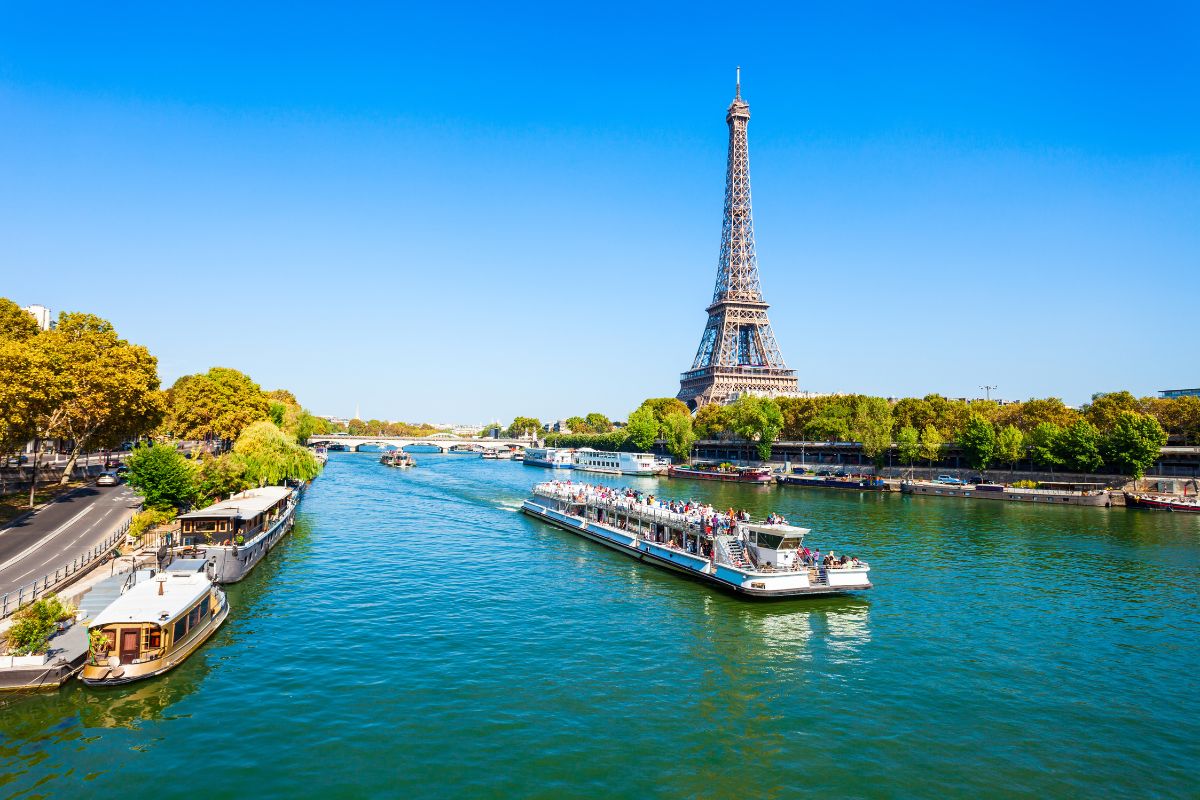
Seine River Cruises (Bateaux Parisiens, Bateaux Mouches)
Location: The main departure docks are located right at the base of the Eiffel Tower (Port de la Bourdonnais).
What it is: A classic Parisian experience offering a boat tour along the Seine River.
Details: Taking a one-hour sightseeing cruise is a fantastic way to see many of Paris's major landmarks from a different perspective without tiring your feet. The boats glide past the Louvre, Notre Dame Cathedral, the Musée d'Orsay, and more. Taking a cruise in the evening is especially magical, as you'll see the "City of Light" live up to its name and witness the Eiffel Tower's sparkling light show from the water.
Iconic Monuments (A Longer Stroll)
Arc de Triomphe
Location: About a 30-minute walk through pleasant Parisian streets, or a very short metro ride away.
What it is: The world's most famous triumphal arch, honouring those who fought and died for France.
Details: Standing at the center of the Place Charles de Gaulle, it is an iconic symbol of French national identity. You can (and should) take the underground passage to the base of the arch to admire its massive scale and detailed sculptures. For a small fee, you can also climb to the top of the panoramic terrace, which offers one of the best views in Paris---a spectacular look down the Champs-Élysées and at the Eiffel Tower.
Explore more on Klook
Top attractions in Paris
- 1 Louvre Museum
- 2 Seine River
- 3 Palais Garnier
- 4 Musée de l'Orangerie
- 5 Arc de Triomphe
- 6 Musée d'Orsay
- 7 Notre-Dame Cathedral of Paris
- 8 Bateaux Parisiens
- 9 La Galerie Dior
- 10 Sainte-Chapelle
- 11 Moulin Rouge
- 12 Montmartre
- 13 Catacombs of Paris
- 14 Parc des Princes
- 15 Gare de Lyon
- 16 Galeries Lafayette Haussmann
- 17 Rue Cler
- 18 Tuileries Garden
- 19 Crazy Horse Paris