Louvre Museum Reviews
Popular places near Louvre Museum
FAQs about Louvre Museum
When is the best time to visit the Louvre Museum to avoid crowds?
When is the best time to visit the Louvre Museum to avoid crowds?
How can I get to the Louvre Museum using public transportation?
How can I get to the Louvre Museum using public transportation?
What is the best entrance to use when entering the Louvre Museum?
What is the best entrance to use when entering the Louvre Museum?
What are the must-see artworks in the Louvre Museum?
What are the must-see artworks in the Louvre Museum?
How long does it take to explore the Louvre Museum?
How long does it take to explore the Louvre Museum?
Can I take photos inside the Louvre Museum?
Can I take photos inside the Louvre Museum?
Is the Louvre Museum accessible for visitors with disabilities?
Is the Louvre Museum accessible for visitors with disabilities?
Is the Louvre Museum suitable for families?
Is the Louvre Museum suitable for families?
What to know about Louvre Museum
The Louvre Museum: A Palace of Wonders Through Art and History
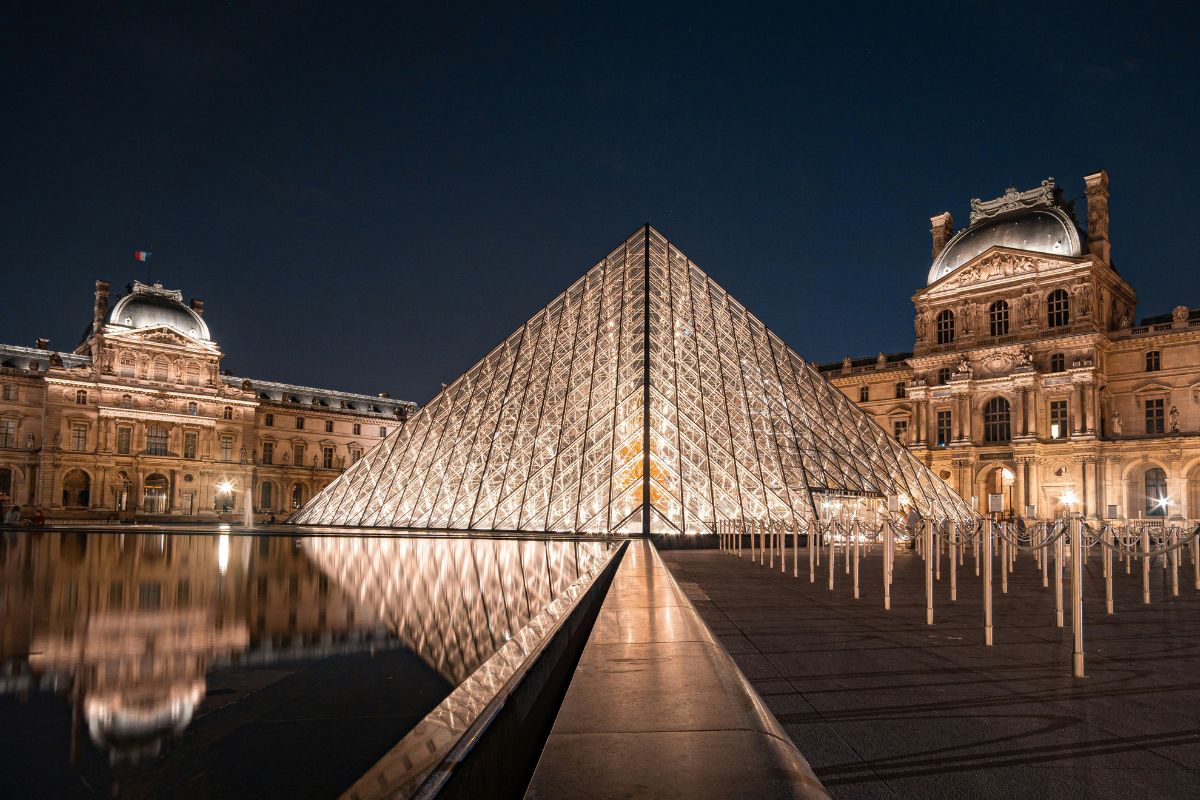
A visit to the Louvre Museum is a journey through the heart of human creativity, housed within the magnificent walls of a former French royal palace. Your experience begins under the iconic glass pyramid, a modern marvel that serves as the gateway to a vast labyrinth of art and history. The museum's sprawling galleries contain a staggering collection that travels from the ancient world, guarded by the Great Sphinx of Tanis and the serene Venus de Milo, to the grand canvases of European masters. While the ultimate pilgrimage is to witness the enigmatic smile of Da Vinci's Mona Lisa and the triumphant ascent of the Winged Victory of Samothrace, the true magic of the Louvre also lies in wandering through the opulent apartments of Napoleon III or descending to the foundations of the original medieval fortress. A trip to the Louvre is more than a museum visit; it is an unforgettable immersion in a palace of wonders where nearly every corner reveals a new masterpiece.
From Fortress to Masterpiece: The History of the Louvre
Phase 1: The Medieval Fortress (c. 1190)
The story of the Louvre begins not as a home for art, but as a formidable fortress. Around 1190, King Philippe Auguste ordered the construction of a defensive castle on the banks of the Seine to protect Paris from Viking raids. This original structure was a classic medieval keep with thick walls and a moat, a symbol of royal power and military might. For a visitor today, this history is not just in books; you can physically descend beneath the Sully Wing to walk amongst the excavated foundations of this original fortress in the Medieval Louvre section.
Phase 2: The Renaissance Royal Palace (16th Century)
By the 16th century, the military threat had subsided, and the Renaissance was in full bloom. King Francis I decided to transform the aging fortress into a lavish royal residence in the elegant new style. He demolished the central keep and began rebuilding the Louvre into a magnificent palace. Crucially, it was Francis I who began the royal art collection that would form the museum's core. He was a great patron of the arts and famously acquired masterpieces, including Leonardo da Vinci's Mona Lisa. Successive kings, from Henry IV to Louis XIV, continued to expand the palace for centuries, creating the vast complex of buildings we see today.
Phase 3: Royal Abandonment and the Birth of an Idea (17th-18th Century)
In 1682, the Louvre's status changed dramatically when King Louis XIV, the "Sun King," moved his entire court to his extravagant new palace at Versailles. The Louvre, no longer the center of royal power, was largely abandoned. Parts of it fell into disrepair, while other sections were taken over by artists and academies. During the intellectual movement of the Enlightenment that followed, thinkers began to champion the radical idea that the nation's and the king's art collections should be displayed publicly for the education and enjoyment of all citizens, with the Louvre being the obvious venue.
Phase 4: The French Revolution and the Museum's Creation (1793)
The French Revolution (1789) was the catalyst that turned the idea of a public museum into a reality. The monarchy was overthrown, and all royal property, including the immense art collection, was nationalized. The new revolutionary government decreed that the Louvre Palace would become a public museum for the people. On August 10, 1793, the Musée Central des Arts officially opened its doors, allowing ordinary citizens to view the former treasures of kings for the first time.
Phase 5: Napoleon and Expansion (Early 19th Century)
Under Napoleon Bonaparte, the Louvre's collections grew exponentially. As his armies conquered much of Europe, countless artworks were brought back to Paris as spoils of war. The museum was even temporarily renamed the Musée Napoléon. Though many of these pieces were eventually returned to their home countries after his defeat, this period significantly enriched the museum's holdings, especially its collection of Egyptian antiquities, which was born from his Egyptian campaign.
Phase 6: The Grand Louvre Project and The Pyramid (20th Century)
Throughout the 19th and 20th centuries, the Louvre solidified its reputation as one of the world's greatest museums. But its most dramatic modern transformation came in the 1980s and 1990s under President François Mitterrand. The "Grand Louvre" project aimed to renovate and expand the museum. The Ministry of Finance, which had occupied the Richelieu wing for decades, was moved out, finally dedicating the entire palace to museum use.
The project's most famous and initially controversialelement was the construction of the Glass Pyramid, designed by the architect I. M. Pei. Intended to serve as a new, modern, and spacious main entrance capable of handling millions of visitors, the Pyramid is now a beloved Parisian icon, blending ancient and modern architecture in a single, breathtaking view.
Exploring the Collections of Louvre by Wing
The Denon Wing: The Gallery of Superstars
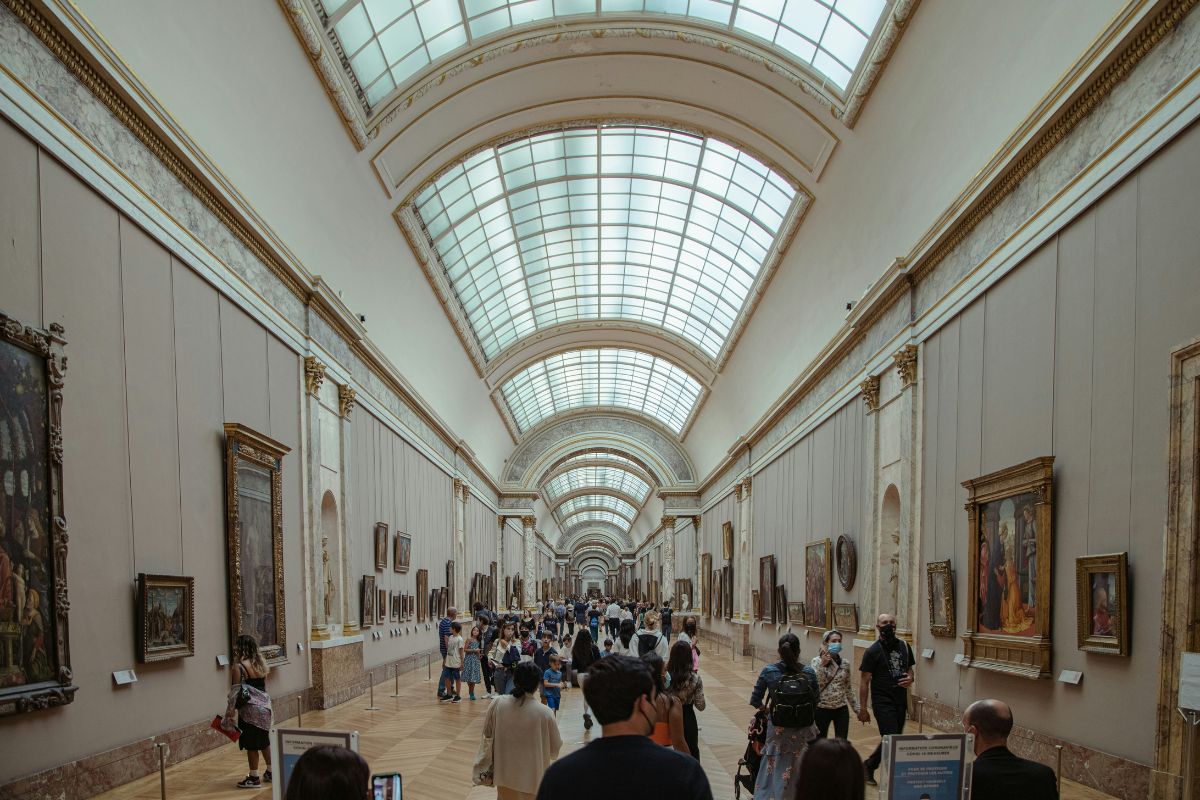
The Denon Wing is the most famous, most visited, and most crowded section of the Louvre. If you think of the Louvre's greatest hits, most of them are here. It is an unmissable part of the museum, showcasing the pinnacle of Italian and French painting in grand, dramatic galleries.
- Overall Atmosphere: High energy and bustling. This is where you'll find the largest crowds, especially on the first floor. It feels like a grand pilgrimage, with visitors from around the world all heading towards the same iconic masterpieces.
Key Masterpieces & Collections:
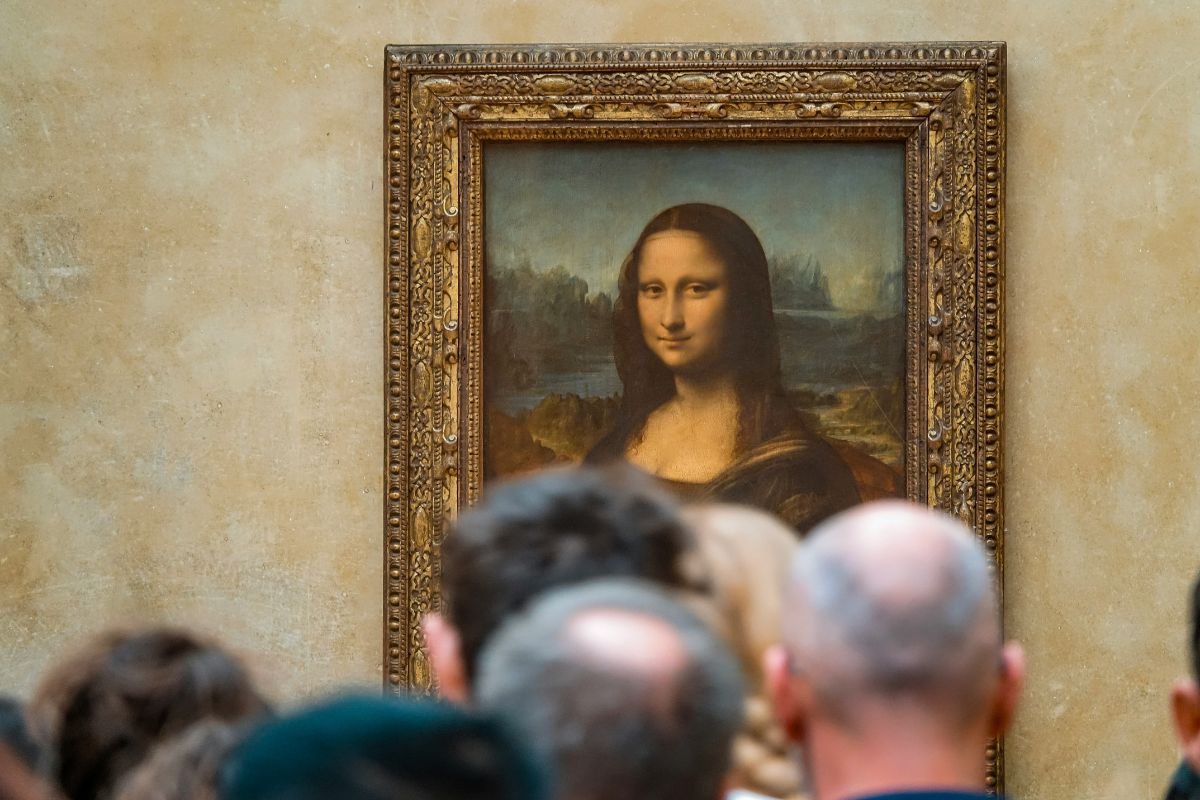
The Mona Lisa (La Joconde): The main event. Housed in the Salle des États (Room 711), Leonardo da Vinci's masterpiece is protected by bulletproof glass and a barrier. Be prepared for a large crowd; the experience is less about quiet contemplation and more about witnessing a global icon. Tip: admire Veronese's colossal The Wedding at Cana which hangs on the opposite wall and is often overlooked.
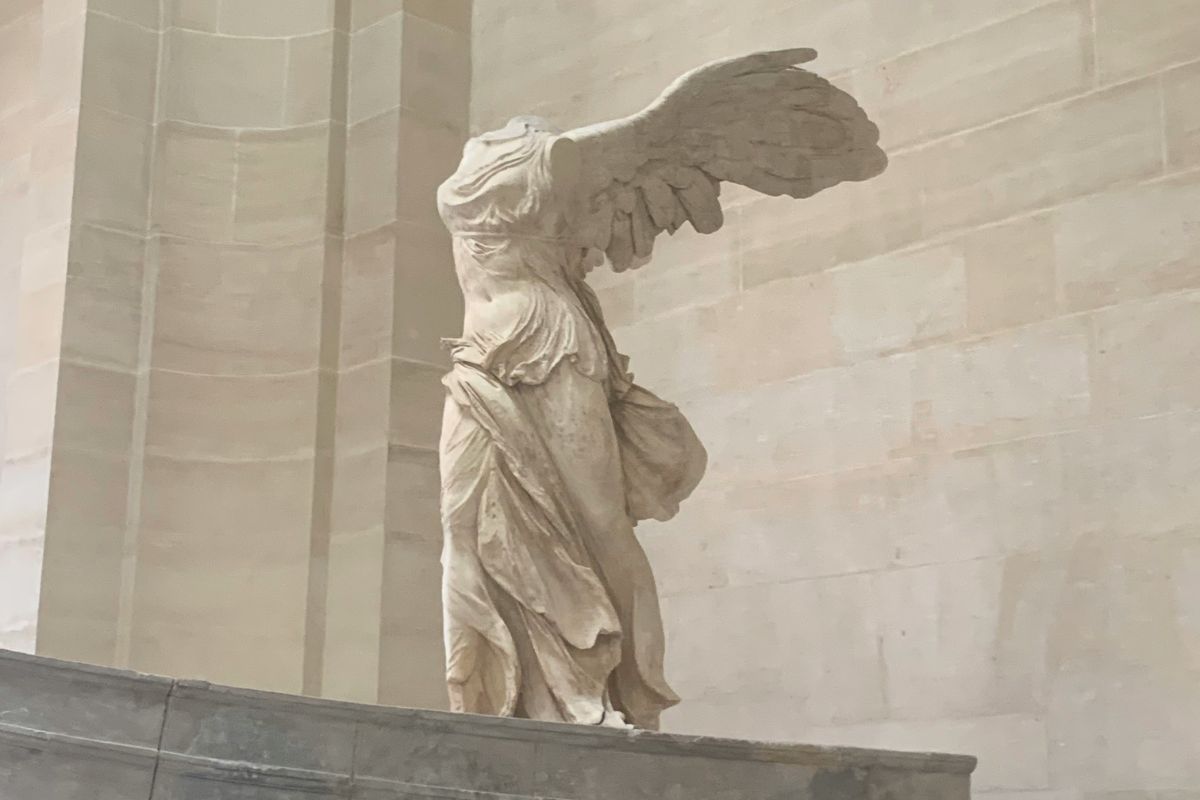
The Winged Victory of Samothrace: This breathtaking Hellenistic sculpture of the goddess Nike has the most dramatic placement in the entire museum. It greets you at the top of the grand Daru Staircase, its headless, winged form creating a powerful and unforgettable first impression.
Grand-Format French Paintings: This wing is home to the monumental, oversized canvases of French Romanticism and Neoclassicism. You absolutely cannot miss Jacques-Louis David's The Coronation of Napoleon, Delacroix's iconic Liberty Leading the People, and Géricault's powerful The Raft of the Medusa.
Italian Renaissance Masters: Beyond the Mona Lisa, the Grand Gallery is lined with masterpieces by Italian legends like Raphael, Caravaggio, and Titian.
The Sully Wing: The Historical Heart
The Sully Wing is the oldest part of the Louvre palace and is structured around the Cour Carrée (Square Courtyard). A visit here is a journey back in time, not just through ancient civilizations, but into the very foundations of the Louvre itself.
Overall Atmosphere: More academic and generally quieter than the Denon wing. It feels like a deep dive into ancient history and the origins of the palace, offering a more contemplative experience.
Key Masterpieces & Collections:
Egyptian Antiquities: The Sully Wing houses one of the world's most extensive collections of Egyptian art. Highlights include the imposing Great Sphinx of Tanis, the remarkably lifelike painted statue of The Seated Scribe, and numerous sarcophagi, papyrus scrolls, and artifacts from daily life along the Nile.
The Medieval Louvre: A must-see hidden gem. Here, you can descend into the basement to see the excavated foundations of the original 12th-century fortress built by King Philippe Auguste. You can walk along the original moat and see the base of the massive keep, literally stepping into the medieval history that lies beneath the art museum.
The Venus de Milo: Located on the ground floor, this iconic statue of Aphrodite is one of the "big three" masterpieces of the Louvre. Its serene beauty and famous missing arms have made it one of the most celebrated sculptures in history.
French Paintings, Sculpture, and Decorative Arts: The upper floors showcase a rich collection of French art from the 17th to the 19th centuries.
The Richelieu Wing: Sculpture and Royal Splendor
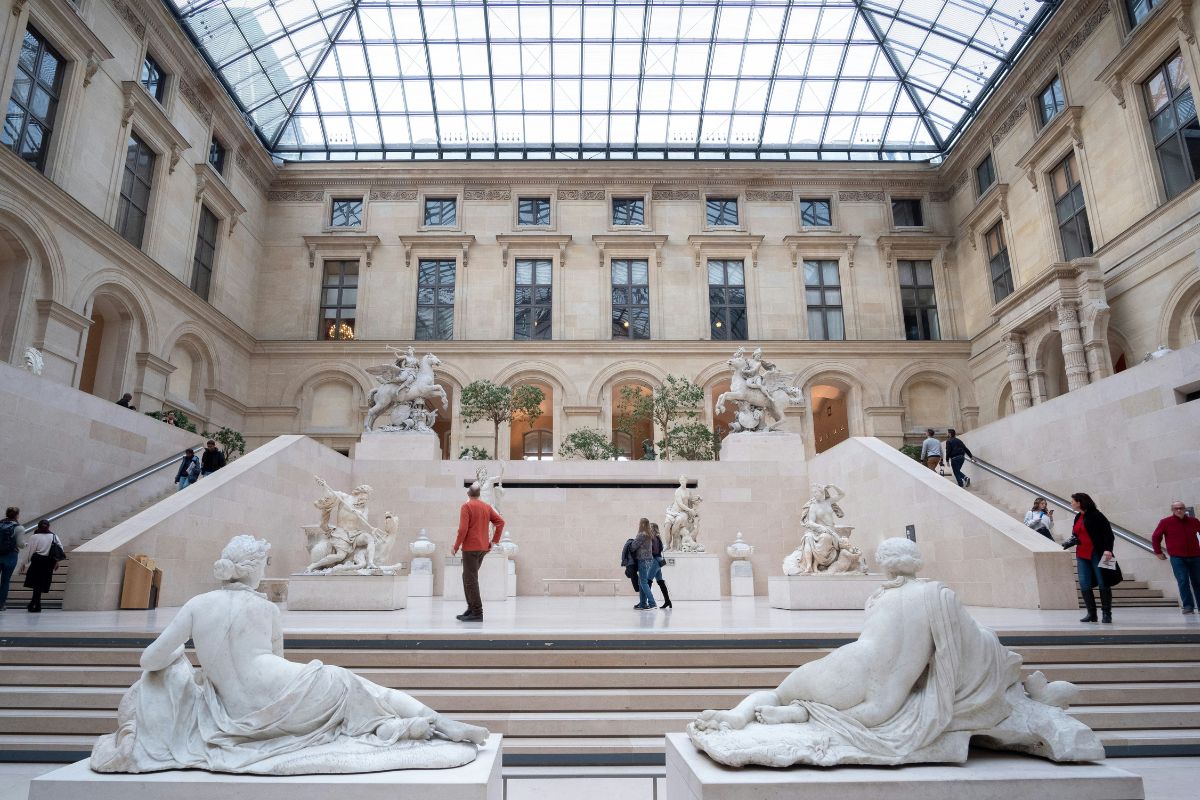
The Richelieu Wing, which runs along the Rue de Rivoli, is often the quietest of the three wings but contains some of the museum's most breathtaking spaces and hidden treasures. It is a showcase of grand sculpture and opulent royal life.
Overall Atmosphere: Grand, airy, and often surprisingly peaceful. The glass-roofed sculpture courtyards are flooded with natural light, providing a beautiful and relaxing environment to escape the crowds.
Key Masterpieces & Collections:
The Marly and Puget Courts: These are two spectacular, glass-covered courtyards filled with monumental French sculptures, primarily from the gardens of the Château de Marly. The natural light and garden-like setting make it a stunning place to admire works like Guillaume Coustou's magnificent Marly Horses.
Near Eastern Antiquities (Mesopotamia): This section is home to some of humanity's earliest artistic and legal achievements. You are greeted by the colossal Winged Bulls of Khorsabad (Lamassu), which once guarded ancient palaces. The undisputed highlight is the Code of Hammurabi, a tall basalt stele inscribed with one of the world's oldest and most complete sets of written laws.
The Napoleon III Apartments: A jaw-dropping hidden gem. This is a perfectly preserved suite of opulent state rooms from the Second French Empire. Walking through these rooms, with their dazzling chandeliers, gilded furniture, plush red velvet, and painted ceilings, feels like stepping into a different world---a palace within the museum. It shows the Louvre's history not just as a museum but as a functioning royal palace.
The "Big Three": The Pillars of the Louvre
These three world-famous masterpieces, each from a different era and medium, form the essential core of any first-time visit to the Louvre.
1. The Mona Lisa by Leonardo da Vinci
Period: Italian Renaissance, c. 1503-1506
Location: Denon Wing, 1st Floor, Room 711 (Salle des États)
What It Is: The world's most famous portrait, depicting Lisa Gherardini, the wife of a Florentine merchant.
Why It's a Masterpiece: The Mona Lisa's fame comes from Leonardo's revolutionary artistic techniques and the portrait's enigmatic quality. He pioneered the sfumato technique, creating soft, hazy outlines that give the painting a lifelike, almost breathing quality. Her three-quarter pose was a departure from the stiff profiles of the time, creating a more intimate connection with the viewer. Her mysterious, fleeting smile and eyes that seem to follow you around the room have captivated audiences for centuries. Its theft in 1911 and subsequent recovery turned it from a masterpiece into a global celebrity.
Visitor Tips: Be prepared. The painting is much smaller than most people expect (77 x 53 cm). It is protected behind thick, bulletproof, anti-glare glass. The room is almost always packed with a crowd. Be patient, take your turn to get to the front, and use your camera's zoom. Crucially, don't forget to turn around and admire the painting that hangs on the opposite wall: Veronese's The Wedding at Cana, which is the largest painting in the Louvre and a breathtaking masterpiece in its own right.
2. The Winged Victory of Samothrace
Period: Hellenistic Greece, c. 190 BC
Location: Denon Wing, 1st Floor, at the top of the Daru Staircase (Escalier Daru)
What It Is: A magnificent marble statue of Nike, the Greek goddess of victory.
Why It's a Masterpiece: Few artworks command their space like the Winged Victory. Its dramatic placement at the summit of a grand staircase makes its discovery as you ascend a truly powerful moment. The statue captures the goddess just as she is alighting on the prow of a ship. The sense of movement is extraordinary, with the fine "wet drapery" of her clothing appearing to be blown back by a strong sea wind. Even without its head or arms, the statue conveys an overwhelming sense of triumph and power.
Visitor Tips: The best way to first see the statue is from the bottom of the staircase, looking up. This allows you to appreciate its intended dramatic impact. Be sure to walk all the way around it to see the incredible detail in the wings and the intricate carving of the fabric.
3. The Venus de Milo
Period: Hellenistic Greece, c. 130-100 BC
Location: Sully Wing, Ground Floor, Room 345
What It Is: An iconic ancient Greek statue believed to depict Aphrodite, the goddess of love and beauty.
Why It's a Masterpiece: The Venus de Milo is celebrated as an ideal of female beauty from the ancient world. Her graceful, serpentine "S-curve" posture is a hallmark of Hellenistic art. The mystery of her missing arms has only added to her fame, sparking endless debate about what her original pose might have been. The statue exudes a calm, classical elegance that has influenced artists for generations.
Visitor Tips: Unlike the Mona Lisa, you can get much closer to the Venus de Milo and admire her from all sides in a dedicated gallery. It's an excellent opportunity for photography and for quietly appreciating the artistry of ancient Greek sculpture without a massive crowd.
Other Key Masterpieces: Beyond the Big Three
The Coronation of Napoleon by Jacques-Louis David
Period: Neoclassicism, 1807
Location: Denon Wing, 1st Floor, Room 702
What It Is: A colossal painting documenting the moment Napoleon crowned his wife, Empress Joséphine.
Why It's a Masterpiece: This painting is a breathtaking piece of historical propaganda on a monumental scale (nearly 10 meters wide). It's filled with fascinating details: David painted Napoleon crowning Joséphine himself (a break from tradition where the Pope would do it), and even included Napoleon's mother in a prominent balcony seat, though she was not actually present at the event. The detail in the opulent robes and the portraits of the attendees is incredible.
Visitor Tips: Take time to stand far back to absorb the sheer scale of the painting, then move closer to examine the individual figures and intricate details.
Liberty Leading the People by Eugène Delacroix
Period: Romanticism, 1830
Location: Denon Wing, 1st Floor, Room 700
Why It's a Masterpiece: This is the definitive image of revolution and the spirit of France. The powerful allegorical figure of Lady Liberty, holding the tricolour flag and a musket, charges forward over a barricade, leading a diverse group of Parisians from all social classes. It is a passionate, energetic, and emotional painting that has become a universal symbol of freedom and the fight for justice.
Visitor Tips: This is one of the most significant paintings in French history. Take a moment to appreciate the story it tells and its powerful symbolism.
The Raft of the Medusa by Théodore Géricault
Period: Romanticism, 1818-1819
Location: Denon Wing, 1st Floor, Room 700
What It Is: A huge, dramatic painting depicting the horrifying aftermath of a real-life French shipwreck.
Why It's a Masterpiece: Géricault's painting was a political bombshell at the time, exposing the incompetence that led to the tragedy. Its artistic power comes from its raw depiction of human suffering and hope, structured in a dynamic pyramid of figures. The realism of the dying and desperate survivors was shocking for its era and cemented the painting as a landmark of French Romanticism.
Visitor Tips: The painting is large and emotionally heavy. Observe the two pyramids—the pyramid of despair on the left and the pyramid of hope on the right, culminating in the man waving a cloth at a distant ship.
The Great Sphinx of Tanis
Period: Ancient Egypt, Old Kingdom (c. 2600 BC)
Location: Sully Wing, Ground Floor, Room 338 (Crypt)
What It Is: An enormous granite sphinx, a mythical creature with the body of a lion and the head of a king.
Why It's a Masterpiece: It is one of the largest and best-preserved sphinxes outside of Egypt. Carved from a single block of rose granite, its sheer size and ancient origins are awe-inspiring. It serves as a monumental guardian to the Louvre's world-class Egyptian collection, immediately immersing you in the power and mystery of the pharaohs.
Visitor Tips: Located in the atmospheric crypt of the Sully wing, its setting enhances its mysterious quality. It's a fantastic introduction before you explore the rest of the Egyptian antiquities.
Tips Before Visiting Louvre Museum
Navigating Inside: How to Use Museum Signage, Levels, and Routes
The Louvre is enormous, but it is well-organized. Understanding its system is key to not getting lost.
Grab a Free Map: The first thing you should do after entering under the Pyramid is grab a free museum map. They are available in over a dozen languages and are your single most important navigational tool.
Understand the Layout (The "U" Shape): The museum is comprised of three main wings—Denon, Sully, and Richelieu—which form a "U" shape around the central Glass Pyramid. The map is color-coded to make distinguishing between them easy.
Follow the Color-Coded Levels: The collections are spread across several floors, which are numbered from -2 to 2 on the maps and signs.
Level -2 & -1: Primarily the Medieval Louvre foundations and auditoriums.
Level 0 (Ground Floor): Heavy on sculpture and ancient civilizations (Greek, Roman, Egyptian).
Level 1 (First Floor): The most famous floor, dominated by paintings (Mona Lisa) and decorative arts.
Level 2 (Second Floor): More paintings, especially larger collections of French and Northern European art.
Follow the Signs for Masterpieces: The Louvre knows what most visitors are there to see. Throughout the museum, you will find prominent signs with pictures of the "Big Three" (Mona Lisa, Winged Victory, Venus de Milo), guiding you in the right direction. Following these is the easiest way to navigate.
Best Route Strategy for a First Visit:
Start in the Denon Wing (Level 1) and head straight for the Mona Lisa and the Winged Victory. Seeing these first helps you beat the worst of the crowds that build up during the day.
From there, cross over to the Sully Wing (Level 0) to see the Venus de Milo and the Egyptian Antiquities, including the Great Sphinx of Tanis.
Finish your tour in the often quieter Richelieu Wing, enjoying the light-filled sculpture courtyards (Level 0) and the dazzling Napoleon III Apartments (Level 1).
Guided Tours vs. Audio Guides: The Pros and Cons
You have several options for enhancing your understanding of the art.
Official Guided Tours:
Pros: Led by an expert art historian, you get fascinating stories and context you'd otherwise miss. The route is efficient, ensuring you see the highlights without getting lost. It's a great way to have a structured, informative experience.
Cons: You move at the group's pace, with little flexibility to linger. Tours have a fixed schedule and can sell out, so booking in advance is essential.
Audio Guides & Official App:
Pros: The ultimate in flexibility. You can explore at your own pace, choosing which artworks you want to learn about. It's a much cheaper option than a live guide. The official Louvre app may also have interactive maps to help you navigate.
Cons: You are responsible for your own navigation, and it can be easy to get lost while following the guide. Some people find it isolating to be listening to headphones for a long period.
Facilities: Comfort and Accessibility
Restrooms (Toilettes): Restrooms are located on every floor and in every wing, typically situated near the main escalators and staircases. The museum is vast, so a good tip is to use them when you see them rather than waiting.
Cloakrooms (Vestiaires): A fantastic free service located under the Pyramid. You are required to check any large bags, backpacks, umbrellas, or bulky coats. Taking advantage of this will make your visit much more comfortable.
Accessibility: The Louvre is largely accessible for visitors with reduced mobility, with elevators and lifts connecting most of the main galleries. It's highly recommended to check the Louvre's official website for its detailed "Accessibility" page, which provides maps of accessible routes and information on borrowing wheelchairs.
Photography Rules
The General Rule: In the permanent collections, personal, non-commercial photography and video are permitted, but without using a flash.
No Flash: This rule is strictly enforced. The intense light from a flash can damage the delicate pigments of ancient paintings and artifacts over time.
No Selfie Sticks or Tripods: These items are banned to ensure visitor safety and prevent accidental damage to the artworks.
Special Exhibitions: Be aware that photography of any kind may be prohibited in the temporary special exhibition galleries. Look for the signs at the entrance to these areas.
Avoiding "Museum Fatigue"
The Louvre is a marathon, not a sprint. "Museum fatigue" is a real phenomenon that can set in after a couple of hours.
Do Not Try to See Everything: Accept that it's impossible. A 3-4 hour visit where you truly connect with a dozen artworks is far better than a 7-hour blur where you remember nothing.
Have a Plan: Go in with your short "must-see" list. This gives your visit focus and prevents aimless, tiring wandering.
Take Regular Breaks: Every 90 minutes, take a 15-minute break. Sit down in one of the beautiful sculpture courtyards (Marly or Puget Courts are perfect for this), grab a coffee at a café, or simply rest your feet on a bench in a less crowded gallery.
Vary Your Scenery: Break up the visual monotony. After an hour of looking at paintings in crowded galleries, switch to a different type of exhibit. Go see the opulent furniture in the Napoleon III apartments, the bright and airy sculpture courts, or descend into the dark, cool foundations of the Medieval Louvre.
Know When to Leave: It's better to leave on a high note, wanting more, than to push yourself until you're exhausted.
Popular Attractions Near the Louvre Museum
Jardin des Tuileries (Tuileries Garden)
Located right next to the Louvre, Tuileries Garden was designed by André Le Nôtre, the same landscape architect who created the gardens at Versailles. Stroll along its tree-lined paths, admire sculptures by artists like Rodin and Maillol, or relax by the fountains. In summer, the garden often hosts art installations and a lively fairground.
Musée d'Orsay
Just across the Seine River from the Louvre, Musée d'Orsay, this world-renowned museum is housed in a former Beaux-Arts railway station. It's home to an extraordinary collection of Impressionist and Post-Impressionist masterpieces by Monet, Van Gogh, Degas, and Renoir. The grand clock windows overlooking Paris are also a highlight.
Pont des Arts (Bridge of Arts)
This pedestrian bridge, Pont des Arts, connects the Louvre with the Left Bank of the Seine. Once famous for its "love locks," it remains a romantic spot with panoramic views of the Seine, the Île de la Cité, and the Eiffel Tower in the distance. It's perfect for a leisurely walk or photo stop.
Palais Royal and Palais Royal Gardens
A short walk from the Louvre, the Palais Royal is known for its elegant courtyard featuring the contemporary art installation Les Colonnes de Buren---black-and-white striped columns that are a favorite photography spot. The surrounding gardens offer a peaceful escape with shaded arcades, chic boutiques, and charming cafés.
Seine River Cruise
Many river cruises depart near the Louvre, especially from the Pont Neuf area. A one-hour Seine cruise lets you see iconic Paris landmarks such as Notre-Dame, Musée d'Orsay, and the Eiffel Tower, all from the comfort of a boat on Seine River. It's a relaxing way to take in the city's beauty.
Place Vendôme
A 10-minute walk from the Louvre, Place Vendôme is a symbol of Parisian elegance. Surrounded by luxury boutiques like Cartier and Dior, it's also home to the famous Ritz Paris. At the center stands the Vendôme Column, commemorating Napoleon's victory at Austerlitz.
Île de la Cité & Notre-Dame Cathedral
About a 15-minute walk along the Seine, Île de la Cité is one of Paris's oldest districts. Here you'll find the breathtaking Notre-Dame Cathedral (currently under restoration), the Gothic Sainte-Chapelle with its dazzling stained-glass windows, and the Conciergerie, a former royal palace turned prison during the French Revolution.
Le Bon Marché
Just a 7-minute drive from the Louvre Museum, Le Bon Marché is one of Paris's most iconic and historic department stores. Renowned for its refined architecture and sophisticated atmosphere, it offers a luxurious shopping experience. Visitors can browse high-end fashion, elegant home décor, and a curated selection of gourmet delicacies, making it a must-visit destination for lovers of style and culture.
Explore more on Klook
Top attractions in Paris
- 1 Eiffel Tower
- 2 Seine River
- 3 Palais Garnier
- 4 Musée de l'Orangerie
- 5 Arc de Triomphe
- 6 Musée d'Orsay
- 7 Notre-Dame Cathedral of Paris
- 8 Bateaux Parisiens
- 9 La Galerie Dior
- 10 Sainte-Chapelle
- 11 Moulin Rouge
- 12 Montmartre
- 13 Catacombs of Paris
- 14 Parc des Princes
- 15 Gare de Lyon
- 16 Galeries Lafayette Haussmann
- 17 Rue Cler
- 18 Tuileries Garden
- 19 Crazy Horse Paris