
Last admission: 1 hour(s) before closing


60
Jeju Bonte Museum Ticket
4.6 / 5
25 reviews
1K+ booked
Save to wishlist

Open today: 10:00-18:00Last entry at 17:00

Suggested duration1-2 hour(s)

Bonte Museum: 69 Sallongnam-ro 762beon-gil, Andeok-myeon, Seogwipo-si, Jeju-do
Packages
Tomorrow
15 Nov
16 Nov
All
Ticket
Admission to attractions
 Valid on the selected date
 Free cancellation before redemption
 Instant confirmation
Package details
Retail: CZK 495.95
CZK 396.75
Ticket
Refresh to make things right again

Book now for tomorrow
See less

Instant confirmation
See less

Valid on the selected date
The voucher is valid only on the specified date (and time if applicable)
See less

Free cancellation before redemption
You'll get a full refund as long as you don't redeem your voucher
See less
About this package
What's included

See less
Not included

See less
Things to note
Booking changes policy
- Changes are allowed anytime before redemption
- The booking can’t be changed if it was booked with Klook Pass, under pre-sales or comes with a freebie.
- The booking cannot be changed if the voucher has not yet been issued.
- Bookings made using SG Culture Pass or Taiwan Culture Points cannot be changed.
Amendment Policy
- Changes made before redeeming the voucher are free
Eligibility
- This offer is not available for Korean passport holders
- Free for children aged 0-2
How to use
Usage validity
- The voucher is valid only on the specified date (and time if applicable)
How to redeem
- Present your mobile voucher
Address
- 69 Sallongnam-ro 762beon-gil, Andeok-myeon, Seogwipo-si, Jeju-do
- Please refer to the map for assistance
Reviews

4.6 / 5
Fantastic
25 reviews
Wan *******
2026/01/31
Great 4.0
beautiful tadao ando architecture, and interesting small collection of exhibits. However, a key Yayoi Kusama gallery no longer exists despite their heavy publicity of it. felt a little cheated.
Claudia *******
2025/12/18
Fantastic 5.0
The architecture of the museum is very beautiful knowing it was Tadao Ando’s creations. Although when we came in the roof top was closed due to construction
Tsai *****
2026/03/05
Fantastic 5.0
Online ticket booking offers discounts. Simply show the QR code on-site for easy redemption of physical tickets. The service staff meticulously explained the exhibition route within the museum, making the viewing experience very enjoyable.
Klook User
2026/04/02
Fantastic 5.0
experience: it was a really wonderful experience, with the 5 different galleries, it gives some information during the Joseon times mixed with modern art as well.
Kendy ****
2025/10/26
Fantastic 5.0
The architecture of the museum building alone is an experience worth visiting for. We had a smooth redemption experience and thoroughly enjoyed the cultural exhibits.
陳 **
2026/11/08
Great 4.0
This museum features quite nice exhibits, and you can see the architecture designed by Tadao Ando. However, considering the ticket price, the value for money is not very high. Additionally, the location is a bit remote and requires a car to get there.
Klook User
2026/01/01
Great 4.0
Voucher is easy to use, just give reference number to staff. Although the architecture is beautiful, overall it is okay to miss it. We looked forward to the Kusama gallery but it has ended and they have not yet removed it from their map and website.
Klook User
2026/05/16
Fantastic 5.0
Korean art from past to present in an architectural marvel. Best reached by taxi or car.
Guide
- The word "bonte" means "original form and as the museum name signifies, bonte museum was established to pursue the original beauty of humankind. The museum is located in Jeju, a place that still maintains its original beauty.
- Special exhibitions of various subjects including nature & architecture, tradition & present, and the world & Korea are on display
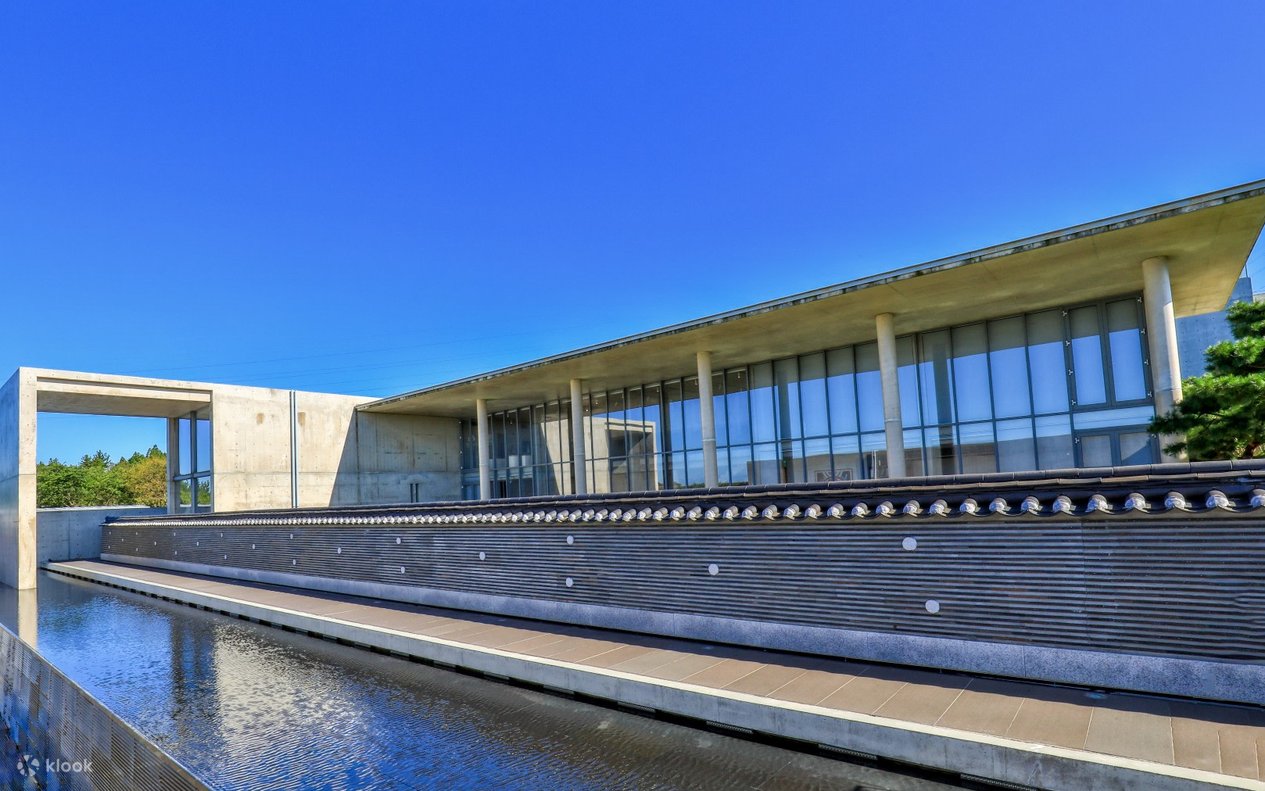
- Bonte museum is located in a famous building designed by a world-renowned architect Tadao Ando, winner of the 1995 Pritzker Architecture Prize also known as the Nobel Prize of architecture. The museum is considered one of his masterpieces.
- Architectural elements incorporate light and water, which blend naturally with the exposed concrete structure reminiscent of marble.
Bonte Museum Opening Exhibition: In Search of Beauty
The word ‘bonte’ denotes inherent form, and true to its name, Bonte Museum was founded to explore the innate beauty of humankind in 2012 on Jeju Island, noted for its superb natural scenery. The museum inquires into the future value of traditional Korean handicrafts through its extensive collection, communicates with contemporaries, and seeks to share the beauty of Korea’s traditional culture with the international community. The exhibition commemorating the opening of the museum will present traditional Korean handcrafts and artworks that the founder collected over the past 30 years, including portable dining tables (soban), wrapping cloths (bojagi), wooden furniture, embroidery, personal ornaments, and earthenware.
Things to note
Architect Ando Tadao
Bonte Museum was designed by world-renowned architect Ando Tadao, who won the Pritzker Architecture Prize (1995), often referred to as the Nobel Prize of architecture. His intent in designing the museum was to embody ‘tradition and modernity that conform to the natural environment of Jeju Island.’ Ando puts the traditional Korean handicrafts that have the breath of nature and warm colors in his trademark concrete walls, creating an atmosphere of a simple, bland wooden building. The refined lines of his architecture and the traditional walls softly connect the traditional and modern spaces.
gallery 1 gallery 1 exhibits traditional Korean handicrafts. The first and second floors are connected seamlessly to allow viewers to visit each room without having to pass through any hallways. This simple, humane space showcases traditional Korean handicrafts such as many different types of portable dining tables, wooden furniture, and wrapping cloths that display both flamboyance and simplicity, and both classicality and unconventionality.
gallery 2 gallery 2 showcases contemporary artworks. This open space with deep eaves and high ceiling is linked to the main exhibition hall. Inside are contemporary artworks by Salvador Dali, Yves Klein, Fernand Léger, and others. There is also Ando Tadao’s Meditation Room. Through plate glass windows, a breathtaking scene of the sea of Jeju Island unfolds with Mt. Sanbang, Moseulbong Peak, Hyeongje Island, and Marado Island.
gallery 3 gallery 3 is dedicated to permanent display Yayoi Kusama’s works, Pumpkin and Infinity Mirrored Room - Gleaming Lights of the Souls.
gallery 4 gallery 4 features the special exhibition, Carriage to Heaven - the Aesthetic of Flower Sangyeo and Kkokdu. Visitors will be able to view sangyeo, a traditional funeral bier, which has been preserved in a near-perfect state together with kkokdu, which are sculptural pieces decorating the sangyeo.
Sculpture Garden Visitors can take a stroll in the spacious Sculpture Garden. It presents Rotraut Klein-Moquay’s Gitane, a dancing figure that expresses the harmony between man and nature, and Jaume Plensa’s visitor-accessible Children’s Soul, which allows visitors to take pictures inside or to pass through it.
You might also like...
Explore more on Klook
Popular Hotels and Places to Stay
- 1 Login Hotel
- 2 Grand Hyatt Jeju
- 3 Shilla Stay Jeju Airport
- 4 Aewol the Sunset Resort
- 5 Shilla Stay Plus Iho Tewoo Ocean Front
- 6 JeJu Bolton Hotel
- 7 Maison Glad Jeju
- 8 Ventimo Hotel & Residence Jeju
- 9 Hotel Whistlelark Jeju
- 10 LOTTE CITY HOTEL JEJU AIRPORT
- 11 Hotel Leo
- 12 Amber Pure Hill Hotels & Resorts Jeju
- 13 Gloucester Hotel Jeju
- 14 Astar Hotel
- 15 Aewol Bada Town House
- 16 I-Jin Hotel
- 17 Ecoland Hotel
- 18 Stanford Hotel & Resort Jeju
- 19 Hotel Mer Bleue Jeju
- 20 Aimi Jeju Beach Hotel Hamdeok W
Nearby Transport Options
- 1 Korea trains
- 2 Seoul Central City Terminal to Jeonju Express Terminal bus
- 3 Seo Daegu Express Bus Terminal to Seoul Express Bus Terminal bus
- 4 Daegu Yonggye Bus Terminal to Busan Central Bus Terminal bus
- 5 Jeonju Express Terminal to Seoul Central City Terminal bus
- 6 Gyeongju Bus Terminal to Seoul Express Bus Terminal bus
- 7 Jeonju Express Terminal to Busan Central Bus Terminal bus
- 8 Seoul Express Bus Terminal to Gyeongju Bus Terminal bus
- 9 Busan Central Bus Terminal to Jeonju Express Terminal bus
- 10 Seoul Express Bus Terminal to Busan Central Bus Terminal bus
- 11 Busan Central Bus Terminal to Seoul Express Bus Terminal bus
- 12 Korea Intercity Express Bus Ticket
- 13 Seoul Express Bus Terminal to Sokcho Express Bus Terminal bus
- 14 Seoul Central City Terminal to Gwangju (U-square) bus
- 15 Incheon Bus Terminal to Busan Central Bus Terminal bus
- 16 Seoul Express Bus Terminal to Yeoju Premium Outlet Bus Terminal bus
- 17 Sokcho Express Bus Terminal to Seoul Express Bus Terminal bus
- 18 Busan Central Bus Terminal to Daegu Yonggye Bus Terminal bus
- 19 Seoul Express Bus Terminal to Gangneung Express Bus Terminal bus
- 20 Pyeongtaek Express Bus Terminal to Seoul Express Bus Terminal bus
Retail: CZK 495.95
CZK 396.75
Promo codes

CZK281.28 off min. CZK2,250.26

CZK14.06 off min. CZK140.64
CZK28.13 off min. CZK281.28

CZK225.03 off min. CZK2,250.26

CZK421.92 off min. CZK5,063.08

CZK196.90 off min. CZK2,810.01
CZK225.03 off min. CZK3,375.39
CZK337.54 off min. CZK5,063.08
CZK337.54 off min. CZK5,063.08
CZK140.64 off min. CZK2,250.26
CZK56.26 off min. CZK1,125.13

5% off min. CZK5,516.48
CZK112.51 off min. CZK2,497.78
All you need to know
Attraction info

Opening hours
See more
All year
Mon ~ Sun
10:00 - 18:00Last entry at 17:00

Location
Bonte Museum: 69 Sallongnam-ro 762beon-gil, Andeok-myeon, Seogwipo-si, Jeju-do

Guidebook
- The word "bonte" means "original form and as the museum name signifies, bonte museum was established to pursue the original beauty of humankind. The museum is located in Jeju, a place that still maintains its original beauty.
- Special exhibitions of various subjects including nature & architecture, tradition & present, and the world & Korea are on display
- Bonte museum is located in a famous building designed by a world-renowned architect Tadao Ando, winner of the 1995 Pritzker Architecture Prize also known as the Nobel Prize of architecture. The museum is considered one of his masterpieces.
- Architectural elements incorporate light and water, which blend naturally with the exposed concrete structure reminiscent of marble.
Bonte Museum Opening Exhibition: In Search of Beauty
The word ‘bonte’ denotes inherent form, and true to its name, Bonte Museum was founded to explore the innate beauty of humankind in 2012 on Jeju Island, noted for its superb natural scenery. The museum inquires into the future value of traditional Korean handicrafts through its extensive collection, communicates with contemporaries, and seeks to share the beauty of Korea’s traditional culture with the international community. The exhibition commemorating the opening of the museum will present traditional Korean handcrafts and artworks that the founder collected over the past 30 years, including portable dining tables (soban), wrapping cloths (bojagi), wooden furniture, embroidery, personal ornaments, and earthenware.
Things to note
Architect Ando Tadao
Bonte Museum was designed by world-renowned architect Ando Tadao, who won the Pritzker Architecture Prize (1995), often referred to as the Nobel Prize of architecture. His intent in designing the museum was to embody ‘tradition and modernity that conform to the natural environment of Jeju Island.’ Ando puts the traditional Korean handicrafts that have the breath of nature and warm colors in his trademark concrete walls, creating an atmosphere of a simple, bland wooden building. The refined lines of his architecture and the traditional walls softly connect the traditional and modern spaces.
gallery 1 gallery 1 exhibits traditional Korean handicrafts. The first and second floors are connected seamlessly to allow viewers to visit each room without having to pass through any hallways. This simple, humane space showcases traditional Korean handicrafts such as many different types of portable dining tables, wooden furniture, and wrapping cloths that display both flamboyance and simplicity, and both classicality and unconventionality.
gallery 2 gallery 2 showcases contemporary artworks. This open space with deep eaves and high ceiling is linked to the main exhibition hall. Inside are contemporary artworks by Salvador Dali, Yves Klein, Fernand Léger, and others. There is also Ando Tadao’s Meditation Room. Through plate glass windows, a breathtaking scene of the sea of Jeju Island unfolds with Mt. Sanbang, Moseulbong Peak, Hyeongje Island, and Marado Island.
gallery 3 gallery 3 is dedicated to permanent display Yayoi Kusama’s works, Pumpkin and Infinity Mirrored Room - Gleaming Lights of the Souls.
gallery 4 gallery 4 features the special exhibition, Carriage to Heaven - the Aesthetic of Flower Sangyeo and Kkokdu. Visitors will be able to view sangyeo, a traditional funeral bier, which has been preserved in a near-perfect state together with kkokdu, which are sculptural pieces decorating the sangyeo.
Sculpture Garden Visitors can take a stroll in the spacious Sculpture Garden. It presents Rotraut Klein-Moquay’s Gitane, a dancing figure that expresses the harmony between man and nature, and Jaume Plensa’s visitor-accessible Children’s Soul, which allows visitors to take pictures inside or to pass through it.