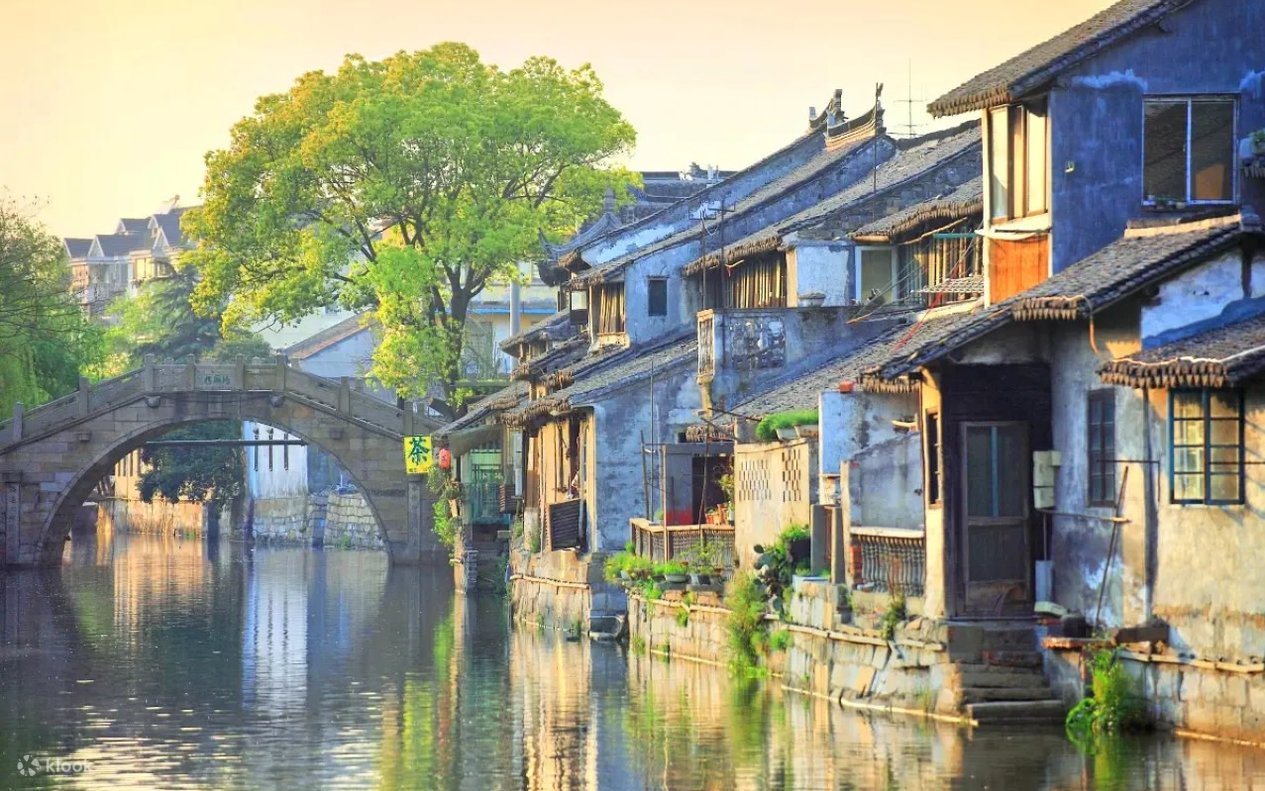
Fengjing Ancient Town


Packages
China Farmers' Painting Village Ticket
 Valid on the selected date
 Conditional cancellation
 24-hour confirmation


- Adult ticket: 1 adult taller than 150cm (exclusive)
- Double ticket: 2 adults above 150cm (excluding 150cm) in height
- Student ticket: Full-time student ID required
- Senior ticket: 1 senior aged 60 (inclusive) to 64 (inclusive)
- Child ticket: 1 child under 1.3 meters (exclusive) in height
- Recommended booking period: 3 days in advance during peak season, 1 day in advance during off-peak season.
- Order effective rules: Effective immediately after successful payment
- Basic purchase limit rules: no limit per single account
- Please cooperate with the scenic area's security check; it is forbidden to carry dangerous items such as flammables and explosives.
- Pets are prohibited from entering the scenic area.
- Preferential tickets require verification of the holder's valid ID before admission to the park.
- The voucher is valid only on the specified date (and time if applicable)
- Enter the park with an electronic QR code
- Park address: No. 28, Lane 8588, Tingfeng Highway, Fengjing Town, Jinshan District, Shanghai
- No. 28, Lane 8588, Tingfeng Highway, Fengjing Town, Jinshan District, Shanghai
Fengjing Ancient Town Venue Pass
Valid on the selected dateConditional cancellation24-hour confirmationFengjing Ancient Town Venue Pass + Huakai Haishang Ecological Park Ticket
Valid on the selected dateConditional cancellation24-hour confirmationFengjing Ancient Town Venue Pass + China Peasant Painting Village Ticket
Valid on the selected dateConditional cancellation24-hour confirmationFengjing Ancient Town Venue Combo Ticket + Boat Ticket + Shanghai Legoland Resort 1-Day Ticket
Valid on the selected dateConditional cancellation24-hour confirmationFengjing Ancient Town Venue Pass + Boat Ticket
Valid on the selected dateConditional cancellation24-hour confirmationReviews
Guide
Fengjing Ancient Town, located in the southwest corner of Shanghai, is a typical Jiangnan water town. As early as 2,000 years ago, people lived in Fengjing Ancient Town. The boundary river within the town was the dividing line between the states of Wu and Yue during the Spring and Autumn Period. Due to spanning both Wu and Yue territories, Fengjing Ancient Town is known as the "Famous Town of Wu and Yue." The ancient town has numerous crisscrossing rivers and 52 bridges, including the Zhihe Bridge, built during the Yuan Dynasty, which has a history of nearly 700 years. Compared to other popular Jiangnan water towns, Fengjing has fewer tourists, allowing you to leisurely enjoy the scenery of small bridges and flowing water. The ancient town has two main streets: one is divided into South Street (Nandajie) in the south, Middle Street (Zhongdajie) in the middle, and North Street (Beidajie) in the north (although divided into three names, they form one continuous street), and the other is Heping Street. The two streets converge at Fengjing Three Bridges, forming a "T" shape. Fengjing Three Bridges is the center of the ancient town, where two rivers meet, and you can simultaneously see Qingfeng Bridge, Zhuhang Bridge, and Beifeng Bridge. Fengjing is the birthplace of Jinshan peasant paintings. You can admire paintings with a rustic charm at the Jinshan Peasant Painting Exhibition Center in Shengdang Lane on Nandajie. There are many art galleries and former residences of famous painters in the ancient town. The Ding Cong Cartoon Exhibition Hall on Beidajie displays furniture used by Mr. Ding, and the second floor features satirical cartoons that vividly portray characters. At the Lü Jiren Art Gallery on Heping Street, you can see the works of Lü Jiren, a classmate of Chen Yifei, and the former residence of Cheng Shifa houses many Chinese watercolors by Mr. Cheng. Generally, tourists enter from the main entrance on the south side of the ancient town, walk to Nandajie, and slowly explore the ancient town along the river. Walking northeast from Nandajie, you reach Zhongdajie after passing Zhihe Bridge. At the beginning of Zhongdajie, you can see the Wu-Yue Boundary Marker with a boundary stone, and a small, inconspicuous river in front of it was the former dividing line between Wu and Yue. Continuing northeast, after passing Fengjing Three Bridges, you reach Beidajie. On Beidajie, you can visit the Shi Wang Temple, built in the Ming Dynasty with red walls, and the Ding Cong Cartoon Exhibition Hall. On Nandajie, Zhongdajie, and Beidajie, you will also pass covered corridors. There are several such ancient and charming corridors in the ancient town, providing shade on sunny days and shelter from rain. Walking on the bluestone path, return to Fengjing Three Bridges, then proceed to visit Heping Street. First, visit the Three Hundred Gardens (Bai Lan Guan, Bai Deng Guan, Bai Hang Guan), next to which is the Lü Jiren Art Gallery. Walking a little further southeast, the former site of Fengjing People's Commune is worth seeing, preserving old-fashioned thermos bottles and telephones from that era, with red suns painted on the walls. Further ahead is the Fengjing Ancient Stage, facing both the street and the river. During peak tourist seasons and holidays, there are free traditional opera performances on the stage. Picking a window seat at the Chen She Teahouse opposite the stage, you can enjoy tea while listening to the opera, which is very pleasant. Walk to the end of the street, visit Cheng Shifa's former residence, and finally, cross the bridge to Production Street (Shengchanjie) on the other side of the river, where there is also the former site of a modern fire-fighting organization, the Dongqu Huozheng Hui. At the beginning of Nandajie in Fengjing Ancient Town, there is a boat dock where you can take a boat to experience the water town charm. The top food recommendation in the ancient town is Dingti (braised pig trotters). There is a Dingti workshop near Zhihe Bridge on Nandajie, introducing the development and production process of Dingti in the ancient town. Wuniao Woli Restaurant (meaning "my own home" in Fengjing dialect) on Shengchanjie near Fengjing Three Bridges is a good restaurant in the ancient town, with a long courtyard designed to resemble small bridges and flowing water. Stuffed snails and Wu-Yue tofu are their signature dishes. The riverside corridor on Shengchanjie is lined with shops selling Fengjing shaomai, qianshi gao (gorgon fruit cake), etc. Among them, "xun lasi" is very distinctive, meaning "smoked toad" in the local dialect of Shanghai suburbs, and tastes great, but you need to be brave enough to try it first. About 4 kilometers from the ancient town, near Zhonghong Road, there is also a Chinese Peasant Painting Village, which is quite unique and can be visited along with Fengjing Ancient Town.
You might also like...
Explore more on Klook
Everything you need for your Shanghai visit


Fengjing Ancient Town

Guidebook
Fengjing Ancient Town, located in the southwest corner of Shanghai, is a typical Jiangnan water town. As early as 2,000 years ago, people lived in Fengjing Ancient Town. The boundary river within the town was the dividing line between the states of Wu and Yue during the Spring and Autumn Period. Due to spanning both Wu and Yue territories, Fengjing Ancient Town is known as the "Famous Town of Wu and Yue." The ancient town has numerous crisscrossing rivers and 52 bridges, including the Zhihe Bridge, built during the Yuan Dynasty, which has a history of nearly 700 years. Compared to other popular Jiangnan water towns, Fengjing has fewer tourists, allowing you to leisurely enjoy the scenery of small bridges and flowing water. The ancient town has two main streets: one is divided into South Street (Nandajie) in the south, Middle Street (Zhongdajie) in the middle, and North Street (Beidajie) in the north (although divided into three names, they form one continuous street), and the other is Heping Street. The two streets converge at Fengjing Three Bridges, forming a "T" shape. Fengjing Three Bridges is the center of the ancient town, where two rivers meet, and you can simultaneously see Qingfeng Bridge, Zhuhang Bridge, and Beifeng Bridge. Fengjing is the birthplace of Jinshan peasant paintings. You can admire paintings with a rustic charm at the Jinshan Peasant Painting Exhibition Center in Shengdang Lane on Nandajie. There are many art galleries and former residences of famous painters in the ancient town. The Ding Cong Cartoon Exhibition Hall on Beidajie displays furniture used by Mr. Ding, and the second floor features satirical cartoons that vividly portray characters. At the Lü Jiren Art Gallery on Heping Street, you can see the works of Lü Jiren, a classmate of Chen Yifei, and the former residence of Cheng Shifa houses many Chinese watercolors by Mr. Cheng. Generally, tourists enter from the main entrance on the south side of the ancient town, walk to Nandajie, and slowly explore the ancient town along the river. Walking northeast from Nandajie, you reach Zhongdajie after passing Zhihe Bridge. At the beginning of Zhongdajie, you can see the Wu-Yue Boundary Marker with a boundary stone, and a small, inconspicuous river in front of it was the former dividing line between Wu and Yue. Continuing northeast, after passing Fengjing Three Bridges, you reach Beidajie. On Beidajie, you can visit the Shi Wang Temple, built in the Ming Dynasty with red walls, and the Ding Cong Cartoon Exhibition Hall. On Nandajie, Zhongdajie, and Beidajie, you will also pass covered corridors. There are several such ancient and charming corridors in the ancient town, providing shade on sunny days and shelter from rain. Walking on the bluestone path, return to Fengjing Three Bridges, then proceed to visit Heping Street. First, visit the Three Hundred Gardens (Bai Lan Guan, Bai Deng Guan, Bai Hang Guan), next to which is the Lü Jiren Art Gallery. Walking a little further southeast, the former site of Fengjing People's Commune is worth seeing, preserving old-fashioned thermos bottles and telephones from that era, with red suns painted on the walls. Further ahead is the Fengjing Ancient Stage, facing both the street and the river. During peak tourist seasons and holidays, there are free traditional opera performances on the stage. Picking a window seat at the Chen She Teahouse opposite the stage, you can enjoy tea while listening to the opera, which is very pleasant. Walk to the end of the street, visit Cheng Shifa's former residence, and finally, cross the bridge to Production Street (Shengchanjie) on the other side of the river, where there is also the former site of a modern fire-fighting organization, the Dongqu Huozheng Hui. At the beginning of Nandajie in Fengjing Ancient Town, there is a boat dock where you can take a boat to experience the water town charm. The top food recommendation in the ancient town is Dingti (braised pig trotters). There is a Dingti workshop near Zhihe Bridge on Nandajie, introducing the development and production process of Dingti in the ancient town. Wuniao Woli Restaurant (meaning "my own home" in Fengjing dialect) on Shengchanjie near Fengjing Three Bridges is a good restaurant in the ancient town, with a long courtyard designed to resemble small bridges and flowing water. Stuffed snails and Wu-Yue tofu are their signature dishes. The riverside corridor on Shengchanjie is lined with shops selling Fengjing shaomai, qianshi gao (gorgon fruit cake), etc. Among them, "xun lasi" is very distinctive, meaning "smoked toad" in the local dialect of Shanghai suburbs, and tastes great, but you need to be brave enough to try it first. About 4 kilometers from the ancient town, near Zhonghong Road, there is also a Chinese Peasant Painting Village, which is quite unique and can be visited along with Fengjing Ancient Town.