
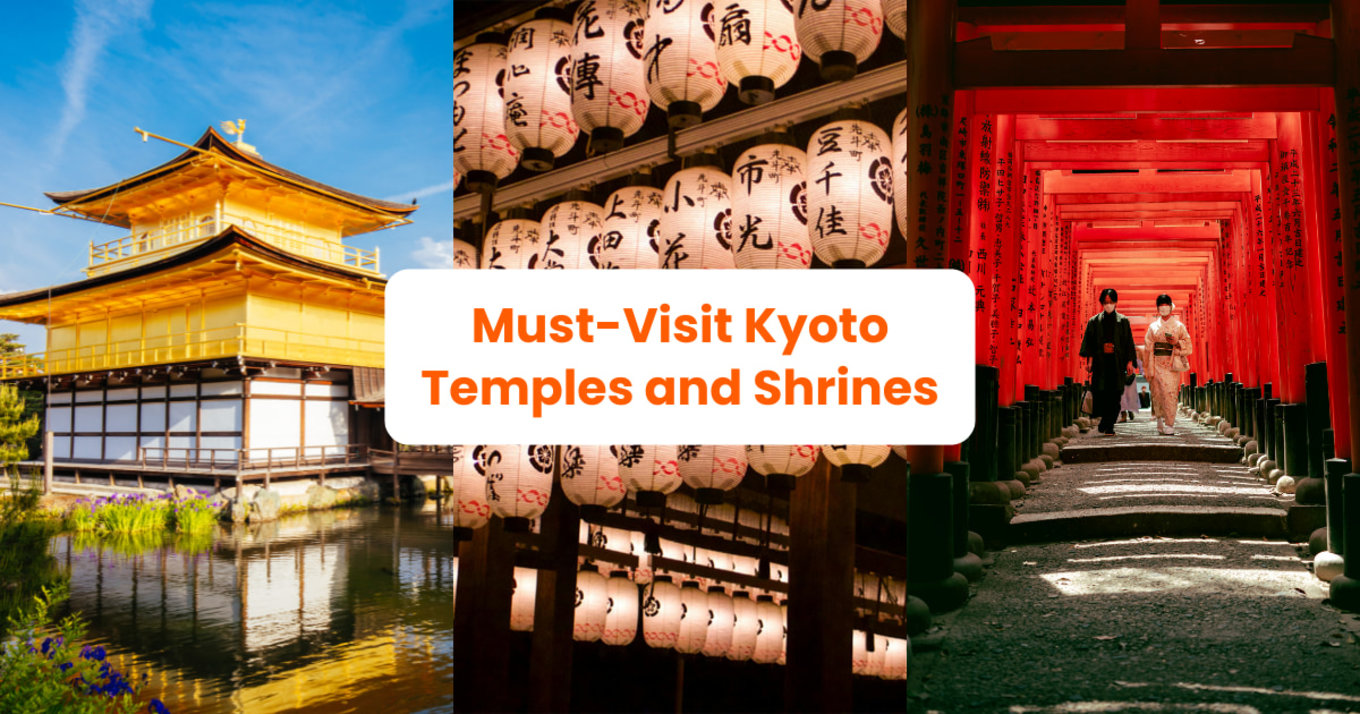
Kyoto was Japan's capital for over a thousand years, and it shows. Around every corner you'll find a wooden gate, a stone path, or a torii tunnel leading somewhere sacred. With over 1,600 Buddhist temples and 400 Shinto shrines packed into one city, figuring out which Kyoto temples are worth your time can feel like a full-time job.
That's what this guide is for. Below, you'll find the most iconic Kyoto temples and shrines, what makes each one different, and a few tips for making the most of your visit.
Kyoto temples and shrines at a glance
Name | Known for | Area |
|---|---|---|
Kinkaku-ji (Golden Pavilion) | Gold-leaf pavilion reflected in a pond | Kita Ward |
Ginkaku-ji (Silver Pavilion) | Zen gardens and raked sand | Sakyo Ward |
Kiyomizu-dera | Wooden stage with sweeping city views | Higashiyama |
Sanjusangen-do | 1,001 statues of Kannon | Higashiyama |
Fushimi Inari Taisha | Thousands of red torii gates | Fushimi Ward |
Shimogamo Shrine | Ancient forest setting, UNESCO site | Sakyo Ward |
Yasaka Shrine | Gateway to the Gion district | Higashiyama |
Heian Shrine | Massive torii gate and gardens | Sakyo Ward |
Why are there so many temples and shrines in Kyoto?
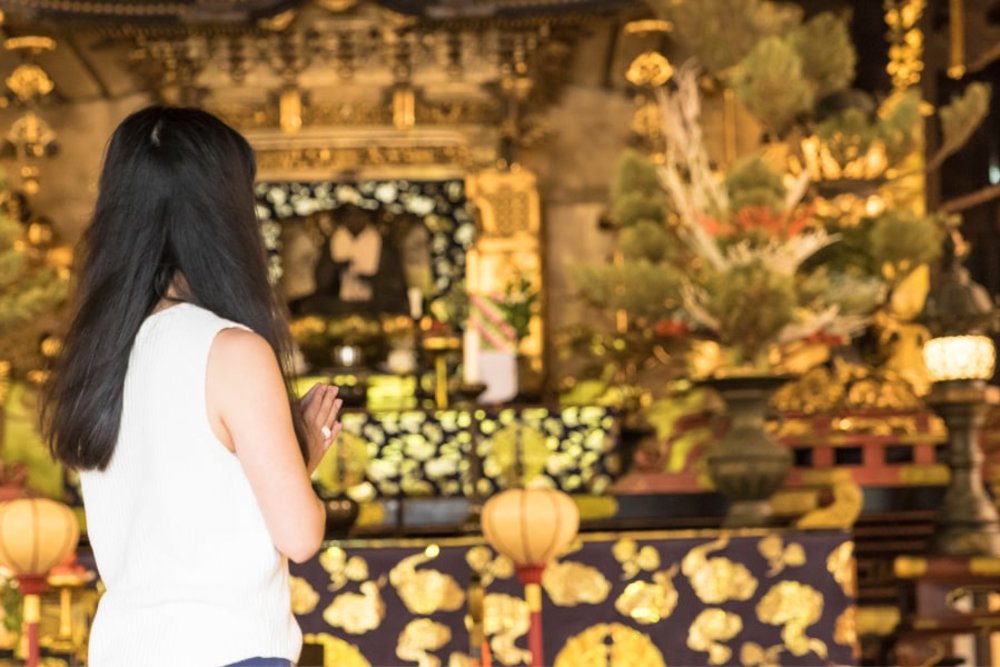
Japanese woman praying in a Kyoto temple
Kyoto served as Japan's imperial capital from 794 to 1868, and emperors, nobles, and shoguns spent centuries building temples and shrines to mark their power and devotion. Buddhist temples and Shinto shrines exist side by side here, and the two traditions often blend at the same site.
A temple is a Buddhist place of worship, usually recognizable by its incense, statues, and pagodas. A shrine is Shinto, marked by a torii gate and rope-wrapped sacred objects. Once you know the difference, spotting Kyoto temples versus shrines becomes second nature.
Must-visit Kyoto temples and shrines
Kinkaku-ji Temple (Golden Pavilion)
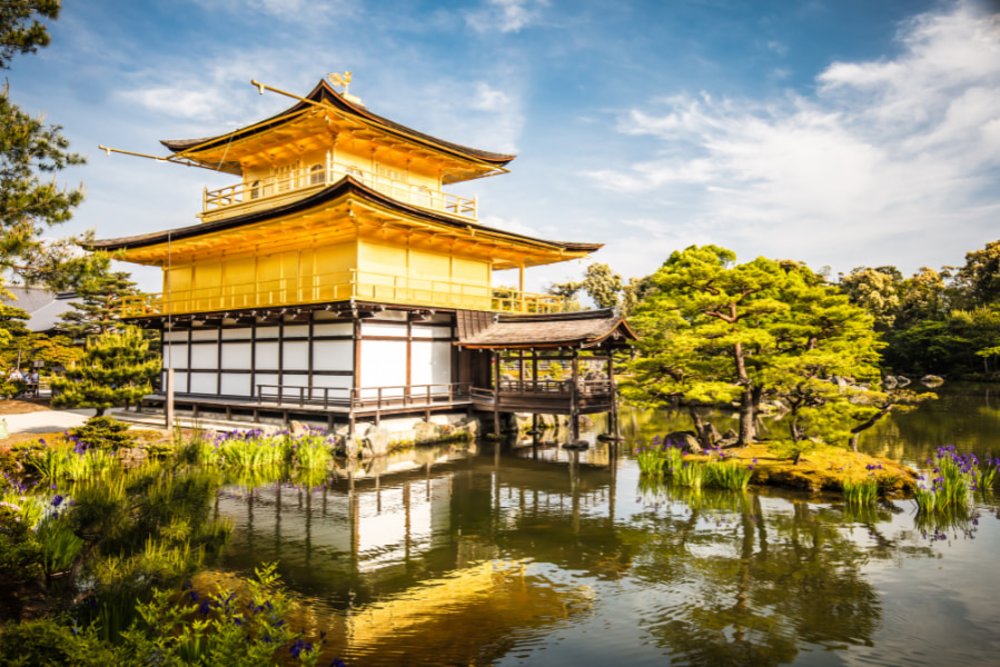
Kinkaku-ji-Tempel oder der Goldene Pavillon in Kyoto, Japan
Kinkaku-ji, or the Golden Pavilion, is probably the single most photographed of all Kyoto temples. The top two floors are covered in real gold leaf, and the whole structure sits at the edge of a reflecting pond that doubles its impact. It started as a retirement villa for a shogun before being converted into a Zen temple after his death.
You can't go inside the pavilion itself, but the surrounding gardens are part of the experience. Come early on a clear morning for the best light and the smallest crowds, since this spot rarely stays quiet for long. A walking tour of western Kyoto is an easy way to pair it with nearby Arashiyama.
📍 Address: 1 Kinkakujicho, Kita Ward, Kyoto 603-8361, Japan
🚊 How to get there: Take Kyoto City Bus 101 or 205 from Kyoto Station to the Kinkakuji-michi stop
🕒 Opening hours: 9:00 AM to 5:00 PM daily
💴 Entry fee: ¥500 for adults (high school students and above), ¥300 for elementary and junior high school students
Ginkaku-ji Temple (Silver Pavilion)
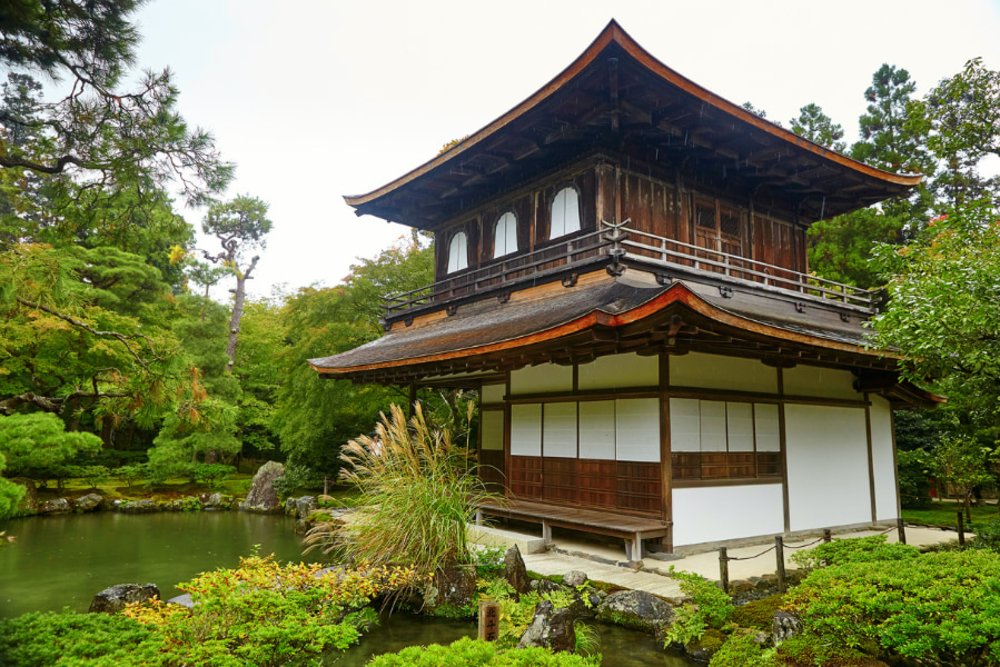
Ginkaku-ji Temple or the Silver Pavilion in Kyoto, Japan
Despite the name, Ginkaku-ji temple, the Silver Pavilion, was never actually covered in silver. The shogun who built it intended it as a rival to Kinkaku-ji, but funding ran out before the silver leaf could be applied, and the result is a quieter, more understated building surrounded by moss gardens and a striking sand cone said to represent Mount Fuji.
What Ginkaku-ji lacks in shine, it makes up for in atmosphere. The walking path behind the main hall climbs a small hill for a view over the whole complex, and it connects directly to the Philosopher's Path, a canal-side walk lined with cherry trees. A Ginkaku-ji historical walking tour is a good option if you'd rather have context along the way.
📍 Address: 2 Ginkakujicho, Sakyo Ward, Kyoto 606-8402, Japan
🚊 How to get there: Take Kyoto City Bus 5, 17, or 100 to the Ginkakuji-michi stop
🕒 Opening hours: 8:30 AM to 5:00 PM (March 1 to November 30), 9:00 AM to 4:30 PM (December 1 to February 28)
💴 Entry fee: ¥500 for adults (high school students and above), ¥300 for elementary and junior high school students
Kiyomizu-Dera Temple
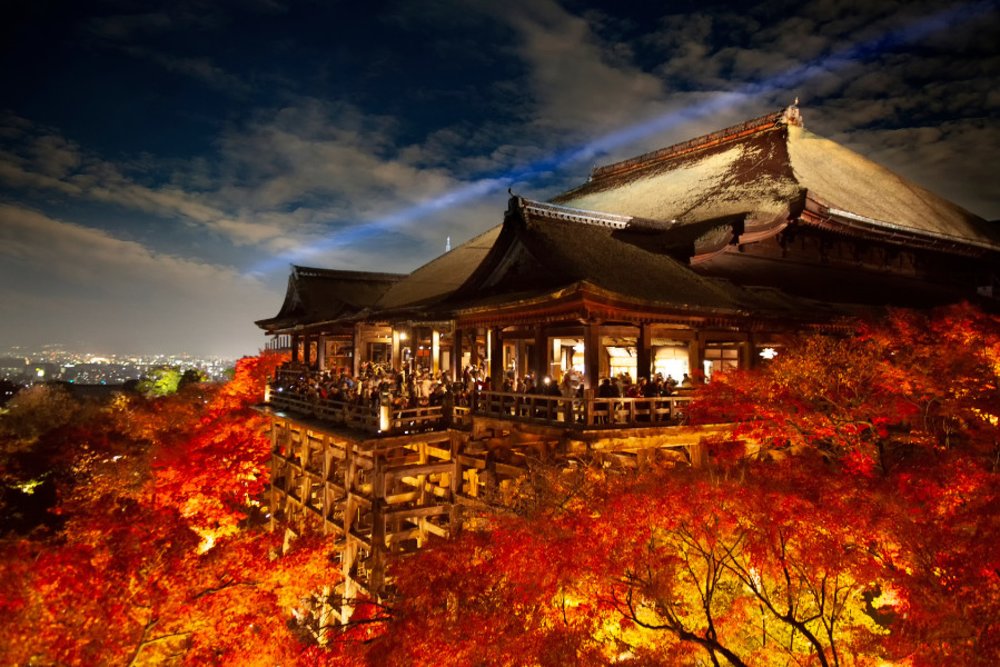
Kiyomizu-dera temple in Kyoto, Japan
Kiyomizu-Dera temple is built without a single nail, held together entirely with wooden joinery, and its main hall extends out over a hillside on tall wooden stilts. The view from that stage looks out across the maple and cherry trees of the Higashiyama district, and it's especially striking during autumn foliage season.
The temple takes its name from a waterfall on the grounds, where visitors line up to drink from three separate streams, each said to grant a different kind of luck. Getting there means walking up Sannenzaka and Ninenzaka, two preserved streets lined with traditional shops that are worth exploring on their own.
If you're combining it with a day trip, this Kyoto and Nara Park tour covers both in a single outing.
📍 Address: 1-294 Kiyomizu, Higashiyama Ward, Kyoto 605-0862, Japan
🚊 How to get there: Take Kyoto City Bus 100 or 206 to the Gojo-zaka or Kiyomizu-michi stop
🕒 Opening hours: 6:00 AM to 6:00 PM daily, with extended hours during special evening illuminations in spring and autumn
💴 Entry fee: ¥500 for adults, ¥200 for elementary and junior high school students
Sanjusangen-do Temple
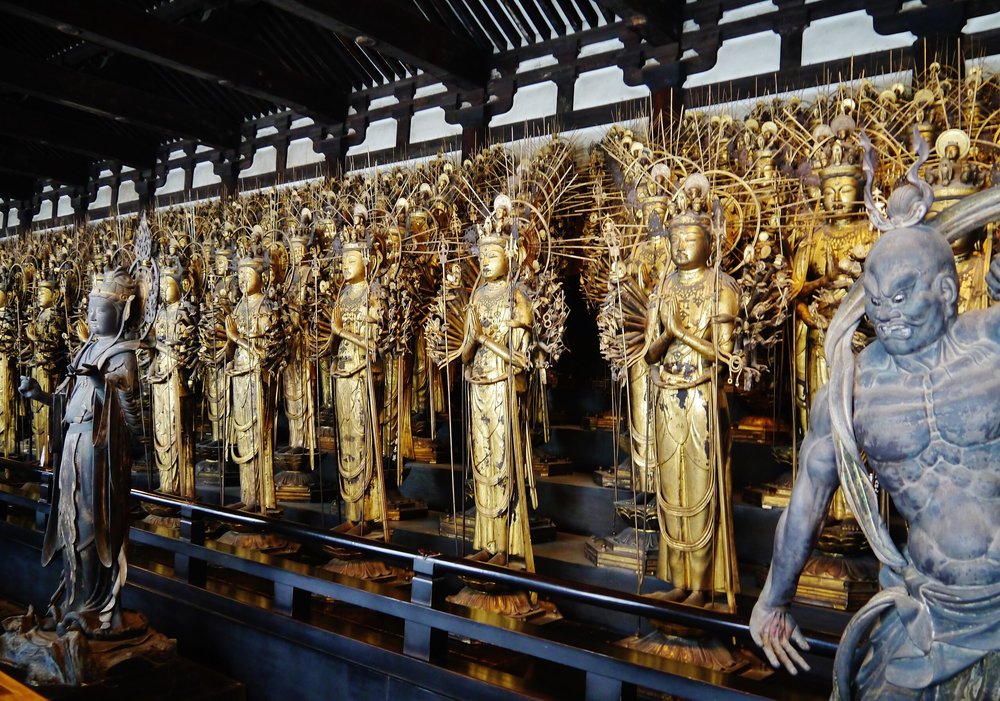
Inside the Sanjusangendo Temple in Kyoto / Photo from Wikimedia Commons
Sanjusangen-do temple is easy to underestimate from the outside. It's a single long wooden hall, but step inside and you'll find 1,001 life-sized statues of Kannon, the Buddhist goddess of mercy, standing in tight rows that stretch the length of the building. Each one was carved individually, and no two faces are exactly alike.
The hall itself is the longest wooden structure in Japan, and archers have used the space behind it for centuries during an annual competition that still takes place today. Photography isn't allowed inside, so it's worth setting time aside to actually take it in rather than rushing through.
Several multi-stop itineraries include it, like this Fushimi Inari and Sanjusangen-do tour that also comes with a shinkansen ticket!
📍 Address: 657 Sanjusangendomawari, Higashiyama Ward, Kyoto 605-0941, Japan
🚊 How to get there: Take Kyoto City Bus 100 or 206 to the Sanjusangendo-mae stop 🕒 Opening hours: 8:30 AM to 5:00 PM (April 1 to November 15), 9:00 AM to 4:00 PM (November 16 to March 31)
💴 Entry fee: ¥600 for adults, ¥400 for junior and senior high school students, ¥300 for elementary school students
Fushimi Inari Taisha Shrine
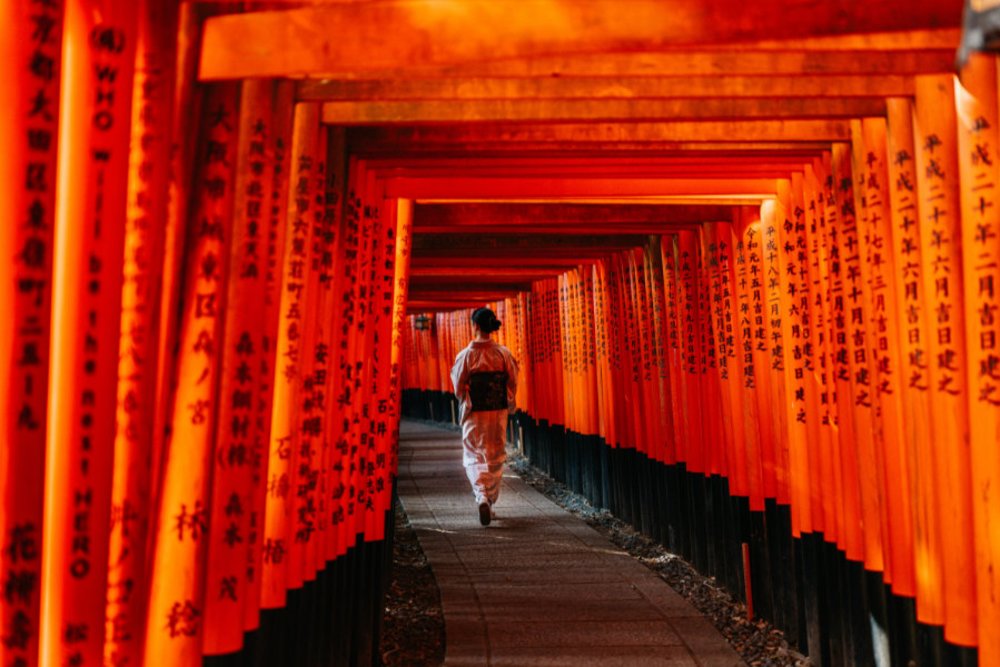
Fushimi Inari Taisha Schrein Torii Tore
Fushimi Inari Taisha is the head shrine for Inari, the Shinto god of rice and prosperity, and it's instantly recognizable thanks to the thousands of vermilion torii gates that wind up the mountainside behind it. Each gate was donated by a business or individual hoping for good fortune, and their names are painted on the back in black ink.
The full hiking loop to the summit takes two to three hours round trip, but you don't need to walk the whole thing to get the classic photo. Most of the crowds thin out after the first thirty minutes, so keep going if you want the paths mostly to yourself. A Fushimi Inari Taisha walking tour is a solid pick if you want a guide to point out the shrine's history along the way.
📍 Address: 68 Fukakusa Yabunouchicho, Fushimi Ward, Kyoto 612-0882, Japan
🚊 How to get there: Take the JR Nara Line to Inari Station, right at the shrine entrance
🕒 Opening hours: Open 24 hours, every day of the year
💴 Entry fee: Free
Shimogamo Shrine
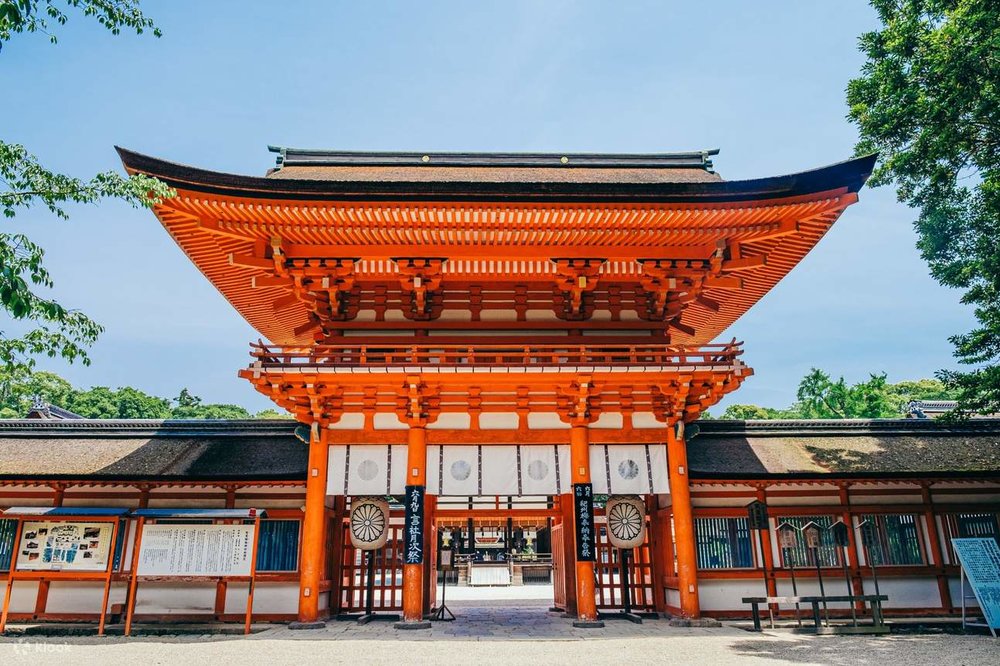
Shimogamo Shrine in Kyoto, Japan
Shimogamo Shrine is one of the oldest Shinto shrines in Kyoto, and part of its charm is the setting. It sits inside Tadasu no Mori, a stretch of primeval forest that has survived largely untouched since before the city itself existed. Walking in feels like stepping out of Kyoto entirely, even though you're minutes from downtown.
The shrine plays a central role in the Aoi Matsuri, one of Kyoto's three major festivals, held every May with a procession of participants in Heian-era court dress. It's also a quieter alternative if you've already covered the bigger names on this list and want a break from the crowds without leaving the city center.
📍 Address: 59 Shimogamo Izumikawacho, Sakyo Ward, Kyoto 606-0807, Japan
🚊 How to get there: Take Kyoto City Bus 4 or 205 to the Tadasunomori stop
🕒 Opening hours: Shrine grounds are generally open from 6:30 AM to 5:00 PM, with slight seasonal variations
💴 Entry fee: The shrine grounds and Tadasu no Mori forest are free. Admission to the Kawai Shrine garden and special exhibition areas requires a separate fee (typically around ¥500)
Yasaka Shrine
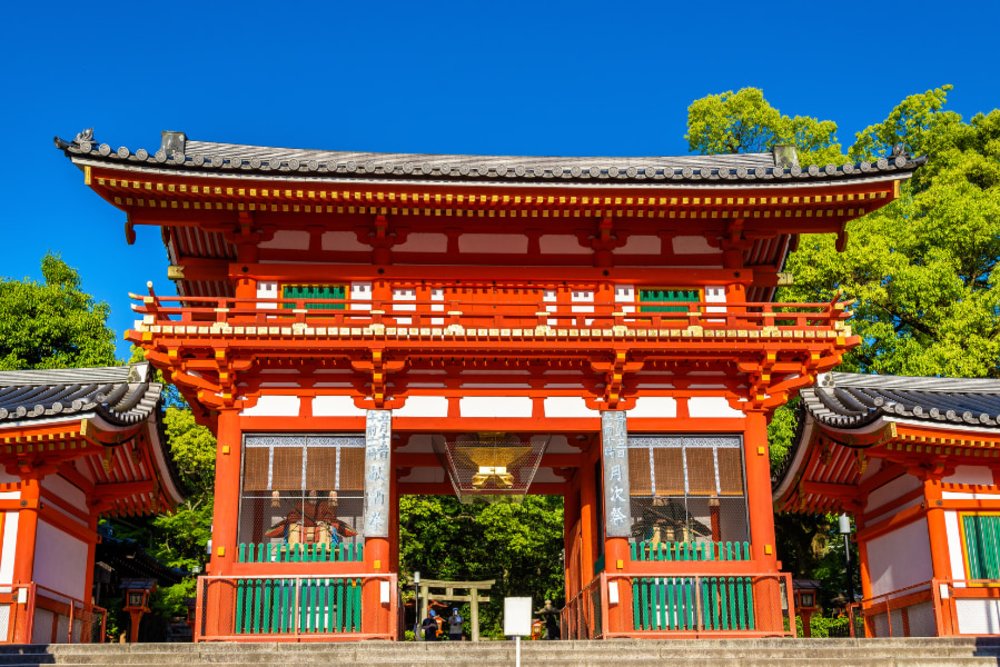
Yasaka-Schrein in Kyoto, Japan
Yasaka Shrine sits right at the entrance to Gion, Kyoto's most famous geisha district, and its bright orange gate is one of the first things you'll see walking in from Shijo-dori. Locals still come here regularly, and the shrine is best known for the Gion Matsuri, a month-long festival every July that fills the surrounding streets with floats and food stalls.
Beyond the festival, Yasaka is worth a stop simply because it connects so naturally to everything around it. Maruyama Park sits just behind the main hall, and Gion's teahouses and lantern-lit alleys start right outside the gate. If you want to dress the part, this kimono rental near Yasaka Shrine is right around the corner.
📍 Address: 625 Gionmachi Kitagawa, Higashiyama Ward, Kyoto 605-0073, Japan
🚊 How to get there: Take Kyoto City Bus 100 or 206 to the Gion stop
🕒 Opening hours: Shrine grounds are open 24 hours. The shrine office is generally open 9:00 AM to 5:00 PM
💴 Entry fee: Free
Heian Shrine
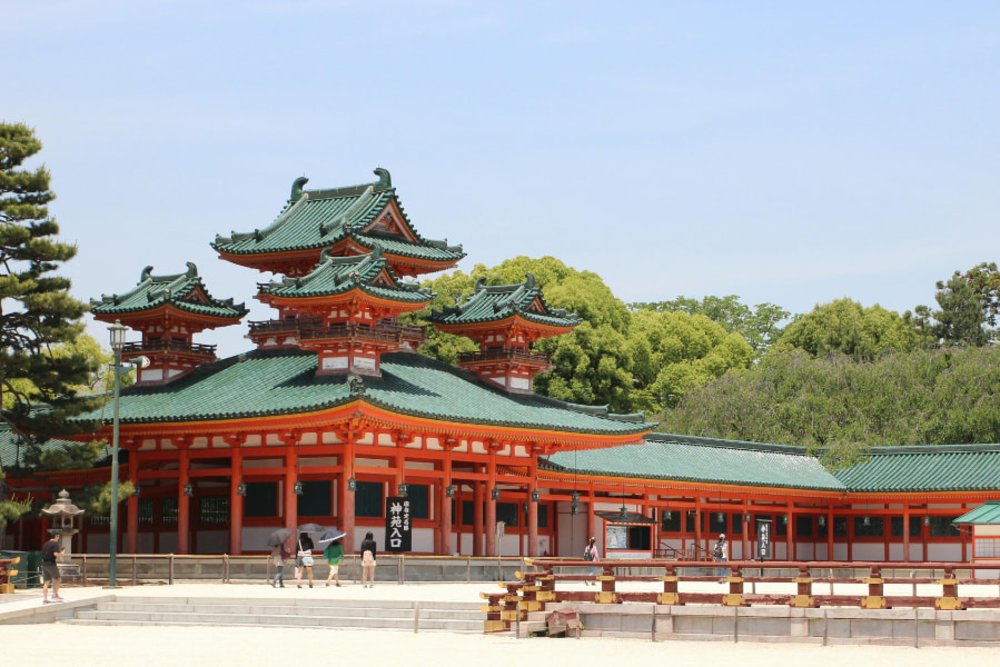
Heian Shrine in Kyoto, Japan
Heian Shrine was built in 1895 to mark the 1,100th anniversary of Kyoto becoming Japan's capital, which makes it younger than most of the temples on this list, but no less impressive. Its giant vermilion torii gate is one of the tallest in Japan and visible from well down the avenue leading up to it.
The shrine itself is a smaller-scale replica of the original Heian-era imperial palace, and behind the main buildings sits a sprawling strolling garden with a pond you can cross via stepping stones shaped like turtles.
It's especially popular during cherry blossom and iris season. This half-day bike tour to Heian Shrine also stops at Kennin-ji, one of Kyoto's oldest Zen temples.
📍 Address: 97 Nishitenno-cho, Okazaki, Sakyo Ward, Kyoto 606-8341, Japan
🚊 How to get there: Take Kyoto City Bus 5 to the Okazaki-koen, Bijutsukan-Heian-Jingu-mae stop
🕒 Opening hours: Shrine grounds are generally open 6:00 AM to 5:30 PM (seasonal hours apply). The Shin-en Garden is typically open 8:30 AM to 5:00 PM
💴 Entry fee: Shrine grounds are free. Shin-en Garden: ¥600 for adults, ¥300 for elementary and junior high school students
Tips for temple-hopping in Kyoto
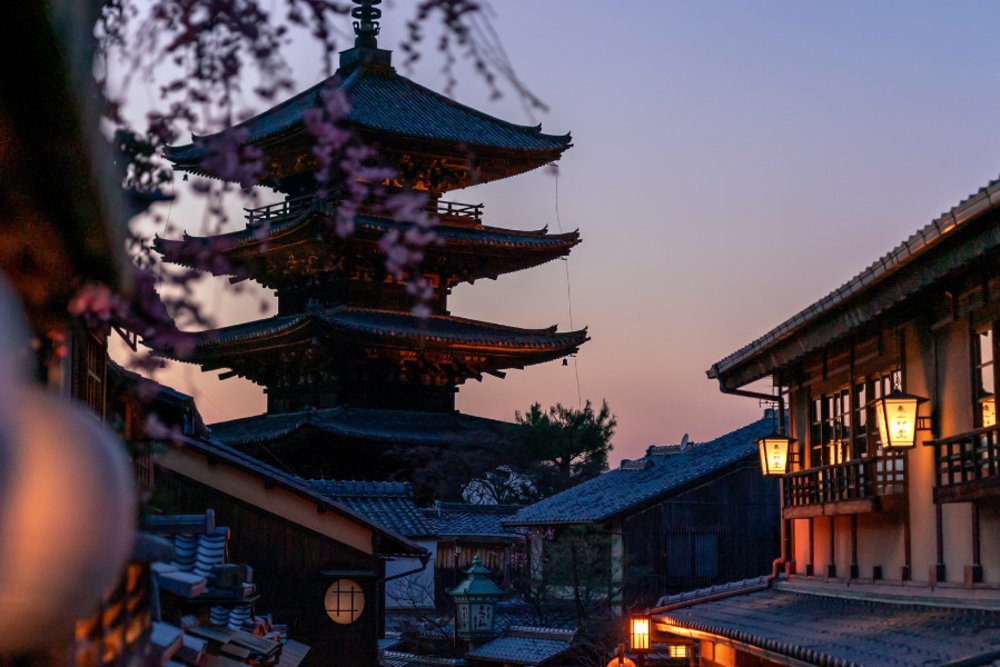
Pagoda in Kyoto, Japan
Join A Kyoto Temple-Hopping Tour
For a more convenient way of exploring the Kyoto temples and shrines, you can consider joining a Kyoto temples and shrines tour that will take you to some of the most iconic sites in the city. Some of these tours even have the option for you to rent a kimono and walk through the historic streets of Kyoto all dressed up! These photos make the perfect souvenirs so that’s a plus!
Stay Connected
Make sure to grab a pocket WiFi or an eSIM when traveling in Japan because this will make getting around so much easier! Public transport in Japan is an experience in itself, and chances are you’ll be looking up directions often to get from one spot to another (or in this case, one temple to the next). So having an internet connection on the go will save you time and stress!
Time Your Visits
Temples and shrines in Kyoto can get pretty busy depending on the time and season. Some are especially crowded during festivals or cherry blossom season, so it’s best to check ahead before your visit to be prepared for the crowds on your temple-hopping adventure. In general, early mornings and later afternoons are the best times to avoid the rush!
Be Respectful
When you go temple-hopping in Kyoto, remember that these sites aren’t just for sightseeing. These are active places of worship so remember to be mindful of your surroundings and show respect while you explore!
FAQs about temples and shrines in Kyoto
What are the five great temples of Kyoto?
While there are many great temples in Kyoto, but if we’re talking about the Five Great Zen Temples of Kyoto then this includes Tenryuji Temple, Shokokuji Temple, Kenninji Temple, Tofukuji Temple, and Manjuji Temple.
What temples should I see in Kyoto?
As there are hundreds of temples that you can see in Kyoto, which ones you should visit depends on the kind of traveler you are and perhaps, based on your current itinerary. For example, a lot of travelers visiting the Gion district check out the Kiyomizu-dera temple where as others often make their way up the northern part of Kyoto to see Kinkaku-ji (Golden Pavilion) to see its architectural beauty.
What are the three temples in Kyoto?
There are many temples in Kyoto but if you only have time to see three temples, then you should definitely visit Kinkaku-ji (Golden Pavilion), Kiyomizu-dera Temple, and Sanjusangen-do Temple.
Can you wear shorts at Kyoto temples?
There isn’t a strict dress code when visiting Kyoto temples, but keep in mind that these are places of worship so it’s best to dress modestly. We know it can get pretty hot in Japan during the summer so yes, you can still wear shorts, but best to avoid very casual ones like board shorts, micros and cut-offs!
More Kyoto guides for you
What is Klook?
Klook is a leading pan-regional experiences platform in Asia Pacific, purpose built to digitalize experiences and make them accessible to every traveler.
Our mission is to build the digital infrastructure for the global experience economy — empowering merchants to share their passions and travelers to discover the heartbeat of each destination. We operate a mobile-first, curated platform featuring diverse experiences across global destinations.