


Traveling to South Korea is an exciting adventure filled with delicious food, stunning sights, and vibrant culture. But navigating a new country—especially one where English isn’t widely spoken—can be a little challenging. That’s where technology steps in!
Based on my 26-day trip to Korea, I found that these are the most important apps for every traveler to have. From navigation to dining, shopping, and beyond, here are my favorite apps that are essential for a seamless trip!
And one more thing before we go into detail: all of these apps need data to work properly. Grab a South Korea eSIM before you fly so you're connected right when you arrive!
Navigation apps for getting around Korea
1. Naver Map (네이버 지도)
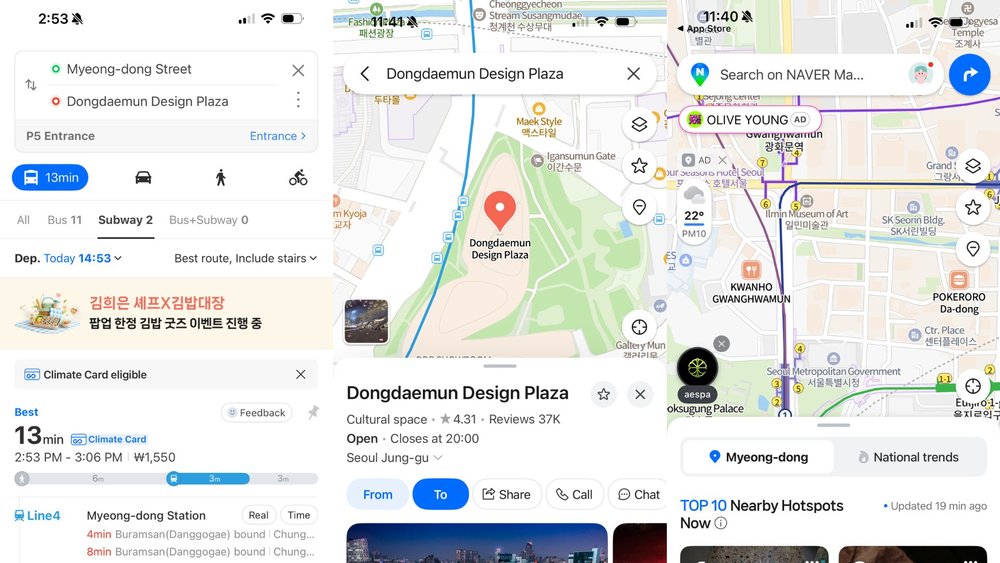
Explore Seoul like a local with Naver Map
Skip Google Maps — it’s not your best bet in South Korea. Due to government data storage policies, Google Maps isn’t able to provide accurate information compared to Naver Map (App Store | Google Play Store).
Naver Map is the crucial navigation tool you’ll need in South Korea, thanks to its popularity and features such as detailed maps, real-time traffic, route suggestions, and integration with public transportation systems.
It’s easy to navigate, even if you’re new to the app, and offers accurate directions for walking, driving, or public transport. Plus, it provides detailed subway and bus timings, making it perfect for travelers on the go.
One feature I especially loved is the ability to save places to a list and pin them on a map! When exploring Seongsu-dong—one of the trendiest neighborhoods in Korea now—I saved 22 spots I wanted to visit. With everything pinned on the map, I could easily plan an optimized walking route that hit all the must-visit spots.
Naver Map also has accurate bus schedules, clear subway exit details, and walking routes from inside subway stations to your destination. It even lists business opening hours and flags if a place has a break in the middle of the day—a lifesaver for avoiding closed restaurants.

2. KakaoMap (카카오 지도)
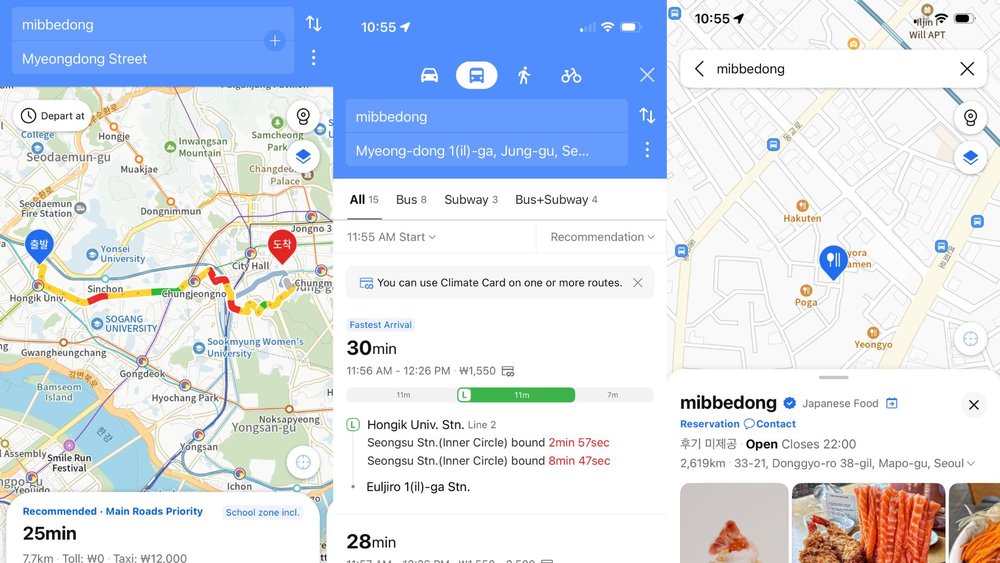
Know your way around Seoul with KakaoMap
If Naver Map doesn’t suit your style, KakaoMap (App Store | Google Play Store) is a great alternative with a clean interface and detailed reviews. Preferences vary even among locals—some find Kakao’s reviews more reliable, while others stick with Naver Map, making it a matter of personal choice.
I prefer Naver Map for its in-built Papago translation feature, which is super helpful for understanding restaurant and attraction reviews. However, one downside is that Naver doesn’t display the number of stars for each review. On the other hand, Kakao Maps does, so you can quickly gauge whether a review is positive or negative at a glance.
Ultimately, both apps are excellent tools, and the choice comes down to what suits you best. Try both and see which one aligns with your preferences and needs!
Translation app for South Korea
3. Papago (파파고)
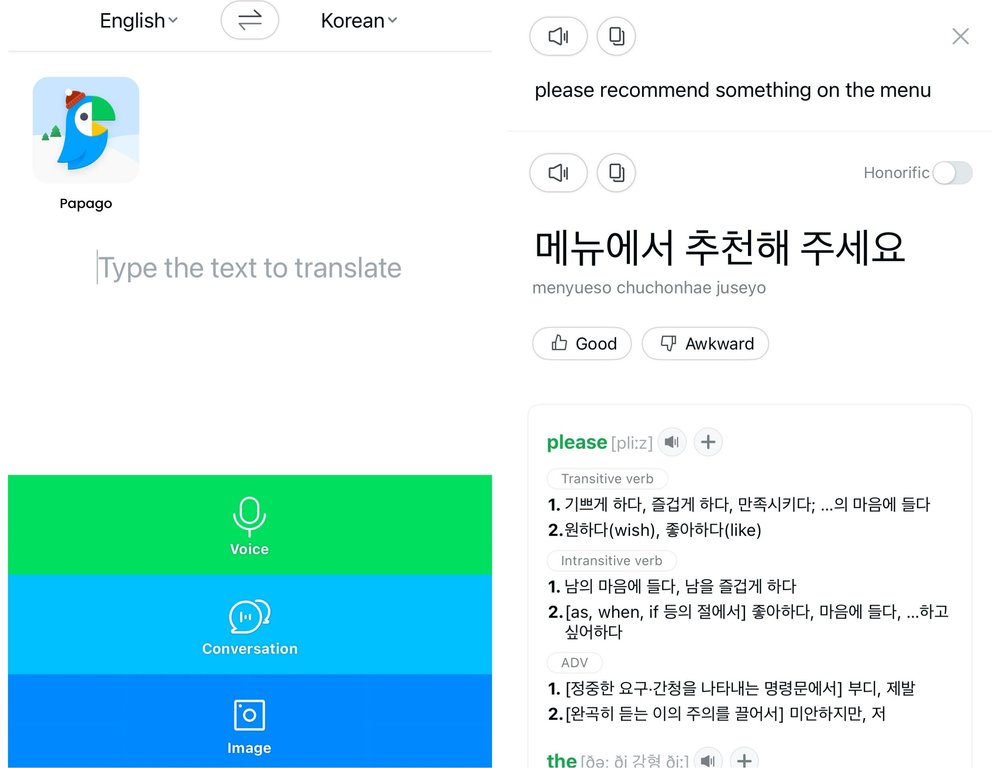
When it comes to navigating language barriers in South Korea, a translation app like Papago (App Store | Google Play Store) is essential. While Google Translate offers a wider range of languages, Papago commonly used in Korea because it’s specifically designed for East Asian languages.
Developed by Naver, it’s optimized for translating Korean into English (and vice versa) with greater accuracy, making it more reliable for travelers.
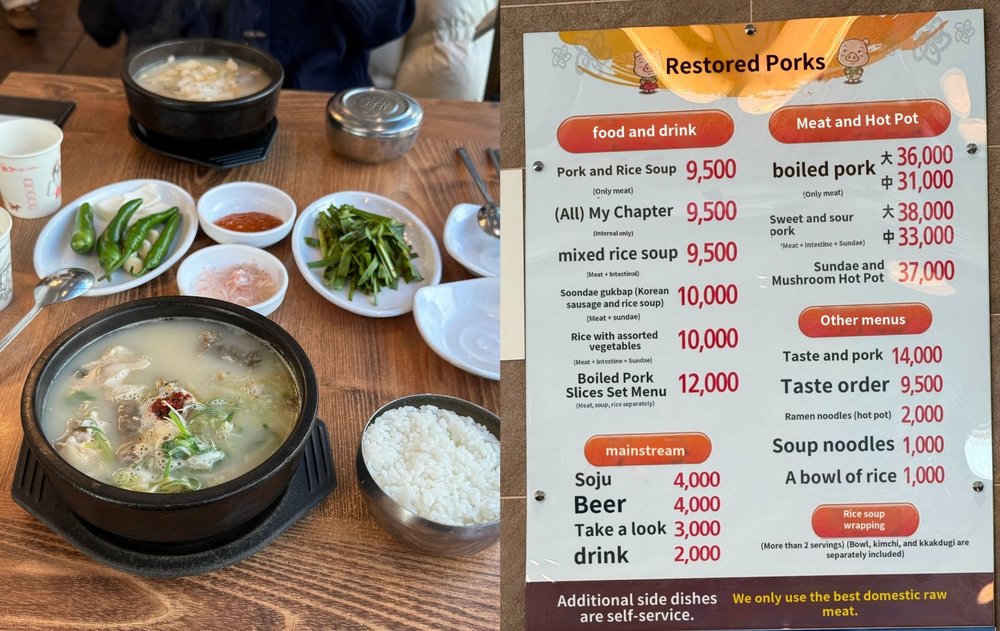
One of Papago’s standout features is its image translation. Simply take a photo of a menu, street sign, or page of text, and Papago will translate it instantly. I found this especially useful for navigating apps like Coupang and Baemin, which are entirely in Korean. It was also a lifesaver for understanding Kakao Talk updates and for reading detailed product descriptions when shopping online.
Even as someone who speaks Korean, I rely on Papago to navigate menus — especially when it comes to unfamiliar dishes.
Papago makes dining and exploring in Korea so much easier. A quick snap of the menu, and voilà—no more mystery meals (unless you want one!).
Transport and taxi apps in Korea
4. Get around hassle-free with k.ride
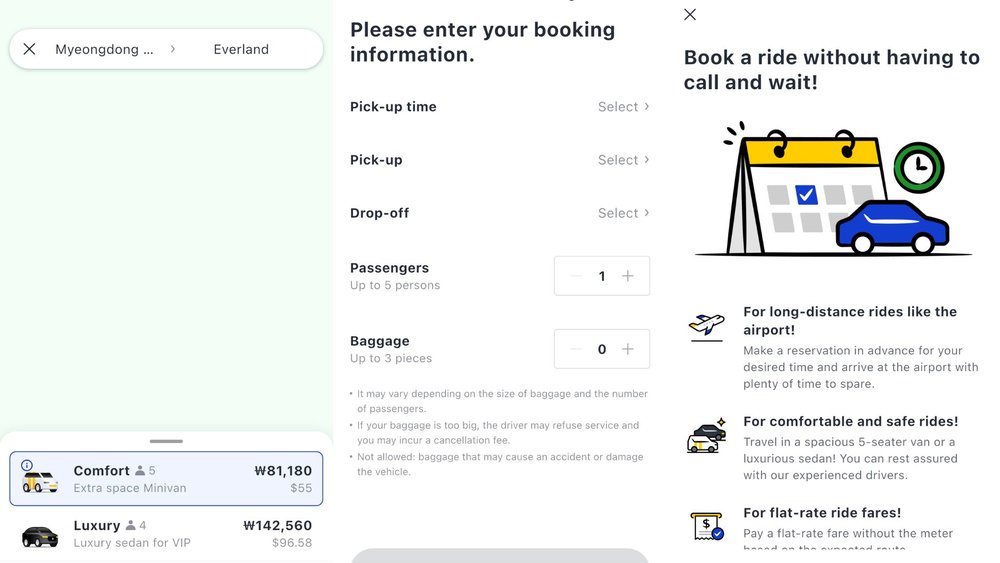
Book your taxi using k.ride
If you want a taxi app built with foreign travelers in mind, k.ride (App Store | Google Play Store) is the one to download. It's the internationally friendly counterpart to Kakao T, with a fully English interface and support for foreign credit cards right out of the box, no Korean payment method needed.
Booking is easy : enter your destination, confirm your ride, and pay by card through the app. It's a great option for late nights when public transport has stopped running (usually around midnight), or anytime you're hauling luggage and want to skip the bus.
Taxis in Korea are also more affordable than you might expect, and drivers are generally happy to take longer intercity trips too. If you ever find yourself in Daegu or need a ride back to Busan after a long day, k.ride makes it easy to book without any language barriers.

5. Mobile T-money (모바일 티머니)
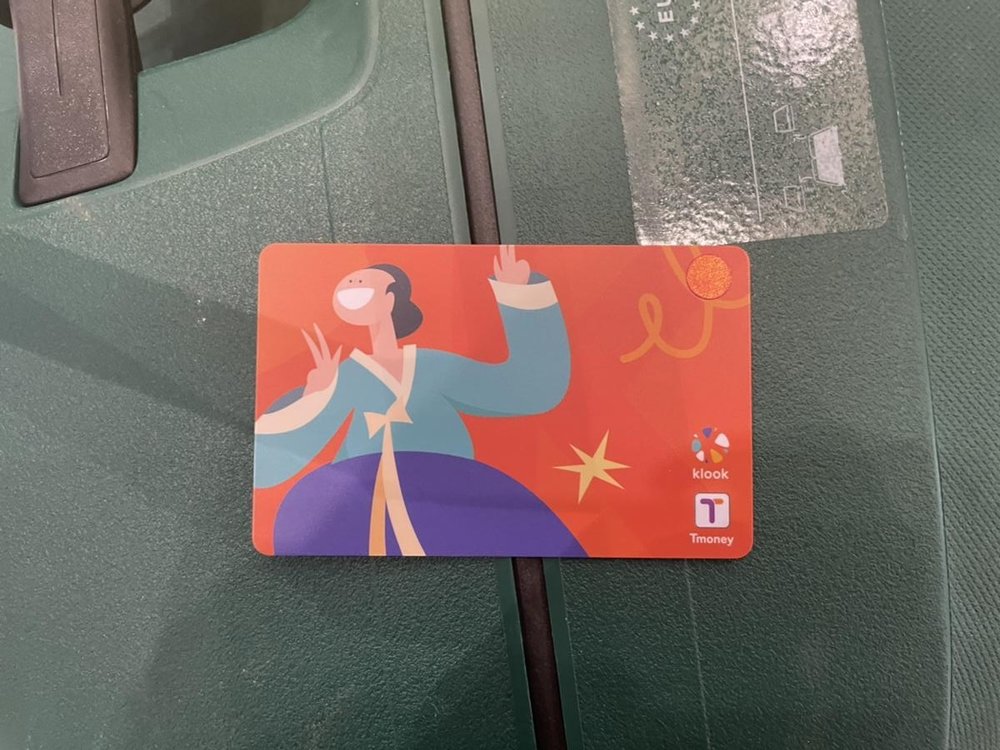
You can get your T-Money Card on Klook | Photo from Klook User
T-money is the transit card used across South Korea for buses, subways, and even some taxis. The mobile T-money app turns your phone into a contactless T-money card, so you don't need a physical card at all. You can top up through the app using a Korean payment method, which is the main limitation for foreign visitors.
If you'd rather skip the setup, a physical T-Money Card via Klook is the easier option– you can top it up at any convenience store and use it immediately.
Apps for food, activities, and bookings in South Korea
6. Catchtable (캐치테이블)
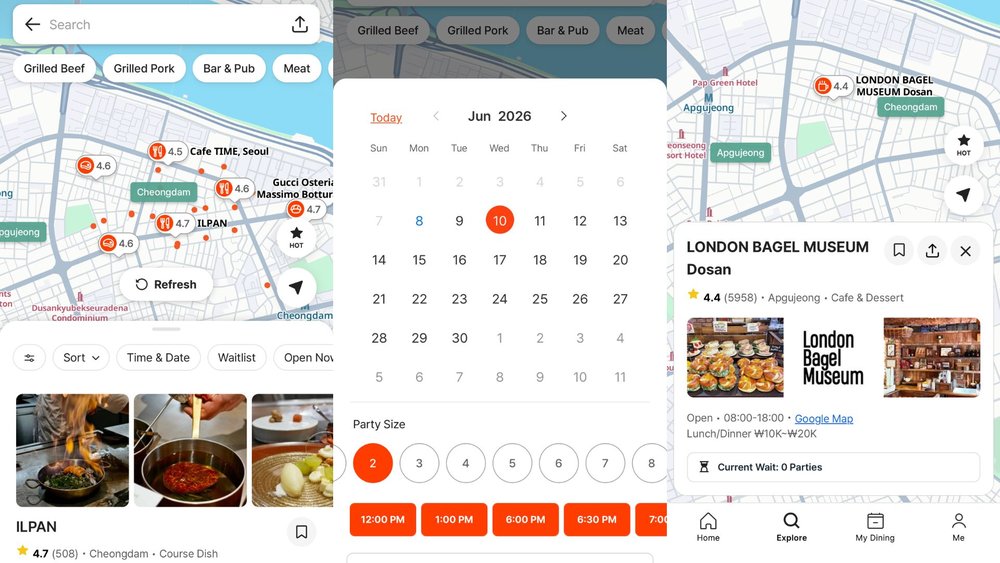
Reserve a seat at your go-to restaurant in Seoul with Catchtable
South Korea’s dining scene is incredible, but many popular restaurants require reservations or have long queues. Catchtable (App Store | Google Play Store) simplifies the process, allowing you to book tables or get a queue number in advance with just a few taps.
What I love most about Catchtable is how it lets you secure a queue number ahead of time. Instead of arriving early to wait at the entrance or retrieve a queue number there, I could explore other places and only head to the restaurant closer to my turn. It’s a fantastic time-saver, letting you make the most of your day without sacrificing a spot at a must-try eatery.
During my trip, I anticipated a long wait at Haebangchon Chicken (해방촌닭), a popular spot in the Haebangchon area known for its mouthwatering chicken dishes, so I used Catchtable to queue early!
Surprisingly, I couldn’t find the restaurant on the global app, even when searching in Korean, so I switched to the Korean version (App Store | Google Play Store) instead. Generally, the global version of Catchtable will do the trick, but it’s worth having the Korean version on hand just in case!

7. Baemin (배달의민족)
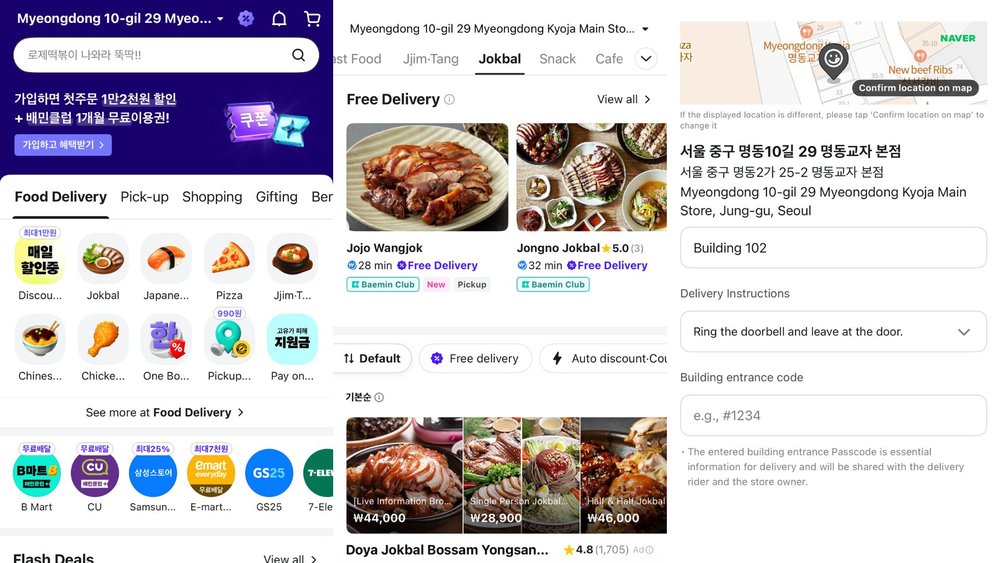
You can satisfy your late night cravings in one click using Baemin!
If you’re craving food delivery, Baemin (App Store | Google Play Store) is your go-to app. Whether it’s fried chicken, jjajangmyeon, or late-night tteokbokki, Baemin offers a wide range of options delivered straight to your door. While the app is entirely in Korean, a little effort and the help of Papago can make ordering a breeze!
Baemin is also foreigner-friendly, as you can use an international phone number for verification. This makes it much easier to get started, especially if you opted for a data-only SIM.
To get started, simply type in your address at the beginning so the app can show you restaurants available in your area. I recommend entering your address in Korean to avoid any errors, so it’s a good idea to have it saved beforehand. After that, you can jump straight into browsing dishes—no need to create an account or log in!
The ordering process is similar to any delivery app you might be familiar with. Once you’ve chosen your food, you’ll see a page to review your order and payment details. If you’re unsure of the steps, take screenshots and translate them with Papago—it’s an easy and intuitive process, especially once you’ve done it a few times.
During my trip, Baemin saved me on multiple late nights when I needed a satisfying meal after a long day. While Baemin might take a little effort for non-Korean speakers, it’s well worth it for the convenience and delicious food delivered right to your door.
8. Coupang (쿠팡)
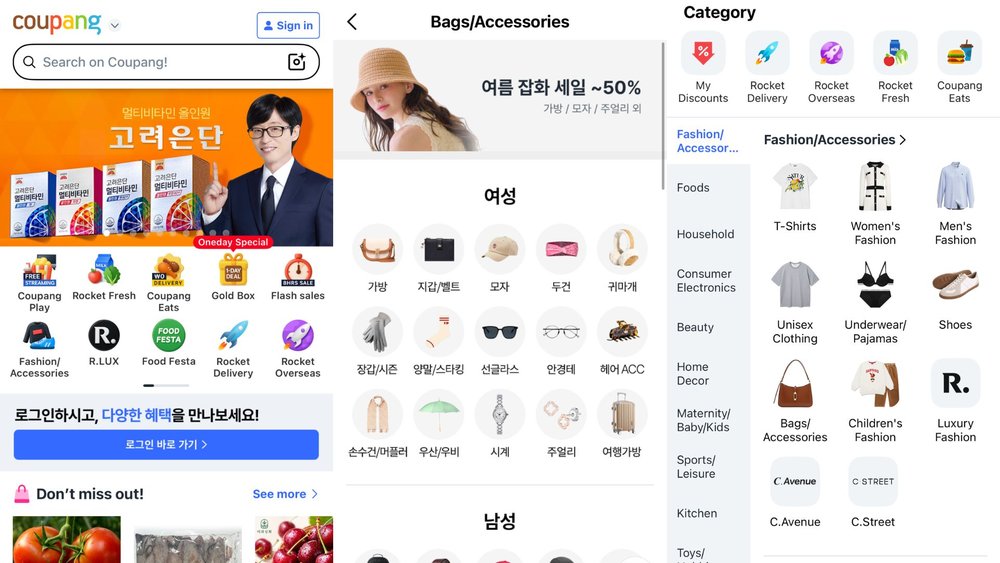
Shop for clothes, skincare, and even convenience store food at Coupang!
Think of Coupang (App Store | Google Play Store) as the Amazon of South Korea. From travel essentials to local snacks, this app has it all. Plus, its “Rocket Delivery” service ensures lightning-fast shipping—even overnight. However, it’s important to note that a Korean phone number is required to place orders on Coupang.
For me, Coupang was a lifesaver when friends back home asked me to bring back specific items and I didn’t have the time to go out of my way to search for what they wanted. Coupang not only saved me time but also ensured I got everything on their wish lists without the hassle.
It’s also great for cheaper alternatives to convenience stores! Someone asked me to buy hangover jellies, which were less expensive on Coupang compared to convenience stores. Since I wasn’t planning to visit supermarkets to compare prices during my trip, ordering from Coupang made the process quick and stress-free.

9. Klook
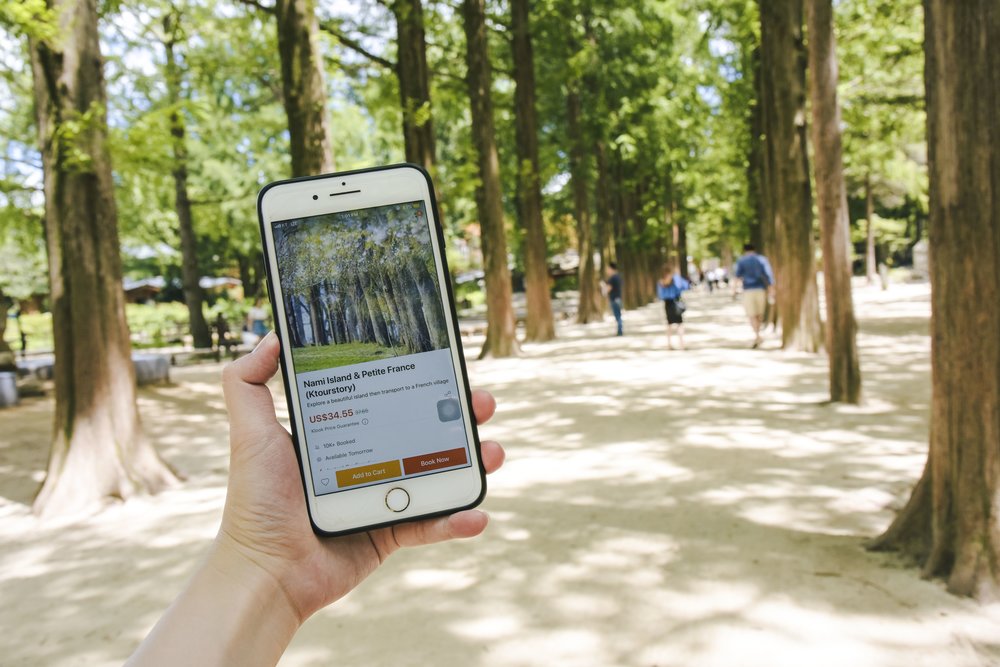
Book your tours and activities ahead of time or during your trip on Klook!
Klook (App Store | Google Play Store) is an invaluable app for planning your South Korea trip. From booking hotels and rail passes to securing tickets for tours and attractions, it’s a one-stop platform for all your travel needs.
Plus, Klook often offers exclusive discounts, including mobile coupons for popular stores like Olive Young and Daiso, helping you save money while shopping. Additionally, the Discover Seoul Pass is an essential travel tool for tourists, offering free or discounted access to a wide range of attractions in Seoul.
One of my most memorable experiences I booked through Klook was a yacht tour in Busan. It was the perfect way to end the day, with stunning views and even a fireworks show on board—an unforgettable experience!
Another highlight was the Everland shuttle bus transfer. This service made it incredibly easy to get to the park without worrying about getting lost, and it saved me so much time.
Klook was also a lifesaver when it came to intercity bus tickets. While tickets can be purchased at bus stations, buses for popular timings often sell out. Being able to secure my seat in advance gave me peace of mind and made traveling between cities smooth and hassle-free!

10. Multi-currency travel cards
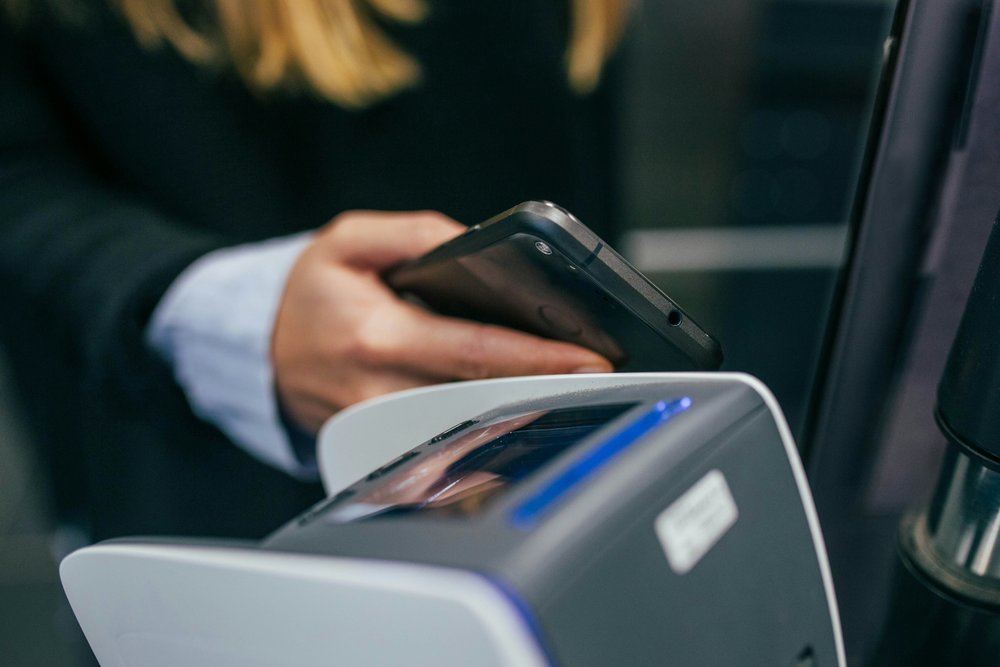
Credit: Jonas Leupe on Unsplash
When traveling to South Korea, a multi-currency travel card is a game-changer for managing your finances. Cards like Revolut, Instarem, or Wise allow you to make secure payments in multiple currencies, including Korean won, without the hefty fees associated with traditional credit cards.
Klook Tip: For iPhone users, it's important to note that Apple Pay is not widely accepted in Korea, so it's good to keep the physical card on you at all times.
These travel cards offer better exchange rates and lower transaction fees, making them a cost-effective option for travelers. You can use them to book accommodations, flights, and activities and even withdraw cash from ATMs, something I found very useful during my trip! Do note that cash can only be withdrawn from certain banks' ATMs.
Whether you’re shopping in Myeongdong or dining in Hongdae, having a multi-currency travel card ensures you can easily manage your expenses and enjoy your South Korea adventure without financial stress.
Exciting experiences to try in South Korea

The city lights in Seoul, South Korea
Once you’ve got your travel apps downloaded, it’s time to plan the fun! South Korea offers a wide range of unique activities and experiences tailored to all kinds of interests. Here are some ideas to add to your itinerary:
For beauty enthusiasts
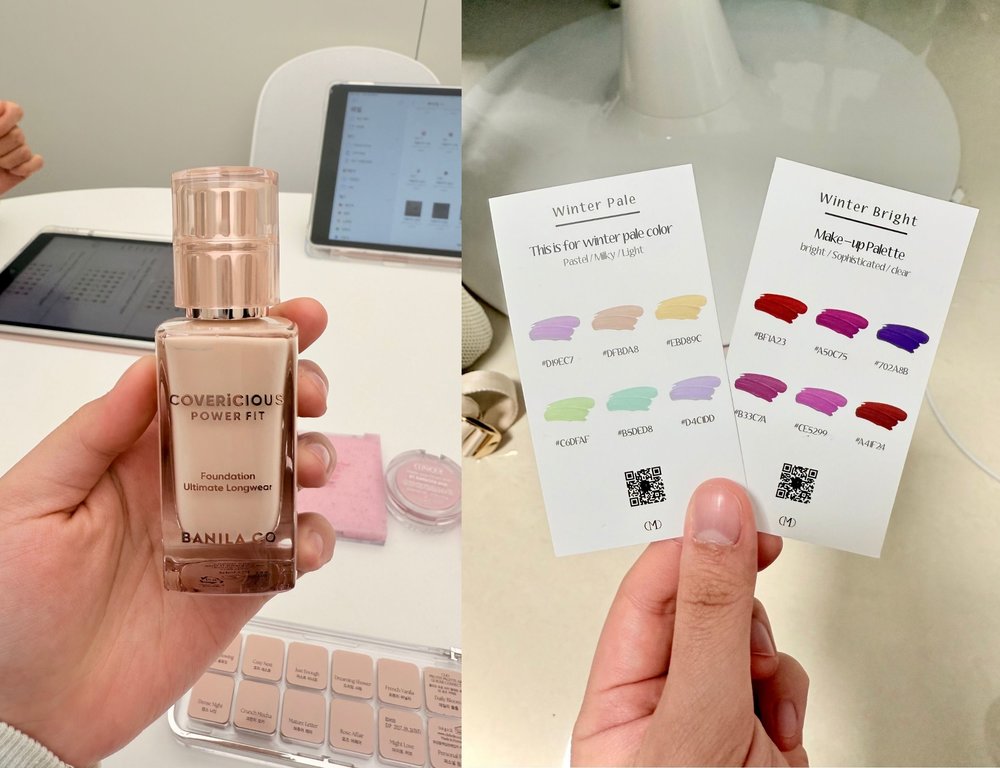
Know the best color palette that suits you with a color analysis
South Korea is a global leader in beauty and skincare, so why not indulge in activities that highlight its expertise? Consider a personal color analysis to discover shades that suit you best, take a makeup lesson to learn the latest K-beauty techniques, or unwind with a luxurious spa experience featuring traditional Korean treatments.

For K-pop and K-drama fans

Go on a K-pop or K-drama pilgrimage!
Dive into the world of your favorite idols and dramas! Take an MBC studio tour to see where popular shows are filmed, visit iconic K-pop stores and entertainment companies like the Kwangya gift shop, or explore locations your favorite idols endorse or frequent. These experiences let you feel closer to the stars you admire.
For culture lovers

South Korea’s rich history and traditions make it a fascinating destination for culture enthusiasts. Visit the country’s majestic palaces, such as Gyeongbokgung or Changdeokgung, and immerse yourself in its heritage. And for the full experience, try renting a hanbok and feel like you’re starring in a traditional K-drama!
And, of course, don’t miss the chance to savor traditional Korean food like bibimbap, tteokbokki, or samgyetang at local eateries.

For nature seekers

Go on a hike at South Korea’s national parks
If you love the great outdoors, South Korea’s natural beauty won’t disappoint. Go hiking at one of its national parks, such as Seoraksan or Jirisan, to enjoy breathtaking views and serene landscapes. Alternatively, spend a relaxing day at one of Korea’s many beautiful beaches, like Haeundae Beach in Busan or Jeju’s pristine shores.
With so many exciting activities, South Korea has something for everyone. Whether you’re exploring its vibrant beauty scene, diving into K-pop culture, soaking in its rich history, or embracing nature, you’re in for an unforgettable adventure!
FAQs about Korea travel apps
Does Google Maps work in South Korea?
Google Maps works in South Korea to a limited extent. You can browse locations and get some directions, but its navigation data is restricted due to Korean government policies around map data storage outside the country. Naver Map and KakaoMap are far more reliable for getting around, and both have English interfaces.
What is the best navigation app to use in Korea?
Naver Map is the most widely recommended navigation app for Korea travel. It covers walking, driving, and public transport with accurate real-time data; shows bus and subway schedules; and even notes if businesses have a midday break.
KakaoMap is a strong alternative, and some travelers prefer its review interface. The good news is both are free, work in English, and don't require a Korean phone number, so you can try both and use whichever suits you better.
What is the best translation app for Korea?
Papago is the best translation app for Korea. It's developed by Naver and is specifically optimized for Korean, which means it handles nuances and everyday phrasing more accurately than Google Translate. Its image translation feature is particularly useful; just point your camera at a menu or sign, and it overlays the English translation directly.
It also has an offline mode for Korean, which is worth downloading in advance. For day-to-day travel, Papago is the app that gets the most use.
How do you get a taxi in South Korea without speaking Korean?
Kakao T (or k.ride for foreigners) is the easiest way to book a taxi in South Korea without speaking Korean. You enter your destination in the app, and the details are sent directly to the driver, so there's no need to explain where you're going.
The app is available in English, accepts international phone numbers for signup, and lets you pay the driver directly by cash or card if you haven't set up a Korean payment method. It works across most of South Korea, not just Seoul, and taxis are generally affordable even for longer trips.
Do Korea travel apps work without a Korean phone number?
Most Korean travel apps work without a Korean phone number. Naver Map, KakaoMap, Papago, Kakao T, and Klook all accept international numbers or don't require a phone number at all. Baemin is also foreigner-friendly and accepts international numbers for verification.
The main exception is some payment or shopping apps like Coupang, which requires a Korean number for orders. For most tourist needs, like navigation, translation, taxis, food delivery, and activity booking, you won't need a local SIM, though you will need mobile data, so an eSIM is worth picking up before you arrive.
Start planning your trip to South Korea
Exploring South Korea has never been easier thanks to these must-have apps. From navigating city streets to booking activities, they’ll make your trip smoother, more enjoyable, and stress-free.
So, what are you waiting for? Download these apps, pack your bags, and start planning your ultimate Korea adventure.

What is Klook?
Klook is a leading pan-regional experiences platform in Asia Pacific, purpose built to digitalize experiences and make them accessible to every traveler.
Our mission is to build the digital infrastructure for the global experience economy — empowering merchants to share their passions and travelers to discover the heartbeat of each destination. We operate a mobile-first, curated platform featuring diverse experiences across global destinations.