Tainan Confucius Temple Tickets
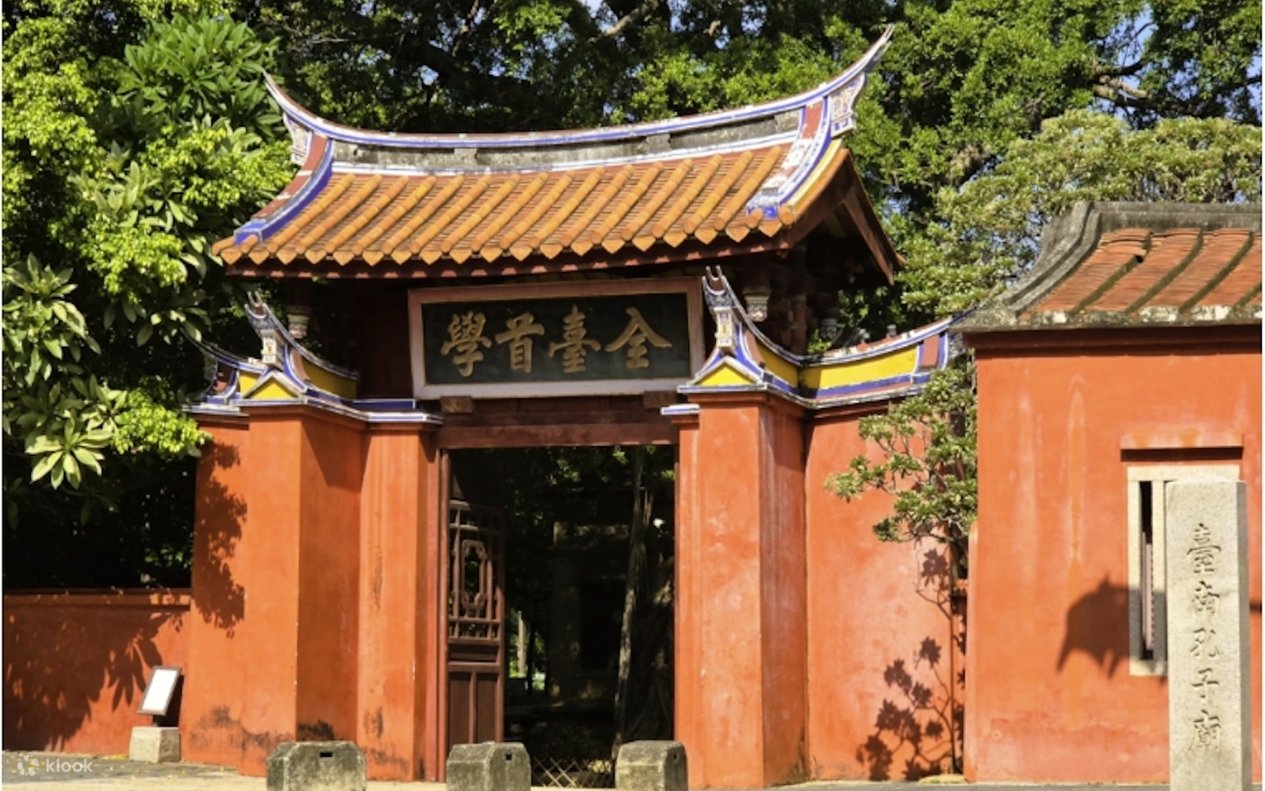
Tainan Confucius Temple, a national historic site founded in 1665, is not only the first official school in Taiwan's history, but also enjoys the reputation of being the "First Academy in Taiwan." This building, with a school on the left and a temple on the right, was consistently an important place for cultivating national talents and educating scholars during the Ming Zheng and Qing dynasties, carrying a profound historical and cultural heritage.
What to expect
Tainan Confucius Temple: The First Academy in Taiwan, a Century of Literary Style Endures
The First Confucius Temple in Taiwan is in Tainan
In the 19th year of the Yongli reign of the Ming Dynasty (1665 AD), when Zheng Chenggong’s son Zheng Jing was in power, Chen Yonghua, the Counselor of the Advisory Army, assisted him and worked hard to govern. He proposed: “We must choose a place to build a sacred temple and establish schools to gather talents; if a country has virtuous scholars, the foundation of the country will be solid, and the world will prosper day by day.”
Zheng Jing agreed and built the Confucius Temple in Chengtian Prefecture (now Tainan City) to enshrine Confucius, in order to promote national studies and carry out education.
For more than 300 years, the majestic sacred palace and the towering school palace have symbolized the inheritance of Chinese culture and the prosperity of ritual sacrifices, and have created the elegant reputation of “Maritime State of Culture and Education.”
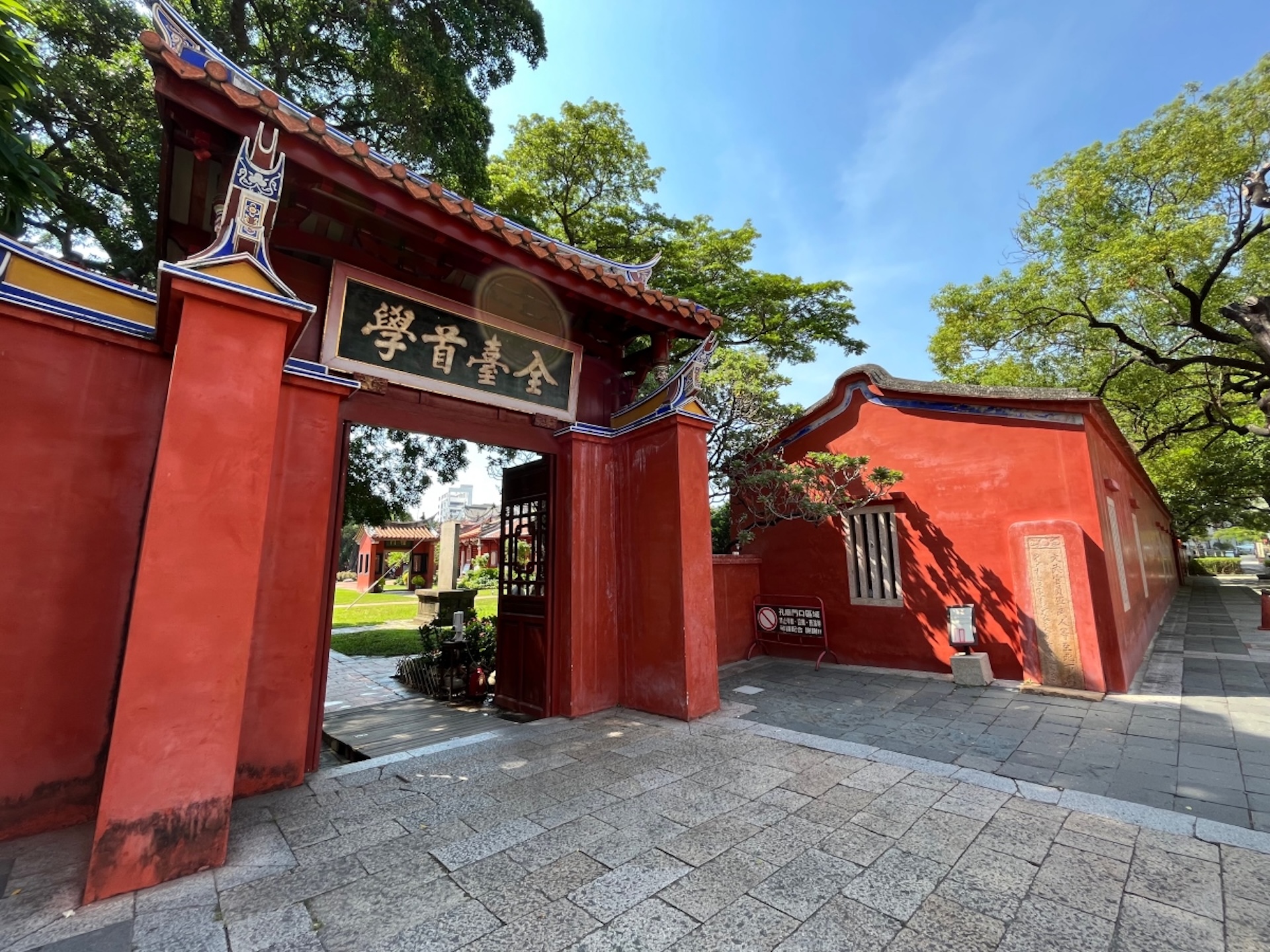 ▲ The First Academy in Taiwan
The First Academy in Taiwan - Dachengfang
The name "Dachengfang" comes from Confucius' title of "Most Accomplished Sage and Teacher," and it also has the meaning of praising his holy virtue.
The archway is in the form of a gate tower, with cross-shaped load-bearing walls to increase stability. Six swallowtail ridges fly up and down on the top of the wall, and the overhanging mountain-style roof is supported by brackets. The plaque “The First Academy in Taiwan” hangs high on the archway, truly echoing the reputation of Taiwan’s first Confucius Temple.
A “Dismount Stele” is embedded in the left wall of Dachengfang to welcome visitors. There is a wall around the temple on the side of the archway. The wall is high and red. Confucius was a member of the Zhou Dynasty, which advocated scarlet. The crowns, clothes, palaces and rooms were decorated with noble red, as is the wall of the Confucius Temple.
 ▲ Dismount Stele
The high wall is also called the “Palace Wall,” which comes from the allusion in “The Analects”: Zigong used the “Palace Wall” to compare learning and cultivation. His own wall was as high as his shoulders, while Confucius’ wall was several ren high. One ren is seven feet, and several ren are already towering. Later generations used “Ten Thousand Ren Palace Wall” to praise Confucius’ learning and morality. The Palace Wall has become a standard feature of the Confucius Temple.
Passing through the Bangong Stone Archway and the Ten Thousand Ren Palace Wall, entering the East Dachengfang, one can get a glimpse of the beauty of the hall.
But seeing the open and bright space, with towering ancient trees, the beautiful name of “Apricot Altar Summer Shade” has spread far and wide. The side of the archway used to be official offices and land shrines, but now they have been abandoned for many years and have been converted into “Cultural Relics Exhibition Rooms,” with a management room next to it.
▲ Dismount Stele
The high wall is also called the “Palace Wall,” which comes from the allusion in “The Analects”: Zigong used the “Palace Wall” to compare learning and cultivation. His own wall was as high as his shoulders, while Confucius’ wall was several ren high. One ren is seven feet, and several ren are already towering. Later generations used “Ten Thousand Ren Palace Wall” to praise Confucius’ learning and morality. The Palace Wall has become a standard feature of the Confucius Temple.
Passing through the Bangong Stone Archway and the Ten Thousand Ren Palace Wall, entering the East Dachengfang, one can get a glimpse of the beauty of the hall.
But seeing the open and bright space, with towering ancient trees, the beautiful name of “Apricot Altar Summer Shade” has spread far and wide. The side of the archway used to be official offices and land shrines, but now they have been abandoned for many years and have been converted into “Cultural Relics Exhibition Rooms,” with a management room next to it.
 ▲ Dacheng Hall
Left School, Right Temple - The Architectural Pattern of the Confucius Temple
▲ Dacheng Hall
Left School, Right Temple - The Architectural Pattern of the Confucius Temple
The Confucius Temple is also known as the "Wen Temple" or the "First Teacher Temple."
This temple is a traditional courtyard building with three entrances and two廂, which has been gradually developed according to the palace regulations of "left school, right temple" and "front hall, back pavilion."
However, after many years of changes and vicissitudes, some buildings have been destroyed by natural disasters or wars. For example, the Zhu Zi Temple, Lingxing Gate, Professor’s Office and Xueshu have all disappeared, leaving only vacant land. What we see today is mostly the appearance after the reconstruction in the sixth year of the Taisho period of the Japanese occupation (1917 AD). In general, it still maintains the style and regulations of the Qing Dynasty. It is the first Confucius Temple in Taiwan and the most representative traditional southern Fujian style building. Minglun Hall “Left School” refers to Minglun Hall, which is located on the left side of the Dacheng Hall of the Confucius Temple, and is the location of the Taiwan Prefectural School. In the past, students who entered the school received supervision from the prefectural school professor here, cultivated their morality, studied hard, and discussed matters and policies.
The horizontal plaques of the Minglun Hall San Chuan Gate are respectively inscribed with "The Gate of Entering Virtue," "Holy Realm," and "Virtuous Pass." Students who pass through this gate and look up, through the implication of space, the Confucian pursuit of moral cultivation and the realm of hoping to become a sage arises spontaneously.

▲ Minglun Hall Dacheng Gate and Dacheng Hall Among the architectural groups of the Confucius Temple, the Dacheng Gate is the most magnificent. The characteristic that the pillars are not inscribed with couplets is to avoid the ridicule of “selling articles in front of Confucius.”
Each pair of door panels is decorated with 108 door nails, because "nine" is the extreme of Yang numbers, taking its multiple represents the majesty and respect of the Holy Temple, and enjoys the honor of emperors.
Each of the two ends of the main ridge of the Dacheng Hall is erected with a “Sutra Cylinder”; also known as “Tongtian Pillar,” symbolizing Confucius’ virtue matching the heavens and the earth, and his Taoism running through ancient and modern times. Eight bells are hung on the four corners of the double eaves, implying that the heavens will use the Master as a wooden bell to inspire and awaken the world. There is a terrace in front of the hall, where the six佾 dance of the Confucius Ceremony is performed. Stone-carved “water-scattering 螭首” are embedded in the four corners of the base, as the water outlet for the terrace and the cloister; the 螭首 is shaped like a dragon’s head, also known as “鰲首”, revealing the prayer for success of “独占鳌头” and the metaphor of “benefiting all directions.” “East 廡” and “West 廡” are located in the厢房 on the left and right sides in front of the Dacheng Hall. The Ritual Instrument Store and the Musical Instrument Store are located in the second half of the left and right厢房 respectively. The back hall was originally called “Qisheng Temple,” which mainly enshrines Confucius’ father, Shuliang He.
The left room is “Yicheng Academy,” which is responsible for the spring and autumn Confucius ceremonies. The right room was originally the “Classics Room,” and the back hall is the end of the “Right Temple.” The space of the “Left School” can be returned to through the eaves gallery.

▲ Dacheng Gate Wenchang Pavilion Wenchang Pavilion, also known as “Kui Xing Tower”, is located on the left rear of Minglun Hall, and is the only tower-shaped building in the Confucius Temple building group.

▲ Wenchang Pavilion Bangong Stone Archway The words “Bangong” symbolize the location of the school. Students who pass the county examination and are admitted enter the school palace (Bangong) and are called students. “Entering Bang”, “游泮”, “采芹” or “遨游泮水” all mean that students are enrolled in school.
The "Bangong Stone Archway" was originally the outermost entrance of the Tainan Confucius Temple. During the Japanese occupation, it was moved eastward due to the construction of Nanmen Road. Now it faces the Dachengfang of the Confucius Temple "The First Academy in Taiwan" across Nanmen Road.

▲ Bangong Stone Archway



Location